A Ram 2500 rolls in on a hook or on its own power, and the story is always close to the same: the truck felt like it had no power from a stop, the transmission would not shift, the wrench light or check engine light came on, and after a key cycle it drove normally for a while before doing it again. That is 68RFE limp-in mode. The unit is not necessarily broken. The control module saw something it did not like and dropped the transmission into the one gear the hydraulics can hold without any electronic help.
The mistake I see most is treating limp mode as the problem. Limp mode is the symptom. The code that triggered it is the lead, and on this unit the list of possible triggers runs from a loose connector to a worn solenoid switch valve bore to a truck that was tuned past what the pump can deliver. This guide covers how the 68RFE limp strategy actually works, which faults trigger it, and the order I test them in so the truck gets fixed once. If you want the wider failure map first, our 68RFE weak spots and fixes guide covers the whole unit.


How 68RFE Limp-In Mode Actually Works
The 68RFE behind the 6.7L Cummins is controlled by a transmission control module housed in the New Generation Controller, using the C1 and C4 connectors, and the PCM does not control the transmission at all, per the ATSG 68RFE technical manual. The TCM monitors every transmission electrical component. When it finds a fault, it sets a DTC, and ATSG is explicit that whether you get just a MIL or full limp-in depends on the type of DTC that was set.
If the TCM decides the fault could damage the transmission, it shuts off the ground signal to the transmission control relay. That kills all power to the transmission solenoids at once. With no solenoids energized, the hydraulic system by itself only provides Park, Reverse, Neutral, and 4th gear, based purely on where the driver puts the shifter.
That is why the complaint sounds the way it does:
- Shifter in Drive: the truck is in 4th gear. A 1.00:1 ratio from a stop with a loaded 3500 feels like the engine has lost half its power. It will crawl away and it will not upshift.
- Shifter in 2 or L: the unit goes to 2nd gear, so the driver can manually shift between 2nd and 4th to limp home.
- Trucks with Electronic Range Select: ATSG notes these have no 2nd gear limp-in, because the lever has no 2 or 1 position. On those trucks, Drive-in-4th is all you get.
Two things fall out of this. First, a customer who says "it only happens sometimes and a restart clears it" is describing a relay shutdown that resets at key-off, not an intermittent mechanical slip. Second, because limp-in is decided by the DTC type, you must pull codes from the TCM itself. A generic reader that only talks to the engine controller can miss the transmission codes entirely.
The Codes That Drop a 68RFE Into Limp
I group the triggers into four families. The code you pull tells you which family to start in.
1. Pressure switch and solenoid switch valve codes
This is the biggest family on high-mileage and tuned trucks. The 68RFE solenoid pack carries five pressure switches that tell the TCM whether each clutch circuit actually received oil. ATSG gives the switch behavior as closing at about 23 psi and opening at about 11 psi. When the TCM commands a clutch and the matching switch does not agree, it sets a rationality code, and those are among the codes that send the unit to limp.
Sonnax lists codes P0841, P0868, P0871, P0988, P1775, and P1776 against wear at the solenoid switch valve and its bore plugs, with symptoms including bind-up, failsafe mode, and burned overdrive clutches. In the Sonnax P0871 pressure switch guide, they put worn valve body bores and solenoid switch valve plugs at roughly 90 percent of the cases they see. Our 68RFE P0871 guide goes deeper on that specific code.
2. Solenoid and relay circuit codes
An open or shorted solenoid, a failed transmission control relay, or a bad connector at the solenoid pack will set circuit codes, and the TCM will usually shut the relay off to protect the unit. The Sonnax RFE solenoid identification and pin-out sheet gives the numbers you test against: every shift solenoid measures 1.3 ohms, and the pressure control solenoid measures 3.5 ohms. The multi-select and underdrive solenoids are normally applied; low/reverse, 2nd clutch, 4th clutch, and overdrive are normally venting. Note that the overdrive solenoid was eliminated in the 2010 to 2018 valve body, so pin 7 is unused on those trucks. Do not chase a missing OD solenoid reading on a 2012.
3. Speed sensor and ratio codes
The TCM compares input shaft speed against output shaft speed to calculate gear ratio. Per ATSG, the input speed sensor reads a tone wheel on the input clutch housing, and the output speed sensor reads the parking gear teeth. Both generate an AC signal. If either sensor drops out, the TCM cannot confirm which gear it is in, and you get speed sensor codes (P0715 input, P0720 output) or gear ratio codes (P0731 through P0736) followed by limp. A ratio code with a healthy sensor signal usually means a clutch is actually slipping, which moves you into the hydraulic family.
One newer case belongs here too. FCA TSB 21-012-25 Rev. B (February 2025, also RSU 25-018) covers 2024 Ram 2500 and 3500 6.7L trucks built June 14 through September 4, 2024 that enter limp home mode with P0716 Input Speed Sensor 1 Circuit Performance, ratio codes P0729 and P0731 through P0735, pressure codes and P0944 loss of pump prime. The cause is a cracked rear selective thrust bearing, and the bulletin repair is a replacement transmission followed by a Quick Learn, not a sensor. On any 68RFE, a speed sensor code stored with ratio and pressure codes means pull the pan before ordering sensors. Our 68RFE speed sensor guide walks through telling the two apart.
4. Line pressure codes
Line pressure faults are the ones that turn a limp-mode complaint into a rebuild if they are ignored. The two ends of the scale:
- Max line pressure: an open circuit in the pressure control solenoid line pressure circuit sends the unit to default pressure. The Sonnax max line pressure write-up shows the signature: 150 to 160 psi at idle in Park, Neutral, and Drive, 250 psi in Reverse, line pressure duty cycle stuck at 38.38 percent, and desired line pressure parked at a 125 psi default with no activity. The codes are P0933 (sensor performance) and P0869 (high line pressure).
- Low line pressure: P0868 sets when actual line pressure runs more than 10 psi below desired. Worn pressure regulator bores, pump wear, and a tuned desired-pressure table are the usual reasons. See our 68RFE P0868 guide for that path.
Diagnosing 68RFE Limp Mode in Order
This is the sequence I use. It goes from cheap and fast to expensive and invasive, and each step either finds the fault or clears a whole family.
Step 1: Pull TCM codes and freeze frame
Use a scan tool that communicates with the transmission controller. Write down every code, including history codes, before you clear anything. Note whether the codes are circuit codes (electrical), rationality codes (hydraulic or switch), or ratio codes (slip). If there are multiple codes, the circuit codes get fixed first, because a dead solenoid circuit can set rationality and ratio codes downstream.
Step 2: Check fluid level and condition
The 68RFE takes ATF+4 only. The Ram 2500/3500 owner information warns that failure to use ATF+4 may affect the function or performance of the transmission. Check level hot, in Park, engine running. Low fluid starves the pump on turns and hills and can set pressure and ratio codes that look like hardware failure. Dark fluid with a burnt smell and clutch material on the dipstick tells you the overdrive clutch has probably already been cooked, and no amount of electrical diagnosis is going to fix that.
Step 3: Verify power, grounds, and the relay
ATSG gives the TCM power feeds as fused battery power to pin 18 on the C4 connector and fused ignition to pin 30 on the C1 connector, plus several grounds. Load-test these with a test light or a voltage drop test, not just a meter reading open-circuit voltage. A corroded ground or a weak battery can pull voltage low enough that the TCM sees solenoid circuit faults. That is also why FCA requires a battery charger holding 13.2 to 13.5 volts during the flash in service bulletin 18-066-23. Then confirm the transmission control relay actually closes when commanded. If the relay drops out and the TCM has no code, look for a supply or ground fault before blaming the module.
Step 4: Ohm the solenoids and pressure switches at the case connector
With the key off and the connector unplugged, check each solenoid against the 1.3 ohm spec and the pressure control solenoid against 3.5 ohms. Then run the Sonnax KOER Reverse test for the pressure switches: engine running, selector in Reverse, and all pressure switches should read open, which shows up as system voltage of roughly 12.6 to 14.4 volts on each switch circuit. A switch that reads closed in Reverse points to a wiring short, a damaged switch lip seal in the solenoid pack, or a leak that is feeding pressure into a circuit that should be empty.
For the pressure control solenoid circuit specifically, clamp a low-amp probe on the PCS ground control wire. Sonnax gives normal current flow as 0.20 to 1.00 amps. No current confirms an open circuit and the max-line-pressure condition described above.
Step 5: Read line pressure on the scan tool
On stock programming, the ATRA Gears Magazine 68RFE article gives commanded and actual line pressure of 60 to 70 psi at idle with a line pressure duty cycle of 22 to 24 percent. Duty cycle under 10 percent means the module is losing control of pressure. A duty cycle pinned near 5 percent with actual pressure below commanded means the module has maxed out and the pump or regulator cannot keep up.
Check for aftermarket tuning here. Gears notes that diesel tunes pushing past 700 lb-ft of torque command pressure beyond the pump's capacity, which is exactly what drives the duty cycle to 5 percent. Oversized tires make it worse, and the article is blunt that the real fix is regearing the axles, not modifying the transmission.
Step 6: Vacuum test the valve body
If the electrical checks pass and you still have pressure switch rationality codes, the valve body is next. The solenoid switch valve and its bore plugs are the critical wear area. The Sonnax 68RFE overdrive clutch article explains why this matters: worn plug bores crossleak oil out of the overdrive circuit, the clutch loses holding force, and the overdrive clutch steels only have a .034 inch core. They distort as soon as they get hot. Sonnax also flags a warped solenoid conductor plate as a cause of OD apply pressure bleeding away and false or intermittent pressure switch codes. Vacuum testing each circuit on the bench is the only way to separate a valve body leak from a bad switch.
The Fix, by Root Cause
- Connector, wiring, or ground fault: repair the circuit, clear codes, and road test. No parts beyond terminals and grounds.
- Transmission control relay: replace the relay, then confirm TCM supply voltages under load.
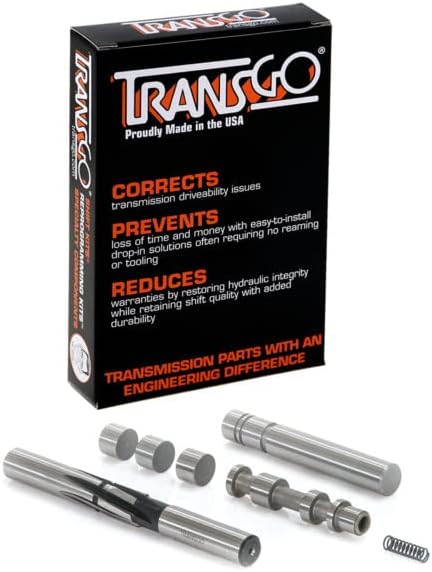
- Solenoid or pressure switch failure: the solenoids and pressure switches live in one solenoid pack assembly, so the fix is a solenoid pack. Sonnax offers remanufactured 44836A-RRP and 44836B-RRP solenoid blocks for this application.
- Speed sensor: replace the failed input or output sensor, and inspect the tone wheel and park gear teeth while you are there.
- Solenoid switch valve and bore wear: ream-and-sleeve or oversized valve repair (Sonnax 92835-series kits) or a remanufactured valve body. Do not put a new solenoid pack on a leaking valve body and expect the codes to stay gone.
- Burnt overdrive clutch: if the fluid is burnt and ratio codes point at 4th, 5th, or 6th, the unit comes out. The valve body leak that caused it gets fixed in the same job, or the new clutches will burn too.
- Tuned truck: reset the transmission tables or match the tune to the hardware. On 2019 Ram 2500/3500 Cummins trucks with P0868 or P0870, check for the TCM/PCM update in service bulletin 18-066-23 before condemning hardware.
After any repair, run the Quicklearn procedure with a scan tool. The 68RFE uses adaptive learning and a clutch volume index to set clutch apply timing, per ATSG. Skipping the relearn gives you harsh or flared shifts that can set new codes and bring the complaint right back.
Shop the part for this fix
If your testing points to a failed solenoid circuit, Core Transmission Parts carries a 68RFE shift solenoid kit that covers the common solenoid pack failures behind limp-in.
View the 68RFE solenoid kit →Or browse the full 68RFE parts collection at Core Transmission Parts.
How to Keep It Out of Limp Mode
- Run ATF+4 only, and keep the level right. Most "my fluid was fine" limp cases turn out to have been run low for months.
- Do not stack a torque tune and big tires on a stock 68RFE and expect stock pressure control. Either the pressure tables and hardware get addressed together, or the gearing does.
- Fix pressure switch codes early. A P0871 caught on the first occurrence is a valve body repair. The same code ignored for 20,000 miles is usually an overdrive clutch job.
- Keep the batteries healthy on a Cummins. Two tired batteries and a corroded ground can produce solenoid circuit faults that look like a failed transmission.
FAQ
What gear is a 68RFE in when it goes into limp mode?
With the shifter in Drive, a 68RFE in limp-in mode is held in 4th gear, which is why the truck feels like it has no power from a stop and never upshifts. Moving the shifter to 2 or L gives 2nd gear, so you can manually shift between 2nd and 4th to get home. Trucks with Electronic Range Select have no 2 or 1 lever position, so they do not get the 2nd gear option.
Why does my 68RFE come out of limp mode after I restart the truck?
In limp-in the TCM has shut off the ground to the transmission control relay, which removes power from every solenoid. A key cycle resets that relay command, so the truck drives normally until the TCM sees the same fault again. That pattern points to a real stored fault, usually electrical or a pressure switch rationality problem, not a random glitch, so pull the TCM codes before clearing them.
What are the most common causes of 68RFE limp mode?
The common triggers are pressure switch rationality codes from a worn solenoid switch valve and bore plugs, solenoid or transmission control relay circuit faults, input or output speed sensor failures that set speed or ratio codes, and line pressure faults such as an open pressure control solenoid circuit. Low fluid, weak batteries or bad grounds, and aftermarket tuning that commands more pressure than the pump can supply also show up regularly.
Can I keep driving a 68RFE in limp mode?
Only far enough to get it somewhere safe. In Drive it is locked in 4th gear, so pulling away puts heavy load on the clutches and fluid, and whatever set the code is often a pressure or slip problem that is already heating the overdrive clutch. Those clutches have a thin .034 inch steel core and distort quickly once hot, so continued driving can turn a valve body or solenoid repair into a rebuild.
Sources
- ATSG — Dodge Ram Trucks 68RFE Transmission, Technical Service Information (2011, PDF). Backs the TCM being housed in the NGC with C1 and C4 connectors, the PCM not controlling the transmission, limp-in depending on DTC type, the TCM cutting the transmission control relay ground, 4th gear in Drive and 2nd gear in 2 or L during limp-in, no 2nd gear limp on ERS trucks, the hydraulic-only P/R/N/4th design, TCM power at C4 pin 18 and C1 pin 30, input and output speed sensor operation, the 23/11 psi pressure switch behavior, and adaptive learning with clutch volume index. atsg.biz (PDF)
- Sonnax — "Dodge RFE Pressure Switch Diagnosis Code P0871." Backs the five-pressure-switch system, the KOER Reverse test with all switches open at 12.6 to 14.4 volts, and worn valve body bores and solenoid switch valve plugs as roughly 90 percent of cases. sonnax.com
- Sonnax — "45RFE, 545RFE, 68RFE Solenoid Identification & Connector Pin Out." Backs the 1.3 ohm shift solenoid and 3.5 ohm pressure control solenoid resistance specs, normally applied versus normally venting solenoids, and the overdrive solenoid elimination on the 2010 to 2018 valve body. sonnax.com
- Sonnax — "Diagnosing Chrysler Transmission Max Line Pressure & P0933, P0869, P1745 Codes." Backs the open PCS circuit default-pressure condition, the 150 to 160 psi idle and 250 psi Reverse signature, the 38.38 percent duty cycle with 125 psi default desired pressure, and the 0.20 to 1.00 amp PCS current test. sonnax.com
- Sonnax — "68RFE Overdrive Clutch Failure: What to Check First When Troubleshooting OD Issues." Backs the .034 inch overdrive clutch steel core, solenoid switch valve plug crossleaks, warped solenoid conductor plate, the 841/868/871/988/1775/1776 code list, and the 92835-series valve kits and 44836A/B-RRP remanufactured solenoid blocks. sonnax.com
- ATRA / Gears Magazine — "Fixing the Root Cause of the Problem: Solving Issues with the 68RFE Transmission." Backs the 60 to 70 psi idle line pressure at 22 to 24 percent duty cycle, the under-10 percent and 5 percent warning values, tunes over 700 lb-ft exceeding pump capacity, and regearing as the fix for oversized tires. gearsmagazine.com
- FCA US / NHTSA — Service Bulletin 18-066-23, Flash: Powertrain Control Module Updates (May 2023). Backs the 2019 Ram 2500/3500 6.7L update covering P0868 and P0870, the 13.2 to 13.5 volt charger requirement, and the Quicklearn step on 68RFE trucks. static.nhtsa.gov (PDF)
- Ram / Mopar — 2022 Ram 2500/3500 Owner Information, Fluids and Lubricants. Backs the ATF+4 requirement and the warning that other fluids may affect transmission function. vehicleinfo.mopar.com
- FCA US LLC / NHTSA — TSB 21-012-25 Rev. B, "Rear Selective Thrust Washer Failure" (February 21, 2025; RSU 25-018). Backs the 2024 Ram 2500/3500 6.7L 68RFE build window, the limp home and hard-shift complaints, the DTC list including P0716, P0729, P0731-P0735 and P0944, the rear selective thrust bearing cracking cause, and the transmission replacement with Quick Learn. static.nhtsa.gov (PDF)