P0868 gets parts thrown at it because the name sounds like a sensor. It is not a sensor code. It is the transmission control logic telling you that it asked the hydraulics for a specific line pressure and the hydraulics came up short. That distinction decides whether you spend an hour with a meter or a weekend with the pump on the bench, so it is worth getting right before you order anything.
This is a diagnostic walkthrough for the Chrysler 68RFE behind the 6.7L Cummins in Ram 2500 and 3500 trucks. If you want the wider failure map for the unit first, read our 68RFE weak spots and fixes guide and then come back here.
What P0868 Actually Measures
ATRA's Gears technical write-up on the RFE pressure code family gives the set criteria plainly. P0868, Line Pressure Low, is monitored continuously while driving in all forward gears, and it sets if actual line pressure is more than 10 psi below desired line pressure. That is the whole test. Two numbers, compared, on a running truck.
It helps to see the rest of the family alongside it, because they tell you which direction to look:
- P0868 — Line Pressure Low. Actual is more than 10 psi below desired.
- P0869 — Line Pressure High. Actual exceeds the highest desired pressure used in the current gear while the solenoid duty cycle is already at maximum.
- P0933 — Hydraulic Pressure Sensor Range/Performance. Actual is more than 172.4 kPa (25 psi) higher than desired.
- P0934 — Line Pressure Sensor Circuit Low. Sensor voltage at or below 0.35 volts for 0.18 seconds.
- P0935 — Line Pressure Sensor Circuit High. Sensor voltage at or above 4.75 volts for 0.18 seconds.
Notice what that means: P0934 and P0935 are the circuit codes. The sensor has to stay inside a 0.35 to 4.75 volt window or one of those two sets instead. So if you have a clean P0868 with no P0934 or P0935 alongside it, the module already believes the sensor circuit is electrically healthy. The pressure shortfall is real until you prove otherwise.
Know Your Baseline Numbers Before You Judge the Reading
You cannot call a pressure low without knowing what it should be. Sonnax gives normal OE line pressure for this family as 60 psi minimum and 150 to 160 psi maximum at stall. On the scan tool with stock transmission programming, sitting in Drive at a stop, you should see 60 psi to 70 psi in both the desired and actual parameters, with line pressure duty cycle between 22 and 24 percent, then about 160 psi at stall.
Here is the part that sends good techs down the wrong road. On a truck with aftermarket transmission tuning, Sonnax reports the same scan tool screen reads 100 psi to 105 psi in both desired and actual, with line pressure duty cycle at 5.1 percent, and over 160 psi at stall. The tune raised the target. P0868 compares actual against desired, and desired just went up by 40 psi.
That is how a 68RFE that ran fine for 90,000 miles sets a line pressure low code the month after a power tune, with nothing mechanically different than the day before. A pressure regulator lineup and pump that comfortably held a commanded 65 psi may not hold a commanded 105 psi, and the shortfall against the new target trips the 10 psi threshold. Before you condemn a single part, find out whether the truck is tuned. The scan tool screen tells you in about five seconds.
Verify the Sensor Is Telling the Truth
Scan data is a report from a sensor, and the sensor is a part that fails. Before you trust the number, put a mechanical gauge next to it. Chrysler's line pressure adapter tool No. 8259 installs into the case in place of the line pressure sensor; the sensor and a mechanical gauge then thread into the tool, so you read both at once. That single setup verifies main line pressure and the accuracy of the sensor in the same test.
Two things this catches. A sensor reading low when actual pressure is fine gives you a false P0868 and a healthy transmission. And low line pressure can also go unnoticed behind a failed sensor reading normal, which is the more expensive version of the same problem. Gears also flags faulty solder and crimp connections at the line pressure sensor connector as a frequent cause of intermittent pressure codes, so inspect the connector body itself, not just the pins.
Chasing a P0868 this week?
Line pressure sensors, solenoid packs, pressure regulator valve kits, filters and the ATF+4 to refill it — the parts that actually close out this code, shipped from the USA.
Shop 68RFE parts →Start With Fluid, Because It Is Free
Level and fluid type first, every time. The 68RFE takes ATF+4 and nothing else. Ram's own owner information for the 6.7L diesel is unambiguous: only use ATF+4 automatic transmission fluid, and failure to use ATF+4 may affect the function or performance of the transmission. Universal fluid in this unit changes friction behavior and pressure response, and it will absolutely put you on a wild goose chase.
Capacities, from Chrysler's Ram fluid capacity chart:
- Service fill, 4x2: 5.20 liters, listed as 11 pints (about 5.5 quarts)
- Service fill, 4x4: 6.20 liters, listed as 13 pints (about 6.5 quarts)
- Overhaul (dry) fill: 15.6 to 16.6 liters, listed as 33 to 35 pints (roughly 16.5 to 17.5 quarts), varying with cooler type, line length and inside diameter, and whether an auxiliary cooler is fitted
Set the level hot, at operating temperature, not cold. And if the code appeared shortly after a service, go back to your own work before anything else: a filter seal that did not seat, a filter left partly unseated in the pump bore, or a deep pan fitted without the correct extended filter will all starve the pump and produce exactly this code. That is a genuinely common cause and it costs nothing but a pan gasket to rule out.
The Electrical Cause That Produces Low Pressure
Line pressure on the RFE family is controlled by a pressure control solenoid (PCS) in the solenoid pack, and Chrysler does not provide a dedicated code for a circuit fault on that solenoid. Sonnax technical communication specialist Jim Mobley documents how the circuit fails in both directions, and the low-pressure direction is what concerns us here.
An open circuit on the PCS line pressure control wire drives the transmission to maximum line pressure: 150 to 160 psi at idle in Park, Neutral and Drive, and around 250 psi in Reverse, with duty cycle flatlined and showing no activity. That is the P0869 and P0933 side of the story. A short to ground on that same circuit is the opposite, and gives you a low-pressure condition. Same wire, same connector, opposite symptom, and the low side is the one that sets P0868.
The test is straightforward and noninvasive. Using a 2013 Ram 6.7L with a 68RFE as the reference, Mobley describes putting a low-current clamp on the PCS ground control wire (wire #12 to PCM connector C1, terminal pin 29), clearing codes, and monitoring the circuit key on, engine running, in Park or Drive. Normal current flow varies from 0.20 to 1.00 amps. Observed current flow proves the circuit is not open. A circuit shorted to ground will also flow current, which is why you read the pressure alongside it: current flowing with pressure sitting low points at the short, not the solenoid. Secure a wiring diagram for the specific VIN before you probe, since pinouts vary by model year.
One more useful cross-check from the same article: if the other solenoids are functioning and code P0882 (low voltage supply) is not present, the power supply side of the circuit is usually not at fault. That narrows the search to the ground control side quickly.
The Mechanical Root Cause: Pressure Regulator Bore Wear
When the fluid is right, the sensor is honest and the circuit checks out, the fault is hydraulic, and on this transmission family the pressure regulator valve bore is the first place to look. Sonnax states the mechanism directly: excess pressure regulator bore wear allows fluid loss, preventing normal line pressure control.
The detail worth understanding is why bore wear costs you pressure rather than just making it noisy. The PR valve is positioned by balance oil acting against spring force. Wear in the bore lets that balance oil leak away, and without adequate balance oil pressure the valve sits out of its intended position. From there you get line pressure instability, restricted cooler and lube flow, and, as Sonnax puts it, a deteriorated bore can cause lowered line pressure, resulting in soft shifting and burnt clutches. The listed symptoms for the repair cover both ends: erratic line pressure, high line pressure, soft shifts, harsh shifts, burnt clutches and restricted converter and lube flow.
Do not eyeball this. Vacuum test the pressure regulator and TC limit valve bores in the pump. Sonnax's working threshold on RFE switch valve bores is 18 inches of mercury as satisfactory, with anything below that worn and due for replacement, and the same discipline applies across the unit: cap the bore, plug the exhausts inside the test area, shuttle the valve to the track you are testing, and read the gauge instead of guessing.
The correction is to recondition the bore and fit a wear-resistant oversized valve. The Sonnax repair for this family is oversized pressure regulator valve kit 44912-10K, which covers 45RFE, 545RFE, 65RFE, 66RFE and 68RFE and requires tooling F-44912-TL10 along with the VB-FIX fixture. The kit uses a hardcoat anodized aluminum valve with annular grooves that help center it in the bore to reduce side-load wear, and it ships with both a green spring and a yellow OE-pressure spring so you can select the pressure characteristic you want.
Sonnax 68RFE Oversized Pressure Regulator Valve Kit 44912-10K
This is the specific repair for the wear that causes low and unstable line pressure on an RFE. If your vacuum test at the PR bore reads short, reaming and fitting this oversized valve restores pressure regulation in all ranges instead of masking it. Requires the F-44912-TL10 tooling and VB-FIX fixture.
View the 44912-10K PR valve kit →Pump Gears: When the Unit Cannot Make Volume
Pressure is what is left after leakage, and it starts with volume. The 68RFE uses a dual-stage pump, and Sonnax lists pump gear wear or fracture and scoring on the surface where the center gear pump pilot passes through the pump body as known failure points, with a center pump gear (72530B-02), a steel-backed aluminum center pump gear bushing (72530B-03) and a heavy duty outer pump gear set offered to address them. Noise complaints often show up alongside. If the truck makes acceptable pressure at speed but falls off badly at idle, look hard at pump condition and clearances, not just at valves.
Downstream Leaks That Bleed Pressure Away
Line pressure can also be perfectly well regulated and still get lost between the pump and the clutch. Sonnax's critical wear area guide for the 45RFE through 68RFE family lists the solenoid switch valve and its outer plugs as wear points tied to codes including 841, 868, 871, 988, 1775 and 1776, along with bind-up, failsafe mode and burned OD clutches. The low/reverse switch valve is another one: wear in that bore lets pressure leak past the one-way function and exhaust through the manual valve, which produces low apply pressure, burnt clutches and delayed or missing Reverse and 1st and 2nd. Sonnax repairs those with checkball sleeve kit 92835-41K, or 92835-45K oversized for extreme wear.
If you have the valve body on the bench for a P0868, vacuum test all of it. Going back in twice for the same truck is how a profitable job turns into a warranty job. Our 68RFE valve body wear fix write-up covers which bores are worth reaming in one pass.
Why You Cannot Just Drive On It
Low line pressure means insufficient clutch apply force. Insufficient apply force means slip, and slip means heat. The 68RFE has less margin for that than almost anything else on the road: the OE overdrive frictions are single-sided with a steel core only .034 inch thick, against .080 inch for the direct clutch steels in a 4L80-E. Those thin steels have very little mass to absorb or shed heat, so once they get hot they distort, clearance goes out of spec, they stop releasing fully, and they burn.
A live P0868 is a countdown. Fix the pressure problem and the truck keeps its clutches. Ignore it for a few thousand miles and the same repair now includes a clutch pack, and probably a converter full of friction material with it.
One Note on 2019 and Later Trucks
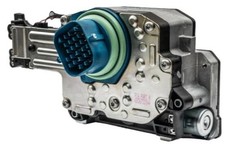
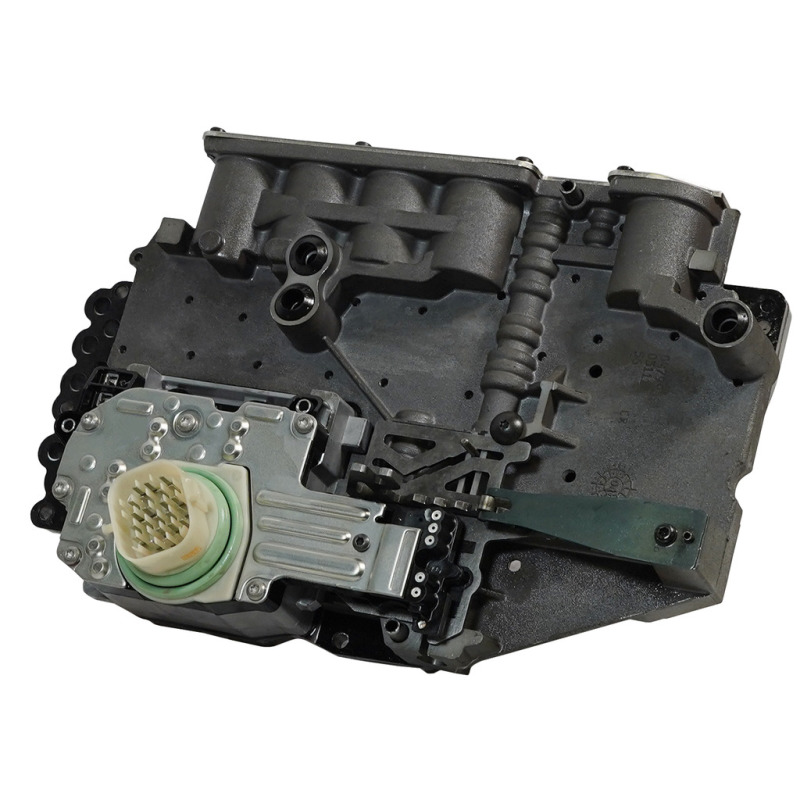
Do not cross-reference parts across the 2019 split. In 2019 the 68RFE for 2500-series Ram trucks with the 6.7L diesel received hydraulic control changes affecting the pump, valve body and solenoid pack. The TCC accumulator retainer, spring and piston were eliminated, the torque converter regulator valve changed dimensionally and gained a bore plug and wire retainer, a lower valve body section was added to the channel plate housing a new Reverse accumulator and a new TCC control solenoid, and the solenoid pack connector changed from gray to blue. Sonnax notes the pressure regulator lineup itself was not changed, which is convenient for this specific repair, but everything around it was. Identify the unit before you order.
The Fix, In Order
Check the software first on a 2019 Cummins truck. Service bulletin 18-066-23 (May 2023), a PCM flash for 2019 Ram 2500 and 3500 pickups with the 6.7L Cummins, lists P0868 line pressure low and P0870 hydraulic pressure test among the 68RFE codes it addresses. The bulletin calls for a battery charger holding 13.2 to 13.5 volts during the flash and, on 68RFE trucks, a transmission Quicklearn afterward. If the truck is behind on software, flash it, relearn, and re-test before you pull the valve body. Our 68RFE harsh shift guide covers the other shift quality fixes in the Ram flash bulletins.
- Read desired and actual line pressure with duty cycle, in Park, Neutral and Drive at a stop. Compare against 60 to 70 psi desired and actual at 22 to 24 percent duty cycle. If both sit near 100 to 105 psi at about 5.1 percent, the truck is tuned and the target moved.
- Check fluid level hot and confirm it is ATF+4. If the code followed a recent service, pull the pan and inspect the filter seal and seating before anything else.
- Verify the sensor with a mechanical gauge using adapter tool No. 8259, so you are diagnosing real pressure and not a lying sensor. Inspect the sensor connector for bad solder and crimp joints while you are there.
- Amp-clamp the PCS ground control circuit key on, engine running, in Park or Drive. Expect 0.20 to 1.00 amps. Current flowing with pressure sitting low points at a short to ground on that circuit.
- Pull the valve body and pump and vacuum test. Pressure regulator bore, TC limit bore, solenoid switch valve and plugs, low/reverse switch valve. Treat 18 in-Hg as the pass mark on the switch valve bores and inspect the castings for erosion and porosity, which no reamer will fix.
- Ream and fit oversized valves where the bores read short. Kit 44912-10K with F-44912-TL10 tooling and VB-FIX for the pressure regulator bore; 92835-41K or 92835-45K for the low/reverse switch valve.
- Inspect the pump gears for wear, fracture and scoring at the center gear pilot bore. A worn pump will not hold pressure at idle no matter how good the valves are.
- Inspect the overdrive clutch pack before you close it up. If the truck ran on low pressure for any distance, those .034 inch steels have already taken heat.
- Refill with ATF+4 to the correct capacity, set the level at operating temperature, run the fast learn, then re-read desired versus actual line pressure on a road test to confirm the gap closed. Our transmission fluid spec chart has the ATF+4 details if you need them at the counter.
Shop 68RFE parts →
Frequently Asked Questions
What does P0868 mean on a 68RFE?
P0868 is Line Pressure Low. The module is monitoring continuously while driving in all forward gears, comparing the line pressure it commanded against what the line pressure sensor reports back. If actual line pressure runs more than 10 psi below desired line pressure, P0868 sets. It is not a sensor circuit code. It is the module reporting that the hydraulics did not deliver the pressure the electronics asked for, which is a very different starting point than a wiring fault.
What should 68RFE line pressure read on a scan tool?
On stock programming, desired and actual line pressure should both read between 60 and 70 psi sitting in Drive at a stop, with line pressure duty cycle at 22 to 24 percent, rising to about 160 psi at stall. Sonnax gives normal OE pressure as 60 psi minimum and 150 to 160 psi maximum at stall. If desired and actual are both sitting near 100 to 105 psi with duty cycle around 5.1 percent, the truck is running aftermarket transmission tuning, and that changes what the pump has to do to keep up.
Can a tune cause P0868 on a 68RFE?
Yes, indirectly, and it catches shops out constantly. Aftermarket transmission programming raises the desired line pressure at idle from roughly 60 to 70 psi up to roughly 100 to 105 psi. P0868 compares actual against desired, so a pump and pressure regulator lineup that comfortably held 65 psi may fall more than 10 psi short of a commanded 105 psi. Nothing broke that day. The bar moved. Always check whether the truck is tuned before you condemn parts.
Will P0868 damage the 68RFE if I keep driving?
It will. Low line pressure does not provide the apply force the clutches need, so they slip, and slip makes heat. The 68RFE overdrive frictions are single-sided with a steel core only .034 inch thick, against .080 inch for the direct clutch steels in a 4L80-E, so they have almost no mass to shed heat and they distort and burn quickly. A P0868 left alone turns a valve body or pump repair into a full rebuild.
What fluid and how much does a 68RFE take?
ATF+4 only. The Ram owner information for the 6.7L diesel with the 68RFE states that failure to use ATF+4 fluid may affect the function or performance of the transmission, so no Dexron, no universal fluid. Chrysler's Ram fluid capacity chart lists a service fill of 5.20 liters (11 pints, about 5.5 quarts) on 4x2 and 6.20 liters (13 pints, about 6.5 quarts) on 4x4, with an overhaul dry fill of 15.6 to 16.6 liters (33 to 35 pints, roughly 16.5 to 17.5 quarts) depending on cooler and line configuration.
Sources
- ATRA / Gears Magazine — "Diagnosing Pressure Trouble Codes." Backs the P0868 set criteria (monitored continuously while driving in all forward gears; sets if actual line pressure is more than 10 psi below desired), the P0869, P0933 (172.4 kPa / 25 psi), P0934 (0.35V for 0.18s) and P0935 (4.75V for 0.18s) thresholds, the 0.35 to 4.75 volt sensor operating window, and faulty solder and crimp connections at the line pressure sensor connector as a cause of intermittent codes. gearsmagazine.com
- Sonnax — "Safely Tune for Higher RFE Line Pressure with a Sonnax Drop-In Lube Regulated PR Valve," March 11, 2021. Backs the stock scan tool baseline of 60 to 70 psi desired and actual in Drive at a stop with 22 to 24 percent line pressure duty cycle and 160 psi at stall, the tuned baseline of 100 to 105 psi with 5.1 percent duty cycle, and the effect of pressure regulator valve position on cooler and lube flow. sonnax.com
- Sonnax — "Diagnosing Chrysler Transmission Max Line Pressure & P0933, P0869, P1745 Codes," Jim Mobley, January 12, 2023. Backs the absence of a dedicated Chrysler code for a PCS line pressure solenoid circuit fault, the open-circuit maximum pressure signature (150-160 psi in Park/Neutral/Drive, 250 psi in Reverse, flatlined duty cycle), the statement that a short to ground on the same circuit produces the opposite low-pressure condition, the low-current clamp test on the PCS ground control wire #12 to PCM C1 pin 29 with 0.20 to 1.00 amps normal, the normal OE pressure range of 60 psi minimum to 150-160 psi maximum at stall, and the P0882 power-supply cross-check. sonnax.com
- Sonnax — Oversized Pressure Regulator Valve Kit 44912-10K product and instruction page. Backs the cause statement that excess pressure regulator bore wear allows fluid loss preventing normal line pressure control, the loss of balance oil putting the valve out of position, the resulting lowered line pressure with soft shifting and burnt clutches, the restricted cooler and lube flow, the listed symptoms, the 45RFE/545RFE/65RFE/66RFE/68RFE coverage, the F-44912-TL10 and VB-FIX tooling requirement, and the hardcoat anodized valve with annular grooves plus green and yellow OE-pressure springs. sonnax.com
- Transmission Digest / Sonnax — "68RFE Overdrive Clutch Failure: What to Check First When Troubleshooting OD Issues," August 3, 2020. Backs the OE line pressure adapter tool No. 8259 method of verifying main line pressure and sensor accuracy together, the warning that low line pressure can go unnoticed behind a failed sensor, the low-pressure to slip to heat to burnt clutch failure chain, the .034 inch OE overdrive clutch steel core against .080 inch for 4L80-E direct clutch steels, and solenoid switch valve plug crossleaks bleeding the OD circuit. transmissiondigest.com
- Sonnax — "Diagnosing 62TE, 68RFE Low/Reverse Switch Valve Issues," Chris Leach, July 14, 2025. Backs the low/reverse switch valve one-way function, the leakage-past-the-valve exhausting through the manual valve that causes low apply pressure, burnt clutches and delayed or no Reverse and 1st and 2nd, the 18 inches of mercury vacuum test pass threshold, the requirement to shuttle the valve and plug internal holes for an accurate reading, and repair kits 92835-41K and 92835-45K. sonnax.com
- Sonnax — "Chrysler 68RFE '19-Later Changes & Identification," Jim Dial, December 29, 2022. Backs the 2019 hydraulic control changes to the pump, valve body and solenoid pack, the elimination of the TCC accumulator retainer, spring and piston, the dimensionally changed torque converter regulator valve with bore plug and wire retainer, the added lower valve body section with new Reverse accumulator and TCC control solenoid, the gray-to-blue solenoid pack connector change, and the statement that the pressure regulator lineup was not changed. It also backs the pump gear failure modes and Sonnax center pump gear 72530B-02 and center pump gear bushing 72530B-03. sonnax.com
- Sonnax — "Chrysler 45RFE, 545RFE, 65RFE, 66RFE, 68RFE Vacuum Test Guide" (critical wear areas and vacuum test locations). Backs the solenoid switch valve and solenoid switch valve plugs as critical wear areas, the associated code list including 841, 868, 871, 988, 1775 and 1776, and the accompanying symptoms of bind-up, failsafe mode and burned OD clutches. sonnax.com
- Ram / Mopar — Owner Information, 2022 Ram 2500/3500, Fluids and Lubricants. Backs the ATF+4 requirement for the 6.7L diesel with the 68RFE and the manufacturer warning that failure to use ATF+4 fluid may affect the function or performance of the transmission. vehicleinfo.mopar.com
- Chrysler / Ram Body Builder's Guide — Ram Fluid Capacities chart (PDF). Backs the 68RFE service fill capacities of 5.20 L / 11 pints (4x2) and 6.20 L / 13 pints (4x4), the 15.6 to 16.6 L / 33 to 35 pints overhaul dry fill, and the note that dry fill varies with cooler type and size, cooler line length and inside diameter, and the use of an auxiliary cooler. rambodybuilder.com (PDF)
- FCA US / NHTSA — Service Bulletin 18-066-23, Flash: Powertrain Control Module Updates (May 2023). Backs the 2019 Ram 2500/3500 6.7L Cummins PCM flash that addresses P0868 line pressure low and P0870 hydraulic pressure test on 68RFE trucks, the 13.2 to 13.5 volt charger requirement, and the Quicklearn step after the flash on 68RFE-equipped trucks. static.nhtsa.gov (PDF)