P0741 reads Torque Converter Clutch Circuit Performance or Stuck Off. The control module commanded the converter clutch to apply, watched TCC slip speed, and never saw the slip come down and stay down. That is all the code tells you. It does not tell you the converter is bad, and on a 6L80 the fastest way to buy the job twice is to assume that it does.
The 6L80 and 6L90 have a genuinely bad reputation for converter failure, and that reputation is earned. But in most of the units that come across a bench with this code, the converter is a casualty rather than the cause. Here is how to tell the difference before you write the estimate.
What has to happen for the clutch to lock
The 6L80 uses a two-path lockup converter. Sonnax's Bob Warnke lays the circuit out in the Hydraulics Fundamentals series: release oil flows through the center of the turbine shaft and exits between the TCC piston and the cover, holding the piston off the cover. Apply pressure is the clamping force loading that piston onto the cover. As release oil is exhausted, apply pressure increases.
Two valves stand between line pressure and that clamping force, and they sit in different castings. That is the detail that trips people up.
- TCC regulator valve — in the lower valve body. It regulates the pressure going to the apply side of the clutch.
- TCC control valve — in the pump body. Oil travels from the TCC regulator valve to the TCC control valve, and the control valve is the gateway that decides whether the converter sees apply oil or release oil.
Either one leaking past a worn bore produces the same complaint: the module commands lockup, the pressure that actually reaches the piston comes up short, and the clutch slips instead of clamping. That slip is heat, and heat is what eventually destroys the friction lining.
Start on the scan tool, not in the pan
Road test on a level road at steady throttle with the transmission at operating temperature and watch TCC Slip Speed (engine RPM minus turbine RPM). What you want to know is whether slip actually comes down when lockup is commanded, and whether it stays down under a light load. A clutch that pulls in and then walks back out as the fluid heats is a classic worn-bore signature rather than a solenoid problem, because the leak gets worse as the fluid thins.
While you are connected, compare line pressure command against actual line pressure. On the 6L80 those two numbers are the difference between a valve body job and a pump job, and low line pressure starves the converter charge circuit no matter how good your TCC valves are.
There is a non-obvious input worth checking here too. In a 6L80 P0741 case study published in ATRA's GEARS magazine, the tech's second move after pulling the code was to check line pressure command and the mass airflow sensor. A MAF that reads low but stays inside its own limits will not set a code of its own, and it can pull commanded line pressure down far enough to cause premature transmission failure. The quick sanity check from that article: at idle in Park with no load, grams per second should be roughly equal to the engine displacement in liters, plus or minus about ten percent, and at around 2500 RPM it should be roughly twenty times the displacement in liters. So a 5.3L should read near 5 g/s at idle and near 100 g/s at 2500 RPM. It takes thirty seconds and it has saved people a rebuild.
Vacuum test both valves, and know the numbers
Bore wear is not something you can call by eye. A valve can look perfect under a light and still leak enough to cost you a converter. Vacuum testing gives you a number instead of an opinion: you seal the circuit, pull air between the spool and the bore, and read the result in inches of mercury. Sonnax notes that a perfect vacuum with no leakage points reads 29.9 in-Hg, that the figure shifts with elevation, and that no real circuit reaches it because design clearance always exists. Vacuum loss is directly proportional to the amount of wear.
The GEARS case study gives you real pass and fail figures off an actual 6L80 with P0741. The valve body passed at 20 in-Hg. The TCC control valve in the pump failed at just 13 in-Hg. That was the root cause behind a converter full of hammered clutch lining. The unit went back together with a replacement pump body and a new converter, and it fixed the truck.
Two procedure notes straight off the Sonnax vacuum test guide for this family, because both are easy to get wrong:
- TCC regulator apply valve (lower valve body): test with a .125" thick nut placed between the shuttle valve and the regulator valve.
- TCC control valve (pump body): remove the converter feed limit valve and test using the actuator feed limit (AFL) valve, #209, positioned so the spool face and the port face are flush. Test at the valve port while plugging the side port with your thumb.
OE valves get tested in the rest position unless the guide says otherwise. Sonnax lists the pump-side TCC control valve against exactly the complaints you are chasing: no lockup, high TCC slip RPM, overheated converter, falling out of lockup when hot, and codes P0218 and P0741.
The converter itself: what you find when you cut it open
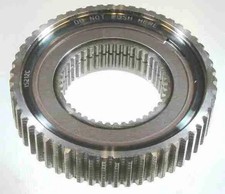
Most full-size trucks and SUVs behind a 6L80 or 6L90 use the JMBX 300mm converter, a single-disc non-captive clutch unit not unlike a late 300mm 4L60-E converter. Sonnax reports that a high percentage of these show extreme damage from the clutch piston and front cover crashing into each other, with the OE cover and piston damaged past reuse. That is where the metal in your pan came from.
Part of the reason is the cover itself. GEARS documented OE covers built with three large mounting pads welded on to resist cracking and flexing. Because the pads resist shrinkage during weld cool-down and the areas between them do not, the clutch surface ends up out of flat. Measured on a converter balancer with a dial indicator, each pad returned to zero while the areas between the pads varied .009" to .014". That is a leak path between piston and cover during lockup, and machining an already-thin cover flat makes it worse. The recommendation from both sources is the same: specify a billet or forged cover on a 6L80 or 6L90 rebuild instead of reusing OE. Sonnax supplies forged cover GM-CC-13 and forged piston GM-DA-17P to the converter rebuilding trade for this exact failure.
Do not close it up without looking at the pump
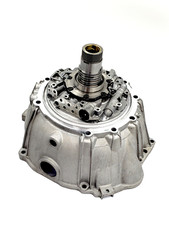
The 6L80 uses a variable displacement vane-style oil pump integral to the bellhousing. The pressure regulator valve lives in the pump cover, and its position is set by a pressure control solenoid in the TEHCM, which in turn positions the pump slide and therefore controls pump volume. GEARS notes that pressure regulator valve wear is common on these units even on applications that never had a converter problem, and that when a converter does come apart, the metal migrates straight back into the pump and the cooler.
There is also a documented GM leak path here that has nothing to do with wear. GM's PIP5175E covers 2013-2022 6L80 (RPO MYC) and 6L50 (MYB) units built at the Silao, Mexico plant with source code 2, for complaints of delayed engagement into Drive, shudder on launch, slipping in first through fourth, and a bump or clunk on the 1-2 shift, typically only once the unit is at operating temperature. The cause GM identifies is loose stator support to pump cover bolts, or a misaligned stator support to pump cover gasket, leaking internally. You find it by applying compressed air to the 1-2-3-4 clutch apply passage with the pan and control assemblies out, then watching for air escaping from the compensator feed passage in the pump cover.
Read the next part carefully, because GM is blunt about it: never check those bolts for looseness with a hand tool. They are torqued at the factory and are never to be loosened. Check them with your fingers, or a socket turned by your fingers, trying to rotate them counterclockwise. If any are loose, or the gasket is misaligned or leaking, the pump cover must be replaced — GM specifies cover kit 24248573 — and the 1-2-3-4 clutch plates get inspected and repaired as needed. The transmission adapts have to be reset afterward.
The bulletins that do not apply to your truck
Search GM converter shudder and you land on 18-NA-355, the fluid exchange to Mobil 1 Synthetic LV ATF HP for shake or shudder between 25 and 80 mph. It is a real bulletin with a real fix, and it is not for you. Its vehicle tables list transmission RPOs M5N, M5T, M5U and M5X — the 8L45 and 8L90 eight-speeds. The newer low-speed shudder bulletin 23-NA-072, which replaced PIP5608J, covers RPO M3V and M3W on Enclave, Traverse, Acadia, Blazer, XT5 and XT6. Also not a 6L80.
The 6L80 is RPO MYC and it takes DEXRON VI. Pouring the 8-speed fluid into it to chase P0741 is not a shortcut, it is a spec violation that buys you nothing.
A working order that saves time
- Verify fluid level at the specified temperature and look hard at the fluid. Metal or friction material in the pan changes the whole plan — you are now doing a contamination job, not a valve job.
- Road test watching TCC Slip Speed at steady throttle. Note whether lockup happens at all, and whether it falls back out as the unit heats.
- Compare line pressure command to actual. Check the MAF against the grams-per-second rule of thumb before you accept a low pressure command as normal.
- Drop the pan and vacuum test the TCC regulator valve in the lower valve body, using the .125" nut between the shuttle valve and the regulator valve.
- Vacuum test the TCC control valve in the pump body using the AFL valve method. This is the one people skip, and in the documented case it was the failure.
- Inspect the pump cover for loose stator support bolts and gasket alignment per PIP5175E, using fingers only.
- Repair the regulator valve bore with 104740-46K for moderate wear, or the oversized 104740-07K for severe. A failed TCC control valve bore means a pump body.
- Replace the converter and specify a billet or forged cover. Flush and flow-test the cooler if there was any debris — a loaded cooler will feed it right back into your new pump.
- Reset adapts, refill with DEXRON VI, and verify slip speed on a second road test before it leaves the shop.
Sonnax TCC Regulator Valve Kit 104740-46K
This is the drop-in repair for the valve-body side of a 6L80 TCC slip complaint. Lengthened spools ride in unworn casting, the longer outboard shuttle valve resists cocking in the bore, and no reaming is needed on moderately worn bores. Sonnax lists P0741 by name among the codes it addresses.
View the 104740-46K kit at Core Transmission Parts →Shop the part for this fix
Valve body kits, pump components, pressure regulator valve kits, solenoids and filter kits for the 6L80 — the parts this job actually calls for, in one place.
Shop 6L80 parts at Core Transmission Parts →Need parts for this job?
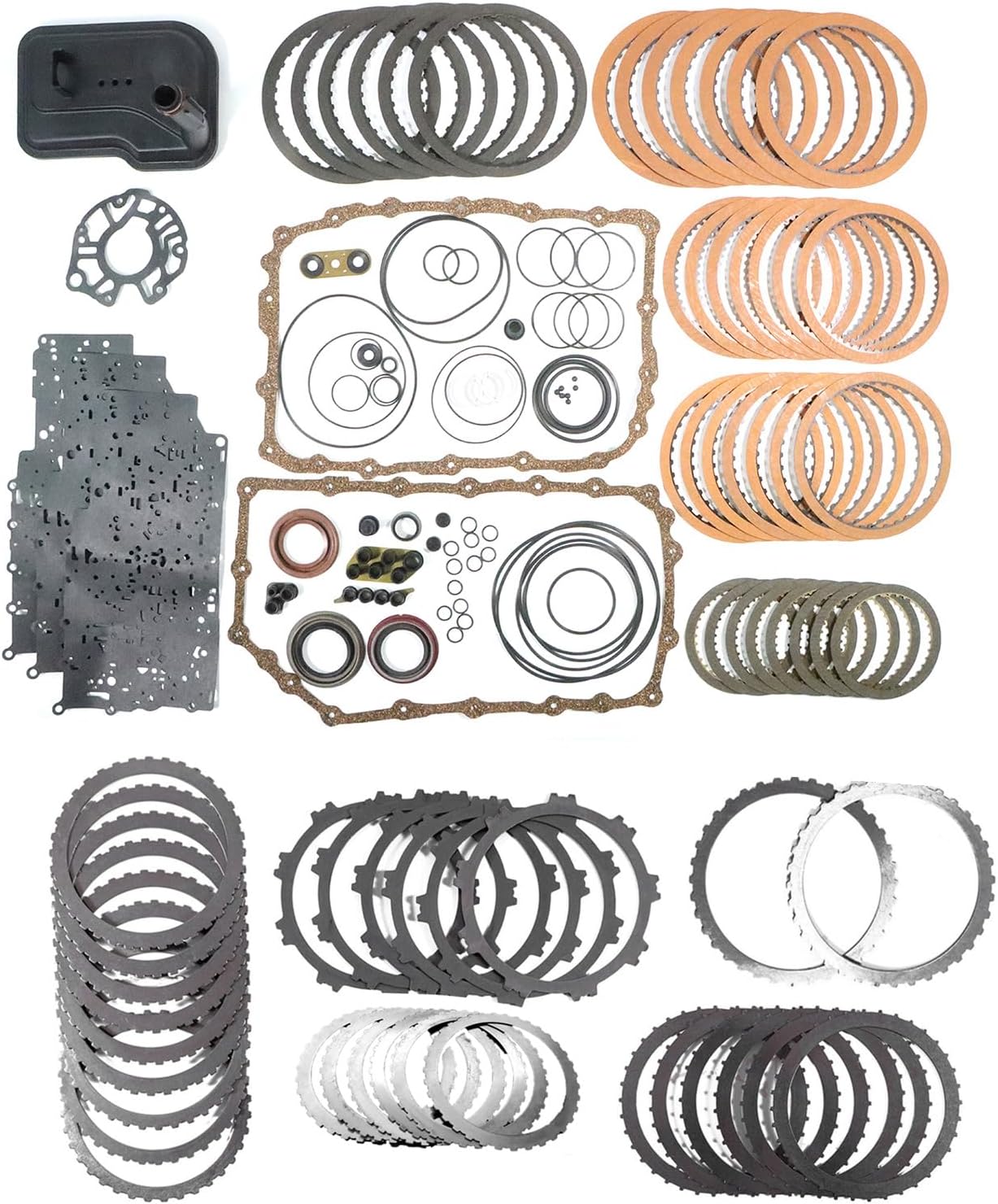
We stock 6L80 valve body components, pump repair parts, filter and pan kits and DEXRON VI. If you are going in for a converter clutch slip complaint, order the valve kit, the filter and the fluid together so the unit does not come back on you.
Browse the full 6L80 parts collection →
FAQ
Does P0741 on a 6L80 always mean the torque converter is bad?
No, but on this unit the converter is the single most likely part, and the valve body or pump is usually the reason it failed. Sonnax reports that 6L80 and 6L90 converters fail at a higher rate than normal, with the clutch piston and front cover crashing into each other and filling the transmission with metal. The mistake is installing a converter and stopping there. Vacuum test the TCC regulator valve and the TCC control valve in the pump before you close it up, or the new converter will go the same way.
Which valve causes 6L80 TCC slip, the regulator valve or the control valve?
Either one, and they live in different castings. The TCC regulator valve is in the lower valve body and sets the pressure going to the apply side of the clutch. The TCC control valve is in the pump body and is the gateway that routes apply and release oil. Sonnax lists no lockup, high TCC slip RPM, overheated converter, falling out of lockup when hot and codes P0218 and P0741 against the pump-side control valve specifically. You have to test both.
What vacuum reading tells me a 6L80 TCC valve bore is worn?
A perfect seal reads about 29.9 in-Hg at sea level, and no real bore ever gets there because design clearance always exists. In a documented 6L80 teardown published in GEARS, the valve body passed at 20 in-Hg while the TCC control valve in the pump failed at 13 in-Hg. That was the fault. Use the Sonnax vacuum test guide for the 6L45, 6L50, 6L80 and 6L90 for port locations and the minimum each circuit should hold, and test valves in the rest position unless the guide says otherwise.
Can I fix a worn 6L80 TCC control valve without replacing the pump?
Not currently. There is a drop-in kit for the TCC regulator valve in the valve body, Sonnax 104740-46K, and an oversized version, 104740-07K, for badly worn bores. The TCC control valve in the pump body is a different story. In the GEARS case study the tech noted that no oversized TCC control valve and reamer existed for it, so the only option was replacing the pump body. Test that valve early, because it changes the price of the job.
Does GM bulletin 18-NA-355 apply to a 6L80 with P0741?
No. That bulletin covers shake or shudder during light throttle acceleration between 25 and 80 mph, and its vehicle tables list transmission RPOs M5N, M5T, M5U and M5X, which are the 8L45 and 8L90 eight-speeds. The 6L80 is RPO MYC and takes DEXRON VI. The newer low-speed shudder bulletin 23-NA-072 covers RPO M3V and M3W on transverse applications. Neither one is a 6L80 fix.
Related guides
- 6L80 P0742: Torque Converter Clutch Stuck On
- 6L80 TCC Shudder: Diagnosis and Fix
- 6L80 Valve Body Problems and How to Test For Them
- 6L80 Slipping Under Load: What to Check
- 6L80 vs 6L90: What Actually Changes
Sources
- Sonnax, TCC Regulator Valve Kit 104740-46K — bore wear at the TCC regulator valve reduces TCC apply and converter charge pressure; symptom list includes code P0741 and high TCC slip RPM; a valve stuck in the release position gives no apply or continuous slip; kit design, contents and the oversized 104740-07K alternative. sonnax.com
- Sonnax, GM 6L45, 6L50, 6L80, 6L90 Vacuum Test Guide — the TCC control valve in the pump body is tied to no lockup, high TCC slip RPM, overheated converter, falling out of lockup hot and codes P0218/P0741; test the TCC control valve using the AFL valve (#209) flush to the port with the converter feed limit valve removed; test the TCC regulator apply valve with a .125" nut between the shuttle and regulator valves. sonnax.com
- Sonnax, Hydraulics Fundamentals Part IV: Converter Clutch Control (Bob Warnke) — two-path lockup converter operation; release oil through the center of the turbine shaft exiting between piston and cover; apply pressure rising as release oil is exhausted; the TC control valve as the gateway for apply and release oil. sonnax.com
- Sonnax, 6L80/6L90 Tech Advisory: Consider an Updated Converter in Your Next Rebuild — the JMBX full-size 300mm single-disc non-captive converter; a high percentage of units showing clutch piston and front cover crash damage; the typical presentation of P0741 with TCC slip percentage out of range; forged cover GM-CC-13 and forged piston GM-DA-17P. sonnax.com
- Sonnax, Vacuum Testing for Leakage — a perfect vacuum with no leakage points reads 29.9 in-Hg and varies with elevation; no circuit reaches it because design clearance always exists; vacuum loss is directly proportional to wear. sonnax.com
- ATRA / GEARS Magazine, "The Problem and the Cause" by Rob Faucett — documented 6L80 P0741 case: the valve body passed the vacuum test at 20 in-Hg while the TCC control valve in the pump failed at 13 in-Hg, requiring pump body replacement; TCC regulator valve located in the valve body and TCC control valve in the pump; the MAF grams-per-second check tied to line pressure command. gearsmagazine.com
- ATRA / GEARS Magazine, "Another Problem with the 6L80/90 Converter" — the OE cover with three welded mounting pads distorts during weld cool-down; dial indicator readings returned to zero at each pad but varied .009" to .014" between the pads, creating a leak between piston and cover at lockup; billet cover recommendation. gearsmagazine.com
- ATRA / GEARS Magazine, "Rise and Fall — 6L80/6L90 Pressure Issues" — variable displacement vane-style pump integral to the bellhousing; pressure regulator valve in the pump cover controlled by a pressure control solenoid in the TEHCM; regulator valve wear common even without converter failure; converter metal migrating into the pump and cooler. gearsmagazine.com
- General Motors, Preliminary Information PIP5175E — 6L80 (RPO MYC) and 6L50 (MYB) units built in Silao, Mexico with source code 2; delayed engagement, launch shudder, slipping in first through fourth and 1-2 clunk caused by loose stator support to pump cover bolts or a misaligned pump cover gasket; the compressed-air test at the 1-2-3-4 clutch passage watching the compensator feed passage; bolts checked by finger only, never with a hand tool; pump cover kit 24248573; adapts must be reset. Hosted in the NHTSA bulletin archive. static.nhtsa.gov (PDF)
- General Motors, Bulletin 18-NA-355 (May 2019) — shake and/or shudder during light throttle acceleration between 25 and 80 mph; the vehicle tables list transmission RPOs M5N, M5T, M5U and M5X (8L45 and 8L90), confirming the bulletin does not cover the 6L80. Hosted in the NHTSA bulletin archive. static.nhtsa.gov (PDF)
- General Motors, Bulletin 23-NA-072 (January 2024) — shudders or shakes at low speeds, replacing PIP5608J; covers 2019-2024 Enclave, Traverse, Acadia, Blazer, XT5 and XT6 with transmission RPO M3V/M3W, not the 6L80. Hosted in the NHTSA bulletin archive. static.nhtsa.gov (PDF)