P0842 reads out as Transmission Fluid Pressure Sensor/Switch A Circuit Low. In GM's own wording for the 6L80 and 6L90 it is TFP (Transmission Fluid Pressure) Switch 1 Circuit Low Voltage. The trouble with this code is that most generic definitions send people looking for a sensor they can unplug and swap. On these six-speeds there is no such part. The pressure switches are buried inside the control module. That single fact changes the whole diagnosis, so it is worth getting straight before you touch a wrench.
For more GM six-speed diagnostics, see our 6L80 valve body testing guide and the 6L80 limp mode causes write-up.
What TFP Switch 1 Actually Does
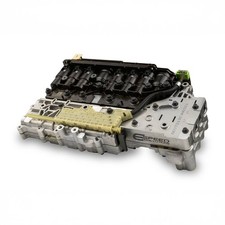
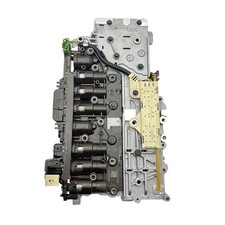
The 6L80 and 6L90 do not use bands. They shift clutch-to-clutch, and the computer relies on pressure feedback to time those apply and release events. To get that feedback, the TEHCM (transmission electro-hydraulic control module) carries a set of transmission fluid pressure switches, each hydraulically tied to one of the clutch regulator valves. Those switches do two jobs: they tell the computer which clutch circuit is pressurized, and they let the computer measure clutch timing by watching the switch change state against input-speed changes. As Sonnax describes it in its TEHCM pressure-switch tech article, that feedback is how the module monitors clutch wear over time and adapts shift timing accordingly.
Switch 1 — the "A" circuit in P0842 — is tied to the 3-5-Reverse clutch regulator valve. Here is the logic GM's strategy runs: when oil pressure is present at TFP Switch 1, the switch reads open, or HIGH. The TCM watches that state to confirm the position of the 3-5-R clutch regulator valve. P0842 sets when the module commands that circuit to release — the 3-5-R clutch pressure transitions from a HIGH-pressure state to a LOW-pressure state — but the switch signal stays LOW instead of following. In plain terms, the computer is being told the circuit is still exhausting or grounded when it should be reporting normally, so it flags the "A" switch circuit as low.
One detail worth holding onto: these switches are normally-closed. Current flows through them when they are not applied by fluid pressure. As fluid is routed to the switch, the film pushes down against the piston and metal disc and separates the contacts to stop current flow. If the film or seal has failed, debris gets into the switch area and the contacts can no longer make and break cleanly. That is the mechanism behind most of these codes, and it is entirely internal.
Symptoms You Will Actually See
P0842 rarely shows up as a quiet, drive-it-anyway code. Because the affected circuit feeds the shift-feedback strategy, the driver usually notices a change:
- Harsh or erratic shifts. Shift flares, rough or clunky engagements, or shifts that land at the wrong time as the adapt strategy loses a trusted input.
- Missing gears or wrong-gear starts. The 3-5-R circuit is involved in reverse and the 3-5 range, so a bad switch reading here can muddy those shifts specifically.
- Limp / failsafe mode. Once the TCM stops trusting the switch feedback it defaults to one fixed gear, drops torque converter lockup, and firms everything up to protect the clutches.
- Company codes. P0842 seldom travels alone. It is common to see it stacked with other TFP switch codes — P0843 (switch 1 high), P0872/P0873 and P0877/P0878 on the other switch circuits, or P0752 and P0989 — when more than one diaphragm is compromised.
That cluster of codes is a tell in itself. A single wiring fault usually sets one code. Multiple pressure-switch codes at once point at the module, because the diaphragms tend to fail as a group under the same heat and contamination.
The Real Root Cause: Cracked Diaphragms Inside the TEHCM
Here is the part the generic code definitions miss. On 2006-and-later GM (and BMW) units using the 6L45, 6L50, 6L80, 6L90 and Gen. 1 6T70/6T75, the pressure-switch diaphragms — thin laminated films that seal and protect the switch piston and contacts — have a documented failure rate. They waffle, delaminate, crack, or tear from constant heat cycling, vibration, high pressure, and debris. When the film splits or the retaining seal blows out, contaminants reach the piston and the switch can no longer report accurately. That is what throws P0842 and its sibling codes.
Contamination accelerates it. After any hard-part failure — a converter that sheds friction material, or a worn pressure regulator valve that lets metal migrate — that debris compromises the film sealing and cooks the switches faster. So when you find a P0842 on a high-mileage truck that also has a burnt-fluid or metal-in-the-pan story, treat the switch code as a downstream symptom and go find what fed it.
The other reason this matters commercially: GM does not sell the pressure switches separately. The factory answer is the complete control solenoid valve assembly / TEHCM (for many of these trucks, P/N 24256657), and a replacement module has to be programmed to the vehicle after the valve body goes back in. That is why so many shops used to write these codes straight to a several-hundred-dollar module. It does not have to end there anymore — more on that below.
Working a 6L80 pressure-switch code this week?
TEHCM pressure-switch repair kits, control solenoid valve assemblies, valve body parts, filters, and DEXRON VI — the parts to fix P0842 right, shipped from the USA.
Shop 6L80 parts →Diagnosis: Do It In This Order
1. Fluid Level and Condition First
Low or dirty fluid can set this code on its own by starving or contaminating the circuit. Before anything else, check level by the fluid-temperature procedure and look at the fluid. Dark, burnt-smelling fluid with metallic material in the pan tells you the switch code has company and you may be chasing a mechanical failure. Clean fluid at the right level lets you move on to the electronics with confidence.
2. Scan the Right PIDs
This is where a real scan tool earns its keep. Pull codes and note whether P0842 is alone or stacked with other TFP switch codes. Then watch live data:
- TFP Switch 1 state — it should change state cleanly as the 3-5-R clutch circuit goes from pressurized to released. Cycle ranges (or road test) and confirm it toggles when it should.
- Pressure control solenoid command and actual — a solenoid stuck on or off distorts the pressure the switch is reading.
- Line pressure PID alongside a mechanical gauge, so you know the number the module reports matches reality.
The decision point is simple. If TFP Switch 1 never changes state while the other switches do, or it stays LOW when the circuit should be releasing, the fault is inside the control solenoid valve assembly and TEHCM. If the harness connector is loose, corroded, or chafed, you have found a cheaper fix — but verify that before you condemn the module.
3. Line Pressure Test
The 6L80 has one line-pressure tap on the case for exactly this. GEARS Magazine's "Rise and Fall: 6L80/6L90 Pressure Issues" points out that line pressure here is set by the pressure regulator valve in the pump cover, positioned by the pressure control solenoid in the TEHCM, so a worn regulator valve can look exactly like a switch or solenoid fault. Bring the unit to operating temperature, connect a mechanical gauge, and read pressure at idle in gear and up through a wide-open-throttle event. A healthy unit runs roughly 45–80 psi at idle and climbs toward about 300 psi at wide-open throttle. Pressure is set by the regulator valve in the pump cover, commanded by the pressure control solenoid inside the TEHCM. No pressure rise usually means that solenoid is stuck in exhaust, or the regulator valve is worn. Because the clutch circuits load the pressure switches, low or erratic line pressure can drive the P0842 indirectly — which is why you verify pressure with a gauge before you spend money on the module.
The Fix
Once you have confirmed the switch itself is the problem and not fluid, wiring, or line pressure, you have two paths.
Path A: Replace the TEHCM (the OE route)
The factory repair is the complete control solenoid valve assembly / TEHCM. You drop the pan, pull the valve body, and swap the module, then it must be programmed to the vehicle before the truck will run right. This is the cleanest fix if the module has other problems, but it is the most expensive, and matching the correct part number by year and application matters — these are not blindly interchangeable across model years.
Path B: Salvage the TEHCM with a pressure-switch kit
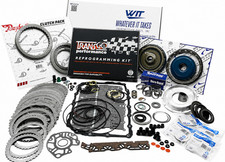
Because the failure is almost always just the diaphragm and seal, the aftermarket built kits to repair exactly that and save the module. Sonnax offers a pressure switch rebuild kit (124740-70K) and a direct-replacement plastic piston (124740-72K) that salvage the TEHCM on the 6L45, 6L50, 6L80, 6L90 and Gen. 1 6T70/6T75. TransGo's PSR-5 kit covers the same families with replacement diaphragms and seals. Sonnax states that installing the rebuild kit "restores normal switch operation, eliminating codes and providing renewed shift performance in all ranges." For a shop that already has the pan down, this turns a module-replacement bill into a bench repair.
Either way, do the repair with clean components and confirm the root cause is addressed. If contamination from a converter or pump failure cracked the diaphragms, replacing switches without fixing the source just cooks the next set.
Fluid and Fill
Refill with DEXRON VI only — no substitutes on these units. GM still lists DEXRON VI for the 6L family: its 2025 TechLink transmission capacities chart shows the 6L90 (RPO MYD) in the Low Cab Forward at 5.7 L (6.0 qt) for a fluid change, on DEXRON VI. A pan drop and filter takes roughly 6 to 7 quarts. A dry rebuild with the converter and cooler filled runs about 11 to 12 quarts, with published capacities ranging from about 10 quarts up to 12.6 quarts depending on the specific 6L80/6L90 variant. Set the final level by the fluid-temperature check, not by a fixed quart count. Getting the level right is not optional here: level affects line pressure, and pressure is what these switches are reading.
Sources
- Sonnax — "Under Pressure: Shift Quality & Pressure Switches in TEHCM Applications," October 27, 2014. Backs the TEHCM pressure switches providing gear-selection and clutch-timing feedback, the switch tied to each clutch regulator valve, the normally-closed operation with the film pushing against the piston and metal disc to break the contacts, the waffled/delaminated film failure mode from high pressure and debris, the DTCs and limp mode that result, and the film-and-seal repair kits that salvage the TEHCM instead of replacing it. sonnax.com
- Sonnax — "Pressure Switch Rebuild Kit 124740-70K" and "Pressure Switch Plastic Piston 124740-72K" part pages. Back the diaphragm/switch failure inside the TEHCM on the 6L45, 6L50, 6L80, 6L90 and Gen. 1 6T70/6T75, and that the rebuild kit restores normal switch operation, eliminates the codes, and renews shift performance in all ranges without buying a new TEHCM. sonnax.com
- Gears Magazine (ATRA) — "Rise and Fall: 6L80/6L90 Pressure Issues." Backs pressure in the 6L series being controlled by a pressure regulator valve in the pump cover, the pressure control solenoid in the TEHCM setting the regulator position, and pressure-regulator-valve wear and torque-converter metal contamination as common root causes of pressure problems that also drive valve and solenoid faults. gearsmagazine.com
- TransGo — "PSR-5 GM 6L80, 6T70 Pressure Switch Repair Kit" product page. Backs the aftermarket diaphragm-and-seal repair for the TFP switches inside the TEHCM on 2006-on 6L45/6L50/6L80/6L90 and Gen. 1 6T70/6T75, the rupture/split diaphragm and blown-seal failure, and the symptoms it corrects (shift flares, rough shifts, missing gears, TFP switch codes, failsafe mode). transgo.com
- GM TechLink — "2025 Transmission Capacities & Fluids (U.S. and Canada only)," revision 05-2025 A. Backs GM's current fluid specification of DEXRON VI for the 6L family and the listed 6L90 (RPO MYD) Low Cab Forward fluid-change capacity of 5.7 L (6.0 qt). gm-techlink.com (PDF)
FAQ
Is P0842 on a 6L80 the sensor, the wiring, or the TEHCM?
On the 6L80/6L90 the transmission fluid pressure (TFP) switches are not external screw-in sensors. They live inside the TEHCM, the control-solenoid-and-module assembly bolted to the valve body. Confirm the fluid level and condition and the harness connector first, because low or dirty fluid and a bad connection can set the code. But the most common hard failure is the pressure switch diaphragm itself cracking or delaminating inside the TEHCM, which is why so many P0842 jobs end at the module, not at a plug-in part.
Can I drive a 6L80 with a P0842 code?
You can move the truck, but expect it to drop into failsafe (limp) once the TCM stops trusting the pressure-switch feedback. That means one fixed gear, no torque converter lockup, and firm shifts. It is fine to limp it home or to the shop, but sustained driving in failsafe with the converter unlocked builds heat and can push a marginal unit further, so get it diagnosed before you tow or run it hard.
What scan data confirms a 6L80 P0842 pressure switch fault?
Watch the TFP Switch 1 state PID along with the pressure control solenoid and line pressure PIDs on a road test or in the bay while cycling ranges. Switch 1 should change state cleanly as the 3-5-Reverse clutch circuit goes from pressurized to released. If the switch stays LOW when the circuit should be releasing, or never changes state while the other switches do, the fault is in the control solenoid valve assembly and TEHCM. Back it up with an actual gauge on the case line-pressure tap.
What line pressure should a healthy 6L80 make?
Roughly 45 to 80 psi at idle in gear, rising toward about 300 psi at wide-open throttle. The pressure regulator valve in the pump cover is commanded by the pressure control solenoid inside the TEHCM. Verify it with a mechanical gauge on the case line-pressure tap before you condemn parts, because low or erratic pressure changes how the clutch circuits load the switches and can drive the code.
What fluid does the 6L80 take and how much?
DEXRON VI only. A pan drop and filter takes roughly 6 to 7 quarts; a dry rebuild with the converter and cooler filled runs about 11 to 12 quarts, with published capacities from about 10 to 12.6 quarts depending on the model. Always set the final level by the fluid-temperature check procedure rather than a fixed quart count, because level affects pressure and shift behavior.