A 6L90 that won't move in any gear, or won't move in one direction while the other works fine, has a short list of documented causes -- and almost none of them involve a worn-out transmission. The unit is usually mechanically sound. The fault is almost always a specific valve, check ball, spacer plate, or control module condition that GM, and the rebuilders who see these units on the bench every day, have already written up. The job is matching your symptom to the right bucket before you pull a pan.
Split the diagnosis before you touch anything
Ask two questions first: did the no-movement condition follow a repair, a reflash, or a TEHCM (transmission control module) replacement, and does it affect forward only, reverse only, or both? The answers put you on one of three tracks -- electrical/software, valve body or pump, or a post-repair assembly error -- and each track has a distinct, documented signature rather than a vague "it's the transmission" diagnosis.
Fluid level and the shift lock: rule them out in five minutes
Before you suspect the module, make sure the complaint is real. A van whose lever will not leave Park is not a no-movement transmission. Per GM's 2012 Chevrolet Express owner manual, the shift lock control system keeps the lever in P unless the ignition is in ON/RUN or ACC/ACCESSORY and the brake pedal is applied, and it is always functional except with a dead or low-voltage battery, which GM puts at less than 9 V. Check the brake switch and battery voltage first.
Then check the level the way GM writes it, because a 6L90 that has lost fluid through a leak will drop pressure and stop moving. The Express manual calls for DEXRON-VI only. Run the lever through every range with about a three-second pause in each, idle at least two minutes, and read the lower level on both sides of the stick. The HOT range is 71-93°C (160-200°F). The manual warns that a cold check is a reference only, and that the high-efficiency air-to-oil cooler may keep fluid below the hot check temperature in light driving. That is why GM says an accurate check needs the transmission temperature measured, so read TFT on a scan tool instead of guessing. If the van was just driven loaded, in heat, or towing, GM says wait at least 30 minutes with the engine off before checking.
Electrical and software causes come first -- they're free to check
Before anything mechanical, confirm the TEHCM's part number and program file match the vehicle's VIN. Sonnax's technical write-up on GM 6L45/6L50/6L80/6L90 no-movement conditions is explicit that an incorrect part number or an incorrectly programmed TEHCM can produce a no-movement or no-upshift condition on its own, with no hardware fault involved at all.
If the no-move condition appeared immediately after a module reflash or a GM relearn procedure, it may be temporary rather than a fault. Sonnax's documented reset is to remove the scan tool, turn the key off, open and close the driver door, and then wait 15 to 20 minutes before trying again -- during OE programming or the relearn process, a transient no-move condition can occur and then clear on its own.
One specific electrical failure to rule out with a pressure gauge: a TEHCM line pressure solenoid stuck in exhaust mode holds line pressure flat at roughly 60 to 68 psi with no rise regardless of throttle or RPM. That's a solenoid or TEHCM problem, not a pump or valve body problem, and chasing it mechanically wastes time.
GM TSB 23-NA-142: the documented no-forward fault on Express and Savana vans
If the complaint is specifically "won't move forward out of Park or Reverse, but reverse works fine," check this bulletin before anything else. GM's Technical Service Bulletin 23-NA-142 (issued September 2023) covers 2017-2023 Chevrolet Express and GMC Savana vans built with the 6L90 (RPO MYD) and describes exactly this symptom: the vehicle won't move forward after shifting into Drive from Park or Reverse, while reverse continues to work normally. GM notes that once the vehicle is moving in Drive, there's no further concern until the next shift cycle -- it's a re-engagement fault, not a continuous slip.
GM's stated cause is a control valve body spacer plate whose check ball seat doesn't meet specification for chamfer across its full circumference, combined with a coin depth that's out of spec. That combination leaves burrs, dents, or dings at the seat, which wears the plastic number 1 check ball prematurely -- and because that check ball carries a high duty cycle, it can wear down, stick, or pass through the spacer plate entirely. GM's bulletin even includes a visual comparison of a worn check ball against a good one to confirm the diameter difference on teardown. The bulletin notes that school buses, which shift to Park at nearly every stop, tend to show the earliest signs of this wear pattern -- a useful tell if you're seeing the fault on a fleet vehicle with a high Park-cycle count.
The fix in the bulletin is a direct parts swap: replace the spacer plate and check ball together, GM part number 24272467. There's no relearn trick or valve body rebuild involved -- it's a worn wear-item replacement, not a design change. If you're seeing this symptom on a 6L90 outside the Express/Savana population, the same spacer plate and check ball wear mechanism is still worth checking, since the part and the failure mode aren't exclusive to those vans.
Other documented valve body causes of no movement
Sonnax's broader write-up on 6L45/6L50/6L80/6L90 no-movement conditions lists several additional valve body faults beyond the TSB above, each with its own signature:
- Wrong separator plate: a Type 2 separator plate installed in a Type 1 valve body causes no forward, while a Type 1 plate (GM part 24245720) installed in a Type 2 body causes no 3rd gear and no reverse. The correct Type 1 plate uses seven check balls -- if the count is wrong, the plate is wrong.
- Clutch select valves installed backward: these valves install with their springs outboard. Reversed installation, or a valve stuck in its bore, can cause loss of forward, reverse, or both depending on which valve is affected.
- Missing TEHCM filter gasket: left out during reassembly, this causes a no-movement condition typically paired with low or no line pressure. It's rare, but it's a one-part fix if found.
- Stuck 1-2-3-4 or 3-5-Reverse clutch regulator valve: a stuck 1-2-3-4 valve causes no forward; a stuck 3-5-R valve can cause no reverse. Both can present as an intermittent fault depending on how the valve is hanging up.
- Shrunken or misplaced check balls: a shrunken or misplaced number 1 check ball causes no forward; a misplaced number 5 check ball causes no reverse. Like the TSB above, this is a wear-item problem, not a casting or design defect.
Pump-side causes: pressure that never shows up
When the valve body checks out but line pressure still won't build, look at the pump itself. Sonnax documents three specific pump faults that produce no movement:
- A TCC control valve stuck against its spring blocks converter charge (apply) oil entirely, which is usually enough on its own to cause no movement. This can be air-checked with the valve body removed.
- A missing pressure regulator boost valve retaining pin allows idle pressure to drop below roughly 30 psi. The unit may still move, but not normally, and pressure will read low across every gear.
- A missing pump pressure relief ball and spring causes no movement with no line pressure at all. Sonnax specifically flags that this one occasionally shows up in rebuilt pumps -- a reminder to verify every spring and ball is accounted for before a reassembled pump goes back in the case.
Post-rebuild no-movement: assembly details, not part failures
If the no-movement condition developed shortly after a rebuild rather than being present from the start, the cause is almost always how something was assembled, not a defective part. Sonnax's case file on 6L80/6L90 no-movement after repair documents two real examples. In the first, a unit worked briefly after reassembly, then lost forward, and a few minutes later lost reverse as well -- with the Service Fast Learn (SFL) relearn process aborting partway through on both occasions. Teardown found the 1-2-3-4 clutch retaining ring had popped out of its groove: the groove has one unmachined lug that the ring's open ends are supposed to straddle to keep the ring from rotating, and a technician who misses that lug can seat the ring just well enough to pass a visual check before a short test drive pops it loose. The 3-5-Reverse retaining ring has the same kind of lug and the same risk.
In the second case, the unit showed no engagement in forward or reverse at all, and SFL failed outright. Teardown revealed the input carrier had been installed upside down -- its splines never engaged the 1-2-3-4 housing splines, even though the carrier still dropped over the sun gear, seated normally, and didn't change endplay. Nothing about the assembly felt wrong by hand; it only showed up on teardown. Both cases point to the same lesson for anyone diagnosing a no-movement complaint right after a rebuild: check orientation and ring seating before you suspect a part is bad.
A working diagnostic order
- Pull codes and confirm the TEHCM part number and program file match the VIN. If a reflash or relearn just happened, run the key-cycle reset and wait 15-20 minutes before retesting.
- Run a line pressure test in Park, Neutral, Drive, and Reverse. Pressure stuck flat at 60-68 psi points at the TEHCM line pressure solenoid. Pressure under 30 psi at idle points at the pump boost valve pin. Zero pressure in every position points at the pump relief ball and spring.
- If the complaint is specifically no-forward with working reverse, check the spacer plate and number 1 check ball against GM TSB 23-NA-142 before anything else -- especially on a 2017-2023 Express or Savana.
- If pressure is present but the vehicle still won't move, check the separator plate type and check ball count against the Type 1/Type 2 spec, and verify clutch select valves are installed with springs outboard.
- If the fault appeared after a rebuild, pull the valve body and inspect the 1-2-3-4 and 3-5-R clutch retaining rings for proper seating against their unmachined lugs, and confirm the input carrier orientation.
- Refill with DEXRON VI only, run a full relearn, and road test before calling the repair complete.
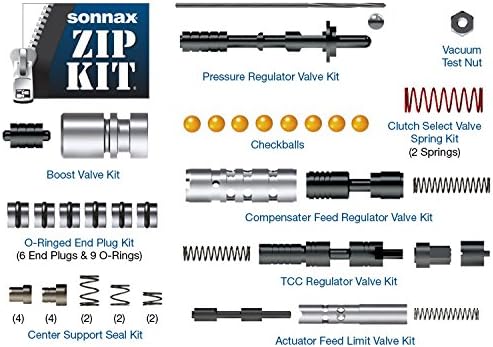
6L90 Zip Kit Valve Body Repair Kit (2006-2018)
Covers the check ball, spring, and separator plate wear points behind most of the no-movement faults above -- the right call when a line pressure test points at the valve body rather than the pump or TEHCM.
View the zip kit at Core Transmission Parts →Shop the part for this fix
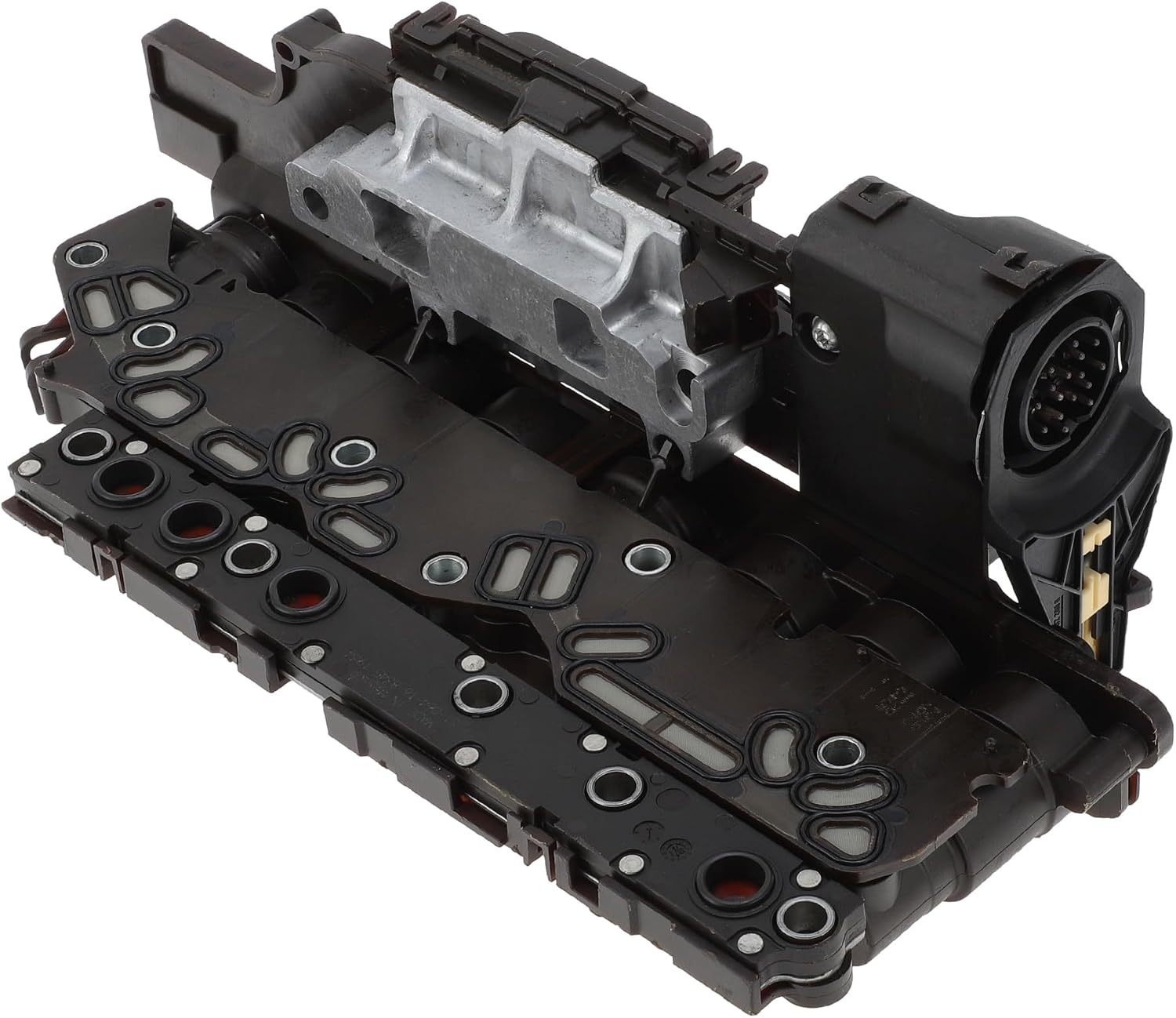
Valve body repair kits, complete valve bodies with TCM, and pump assemblies for the 6L90 — the parts a no-movement diagnosis actually points to.
Shop 6L90 parts at Core Transmission Parts →Need parts for this job?
We stock 6L90 valve bodies, zip kits, pumps, and DEXRON VI. Match the part to what the line pressure test actually shows -- a spacer plate fault doesn't get fixed by a pump, and a pump problem doesn't get fixed by a valve body swap.
Browse the full 6L90 parts collection →
FAQ
What is the most common documented cause of no movement in a 6L90?
On 2017-2023 Chevrolet Express and GMC Savana vans with the 6L90 (RPO MYD), GM's Technical Service Bulletin 23-NA-142 documents a no-forward-movement condition caused by a valve body spacer plate whose check ball seat is out of spec on chamfer and coin depth. That lets the number 1 check ball wear prematurely and stick or pass through the plate, so the vehicle won't move forward out of Park or Reverse even though reverse itself still works. GM's fix is to replace the spacer plate and check ball as a unit, part number 24272467. The condition is not unique to GM service vans -- any 6L90 that lost forward only, with reverse unaffected, should have this checked before anything else is suspected.
How do I tell an electrical no-movement fault from a mechanical one on a 6L90?
Pull codes and check for a recent TEHCM replacement or reflash first -- a TEHCM with the wrong part number or program file for the VIN, or a no-move condition that started right after service, points at software before hardware. Sonnax also documents that a temporary no-move condition can follow normal OE programming or a relearn; their suggested reset is to remove the scan tool, cycle the key off, open and close the driver door, then wait 15 to 20 minutes before retrying. If there's no recent service history and the condition is constant, move to a line pressure test in Park, Neutral, Drive, and Reverse rather than chasing codes further.
What does a line pressure test tell me about a 6L90 no-movement complaint?
Line pressure that stays normal in Park but drops to zero once you select a gear points at a valve body or clutch-feed fault -- a stuck clutch select valve, a misplaced or worn check ball, or a stuck 1-2-3-4 or 3-5-Reverse clutch regulator valve. Line pressure that never rises above roughly 60 to 68 psi regardless of gear or throttle usually means the TEHCM line pressure solenoid is stuck in exhaust mode. Pressure below 30 psi at idle in every gear can mean a missing pump pressure regulator boost valve retaining pin, and no line pressure at all in any position can mean a missing pump pressure relief ball and spring, which Sonnax notes shows up occasionally in rebuilt pumps.
Why would a 6L90 lose movement right after a rebuild but not immediately?
Sonnax has documented two specific rebuild-related cases. In one, the 1-2-3-4 clutch retaining ring was not seated past an unmachined lug in its groove that keeps the ring from rotating -- the transmission worked for a short test drive, then lost forward, then lost reverse a few minutes later, and the Service Fast Learn relearn process aborted partway through both times. In the other, the input carrier was installed upside down; its splines never engaged the 1-2-3-4 housing splines even though it dropped into place and felt normal on assembly, producing no engagement in forward or reverse. Both point to the same lesson: a no-movement fault that develops gradually right after a rebuild is almost always an assembly detail, not a part failure.
What fluid and capacity does a 6L90 use?
The 6L90 requires DEXRON VI automatic transmission fluid, the service-fill specification GM introduced for its six-speed clutch-to-clutch transmissions because the older DEXRON III fluids could not meet the friction durability and oxidation resistance these units need. A pan-and-filter service runs roughly 6 to 6.5 quarts depending on the sump, while a full refill after a complete overhaul runs roughly 10 to 13 quarts depending on the vehicle and cooler circuit. Always confirm the exact level using the fill procedure for the specific application rather than topping off to a generic quart figure.
Related guides
- 6L90 No Reverse: Diagnosis and Fix
- 6L90 Limp Mode: Causes, Codes and the Real Fix
- 6L90 Valve Body Problems: Symptoms, How to Test, and Replacement
- 6L90 Common Problems and Fixes: Six Failures That Actually Show Up
- 6L90 Delayed Engagement: Causes and the Real Fix
Sources
- General Motors, Technical Service Bulletin 23-NA-142 (September 2023) — "No Forward Gear When Shifting from Park to Drive and/or Reverse to Drive" on 2017-2023 Chevrolet Express and GMC Savana with the 6L90 (RPO MYD); cause traced to a control valve body spacer plate out of spec on check ball seat chamfer and coin depth, wearing the number 1 check ball; repair is replacement of the spacer plate and check ball, GM part 24272467. Hosted in the NHTSA technical service bulletin archive. static.nhtsa.gov (PDF)
- Sonnax, "GM 6L45/50, 6L80/90 No-Movement Conditions: Analysis and Repair Tips" — documented no-movement causes across TEHCM programming errors, line pressure solenoid faults, pump TCC control valve and boost/relief hardware, valve body separator plate mismatches, clutch select valve installation, and check ball wear. sonnax.com
- Sonnax, "6L80/6L90 'No Movement' After Repair" (September 23, 2014) — two documented post-rebuild case studies: a 1-2-3-4 clutch retaining ring popped out of its groove after missing an unmachined lug during assembly, and an input carrier installed upside down with splines that never engaged the housing. sonnax.com
- SAE International, "General Motors DEXRON-VI Global Service-Fill Specification" (2006-01-3242) — GM's factory-fill ATF requirements for six-speed clutch-to-clutch transmissions, including the 6L90, exceeded what DEXRON III service fluids could provide, driving the DEXRON VI specification for friction durability, viscosity stability, and oxidation resistance. saemobilus.sae.org
- General Motors, 2012 Chevrolet Express Owner Manual — the shift lock control system conditions and its less-than-9 V low-battery exception, DEXRON-VI as the specified fluid, the 6-speed fluid check procedure (three-second pause in each range, two-minute idle, read the lower level), the 71-93°C (160-200°F) HOT range, the 30-minute wait after hard use, and the air-to-oil cooler note on reaching check temperature. GM: 2012 Express owner manual (PDF)