A 6L90 in limp mode is not a transmission that quit. It is a transmission that was told to stop trying. The control module inside the pan made a decision, and everything the customer is describing — no shifts, a hard bang into gear, no converter lockup, speedometer fine, engine fine — is the module executing that decision exactly as GM wrote it.
That matters because failsafe is not a symptom you chase. It is a response, and the response is identical no matter what triggered it. The job is never "why is it in limp mode," it is "which of the handful of things that trigger failsafe is the one on this truck" — and the codes plus a pressure gauge will answer that in about an hour if you go in the right order.
The short version: when the 6L90 module sets a fault it cannot work around, ATRA's GM update material states it does three things — commands maximum line pressure, turns off all solenoids resulting in a third or sixth gear default, and freezes the shift adapts. Reverse usually survives. Everything else you are looking at is downstream of those three actions. Pull the codes, look at freeze frame, then put a gauge on the passenger-side mainline port before you touch a part.

What Failsafe Actually Does on a 6L90
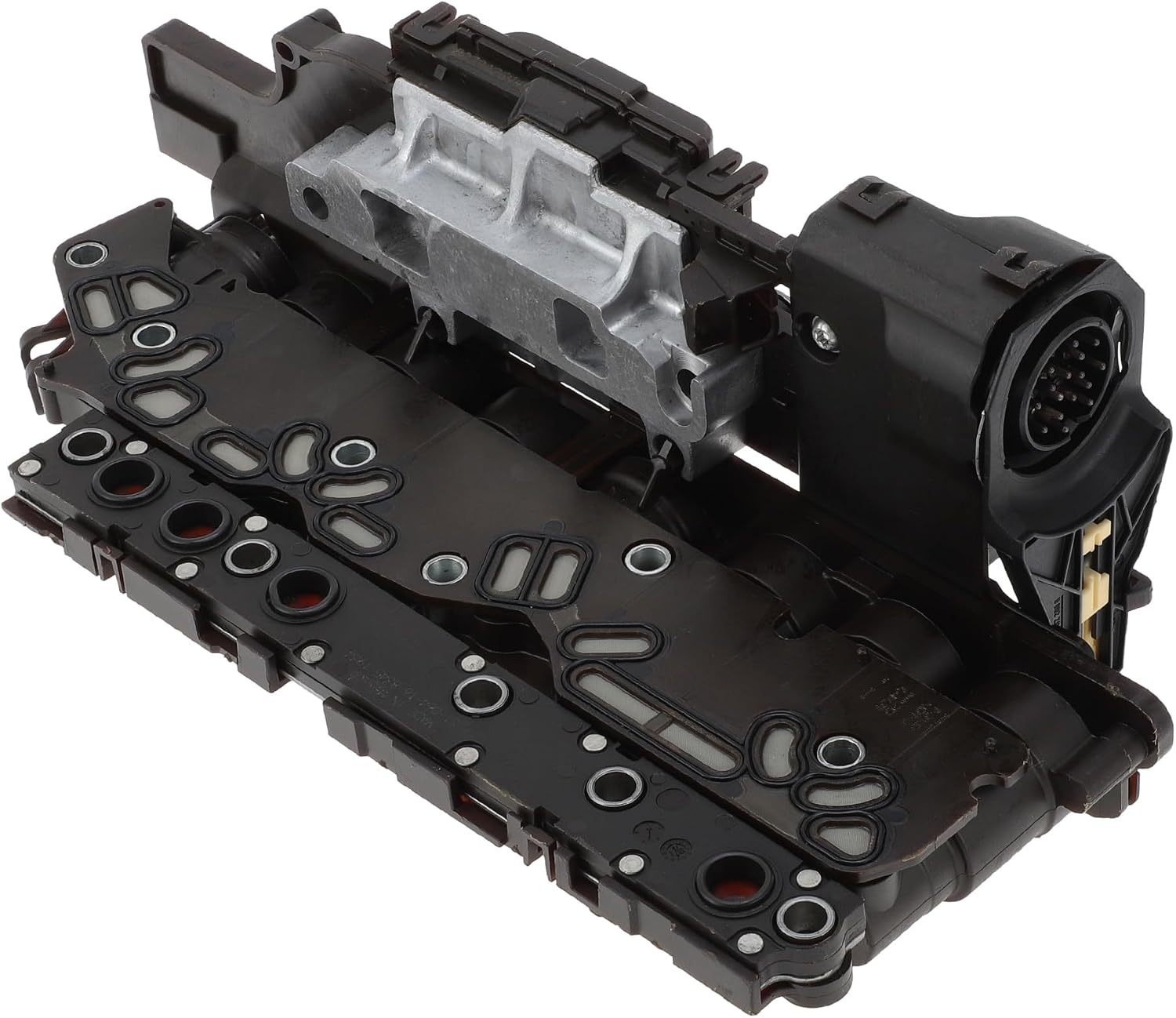
The 6L90 (RPO MYD) carries its transmission control module inside the pan, bolted to the valve body as the TEHCM. All eight solenoids, four pressure switches and the module itself are one over-molded assembly. When that module hits a fault it cannot compensate for, it does not shut down — it de-energizes the solenoid stack and lets the hydraulics fall where they fall.
With every solenoid off, the clutch select and shift logic land the unit in third or sixth gear, per ATRA's 6L50/6L80/6L90 update material. At the same time the module commands maximum line pressure so whatever clutches are applied cannot slip, and freezes the adaptive values so it does not learn bad numbers while running blind. That is why the truck still moves, still backs up, and hits like a hammer doing it.
Two things follow. Maximum line pressure with the converter unlocked is a heat generator, so a customer who drives it that way for a week may hand you a burnt unit on top of the original fault. And because the adapts froze at the moment of the fault, every one of these repairs ends with an adaptive reset and a relearn drive.
Cause 1: The Internal Mode Switch (P1825, P182E, P1915)
This is the most underdiagnosed trigger on the unit, because the PRNDL display usually goes blank or stops tracking the shifter and the whole thing reads as electrical. These are mode-switch codes, and ATRA lists their set conditions plainly.
- P1825 sets on a range logic mismatch — IMS range A low while in D6 for more than 8 seconds, range C high in D6 for more than 8 seconds, ranges A, B and P low in Park for more than 1 second, the park/neutral switch indicating P/N while the IMS reports another range, or an invalid IMS range for more than 3.25 seconds with vehicle speed above 10 MPH.
- P1915 sets when engine speed is above 525 RPM for more than 3.25 seconds, input shaft speed is above 250 RPM, output speed is below 90 RPM, and the IMS voltage sequence does not follow the designed state.
If any of the three set, the module goes straight to failsafe. Before you order a switch, monitor the switch states on the scan tool against the published logic table — Park reads L/H/H/L, Reverse L/L/H/H, Neutral H/L/H/L, D6 H/L/L/H, D4 L/L/L/L. If the states track the shifter correctly, ATRA points you at the shift cable, the shift lever, and the rooster comb and detent assembly before the switch itself. A stretched cable that parks the detent between positions produces an invalid range just as convincingly as a dead switch.
Cause 2: Pressure Switch Failure Inside the TEHCM
The TEHCM holds four pressure switches, and Sonnax notes they do double duty: they report gear selection and they give the computer clutch timing feedback, each one hydraulically tied to a clutch and its regulator valve. They are normally-closed switches that pass current when unpressurized; oil pressure pushes the film down against the piston and metal disc, separating the contacts.
When the films fail — Sonnax describes them coming out of failed units waffled or delaminated from high pressure and debris — the seal is gone, contamination reaches the piston and contacts, and the module loses its clutch timing feedback. The codes that fall out of that are P0752, P0872, P0877 and P0989, and the vehicle may go into limp mode.
The symptom pattern is distinctive: shift timing gets erratic before it goes to failsafe, and it often comes and goes with temperature. A single pressure switch code on an otherwise clean unit is not a reason to buy a whole transmission.
Cause 3: Ratio and Solenoid Performance Codes (P0751, P0776)
These are the codes where the module caught the transmission not doing what it was told. Both have published set conditions you can work from.
P0751 (SS1 performance, stuck off) sets when first gear is commanded but the actual ratio indicates fourth, or slip exceeds 35 RPM for 0.5 to 1.05 seconds — and only when P0716, P0717, P0722, P0723, P1915 and P1825 are all clear. ATRA's cause list for it is mostly debris and hardware, not electronics: debris in the pan, cracks in the filter, debris or checkball problems at the separator plate, a clutch select valve #2 bore plug of the wrong size (the spec is 11.502 mm / 0.453 in, plus or minus 0.002 in), a sticking CBR1/C456 regulator valve, and missing calibration updates.
P0776 is the one that catches cracked drums. Per ATRA bulletin 2012-54, it sets when the module detects an incorrect oncoming clutch gear ratio while the 3-5-R clutch is commanded to apply for 2.25 seconds and input shaft speed is more than 60 to 100 RPM off the anticipated value — with ignition voltage between 8.6 and 18.0 volts, fluid temperature at or above 32°F, driven wheel speed at 80 RPM or more, side-to-side wheel speed difference at 150 RPM or less for six seconds, PC solenoid 2 commanded on, and third (1.532:1) or fifth (0.852:1) achieved. When it sets, the module commands maximum line pressure, inhibits TCC, and freezes adapts — failsafe by another name.
The cause behind a large share of those is a cracked 1-2-3-4 / 3-5-Reverse clutch housing. The cracks sit in the 3-5-Reverse area of the drum and change severity with temperature and input torque, which is exactly why the complaint comes and goes. Inspect the drum visually and with a soapy water air test. The updated housing carries a DOT MATRIX stamping; no stamping means you inspect, because that drum predates the supplier change. And when you replace one, verify the support bearing is in the new housing — some early GM replacements shipped without it, and shift feel suffers if it is missing.
Cause 4: Line Pressure That Is Not What the Module Thinks
Failsafe is frequently the module's reaction to hydraulics it can no longer control. Sonnax's 6L45/50, 6L80/90 no-movement analysis gives two readings worth memorizing:
- Stuck at roughly 60 to 68 psi with no rise as RPM comes up — the line pressure solenoid is stuck in exhaust mode.
- Below 30 psi at idle — a missing boost valve roll pin in the pressure regulator. A missing relief ball and spring gives you no movement and no line pressure at all.
Sonnax also flags assembly faults that read like a dead transmission. A Type 2 separator plate on a Type 1 body (plate 24245720, seven checkballs) gives no forward, while a Type 1 plate on a Type 2 body gives no third and no reverse. The number 1 checkball out of place is no forward; number 5 is no reverse. A stuck 1-2-3-4 clutch regulator valve is no forward, a stuck 3-5-R regulator is no reverse plus shift complaints, and omitting the TEHCM filter gasket gives no movement with no or low line pressure. If the unit went to failsafe right after a rebuild or a valve body swap, start here rather than with the module — and verify that the TEHCM part number and program file match the VIN, because a mismatch on its own can leave the unit unable to move.
Cause 5: Heat, the Cooler Circuit and the Thermal Bypass Valve
GM bulletin 22-NA-182 covers 6L80, 6L90, 8L90, 10L80, 10L90 and 10L1000 vehicles complaining of harsh shifting, shudder, surge, stall, neutral/flare, overheating or above-normal fluid temperature, and it names a cause that is easy to miss on low-mileage trucks: a twisted cooler line. Disconnect it at the auxiliary cooler and untwist it, replace it if it stays misshaped, then check and correct the fluid level.
If the line is straight, the bulletin points at the thermal bypass valve. On the six-speeds, including the 6L90, the TBV is external to the transmission and opens at 158°F (70°C). A TBV that never opens means the cooler never sees full flow, and a unit that runs hot long enough will eventually hand you a failsafe event with burnt fluid behind it. Gears Magazine's rebuild-side list of overheat contributors is the same short one: wrong fluid level, incompatible fluid, contaminated fluid, no TCC apply or excessive TCC slip, and a sticking external cooler bypass valve. All of it is checkable before teardown.
The Diagnostic Order That Works
- Read and record before you clear. Every stored code plus the freeze frame — input speed, output speed, fluid temperature, commanded gear, commanded line pressure. Clearing first throws away the only picture of the moment it dropped out.
- Check the fluid, honestly. Level at the check plug with the fluid at the correct temperature, and look at what comes out. Clutch material or varnish changes the whole plan.
- Sort the codes by priority. Mode switch codes (P1825, P182E, P1915) and speed sensor codes (P0716, P0717, P0722, P0723) outrank everything, because most ratio and solenoid codes will not even set while those are active.
- Put a gauge on it. Gears Magazine's procedure: connect a pressure gauge to the passenger-side mainline port and compare the commanded EPC value on the scan tool to what the gauge reads. Sweep EPC solenoid amperage up and down with the bi-directional controls, engine running, and watch for a real hydraulic response.
- Force failsafe deliberately. If that reads low, pull the TCM fuse — it kills module power and puts the EPC solenoid in high-pressure demand. If pressure now rises with engine speed, the pump and regulator are fine and the problem is on the control side. If it still does not rise, it is the pump, the pressure regulator, or the EPC solenoid.
- Air test the drum. Any hint of P0776 or an intermittent 3rd/5th/Reverse slip earns a soapy water air test on the 1-2-3-4 / 3-5-Reverse housing and a look for the DOT MATRIX stamp.
- Condemn the TEHCM last. Multiple simultaneous solenoid and pressure sensor codes on a unit with good pressure response, clean fluid and a verified harness is the pattern that points at the module — not a single code on a truck you have not tested.
Shop the part for this fix: 6L90 TEHCM (OEM 24275873)
If the pressure test came back clean, the harness and case connector check out, and you are still holding a stack of solenoid and pressure switch codes, this is the part that ends it — the 2006-2017 6L90 transmission control module. Note it has to be programmed to the VIN after installation, so plan for the J2534 session.
Get the 6L90 TEHCM →Need something else for the job? Browse the full 6L90 parts collection.
Matching the Fix to the Cause
| What you found | The repair |
|---|---|
| P1825 / P182E / P1915 with switch states not tracking the shifter | Internal mode switch, after ruling out shift cable, lever and rooster comb/detent |
| P0752 / P0872 / P0877 / P0989, erratic shift timing before failsafe | Pressure switch failure inside the TEHCM — module service or replacement |
| P0776, complaint changes with temperature and load | Air test and replace the cracked 1-2-3-4 / 3-5-Reverse housing; verify the bearing is in the new one |
| P0751 with debris in the pan or a cracked filter | Clean the separator plate and checkballs, correct the clutch select valve #2 bore plug, update the calibration |
| Pressure flat at 60-68 psi, no rise with RPM | Line pressure solenoid stuck in exhaust |
| Under 30 psi at idle | Pressure regulator boost valve roll pin missing; inspect the regulator circuit |
| Failsafe right after a rebuild or valve body swap | Verify separator plate type, checkball placement, TEHCM filter gasket, and that the module program file matches the VIN |
| High fluid temperature, harsh shifts, shudder | Inspect for a twisted cooler line per 22-NA-182; verify the 158°F thermal bypass valve is opening |
Need parts for this job? We stock the 6L90 hardware these repairs call for — control modules and valve bodies, solenoid kits, pressure regulator valve kits, filters, pan gaskets and master rebuild kits. Browse all 6L90 parts →
Keeping It From Coming Back
Whatever put the unit in failsafe, finish the job the same way. Drop the pan and change the filter. Verify the cooler circuit actually flows — lines not twisted, thermal bypass valve opening at 158°F, not just a cooler that is present. Then perform the adaptive reset and drive the relearn cycle, because those adapts froze the instant the code set and they reflect a transmission running on maximum line pressure.
If the unit is coming apart, Gears Magazine's 6L80/6L90 specs are worth checking against your build: unit endplay 0.004 in to 0.006 in, pump slide-to-rotor clearance 0.0008 in to 0.002 in verified with Plastigage, slide return pocket 0.020 in minimum so the spring cannot coil bind, and rotor and slide nominal thickness about 0.707 in. Machining a bell housing or stator to clean up a worm track surface removes material and opens endplay, so measure after, not before.
FAQ
What gear does a 6L90 default to in limp mode?
Third or sixth. When the module sets a fault it cannot work around it commands maximum line pressure, turns off every solenoid and freezes the shift adapts, and with all solenoids off the hydraulics land in third or sixth gear. Reverse usually survives. That is why the truck creeps away from a stop but never shifts and never locks the converter.
Can I drive a 6L90 in limp mode?
Short distances, unloaded, yes. Long distances, no. The module holds maximum line pressure the whole time and the converter stays unlocked, which drives fluid temperature up fast. On a 2500 or 3500 pulling anything, that combination will cook the fluid and take the clutches with it.
Does disconnecting the battery clear 6L90 limp mode?
It can clear the symptom and it will not fix the cause. The fault returns the moment the set conditions repeat, often within one key cycle. Worse, pulling power wipes the freeze frame that tells you what input speed, output speed, fluid temperature and commanded gear were at the moment it dropped out. Record the data before you clear anything.
Is 6L90 limp mode always the TEHCM?
No, and that assumption sells the most unnecessary modules. A cracked 1-2-3-4 / 3-5-Reverse clutch housing, a worn pressure regulator bore, debris in the separator plate, a failed internal mode switch and a twisted cooler line can all put a 6L90 in failsafe with the module perfectly healthy.
What line pressure should a 6L90 make?
It should rise with engine speed and with throttle, and the response matters more than any single number. If the gauge sits flat at roughly 60 to 68 psi with no rise as RPM comes up, Sonnax attributes that to the line pressure solenoid stuck in exhaust. Below about 30 psi at idle points instead at a missing boost valve roll pin in the pressure regulator.
Related guides
- 6L90 P0776: Causes, Set Conditions and the Fix
- 6L90 P0751: Shift Solenoid A Performance
- 6L90 Valve Body Problems and How to Test Them
- 6L90 Shift Solenoid Symptoms and Testing
- 6L80 Limp Mode: Causes and Diagnosis
Sources
- ATRA — 6L50, 6L80, 6L90 Updates and Product Issues (Steve Garrett). Source for the failsafe response itself (command maximum line pressure, turn off all solenoids resulting in third or sixth gear default, freeze shift adapts), the P1825 and P1915 set conditions, the internal mode switch state logic table, and the P0751 set conditions and cause list including the 11.502 mm clutch select valve #2 bore plug spec. atracom.blob.core.windows.net/webinars/gm/6l50_80_90_updates.pdf
- ATRA Technical Bulletin 2012-54 — GM 6L80/6L90, Slips in Reverse, 3rd, 5th, P0776 Possibly Set. Source for the full P0776 set and enabling conditions, the 1.532:1 third and 0.852:1 fifth gear ratios, the module's response to P0776, and the cracked 1-2-3-4 / 3-5-Reverse housing with the DOT MATRIX stamping and the missing-bearing caution. atracom.blob.core.windows.net/manuals/individual/2012/2012-54.pdf
- Sonnax — GM 6L45/50, 6L80/90 No-Movement Conditions. Source for the 60-68 psi stuck-in-exhaust line pressure solenoid reading, the under-30-psi missing boost valve roll pin, the separator plate type mismatches (including plate 24245720), the checkball and clutch regulator faults, the TEHCM filter gasket omission, and the requirement that the TEHCM part number and program file match the VIN. sonnax.com/tech_resources/1216
- Sonnax — Under Pressure: Shift Quality & Pressure Switches in TEHCM Applications. Source for the four pressure switches, their dual gear-selection and clutch-timing role, the normally-closed film-and-disc design, the waffled or delaminated failure mode, and DTCs P0752, P0872, P0877 and P0989 with the associated limp mode. sonnax.com/tech_resources/215
- General Motors Service Bulletin 22-NA-182 (September 2024, via NHTSA). Source for the twisted cooler line cause on 6L80/6L90-equipped vehicles with harsh shift, shudder, surge, stall, neutral/flare or overheating, and for the six-speed thermal bypass valve opening temperature of 158°F (70°C), external to the transmission. static.nhtsa.gov/odi/tsbs/2024/MC-11008962-0001.pdf
- Gears Magazine (ATRA) — 6L80/6L90: Issues That Could Drive You Crazy. Source for the mainline pressure gauge procedure on the passenger-side port, the bi-directional EPC amperage sweep, the TCM-fuse failsafe test that forces high-pressure demand, the overheat contributor list, and the bench specs: 0.004-0.006 in endplay, 0.0008-0.002 in pump slide-to-rotor clearance, 0.020 in minimum slide return pocket, and 0.707 in nominal rotor/slide thickness. gearsmagazine.com/magazine/6l80-6l90-issues-that-could-drive-you-crazy