A 6L90 that engages late is telling you something specific, and it is usually not "the clutches are worn out." You pull the lever into Drive or Reverse, the engine note stays flat for a second or three, and then the truck either takes off with a bump or creeps away like nothing happened. That gap is the pump trying to fill something. Your job is to figure out what is empty, or what is leaking while it fills.
The 6L90 makes this easier than most units, because GM and ATRA have both documented exactly where this transmission loses volume. Everything below is tied to a bulletin, a published part number or a manufacturer's own bore-wear data.
The short version: a 6L90 delay is a volume problem before it is a pressure problem. Cold-only or Reverse-first delays live in the 1-2-3-4 / 3-5-R drum — a cracked housing weld that GM documents in bulletin 09-07-30-004J, leaking pump cover clutch fluid seal rings, or the clutch piston seals. Delays that get worse as the unit heats up live in the valve bores: the pressure regulator, the clutch boost valve and the CBR1/4-5-6 clutch regulator valve. Split the complaint by temperature and by range before you quote anything.
First, Define the Delay You Actually Have
"Delayed engagement" gets used for three different complaints, and they do not share a repair. Sort them before you touch a wrench.
- Cold-only, first engagement of the day. Truck sits overnight, the first Park-to-Reverse or Park-to-Drive takes two to five seconds, and every engagement after that is normal. This is drain-down: fluid bled out of a circuit while the vehicle sat, and the pump has to refill it before a piston can stroke.
- Reverse-only, any temperature. Drive engages right now, Reverse takes a beat or slips as it catches. On a 6L90 that finger points straight at the 1-2-3-4 / 3-5-R drum, because that drum carries reverse apply.
- Everything, and worse when hot. Both ranges are late, shifts have gone soft, and the unit feels lazy after twenty minutes. That is a pressure complaint, and pressure complaints on a 6L90 start at worn valve bores.
Before any of that, check the obvious. Set the fluid level at the check plug with the fluid at operating temperature — a cold reading on a 6L90 will hand you a false full. GM's 2025 capacity table lists the 6L90, RPO MYD, at a fluid change capacity of 5.7 liters / 6.0 quarts on DEXRON VI. [6] That is a pan-and-filter number, not a dry fill after an overhaul.
The Cracked 1-2-3-4 / 3-5-R Housing GM Documented
GM Service Bulletin 09-07-30-004J (February 2014) is the single most useful document for this complaint. Its subject line is "Slips in Reverse or Third, Delayed Reverse or Drive Engagement, DTC P0776, P2715, P2723, Harsh 2-3 Shifts (Inspect 1-2-3-4 / 3-5-R Housing and Pump Seal Rings)," and it covers 6L80 and 6L90 units, RPOs MYC and MYD, across 2006-2009 Corvette and Cadillac STS-V/XLR, 2007-2008 Escalade, Silverado, Sierra and Yukon Denali, 2008 Suburban and Yukon XL, 2008-2009 HUMMER H2 and 2008-2009 Pontiac G8. [1]
The customer conditions GM lists are worth reading in full, because they show how wide this one failure spreads: slip when Reverse is selected or no reverse, delayed engagement into reverse, MIL with P0776, P2715 or P2723 active or in history, harsh 2-3 shifts, harsh 4-5 shifts or slips in fifth, and slips on acceleration when passing. [1] On 2006-2008 vehicles, GM states the cause may be a cracked 1-2-3-4 / 3-5-R clutch housing. [1]
How to actually find the crack
You will not see it. The crack is in the weld, and GM's test is pneumatic. Per the bulletin, with the housing fully assembled: apply soap compound to the weld area of the housing, hold your thumb over the air bleed passage, spray compressed air into the 3-5-R clutch feed hole, and inspect the weld area for bubbles. Bubbles mean a new housing is required. [1] Disassembled, the procedure is the same except the air goes into the housing directly. [1]
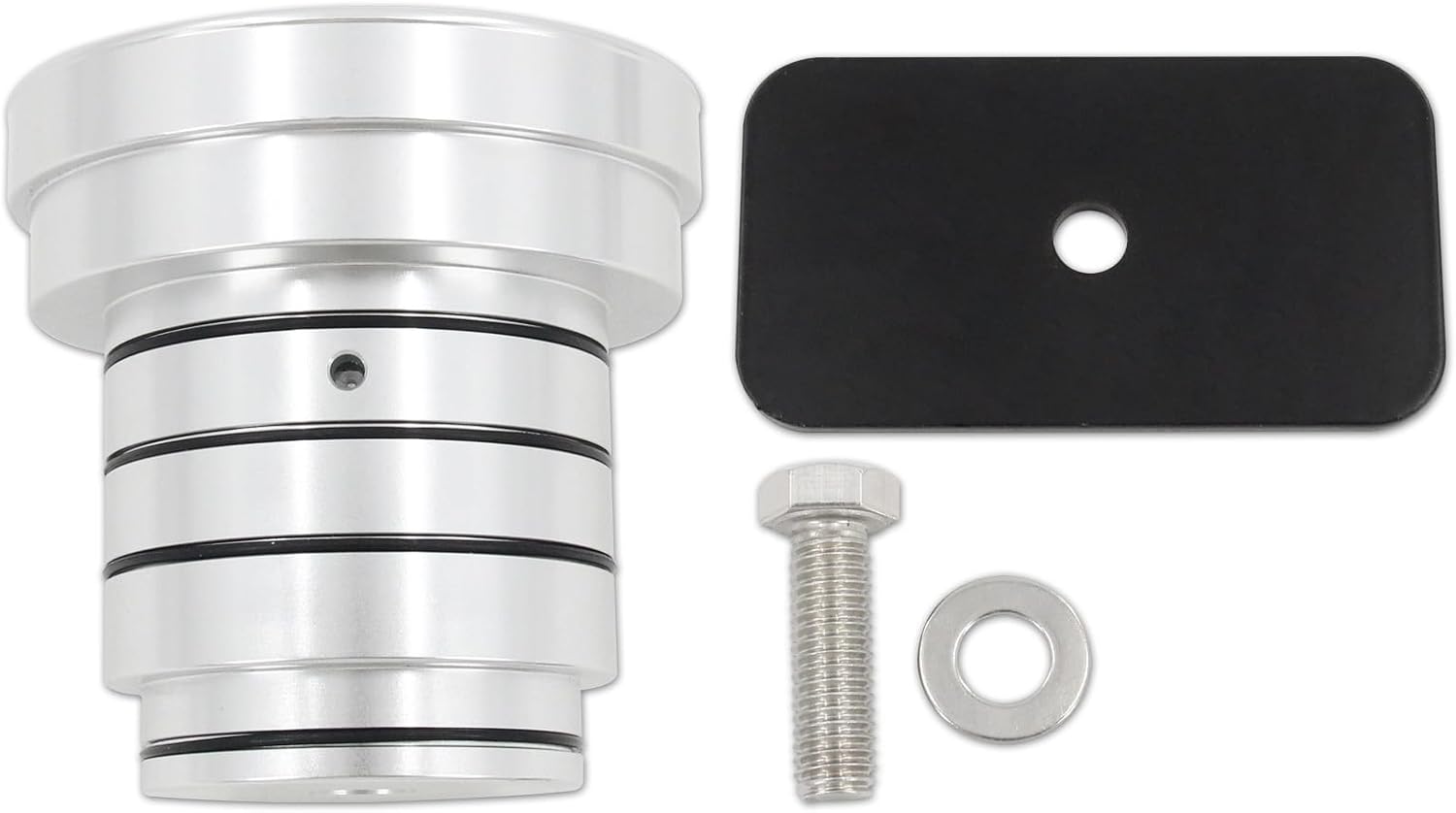
This is the test that separates a real diagnosis from a guess, and it is the reason a drum leak tester earns its place on the bench. A housing that leaks under air is a housing that cannot hold apply pressure long enough to stroke the piston cleanly, which reads to the driver as a delay and to the TCM as a slip code.
Two traps in the repair
GM flags both. First, the 6L80 got a design change to the 1-2-3-4 piston, the 1-2-3-4 piston housing and the 3-5-R piston for the 2008 model year, and installing a 2008 6L80 complete housing assembly into a 2007-or-older 6L80 may produce a 2-3 shift flare or 3-5-R clutch distress. [1] Second, when installing a new housing into a 2007-or-older unit, all three inner seals must go in; leaving them out can cause no reverse, no forward, or distressed clutches. [1]
On the 6L90 side, GM lists complete assembled 1-2-3-4 / 3-5-R clutch housings under part number 24238695 for MYD 2007 and 2008, supplied with all pistons, seals, clutches, bearing and internal parts, with no assembly required before installation. [1]
Pump Cover Seal Rings: One-Piece Versus Two-Piece
The same bulletin covers the second leak path, and this one is a low-mileage failure. On 2006-2009 vehicles, GM attributes a harsh 2-3 condition to leaking 1-2-3-4 and 3-5-R clutch fluid seal rings on the transmission fluid pump cover assembly. [1]
The history matters. Production used a one-piece seal ring design in 2006, 2007, 2008 and early-build 2009. Starting December 2008, GM implemented a two-piece design. The one-piece ring may leak and cause the harsh 2-3, and GM notes this is typically a low mileage issue. If the rings are one-piece, replace them with new one-piece rings — the pump cover itself does not have to be replaced. [1]
Two warnings ride along with that. The seal rings must be installed in a specific orientation, and getting it wrong causes a repeat harsh 2-3. [1] And you must not install one-piece rings on a two-piece pump cover; the two-piece cover is identified by the notch in the seal ring grooves that accepts the tab on the two-piece ring. [1] GM lists the one-piece ring kit as 24248581. [1]
ATRA's 6L50/6L80/6L90 update material carries the story forward: an interim-2009 design change deepened the grooves on the back of the pump cover so a rubber o-ring sits under the seal, with seal kit 24248559 as the new design and 24248573 as the pump cover and seal kit. [2] If you have the cover apart for a delay complaint, this is the update to land on.
Drain-Down and the 20 Percent Piston Capacity Change
ATRA's update handout has a section titled, plainly, "Delayed Engagement, Reverse Drain Down" with the note "N-R / P-R Delay" — Neutral-to-Reverse and Park-to-Reverse. [2] That is the cold-morning complaint described in the manufacturer's own words.
The fix GM engineered was to reduce how much oil the drum needs in the first place. Starting with the 2008 model year, oil capacity was reduced by 20 percent for the 1-2-3-4 / 3-5-R clutches, limiting the volume of oil required to stroke the piston, with a TCM calibration change to match. [2] Less volume to fill means less delay when a circuit has drained overnight.
That change came with new pistons: for 2006-07, reverse clutch piston 24234213 plus drum seal kits 24248576 (car) and 24248578 (truck); for 2008-09, 3-5-R piston 24238696, 1-2-3-4 piston 24238700 and drum 24243898, which ATRA notes will not back service previous model years. [2] That back-service warning is the same trap GM flags in the bulletin, from the other direction. [1]
While you have the drum apart, deal with the wave plates. ATRA documents a mid-2007 housing update for a no-forward-movement condition whose root cause was the snap ring popping out of the housing, and alongside it the 3-5-R wave plate went from 12 to 18 teeth and the 1-2-3-4 wave plate from 9 to 18 teeth (parts 24239828 and 24239615), with selective snap rings 24240194 and 24240201. Unlike the piston parts, these do back service previous model years. [2] More teeth spread the apply cushion over more area, which is exactly what a work-hardened original plate stops doing.
The Two Valve Bores That Delay Low and Reverse
If the delay is present hot, present in both ranges, and getting worse, the drum is probably not your problem. Volume is reaching the circuit; something upstream is bleeding it off.
CBR1/4-5-6 clutch regulator valve
This valve directs line pressure to regulate whichever clutch is applying, balancing solenoid pressure, spring force and clutch feedback pressure, and it is in the circuit for Low, Reverse, 4th, 5th and 6th. Sonnax's published symptom list for the 6L80/6L90 version is short and on the nose: delayed engagement, flare shifts, burned 4-5-6 clutch, poor shift quality. [3] The mechanism is ordinary oscillation wear — the valve strokes constantly, the bore opens up, and the leak that develops shows as engagement delay in Low or Reverse and flared upshifts. [3] Replacement valve 104740-50 addresses it.
Clutch boost valve
The boost valve supplies feedback pressure to the clutch regulator valves, with pressure control solenoid fluid acting on it to control the oil delivered to the balance end of the regulator valve. [4] When its bore wears, Sonnax lists shift quality that is no longer load sensitive, clutch pressure solenoid codes, burnt clutches, delayed engagement, harsh shifts, slide shifts, slip codes, and slips and flares. [4] "Shift quality is not load sensitive" is the tell — the transmission has lost its ability to raise clutch pressure with torque, so light-throttle engagements go lazy. Oversized valve 104740-01 with a reconditioned bore restores it.
Pressure regulator valve
The PR valve oscillates constantly too, and Sonnax is direct about the result: continuous oscillation produces excess bore wear that causes erratic line pressure and restricts cooler and lube flow. [5] Their symptom list includes low line pressure, soft shifts and clutch slippage alongside the high-pressure and overheating symptoms. [5] Wear at the outboard spool is the side that costs you pressure, and low line pressure at idle in gear is a delay you can measure. Kit 104520-15K ships with the valve, spring and checkball. [5]
Diagnosis, in Order
- Interview for temperature and range. Cold-only, Reverse-only, or all the time and worse hot. This one question splits the job in half.
- Fluid level hot, at the check plug. DEXRON VI only. [6] Look at the fluid on a clean rag: dark with friction fuzz points at the drum, clean but low points at a leak or a bad service.
- Pull codes before you clear anything. P0776, P2715 and P2723 in current or history are the combination GM ties to the drum and pump seal rings. [1] Clutch pressure control solenoid codes without debris in the pan lean toward bore wear rather than a bad solenoid.
- Overnight soak test. Leave it sitting, then watch input shaft speed against engine RPM on the scan tool at the first start. If input speed takes a long, obvious beat to come up to engine speed, the converter and front circuits drained down while it sat. Time it and write the number down so you can prove the repair later.
- Line pressure, hot, in Drive and Reverse at idle. Compare against the service data for the application, and watch commanded versus actual pressure control solenoid current. Low actual pressure with a correct command is a hydraulic leak, not an electrical one.
- Air-test the drum. Soap the weld, thumb the air bleed passage, air into the 3-5-R clutch feed hole, look for bubbles. [1] A drum leak tester makes this a two-minute check instead of a wrestling match.
- Inspect the pump cover seal rings. One-piece or two-piece, and which cover do you have — look for the notch. [1]
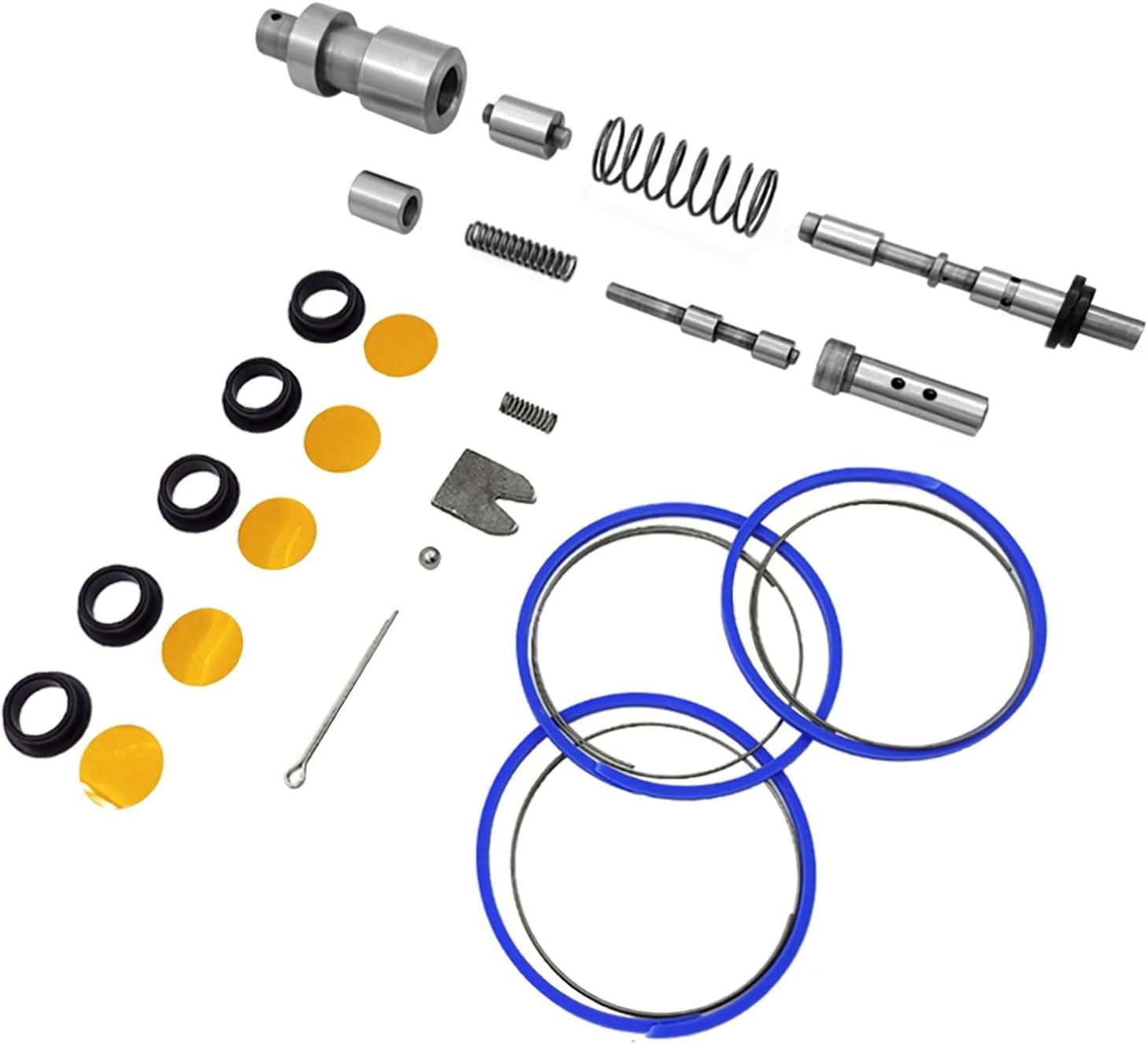
- Then the valve bores. PR, clutch boost, CBR1/4-5-6. Recondition and install oversized valves rather than throwing a valve body at it, unless the separator plate or check ball seats are damaged.
Doing the Repair Once
If the unit is coming out for a cracked housing or a drained drum, do not put it back together to the original print. Land the 18-tooth wave plates, the updated pistons for the year you are building, the correct pump cover seal rings for the cover in front of you, and reconditioned valve bores in the pump and valve body. [1] [2] Every one of those is a documented update, not a hot rod part, and each of them is a known cause of the exact complaint the customer brought you.
The one thing that will bring the truck back regardless of how good the rebuild was is fluid. Fill it with DEXRON VI, set the level at the check plug hot, and confirm the number. [6]
The exact seal pack for the drum that causes this
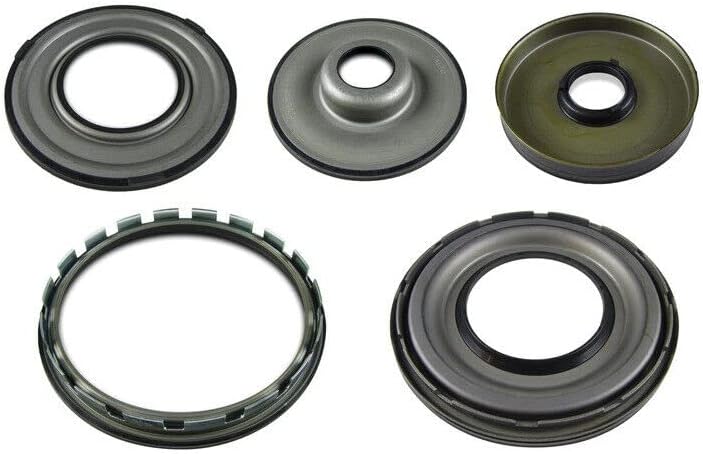
If the air test found a leak or the drum is coming apart for drain-down, the 1-2-3-4 and 3-5-Reverse clutch seal pack is the piece you need in hand before the unit is on the bench.
6L90 1-2-3-4 & 3-5-Reverse clutch seal pack →Need the rest of the unit? Browse the full 6L90 parts collection.
Need parts for this job? Drum leak testers, bonded clutch piston sets, pump cover seal kits, valve kits, filters and DEXRON VI for the 6L90 are all on our 6L90 parts page, shipped from the USA with checkout on site.
FAQ
Why does my 6L90 engage fine when warm but take several seconds when cold?
That pattern points at drain-down rather than at worn clutches. While the truck sits, fluid bleeds past seals and back into the sump, so the next start finds the pump filling empty circuits before it can stroke a clutch piston. The 6L90 uses the same 1-2-3-4 / 3-5-R drum for forward and reverse apply, which is why a drain-down complaint so often shows up as a Park-to-Reverse delay first. A delay that disappears after the first engagement of the day and never returns is almost always volume, not pressure.
Is 6L90 delayed engagement into reverse always a cracked clutch housing?
No, but GM lists it as a cause worth ruling out. Bulletin 09-07-30-004J covers delayed reverse or drive engagement, slip or no reverse, harsh 2-3 shifts and DTCs P0776, P2715 and P2723 on 6L80 and 6L90 units, and names a cracked 1-2-3-4 / 3-5-R clutch housing as the cause on 2006-2008 vehicles. The check is a soap-and-air test on the weld, not a visual one, because the crack is usually in the weld joint and does not show up under a shop light.
Can 6L90 delayed engagement be fixed without pulling the transmission?
Sometimes. If the delay is worst hot and is paired with soft shifts and low line pressure, worn pressure regulator, clutch boost and CBR1/4-5-6 clutch regulator valve bores are the likely cause, and those are valve body and pump repairs. If the delay is cold-only or reverse-only, the fault is in the drum, its pistons and seals, or the pump cover seal rings, and the unit has to come out. Diagnose which of the two patterns you have before quoting the job.
Does fluid level or fluid type cause a 6L90 delay?
Both can, and both are free to rule out first. The 6L90 takes DEXRON VI only, and GM's capacity table lists RPO MYD at 5.7 liters or 6.0 quarts for a fluid change, which is a pan-and-filter figure and not a dry fill. Check the level at the check plug with the fluid at operating temperature, because a cold level reading on a 6L90 will lie to you. A unit that is genuinely low will delay, flare and eventually burn clutches.
Do I replace the whole valve body or just the worn valves?
Replace the valves and recondition the bores if the castings are otherwise sound. Sonnax lists delayed engagement as a symptom for both the clutch boost valve and the CBR1/4-5-6 clutch regulator valve on the 6L80 and 6L90, and both are serviceable in the existing casting. A complete valve body makes sense when the separator plate is damaged, the check ball seats are worn, or you do not have the reamer tooling to do the bores properly.
Sources
- GM Service Bulletin 09-07-30-004J (February 2014), via NHTSA. Backs the subject line and condition list (slips in Reverse or Third, delayed Reverse or Drive engagement, DTCs P0776, P2715, P2723, harsh 2-3 shifts, harsh 4-5 or slips in fifth), the affected models and RPOs MYC and MYD, the cracked 1-2-3-4 / 3-5-R clutch housing as the 2006-2008 cause, the soap-and-compressed-air weld inspection through the 3-5-R clutch feed hole, the 2008 model year design change to the 1-2-3-4 piston, piston housing and 3-5-R piston on the 6L80, the one-piece versus two-piece pump cover clutch fluid seal ring history (one-piece through early-build 2009, two-piece from December 2008) and the notch-and-tab identification, and part numbers 24238695 and 24248581. NHTSA — GM Service Bulletin 09-07-30-004J (PDF)
- ATRA — GM 6L50 / 6L80 / 6L90 Updates technical handout. Backs the delayed engagement and reverse drain-down section and its N-R and P-R delay language, the start-of-production 2008 model year 3-5-Reverse clutch piston capacity reduction (oil capacity for the 1-2-3-4 / 3-5-R clutches cut by 20 percent to limit the volume required to stroke the piston, with a matching TCM calibration change), the mid-2007 clutch housing update for no-forward-movement caused by the snap ring popping out, the 3-5-R wave plate change from 12 to 18 teeth and the 1-2-3-4 wave plate from 9 to 18 teeth, and the interim-2009 pump cover seal update with the deeper groove and o-ring under the seal (seal kits 24248581 old design, 24248559 new design, 24248573 pump cover and seal kit). atracom.blob.core.windows.net — 6L50/6L80/6L90 Updates (PDF)
- Sonnax — CBR1/4-5-6 Clutch Regulator Valve 104740-50 (GM 6L80, 6L90). Backs the symptom list (delayed engagement, flare shifts, burned 4-5-6 clutch, poor shift quality), the valve's job of directing line pressure to regulate the applying clutch from solenoid, spring and clutch feedback pressures, and the wear mechanism in which oscillation lets fluid leak and produces engagement delays in Low or Reverse. sonnax.com/parts/5995-cbr1-4-5-6-clutch-regulator-valve
- Sonnax — Oversized Clutch Boost Valve 104740-01 (GM 6L45, 6L50, 6L80, 6L90). Backs the boost valve symptom list (shift quality not load sensitive, clutch pressure solenoid codes, burnt clutches, delayed engagement, harsh shifts, slide shifts, slip codes, slips and flares) and the valve's function of supplying feedback pressure to the clutch regulator valves, with pressure control solenoid fluid acting on the boost valve to control oil delivered to the balance end of the clutch regulator valve. sonnax.com/parts/1702-oversized-clutch-boost-valve
- Sonnax — Pressure Regulator Valve Kit 104520-15K (GM 6L45, 6L50, 6L80, 6L90). Backs the mechanism (continuous oscillation of the pressure regulator valve produces excess bore wear, causing erratic line pressure and restricting cooler and lube flow), the published symptom list including low line pressure, soft shifts, clutch slippage and converter concerns, and the kit contents of valve, spring and checkball. sonnax.com/parts/5938-pressure-regulator-valve-kit
- GM TechLink — 2025 Transmission Capacities & Fluids (U.S. and Canada). Backs the 6L90 fluid specification and service capacity: RPO MYD, fluid change capacity 5.7 liters / 6.0 quarts, DEXRON VI. gm-techlink.com — Transmission Capacities & Fluids 2025 (PDF)