A 6R140 with a bad shift gets a solenoid blamed more often than it deserves. The unit has seven solenoids on one valve body, each tied to one clutch or one pressure circuit. They are variable bleed solenoids, and the TCM runs them on a calibration that has to match the band number stamped on each one. So a solenoid can measure perfectly and still cause a flare, and a brand-new one can cause a harsh shift if it carries the wrong band. The quick facts: three normally high solenoids (SSB, SSE, LPC) and four normally low (SSA, SSC, SSD, TCC), all of them 4.8 to 5.4 ohms, a 13-digit solenoid strategy and 8-digit ID on the valve body tag, and a failsafe that leaves the truck in 5th and Reverse with maximum line pressure.
This guide starts with what each solenoid runs, then goes to what the truck does when one fails, how to prove it, and how to replace it without creating a comeback. The Ford-trade sources are listed at the bottom.

The seven solenoids and what each one runs
The 6R140 uses the same five-clutch layout as the 6R80: forward (A), direct (B), intermediate (C), low/reverse (D) and overdrive (E). Wayne Colonna's TorqShift 6 write-up for POWERTRAIN PRO lists the solenoids and their clutches. The Sonnax-made Rostra solenoid instructions show the same positions on the 6R140 valve body.
| Solenoid | Type | Controls | Gears it works in |
|---|---|---|---|
| SSA | Normally low | Forward clutch (A) | 1st through 4th |
| SSB | Normally high | Direct clutch (B, 3-5-R) | 3rd, 5th and Reverse |
| SSC | Normally low | Intermediate clutch (C, 2-6) | 2nd and 6th |
| SSD | Normally low | Low/reverse clutch (D) | 1st, manual low and Reverse |
| SSE | Normally high | Overdrive clutch (E, 4-5-6) | 4th, 5th and 6th |
| TCC | Normally low | Converter clutch | Lockup apply and release |
| LPC | Normally high | Main regulator (line pressure) | All ranges |
One difference from the 6R80 matters here. On the 6R80, SSE is an on/off solenoid that switches a multiplex valve so SSD can feed the E clutch. On the 6R140, D and E each get their own variable solenoid, so each clutch has its own circuit. That makes the diagnosis cleaner. A bad 4-5-6 clutch circuit is SSE, not SSD.
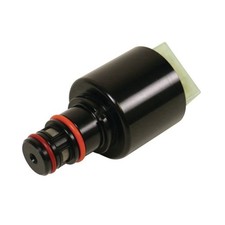
"Normally high" and "normally low" describe what the solenoid puts out with no current. A normally low solenoid gives low pressure when it is off, and a normally high one gives full pressure when it is off. The plastic snout shows which you have. Black is normally high, and brown is normally low. The Rostra chart lists the SSE snout as grey, so read the band and the NH/NL marking and do not rely on color alone. The O-ring colors differ too: orange and red on normally high, green and red on normally low.
Why a dead solenoid often looks like 5th gear
The failsafe on this transmission is built around the normally high solenoids. Colonna quotes Ford's strategy: if an electronic, hydraulic or mechanical fault happens, the PCM or TCM shuts off all current to the transmission. With no current, SSB, SSE and LPC all go to full output. B plus E is 5th gear, and LPC at full output gives maximum line pressure. The truck is left with 5th and Reverse only, and the converter clutch stays unlocked.
That tells you a lot. A Super Duty that takes off hard in a high gear, will not downshift, and still has Reverse is usually in failsafe. That points to power feed, grounds, the case connector, the internal harness or the TCM before any one solenoid. On a diesel, the transmission is run by an external TCM. On the 6.2L gas truck, the PCM runs it.
It also changes how a single failure shows up. An open coil on a normally high solenoid does not make its clutch slip. It makes its clutch stay applied. A truck with a dead SSB has B clutch pressure all the time, which can bind in gears where B should be off. A dead SSA, SSC or SSD takes its clutch away, so you get a slip, a flare or a missing gear.
Symptoms that point to one solenoid
Match the bad shift to the clutches that change on it.
- 2-3 flare or bind. From the clutch chart above, B applies while C releases, so SSB and SSC are both suspects.
- 1-2 problem. C applies while D (or the one-way clutch) releases. SSC is the first look, but read the section below on false leads before you buy one.
- No 4th, 5th or 6th. The E clutch is not applying. That is SSE, its regulator and latch valves, or the E clutch itself.
- Harsh, late or missing Reverse. Reverse is B plus D, so check SSB and SSD.
- Every shift harsh, or every shift soft. That points to line pressure: LPC, the main regulator, or the solenoid feed regulator that supplies all the solenoids.
- Lockup shudder or rpm cycling at cruise. The TCC solenoid, or the converter clutch regulator valve behind it.
- Soft one day, harsh the next. The classic sign of a solenoid that has drifted from its band.
The last one is the most common complaint I hear on high-mileage 6.7L trucks. Dial writes that the variable bleed solenoids on the 6R80 and 6R140 tend to lose their calibration over time. That leaves the TCM trimming current for a solenoid that no longer puts out what its band number says. What you get is flares, harsh shifts, binds and shifts that change from day to day, often with no code stored.
Codes follow the standard SAE layout. Circuit faults are P0750 (SSA), P0755 (SSB), P0760 (SSC), P0765 (SSD) and P0770 (SSE). The performance or stuck-off codes on the same solenoids come one number up, such as P0751. Ratio codes like P0733 (3rd gear ratio) tell you a gear did not come in right, not which part caused it. A circuit code points to a coil or wiring. A performance or ratio code can be hydraulic or mechanical just as easily as electrical.
How to prove it before you buy solenoids
1. Rule out the inputs
The TCM decides shift timing and line pressure from engine load, so a bad load signal can look like a bad solenoid. Transmission Digest published a 2015 F-350 6.7L case from Michael Wiggins of Certified Transmission. The truck had over 300,000 miles, a 1-2 shift that was harsh and 4-5 seconds late on light throttle, and no codes. The transmission sensors were normal. The exhaust back pressure sensor was reading 474.2 kPa (68.8 psi) on light acceleration, when about 30 psi is normal. The TCM thought the truck was under heavy load, so it held the shift and raised line pressure. A new Ford EBP sensor fixed it on the spot. On a diesel, look at the engine data before you pull the pan.
Check the transmission sensors on the same screen. Colonna gives the turbine speed sensor as a 0-5 V pulsed signal from case connector terminal 11, the output speed sensor as the same type of signal from terminal 17, and the fluid temperature sensor at about 1.2 V at operating temperature. A TSS or OSS dropout makes the TCM calculate a ratio error, and that can look like a slipping clutch.
2. Check the strategy tag against the TCM
Pull the solenoid strategy with the scan tool and compare it to the tag. Per Sonnax's Jason Larochelle, the 6R140 strategy is a 13-digit number and the solenoid body ID is 8 digits, both on the valve body tag. The Rostra instructions add that the 13-digit number should match the tag on the driver side of the case near the bellhousing. If the valve body was replaced before the truck came to you and those numbers do not match, you have found your harsh shift. If the tag is missing, the scan tool can still read the strategy the TCM is running.
3. Graph commanded current against the shift
Record the bad shift with the commanded current for each solenoid involved, turbine speed, output speed and line pressure. On a normally low solenoid, more current means more pressure. On a normally high one, less current means more pressure. If the current sweeps smoothly and the ratio still flares or binds, the solenoid is sticking, has drifted, or its valve is hanging. If the current is erratic or pinned, check the connector, the case pins and the internal harness first.
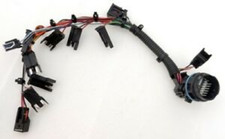
GEARS Magazine's 6R140 update warns about the internal harness: splices inside it can fail and cause intermittent open circuits. The fix is solder and oil-resistant shrink wrap, or a new harness. An intermittent open on a normally high circuit sends that clutch to full apply for a moment, and that feels like a bump or a bind.
4. Resistance only tells you so much
Colonna lists all seven 6R140 solenoids at 4.8 to 5.4 ohms. Out of range means the coil is open or shorted, and the solenoid is done. In range means only that the coil is intact. It says nothing about calibration or a sticking pintle. The TCM controls these solenoids by current, so a solenoid that ohms out fine can still be the part that is off its band.
5. Vacuum-test the valve body before you blame the solenoid
A worn or stuck valve can look exactly like a solenoid fault. GEARS reports that the 6R140 valve body collects debris on high-mileage units. That can stick the 1-2-3-4 control valve and cause a neutral at stops or a harsh 5-4 and 6-4 forced downshift. Dial points to two valves that cause trouble on the 2-6 and 5-6 shifts. One is the C (2-6) clutch regulator, which SSC controls with no latch valve. The other is the 4-5-6 clutch latch valve. If the valve bores are worn, new solenoids will only fix the problem for a while. Our 6R140 valve body wear guide covers the vacuum test and the bores.
Replacing a 6R140 solenoid the right way
Ford measures the flow of every solenoid and gives it a band from 1 to 5. The TCM calibration is built from which band sits in which position. Larochelle puts it plainly: installing any band number you have on the shelf can cause a flare or harsh shift that takes the TCM a long time to learn out. There are two correct ways to do it.
- Single solenoid, same band, same position. Replace it with one of the same type (NH or NL) and the same band number, in the same position. Sonnax says no programming is needed. You still erase keep-alive memory, clear the adaptive values and drive the Ford adaptive cycle. The Rostra sheet recommends resetting adapts even with a same-band part, because the old solenoid had drifted and the TCM had adapted to that drift.
- Full solenoid set or new valve body. Enter the new 13-digit strategy and 8-digit ID from the new tag into the TCM with a Ford scan tool or a J2534 pass-through device. Then clear the adaptive tables, reset keep-alive memory and drive the relearn. Skip this step and the TCM is running a calibration for solenoids that are no longer in the unit.
For the relearn, follow the Ford adaptive drive cycle in the service information for that model year, starting with the fluid at operating temperature and the level set hot. Then keep driving it. In my shop, a 6R140 can take a lot of stop-and-go cycles through every gear before a flare fully learns out. Tell the customer that before they leave.
Single solenoid or full set? One solenoid with a matching band is a fair repair on a low-mileage truck with one clear electrical failure. On a 150,000-mile truck with a shift that changes day to day, the solenoids have drifted as a group. Replace the full set and program it, or put in a remanufactured valve body with a matching tag. Most 6R140 comebacks I see after a solenoid job come from mixed bands, a strategy that was never programmed, or one new solenoid next to six worn ones.
6R140 shift solenoid kit, 2011-up
Replacement shift solenoids for 2011-up Super Duty 6R140 units, for when the scan data shows the solenoid body has drifted, not just one failed coil. Program the strategy and drive the relearn. Sold by our sister store, CoreTransmissionParts.
Shop the part for this fix →Need the EPC/line pressure solenoid or another single unit? The solenoids collection lists the other 6R140 options.
Need parts for this job?
Our 6R140 parts page has complete solenoid kits, single pressure control and TCC solenoids, internal wiring harnesses, and new valve bodies for trucks where the bores are worn too. Checkout is on site.
FAQ
What are the symptoms of a bad shift solenoid on a Ford 6R140?
The usual signs are one shift that flares or binds while the others are fine, shifts that are soft one day and harsh the next, no 4th through 6th, a harsh or late Reverse, or a truck stuck in 5th and Reverse failsafe. Match the bad shift to its clutches to find the solenoid. A bad 2-3, for example, involves SSB (direct clutch) and SSC (intermediate clutch).
What is the resistance of a 6R140 shift solenoid?
All seven 6R140 solenoids measure 4.8 to 5.4 ohms. A reading outside that range means an open or shorted coil. A reading inside it only proves the coil is intact, because the TCM controls these solenoids by current and a solenoid can drift off its band while still measuring correctly.
Can you replace just one solenoid on a 6R140?
Yes, if the new one is the same type (normally high or normally low) and has the same band number, and goes in the same position. Sonnax says no programming is needed in that case, but you still erase keep-alive memory, clear adaptives and drive the Ford relearn. A full set or new valve body needs the new 13-digit strategy and 8-digit ID programmed into the TCM.
Why is my 6R140 stuck in 5th gear?
When the TCM or PCM sees a serious electrical, hydraulic or mechanical fault, it cuts all current to the transmission. The normally high SSB, SSE and LPC solenoids then give full pressure, which applies 5th gear with maximum line pressure and leaves only 5th and Reverse. Check power, grounds, the connector and the internal harness before replacing a solenoid.
Why does my 6R140 shift harsh after replacing solenoids?
Usually the band numbers do not match the originals, the new solenoid body strategy was not programmed into the TCM, or the adaptives were not reset and relearned. Sonnax warns that installing whatever band is on the shelf can cause a flare or harsh shift that takes the TCM a long time to learn out.
Related guides
- 6R140 Valve Body Wear and Fix
- Ford 6R140 TorqShift Problems and Service Guide
- 6R140 Fluid Type and Capacity
- 6R140 Filter and Pan Service Guide
- 6R80 Shift Solenoid Symptoms and Replacement
Sources
- Sonnax, Jason Larochelle, "6R140 Transmission Solenoid Strategy Code: Don't Break Up the Band." Backs the 13-digit strategy and 8-digit solenoid body ID on the valve body tag, bands 1-5 by flow, black NH and brown NL snouts, no programming for a same-band same-position swap, the KAM, adaptive and drive-cycle steps, J2534 programming for a new valve body, and the flare or harsh shift warning. sonnax.com
- Rostra Powertrain Controls (Sonnax), Installation Instructions, Ford 6R80 (2010-later), 6R100, 6R140 Variable Bleed Solenoids (03-10-23). Backs the 6R140 solenoid positions and clutch names, the O-ring colors, band and NH/NL matching, the 13-digit number matching the case tag near the bellhousing, and resetting adapts even with same-band parts. rostra instructions (PDF)
- Vehicle Service Pros, Wayne Colonna (POWERTRAIN PRO), "Introducing Ford's TorqShift 6 Transmission" (Jan. 1, 2020). Backs the seven solenoids and their clutches, three NH and four NL, 4.8-5.4 ohms, the 5th-and-Reverse failsafe with max line pressure and TCC off, external TCM on diesel and PCM on gas, and the TSS (terminal 11), OSS (terminal 17) and TFT (about 1.2 V) signals. vehicleservicepros.com
- Sonnax, Jim Dial, "Troubleshooting Ford 6R80 & 6R140 Timing-Related Shift Issues." Backs variable bleed solenoids losing calibration over time, the resulting flares, binds and inconsistent shifts, and the C (2-6) clutch regulator and 4-5-6 latch valve roles. sonnax.com
- GEARS Magazine (ATRA), "Problems and Fixes: Revisiting the 6R140 Transmission." Backs failed internal harness splices causing intermittent opens, and valve body debris sticking the 1-2-3-4 control valve (neutral at stops, harsh 5-4 and 6-4 downshifts). gearsmagazine.com
- Transmission Digest, Michael Wiggins, "Diagnosing a Delayed, Harsh 1-2 Shift in the Ford 6R140 Transmission" (July 16, 2025). Backs the 2015 F-350 case with a 474.2 kPa (68.8 psi) EBP reading against about 30 psi normal, and the EBP sensor fix. transmissiondigest.com