The short answer: the Ford 6R140 TorqShift 6 takes MERCON LV and nothing else. Ford Component Sales lists the total capacity at about 4 gallons. A pan drop takes 8.2 quarts to refill, pulling the valve body takes 10.2 quarts, and a unit that was fully torn down takes 16.2 quarts. The final level gets set with the fluid between 196 and 216°F, read off a scan tool.
Those numbers are the easy part. The part that brings 6R140s back to the shop is how the fluid gets in and how the level gets checked. I have seen a truck come back with a neutral condition on a hill after a routine service, and the cause was a filter seal, not the transmission. Below is how I handle fluid on these units, with the Ford and Sonnax figures behind each step. Sources are at the bottom.
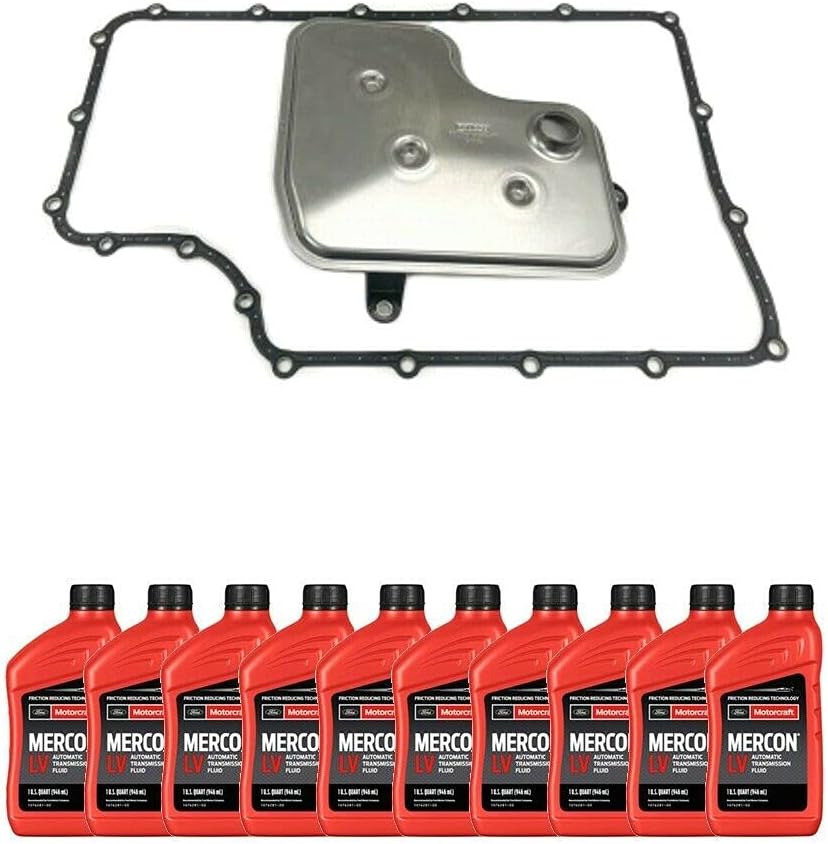

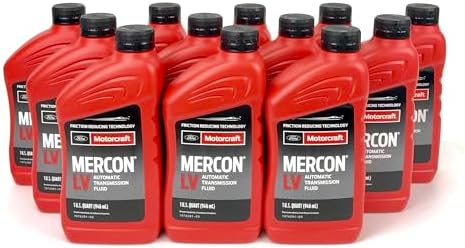
Fluid type: MERCON LV in every 6R140
Ford's own spec sheet for the 6R140, published by Ford Component Sales for the unit it sells to upfitters and OEMs, lists the transmission fluid as MERCON LV ATF. Ford's Motorcraft ATF chart (Version 21, September 2026) shows the 6R140 TorqShift 6 column as LV from its 2011 introduction forward. The by-vehicle chart (Version 19, September 2026) breaks that down:
- F-250 through F-550 Super Duty with the 6R140 (6.7L diesel, 6.2L, 6.8L): MERCON LV, 2017-2019.
- E-Series with the 6R140 (6.2L 2017-2019, 6.8L 2019, 7.3L 2021 on): MERCON LV.
- Chassis cab, stripped chassis and motorhome with the 6R140 (6.8L 2017-2019, 7.3L 2020 on): MERCON LV every year through 2026.
That last line matters because the 6R140 did not go away when the Super Duty pickup switched to the ten-speed. It is still behind the 7.3L in stripped chassis and motorhome builds. The same chart lists the Super Duty's 10R100 and 10R140 as MERCON ULV. If a fleet has a 2019 F-350 and a 2021 F-350, those two trucks take different fluid. Check the transmission, not the badge on the fender.
The Motorcraft part numbers from the chart are XT-10-QLVC (quart), XT-10-5Q3LV (5-quart jug) and XT-10-DLV (55-gallon drum). The chart also carries a caution in capital letters that I agree with: do not use supplemental transmission fluid additives, treatments or cleaning agents, and the listed fluids are unique fluids that must be used where they are specified. I have never seen a bottle of shift fix repair a worn TCC regulator bore. It just hides the symptom until the next tow.
What "LV" actually means
Motorcraft's product data sheet gives the numbers: 6.0 cSt at 100°C, 29.6 cSt at 40°C, 10,200 cSt at -40°C, a viscosity index of 155 and a pour point below -48°C. The license number is MLV070701. That low viscosity is what the solenoid calibration and the adaptive shift tables are built around. A thicker fluid like MERCON V fills and exhausts clutch circuits at a different rate, and on a unit that is holding up to 935 lb-ft (per the Ford spec sheet), soft or late clutch fill means heat and slip.
If you use an aftermarket multi-vehicle fluid, look for an actual MERCON LV license on the label. "Suitable for use in" is a marketing claim, not a Ford approval.
Capacity: what the numbers mean on the bench
The Ford Component Sales spec sheet lists fluid capacity as 4 gallons, which is 16 quarts. That is a dry figure for the transmission itself. For real service work, the more useful numbers come from Sonnax's 6R140 write-up, which lists refill quantities by job:
| Job | 6R140 refill | Fluid |
|---|---|---|
| Drain plug or pan removal only | 7.8 L (8.2 qt) | MERCON LV |
| Valve body removal | 9.7 L (10.2 qt) | MERCON LV |
| Full transmission disassembly | 15.3 L (16.2 qt) | MERCON LV |
| Total capacity (Ford spec sheet) | About 4 gal (16 qt) | MERCON LV |
Treat those as starting quantities, not the finish line. Cooler size varies by chassis, and a truck with an aftermarket deep pan holds more than stock. The capacity figure tells you how much to buy. The hot level check tells you when it is full.
The practical takeaway from that table is that a pan drop replaces roughly half the fluid in the unit. The converter and the cooler circuit keep the rest. One pan service dilutes old fluid. It does not replace it. If the fluid that came out was dark, I do a second drain and fill after a few hundred miles instead of trying to exchange it all at once.
For buying, a 12-quart case covers a pan and filter job with enough left for the level check. A valve body job uses a bit more than 10 quarts, so a 12-quart case still works there. After a full rebuild, buy 20 quarts. You do not want to be short with the truck on the lift and the fluid below the check range.
Setting the level: temperature first
The number one mistake on 6R140 fluid is setting the level cold. The fluid expands as it heats, so a level that looks correct at 100°F reads high at operating temperature. Sonnax and Transmission Digest both give the check window as 91-102°C (196-216°F). The sequence I use:
- Truck level on the lift or the shop floor. A tilted truck reads wrong.
- Scan tool connected and reading the transmission fluid temperature (TFT) PID. Do not guess temperature from how long the engine has been idling.
- Engine running. Move the selector through each range and hold a few seconds in each so the clutch circuits fill, then return to PARK.
- Confirm TFT is inside 196-216°F before you read anything.
- Read the level. Add fluid in 0.24 L (half-pint) steps, per Sonnax, and let it settle before you check again.
- Road test, then recheck hot.
Sonnax also warns against overfilling, and it is right to. Overfilled fluid gets churned by the rotating parts, foams, and runs hotter. Aerated fluid gives the solenoids soft, inconsistent pressure, which feels like a worn valve body when the hard parts are fine.
The Sonnax article includes a figure with the dipstick level instructions for late 6R140s, so check which instructions apply to your build instead of assuming. Once the pan is back on, the hot scan-tool check is the only reading that counts.
The filter seal that caused a neutral condition
This case is why I take the filter seal as seriously as the fluid. Jim Mobley of Sonnax wrote it up in Transmission Digest in June 2022. A 6R140 came in with an intermittent neutral. It drove fine on flat ground, but on an incline it would lose drive. Line pressure spec on this unit is 90-260 psi, and during the fault the gauge dropped to 0 psi.
When the tech pulled the filter bolt, the filter dropped straight into the drain pan. The seal on the filter neck had no grip on the pump intake at all. On a grade, the fluid moved, the loose filter lost its seal, the pump sucked air, and line pressure went to nothing. The fix was a better O-ring on the filter neck, not a rebuild.
Two things from that case stay with me:
- The level mattered too. After the new seal, the level read right at the edge of overfilled cold. With the fluid at operating temperature, it came in at the upper end of the normal range after one extra pint. That is exactly why you do not set a 6R140 level cold.
- The test has to match the fault. Sonnax says to road test at operating temperature more than once, including a climb up a 20-30° grade to confirm the neutral is gone. A flat-road test drive would have missed it.
When I install a filter on a 6R140 now, I check that the neck seal has real resistance going into the pump. If it slides in with no effort, it does not go in the truck.
Heat: why 6R140 fluid wears out
The Ford spec sheet rates the 6R140 for 250°F continuous. GEARS Magazine's 6R140 article gives the normal operating range as 195-230°F, and says 210-220°F in a warm climate with no codes is normal. Readings above that point to a cooling problem, and on a 6.7L Super Duty the cooling system is where you look first.
Per GEARS, the diesel's secondary cooling loop handles the transmission fluid warmer, the intercooler, the fuel cooler and the EGR cooler, and the transmission puts the most heat into it. A low secondary coolant reservoir by itself will overheat the transmission. Check that reservoir, look for leaks in every part of the loop, and confirm the secondary coolant pump is running before you blame the transmission.
Two more heat causes from the same article are worth knowing:
- Converter charge oil feeds the cooler. If the pump stator sleeve has turned, it can block converter charge oil, which cuts cooler flow and overheats the fluid. That usually shows up after a rebuild.
- Tunes. Diesel tunes that delay converter lockup create extra heat. GEARS says to confirm stock programming before chasing an overheating complaint.
Heat is what breaks down MERCON LV. Oxidized fluid loses friction control, and that speeds up the valve body bore wear covered in our 6R140 valve body wear guide.
Service interval
Look up the scheduled maintenance section in the owner's manual for the truck's year. Ford's normal schedule and its severe-duty schedule are far apart, and the owner is usually on the normal one without realizing it. Any Super Duty that tows a real trailer, plows, or runs a lot of PTO or idle hours is severe duty.
My shop practice on those trucks is fluid and filter about every 30,000 miles. That is my number, not a Ford number. It is also the right time to check the magnet and filter. A light gray film on the magnet is normal wear. Black fluid that smells burnt, with friction material in the pan, means the clutches are already going. At that point a fluid service will not save it.
After any fluid service, clear the adaptive tables and let the TCM relearn. The adapts were learned on the old fluid, and new MERCON LV changes how the clutches apply.
6R140 filter and pan gasket kit, FT187, 2011-2019
The filter and gasket for a 6R140 pan service, 2011-2019 Super Duty. Check the neck seal fit before it goes in. Sold by our sister store, CoreTransmissionParts.
Shop the part for this fix →Pan dented or leaking at the gasket? The transmission pans collection has stock and deep 6R140 pans and pan kits with filters.
Need parts for this job?
Our 6R140 parts page carries filter kits, service kits with MERCON LV, deep pans, cooler lines, and the solenoid kits and valve bodies for when a fluid service turns up a bigger problem. Checkout is on site.
FAQ
What transmission fluid does a Ford 6R140 use?
MERCON LV only, Motorcraft XT-10-QLVC for a quart. Ford's spec sheet and its current ATF chart list MERCON LV for the 6R140 in every application, including 2017-2019 Super Duty pickups and 2020-on 7.3L chassis cab and motorhome builds. Do not use MERCON V, and do not use MERCON ULV, which is the fluid for the 10R100 and 10R140.
How many quarts does a 6R140 hold?
Ford Component Sales lists total capacity at about 4 gallons, or 16 quarts. Sonnax lists 8.2 quarts to refill after a pan drop, 10.2 quarts after valve body removal and 16.2 quarts after full disassembly. Use those to plan how much to buy, then set the final level hot.
At what temperature do you check 6R140 fluid level?
Check it with the fluid between 91 and 102C (196-216F), read from the transmission fluid temperature PID on a scan tool. A level set cold will read high once the fluid heats up, and an overfilled 6R140 foams and runs hotter.
Can a bad filter seal cause a 6R140 to lose drive?
Yes. Sonnax and Transmission Digest documented a 6R140 with an intermittent neutral on inclines where line pressure dropped from the 90-260 psi range to 0 psi. The filter neck seal had no grip, so the filter fell out when the bolt was removed. A better O-ring fixed it.
How often should 6R140 fluid be changed?
Check the scheduled maintenance section of the owner's manual for your year, and use the severe-duty schedule if the truck tows, plows or idles a lot. My shop practice on those trucks is fluid and filter about every 30,000 miles, which is my number, not Ford's.
Related guides
- Ford 6R140 TorqShift Problems and Service Guide
- 6R140 Valve Body Wear and Fix
- 6R140 vs. 5R110W Differences
- 6R80 vs. 6R140 Differences
- 6R80 Fluid Type and Capacity
Sources
- Ford Component Sales, LLC, Ford 6R140 6-Speed Automatic Transmission Technical Specifications. Backs MERCON LV ATF, the 4-gallon fluid capacity, the 935 lb-ft maximum torque rating and the 250°F continuous rating. fordcomponentsalesllc.com (PDF)
- Ford Customer Service Division, Motorcraft Automatic Transmission Fluid Charts, by transmission (Version 21, 9/2026) and by vehicle (Version 19, 9/2026). Back MERCON LV for the 6R140 from 2011 on, the Super Duty, E-Series and chassis cab/motorhome 6R140 rows, MERCON ULV for the 10R100/10R140, part numbers XT-10-QLVC, XT-10-5Q3LV and XT-10-DLV, and the caution against additives, treatments and cleaning agents. by transmission (PDF) / by vehicle (PDF)
- Motorcraft, MERCON LV Automatic Transmission Fluid Product Data Sheet. Backs license number MLV070701 and the typical properties: 6.0 cSt at 100°C, 29.6 cSt at 40°C, 10,200 cSt at -40°C, viscosity index 155, pour point below -48°C. fcsdchemicalsandlubricants.com (PDF)
- Sonnax, "Ford 6R140: Repairing Elusive Intermittent Neutral Condition." Backs the refill quantities (8.2, 10.2 and 16.2 qt), the 91-102°C (196-216°F) check temperature, half-pint fill increments, the overfill warning, the late-unit dipstick instructions, the 90-260 psi line pressure spec and the 20-30° incline test. sonnax.com
- Transmission Digest, Jim Mobley, "Ford 6R140: Repairing the elusive intermittent neutral condition" (June 20, 2022). Backs the filter dropping out with a seal that had no resistance, the O-ring fix, and the cold near-overfill versus hot upper-range level with one extra pint. transmissiondigest.com
- GEARS Magazine (ATRA), "Problems and Fixes: Revisiting the 6R140 Transmission." Backs the 195-230°F normal operating range, 210-220°F as normal in warm climates, the secondary cooling loop components, low secondary coolant causing overheating, converter charge oil feeding the cooler and the turned pump stator sleeve, and tunes that delay lockup. gearsmagazine.com