Put a 6.7L Power Stroke Super Duty and a Duramax Silverado HD side by side in the bay and the customer question is always the same: which transmission is tougher? The honest answer is that the Ford 6R140 and the Allison 1000 were built to two different philosophies. The 6R140 is a clean-sheet Lepelletier six-speed that Ford designed around its own diesel. The Allison 1000 is a commercial-duty unit from a company that builds transmissions for buses and trucks, and GM bolted it behind the Duramax starting in the 2001 model year.
This is the comparison as a rebuilder sees it: what each manufacturer actually publishes, the ratio sets, fluid and service rules, how each one is controlled, where each one fails, and what to check before you order parts. Every hard number below comes from Ford Component Sales, GM, Allison, Sonnax, ATRA or Transmission Digest, all listed in the Sources section.
The Short Version
| Item | Ford 6R140 TorqShift | Allison 1000 (six-speed) |
|---|---|---|
| Published rating | 935 lb-ft max engine torque (Ford Component Sales) | Paired with Duramax 6.6L at 765 lb-ft @ 1600 rpm (GM 2016 HD spec) |
| 1st / 2nd / 3rd | 3.974 / 2.318 / 1.516 | 3.10 / 1.81 / 1.41 |
| 4th / 5th / 6th | 1.149 / 0.858 / 0.674 | 1.00 / 0.71 / 0.61 |
| Reverse | 3.128 | 4.49 |
| Geartrain | Lepelletier: 1 simple planetary + 1 Ravigneaux, 5 clutch packs (3 rotating, 2 brake) | Allison clutch-to-clutch design, C1 through C5 clutches |
| Fluid | MERCON LV, 4 gallons | Castrol TranSynd (TES 295/668), 15.3 qt overhaul (GM) |
| Filter | Internal pan filter | Spin-on control main filter plus internal suction filter |
| Controller | PCM on gas, separate TCM on diesel; J1939 | Separate TCM |
| PTO drive | I.D. splines in the converter impeller hub | PTO drive gear on the C1/C2 clutch drum |
| Weight | 345 lb (converter about 70 lb dry) | Not published in the sources used here |
Notice what is and is not in that table. Ford Component Sales publishes a 935 lb-ft engine torque rating for the 6R140 on its OEM spec sheet. GM's spec sheet does not give an input torque rating for the Allison; it lists the engine it paired with it, the 765 lb-ft Duramax. The bigger four-digit numbers you see quoted for either unit on forums are tuner and aftermarket claims, not factory data.
Gear Ratios: Two Different Answers to the Same Trailer
The 6R140 runs 3.974, 2.318, 1.516, 1.149, 0.858 and 0.674 with a 3.128 reverse, per the Ford Component Sales sheet. The Allison 1000 in GM's 2016 Silverado HD spec sheet runs 3.10, 1.81, 1.41, 1.00, 0.71 and 0.61, with a 4.49 reverse and a 3.73 final drive behind the Duramax.
Run the math and the difference is obvious. The 6R140 first gear is about 28 percent deeper than the Allison's, and the Ford's total spread (first divided by sixth) is about 5.9 to 1 against roughly 5.1 to 1 for the Allison. Ford chose a deep first and stacked the gears for launch. The Allison does the opposite in reverse: its 4.49 reverse is deeper than its own first gear, which is why a Duramax backs a gooseneck up a grade without leaning on the converter. The 6R140's 3.128 reverse is shallower than its first.
On the scan tool, that means the ratio check you do on every road test has to use the right table. Compare turbine speed to output speed in each commanded gear. If one gear drifts off the factory number while the rest hold, you are looking at the clutch applied in that gear. A 6R140 that reads 1.00 in fourth is not "a little off," it is a different transmission's ratio, and somebody has handed you the wrong spec sheet.
Torque Converters and PTO: Where They Really Split
The 6R140 converter is a heavy, unusual piece. Sonnax puts it at about 70 pounds dry, with a large thin-walled impeller hub splined in two places: the outside diameter drives the transmission pump and the inside diameter drives the PTO. Both surfaces seal, so inspect the inside of the hub as carefully as the outside, and replace the drawn cup needle bearing in the pump on every rebuild. It is also a captive-clutch design. The clutch plate reacts against a separate backing plate and never touches the front cover, so Sonnax's point stands: paying extra for a forged billet front cover on a 6R140 converter buys you very little.
Ford's TCC strategy on this unit is busy. Within normal operating temperature the clutch can apply as early as second gear at 18 mph and it applies and releases often on both upshifts and downshifts. A customer who describes "a shift that is not a shift" around town is usually feeling normal TCC activity.
The Allison takes its PTO drive off a gear on the C1/C2 clutch drum, and ATRA's LCT1000 material notes that the turbine speed sensor reads the teeth on that same PTO drive gear. Early units also had an engine speed sensor reading dimples on the converter shell at a gap of about 0.033 inch. ATRA warns that a damaged dimple causes a converter surge complaint without setting a code, and that the dropout shows on an oscilloscope but may never show on scan data. GM eliminated that sensor in 2007, so this is a 2001-2006 problem.
For 2010-2011 Allison updated the 1000 converter with a dual friction lockup clutch and a roller one-way stator clutch. ATRA notes the updated converter is identified by "swedge" marks between the pads and is not designed to back-service earlier units.
Controls: Banded Solenoids vs a Shift-Valve Switch Manifold
6R140
Ford Component Sales lists PCM control for gas applications and a separate TCM for diesel applications, communicating over J1939. The solenoids are variable bleed units that are banded at the factory, and the solenoid body strategy codes on the valve body and the case tag have to be programmed into the module so it knows each solenoid's band and which clutch it controls. Sonnax's timing article explains why reused solenoids come back: they lose their calibration over time, a band 3 drifts to a band 5, and the PCM's adapts can no longer place the regulator valve correctly. The result is a 1-2 slide or a harsh 1-2, and because the same solenoid also controls clutch release, a 2-3 flare or bind-up. With good solenoids and correct banding, Sonnax reports the relearn can finish in three to five shift cycles.
Do not stop at the transmission, either. Transmission Digest documented a 2015 F-350 with a delayed, harsh 1-2 and no codes that survived a replacement transmission, valve body and two TCMs. The exhaust back pressure sensor was spiking to 68.8 psi at light throttle, so the PCM was reading false engine load. A new EBP sensor fixed it. On a 6.7L, check engine load inputs before condemning the unit.
Allison 1000
The Allison's pressure switch manifold works differently from most GM units. ATRA notes that it reports shift valve movement to the module rather than manual valve position. Pressure switches 1, 2 and 3 track shift solenoids C, D and E, and switch 4 tracks reverse. Key on, engine off, three switches should read open and one closed; start the engine and they should flip. For P0842, P0877 and P0872, ATRA's test is to swap solenoids C, D and E: if the code follows the solenoid, replace it, then air-test the clutches.
Two Allison traps worth memorizing from the same ATRA deck. First, a restricted solenoid feed filter causes a no-movement condition with no codes, the dash reads "Shift Inhibited" and the range signal still reads correctly on the scan tool. Pull and clean or replace that filter. Second, after replacing the internal mode switch, torque its retaining bolt to 92 lb-in and run the fast learn, or the customer comes back with a shift complaint.
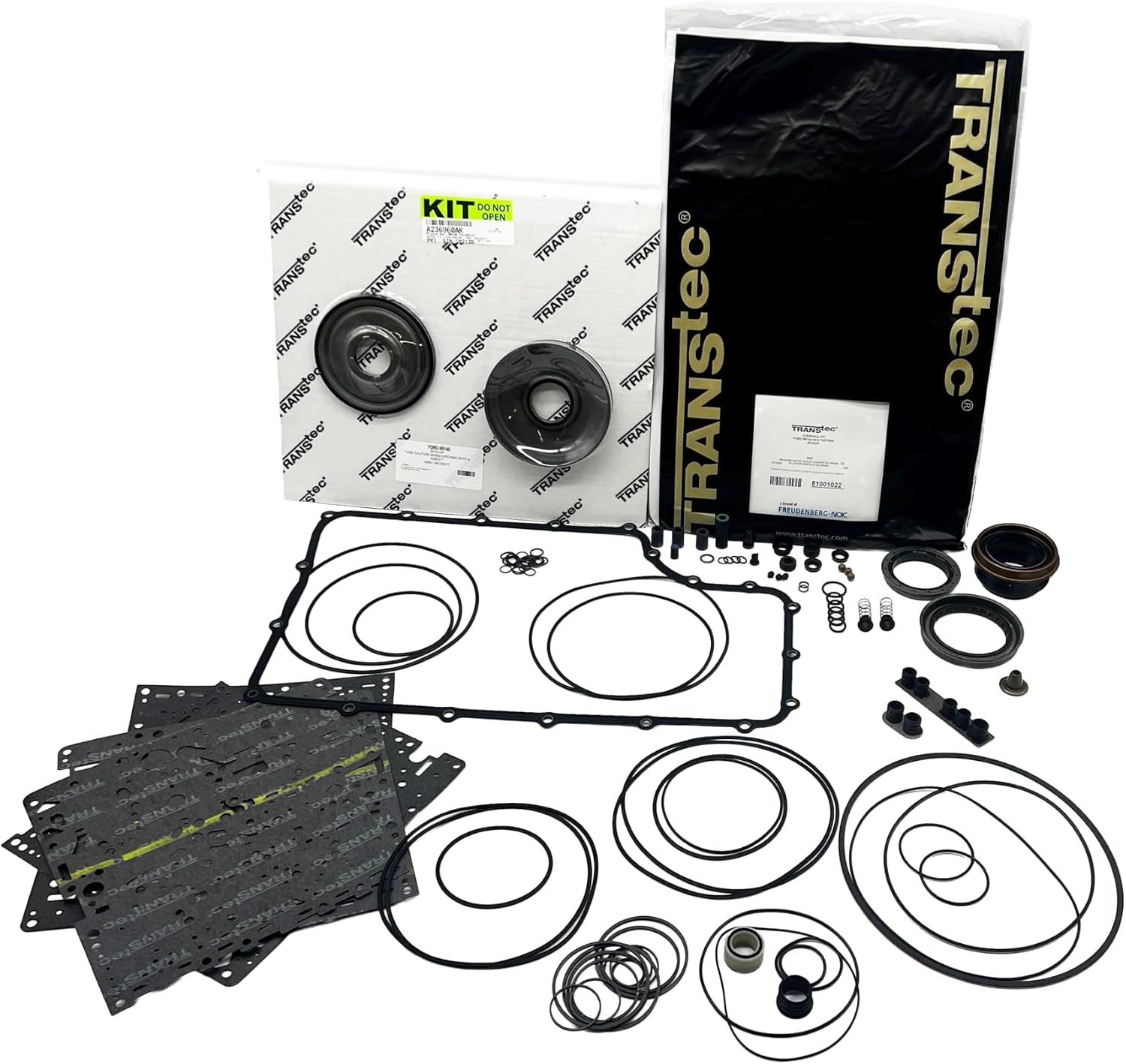
Shop the part for this fix: 6R140 overhaul kit with bonded pistons
For a 6R140 that is slipping, flaring or full of clutch material, this 2011-up overhaul kit carries the gaskets, seals and bonded pistons for the teardown. Order Allison overhaul parts separately; nothing crosses between these two units.
View the 6R140 overhaul kit →Working on the Duramax side? Browse Allison 1000 transmission parts.
Generations: Identify Before You Order
6R140 separator plates
Sonnax splits the 6R140 valve body into two casting families. 2011-2014 castings end in EB and take unnotched plates stamped BC3P-7Z490-EB, -EC, -ED or -EE, and partway through that run Ford added a third dampener piston in the low/reverse solenoid circuit. From the 2015 model year castings end in BA and the plates carry a C, CC, V or VV notch. The VV plate, used on 2017-later diesels, deletes the 2-6 cutback feed hole and has to be paired with the narrow-land 4-5-6 latch valve. Put a VV plate on a unit that wants a C or CC and the 2-6 regulator sees a 2.3 to 1 ratio on the 5-6 upshift instead of 1.24 to 1, and the 5-6 comes in hard. Unnotched plates fit only EB castings; notched plates fit only BA castings.
Allison 1000 valve bodies
The Allison has four valve body versions. Per ATRA and Transmission Digest: 2001-2005 units are five-speeds, with a G solenoid added in 2004 to lower line pressure in Park and Neutral and cut pump whine. 2006-2009 units became six-speeds, the trim solenoids changed to pressure control solenoids and the external neutral start switch moved inside as an internal mode switch. For 2010 the G solenoid was dropped and a main modulating solenoid took over line pressure. The 2010-up valve body does not interchange with anything earlier, and its separator plate is the only Allison plate with bonded gaskets.
The 2010-2011 Allison updates came with a hard rule: the updated ground sleeve (29546302), turbine shaft (29548947), main shaft (29546284) and output shaft (29546744) must be used as a set. ATRA warns that mixing 2010 shafts with earlier ones can damage the transmission because the lube orifices changed. Read the shafts on the bench before you reuse anything.
Fluid and Service: Close in Volume, Far Apart in Rules
The 6R140 takes MERCON LV, with a 4 gallon capacity on the Ford Component Sales sheet and a 250 degree F continuous operating rating. GM's TechLink fluid chart lists the Allison LCT1000 (RPO MW7) at 15.3 quarts at overhaul with Castrol TranSynd. Nearly the same volume, two incompatible fluids. Never top off one with the other's jug.
Allison is far more specific about intervals. Its 1000/2000 operator's manual sets them by fluid. With 100 percent TES 668 or TES 295 fluid and prognostics off, the fluid change is 150,000 miles or 48 months in general duty and 75,000 miles or 36 months in severe duty, and the spin-on control main filter is every 50,000 miles or 24 months. With TES 389 fluid, both drop to 50,000 miles in general duty and 12,000 miles or 6 months in severe duty. Anything short of 100 percent TES 295 or 668 is treated as a mixture and goes on the TES 389 schedule. Prognostics, where fitted, also require approved fluid and control main filter P/N 29539579.
Check the Allison hot, at a 160-200 degree F sump temperature, reading the HOT band. Allison warns that an overfull transmission can overheat. On a used Duramax with unknown service history, assume a mixture and set the customer on the short schedule.
Where Each One Fails
- 6R140, after a rebuild: wrong separator plate or latch valve for the casting and year (harsh 5-6), reused solenoids that lost their banding (harsh 1-2, 2-3 flare), and solenoid body strategy not programmed after a unit swap.
- 6R140, in service: converter hub, pump bearing and PTO spline wear on hard-worked trucks, and shift complaints that trace back to engine load sensors rather than the transmission.
- Allison 1000: wrong valve body or solenoids for the year, dirt-stuck valves (ATRA says flat-sand the valve body, torque bolts evenly and make sure both the pan and spin-on filter magnets are in place), a plugged solenoid feed filter, and fluid neglect run on the long-interval schedule.
So Which Is Stronger?
On published numbers, the 6R140 is the one with a factory torque rating, 935 lb-ft at the engine, and it has the deeper first gear for launching a load. The Allison has the longer service record, a deeper reverse, a spin-on filter that is easy to service, and a fluid program built for commercial duty cycles. Both survive heavy towing in stock form when they are serviced on schedule and rebuilt with the right parts for their year.
The question that actually matters in a shop is not which is stronger, because nothing interchanges. Different bellhousings, controllers, harnesses, fluids and PTO drives mean a Ford stays a 6R140 and a Duramax stays an Allison. What matters is identifying the casting, plate notch and year on a 6R140, or the valve body version and shaft set on an Allison, before you order a single part.
Need parts for this job?
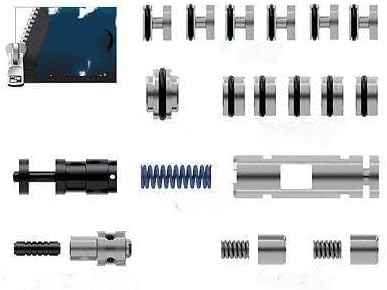
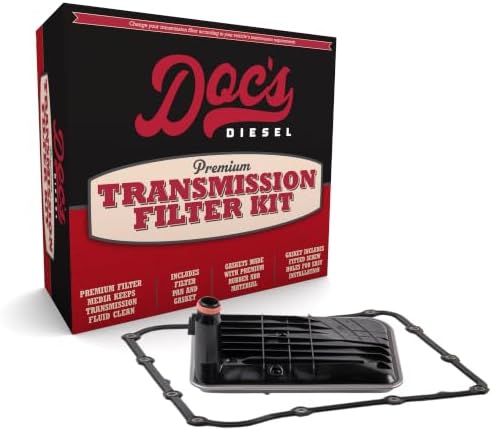
6R140 overhaul kits, valve bodies, Zip Kits, solenoid kits and filter kits, plus Allison 1000 filters, solenoid kits and valve bodies. Secure checkout on our site.
Shop 6R140 parts →Frequently Asked Questions
Is the 6R140 stronger than the Allison 1000?
On published numbers, Ford Component Sales rates the 6R140 at 935 lb-ft of maximum engine torque. GM does not publish an input rating for the Allison on its spec sheet; it lists the engine paired with it, the 6.6L Duramax at 765 lb-ft at 1600 rpm in 2016. Both handle heavy towing in stock form when serviced on schedule, and the higher numbers quoted online are aftermarket claims.
What are the 6R140 and Allison 1000 gear ratios?
The 6R140 runs 3.974, 2.318, 1.516, 1.149, 0.858 and 0.674 with a 3.128 reverse, per Ford Component Sales. GM's 2016 Silverado HD spec sheet lists the Allison 1000 at 3.10, 1.81, 1.41, 1.00, 0.71 and 0.61 with a 4.49 reverse. The Ford has the deeper first gear and the Allison has the deeper reverse.
What fluid does each transmission take?
The 6R140 takes MERCON LV, with a 4 gallon capacity listed by Ford Component Sales. GM's TechLink chart lists the Allison LCT1000 at 15.3 quarts at overhaul with Castrol TranSynd, and Allison approves TES 295, TES 668 and TES 389 fluids. The two fluids are not interchangeable.
How often should the Allison 1000 fluid and filter be changed?
Allison's operator's manual sets it by fluid. With 100 percent TES 668 or TES 295 fluid, change fluid at 150,000 miles or 48 months in general duty and 75,000 miles or 36 months in severe duty, and the spin-on control main filter every 50,000 miles or 24 months. With TES 389 fluid or any mixture, both drop to 50,000 miles general and 12,000 miles or 6 months severe.
Can you swap an Allison 1000 into a Ford with a 6R140?
Not as a bolt-in. The two units use different bellhousings, controllers, harnesses, fluids and PTO drives, and the 6R140 diesel TCM and the Allison TCM are separate systems calibrated to their own engines. On a working truck it is far cheaper to rebuild the transmission that came in it with the correct parts for its year.
Sources
- Ford Component Sales, LLC — "Ford 6R140: 6-Speed Automatic Transmission Technical Specifications" (OEM spec sheet). Backs the 935 lb-ft maximum engine torque, 345 lb weight, MERCON LV and 4 gallon capacity, 250 F continuous rating, 125K gas / 97K diesel converter K factor, Lepelletier powerflow with one simple planetary, one Ravigneaux set and five clutch packs (3 rotating, 2 brake), all six ratios plus 3.128 reverse, PCM on gas vs TCM on diesel, J1939 and the PTO option. fordcomponentsalesllc.com (PDF)
- General Motors — 2016 Chevrolet Silverado HD Specifications (GM Media). Backs the Allison 1000 ratios 3.10 / 1.81 / 1.41 / 1.00 / 0.71 / 0.61 with 4.49 reverse, the 3.73 final drive, and the Duramax 6.6L rating of 397 hp and 765 lb-ft at 1600 rpm. media.gm.com (GM PDF)
- GM TechLink — 2025 Transmission Fluid Capacities chart. Backs the LCT1000 (RPO MW7) overhaul capacity of 14.5 L / 15.3 qt with Castrol TranSynd. gm-techlink.com (GM PDF)
- Allison Transmission — 1000 and 2000 Series Operator's Manual OM8471EN (Sept 2021). Backs the prognostics fluid and filter requirement (TES 295/668/389, control main filter P/N 29539579), the Table 6-2 fluid and filter intervals by fluid type and duty, the mixture rule, the 160-200 F hot check and the overfill warning. Allison PDF
- ATRA — "Allison LCT1000" technical webinar, Mike Souza, ATRA Senior Research Technician (2014). Backs the Gen I-III history (2004 G solenoid, 2006 six-speed with PCS solenoids and internal mode switch, 2010 main modulating solenoid), the engine speed sensor 0.033 in gap and 2007 elimination, TSS reading the PTO drive gear on the C1/C2 drum, the pressure switch manifold logic and C-D-E solenoid swap test for P0842/P0877/P0872, the solenoid feed filter no-movement condition, the 92 lb-in IMS bolt and fast learn, and the 2010-11 shaft set and converter updates with part numbers. atracom (ATRA PDF)
- Transmission Digest — "Identifying Allison 1000/2000/2400 Valve Bodies" (Jeff Parlee, Sonnax). Backs the four Allison valve body versions and the non-interchangeable 2010-up design with the bonded-gasket separator plate. transmissiondigest.com
- Sonnax — "How to Identify Ford 6R140 Torque Converter Features & Avoid Application Pitfalls" (Steve Jaussaud). Backs the roughly 70 lb dry converter, impeller hub O.D. splines for the pump and I.D. splines for the PTO, the pump needle bearing guidance, the captive clutch reacting against a separate backing plate, and TCC apply as early as 2nd gear at 18 mph. sonnax.com
- Sonnax — "Ford 6R140 Separator Plate Identification" (Eric Streed). Backs the EB vs BA casting families, BC3P-7Z490-EB/-EC/-ED/-EE plates, the added third dampener, the C / CC / V / VV notches, the VV plate and narrow-land 4-5-6 latch valve on 2017-later diesels, and the 2.3:1 vs 1.24:1 ratio behind a harsh 5-6. sonnax.com
- Sonnax — "Troubleshooting Ford 6R80 & 6R140 Timing-Related Shift Issues." Backs the variable bleed solenoid banding (bands 1-5), solenoid strategy codes programmed to the module, solenoids losing calibration over time and causing harsh or flared shifts after overhaul, and the three-to-five shift cycle relearn. sonnax.com
- Transmission Digest — "Diagnosing a Delayed, Harsh 1-2 Shift in the Ford 6R140 Transmission" (Mike Wiggins, July 2025). Backs the 2015 F-350 case with no codes, replaced transmission, valve body and TCMs, and the exhaust back pressure sensor reading 68.8 psi at light throttle as the root cause. transmissiondigest.com