There is no single part on a 6R80 called "the 3-4 clutch." What techs mean by that is the 3-4 upshift event itself: the one moment in the whole shift map where the direct clutch (B) has to let go at almost the same instant the overdrive clutch (E) takes hold, while the forward clutch (A) just keeps doing what it was already doing in 3rd. When that handoff goes wrong, you get a flare, a hunt between 3rd and 4th, or a truck that momentarily feels like it dropped into neutral on the way to 4th. Some of those cases are a $20 solenoid. Some are a cracked clutch piston that will not show up until the third time the unit comes apart.
This guide walks through what actually happens during the 3-4 shift, how to read the symptom against the clutch apply chart, and the two real ATRA/ATSG field cases that show why a clean pan and a good air-check do not always mean the clutch is innocent. Every source is listed at the bottom.

What actually happens during the 3-4 shift
The 6R80 is Ford's build of the ZF 6HP26, and it uses five clutches, lettered A through E, to cover six forward gears plus reverse. GEARS Magazine's Lance Wiggins lays out the identification in "Controlling the 6R80": the forward clutch (A) holds through 1st-4th, the direct clutch (B) covers 3rd, 5th and Reverse, and the overdrive clutch (E) covers 4th, 5th and 6th. Put those side by side and the 3-4 shift is the only transition on the whole chart where A stays applied, B has to release, and E has to apply, all in the same breath.
| Gear | Clutches applied | What changes going 3→4 |
|---|---|---|
| 3rd | A (forward) + B (direct) | — |
| 4th | A (forward) + E (overdrive) | B releases, E applies, A never moves |
That is why a 3-4 complaint is almost always a B-release or E-apply problem, not an A problem. If the truck also slips or flares in every other gear that uses A (1st through 4th), the forward clutch or something upstream of it, like the pump or main line pressure, is more likely the real cause, and the 3-4 symptom is just where it is most noticeable.
The three ways a 6R80 3-4 clutch failure shows up
1. Flare on the 3-4 upshift
Engine and turbine speed rise before the transmission catches in 4th. This is the classic sign that B let go before E built enough pressure to carry the load, a timing mismatch rather than a worn part in most cases.
2. A dead spot or "neutral" feeling going into 4th
This is the one that gets misdiagnosed as a bigger failure than it is. ATRA's Shift Pointers column on a 2014 Ford F-150 with no 4th, 5th or 6th and a stored P0771 describes exactly this: on the road test, the transmission "neutralized on the 3-4 shift," and the same thing happened repeatedly on the lift. Nothing was slipping and catching, it just went briefly to nothing.
3. Shifting in and out of 4th, or hunting
The companion case in the same ATRA article, a 2015 Ford Transit, shows up as the PCM commanding repeated 4-5, 5-4, 4-5 shifts with no clutch actually at fault for the hunting between gears, the controller was reacting to a problem it could feel but not name. A 6R80 that will not settle on a gear near the 3-4/4-5 boundary deserves the same workup described below before you touch a single part.
Codes you will actually see
P0734 – 4th gear incorrect ratio. The PCM compares input shaft speed to output shaft speed and the ratio does not match what 4th gear should produce. This is a ratio-based code, so it fires whether the cause is electrical, hydraulic, or a worn clutch pack.
P0771 – shift solenoid E performance. ATRA's write-up is explicit that this is a non-electrical code: the circuit is complete and the computer is commanding the solenoid correctly, but the transmission is not producing the result the PCM expects. That can be a solenoid stuck mechanically, a leaking hydraulic circuit, or damage inside the clutch itself.
Do not expect either code to appear right away. Wiggins notes in GEARS that the system needs four consecutive shift-error failures before it stores a shift error code, and five consecutive failures for a continuous TCC code. A 3-4 flare or hunt can repeat for days before anything lands in memory, so graph the shift on a scan tool rather than waiting on a code to tell you where to look.
Diagnosis: solenoid timing first, then mechanical
- Confirm the fluid level with the engine running, at operating temperature, selector in Drive, truck level, through the fill plug on the case. MERCON LV is the only fluid Ford specifies for this unit. Low fluid produces exactly the kind of flare described above and costs nothing to rule out first.
- Graph the 3-4 shift itself on a scan tool. Watch turbine speed (TSS), output speed (OSS) and commanded gear through the transition, not just steady-state in 3rd or 4th. A flare that happens only on the shift event, with clean ratios once the gear settles, points at timing, not a worn clutch.
- Amp-clamp the B and E solenoid circuits during the shift. Sonnax's troubleshooting method for the 6R80's 2-3 shift uses exactly this approach, clamping the solenoid feeding the off-going clutch and the one feeding the on-coming clutch and watching amperage and pressure build through the transition. The same method works for 3-4: a solenoid that is slow to release B or slow to apply E will show it in the trace before it shows up as a part failure.
- Check for solenoid calibration drift. Sonnax's Jim Dial documents that the 6R80's variable bleed solenoids are banded 1 through 5 and can drift off that factory band over time, throwing off the PCM's shift overlap calculation on any shift the drifted solenoid controls. If you replace a solenoid, match the band number stamped on the one you pull, or reprogram.
- If electrical and hydraulic checks come back clean, do the air-check before you close the unit. ATRA's fix for the stripped-planet case was to apply air to the A and E clutches together while turning the output shaft by hand. Grinding you can feel and hear means the splines at the 4-5-6 hub are stripped, a hard-part failure no amp clamp will ever find.
When the clutch itself is the problem
Transmission Digest's Wayne Colonna, writing up an ATSG hotline case, covers a 2014 Ford Expedition 5.4L that came in slipping in 5th with a stored 5th-gear ratio code. On teardown, only the E clutch (4-5-6, overdrive) plates showed a slight burn; the drum checked out with no cracks. The shop rebuilt it, replaced the valve body on general principle, and sent it back out. It came back shifting in and out of 5th. A third teardown, after two rounds of chasing speed sensors and engine-side causes, finally found a cracked 4-5-6 clutch piston that had worsened since the first rebuild.
The detail that matters for this article is Colonna's own note on how that failure usually presents: "Typically, this type of failure causes a problem with a shift into fourth rather than into fifth gear." In other words, a cracked E clutch piston is, more often than not, a 3-4 clutch failure first, and only shows up as a 5th-gear problem in the unlucky cases like this one. A piston crack will not reliably show on a simple air-check, which is why Colonna's case needed three teardowns to find it. If you have ruled out solenoids, valve body wear, and stripped planet splines, and the hunt or flare on the 3-4 shift will not quit, pull the E clutch drum and crack-check the piston under magnification rather than reusing it on faith.
The fix, in order
- Fluid level and condition first. Correct with MERCON LV, clear codes, re-test. A flare that disappears was a fluid problem.
- Timing and calibration: if the amp trace shows a slow or mismatched B or E solenoid, replace it with a matched band number or reprogram, rather than replacing parts at random.
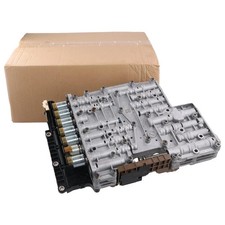
- Hydraulics: a worn valve body bleeding off apply pressure to B or E gets sealed bores or a remanufactured valve body.
- Hard parts, last: stripped 4-5-6 hub splines found on the air-check, or a cracked E clutch piston found on teardown, need the clutch pack, drum inspection, and in the stripped-spline case, new planetary gears. Use a master rebuild kit if the pan has friction material in it; a 3-4 clutch problem with a clean pan is not yet a rebuild.
- Program and run the drive cycle after any solenoid or valve body work. Enter the 13-digit solenoid body strategy and 12-digit identification under Module Programming, matching the tag on the new part. Then run Ford's drive cycle: from a stop in D, accelerate moderately to 50 mph (80 km/h) so the transmission reaches 6th, hold steady speed and throttle for 15 seconds, tap the brake for 5 seconds, stop for 20 seconds, and repeat five times. Skipping this step leaves erratic shifts behind that can look like the original complaint came back.
6R80 overhaul transmission rebuild kit with overhaul gaskets
For a 6R80 with a confirmed burned or cracked E or B clutch and friction material in the pan: the seals, gaskets and soft parts to overhaul the unit correctly the first time. Sold by our sister store, CoreTransmissionParts.
Shop the part for this fix →Need a bushing set, steels or a full kit for another unit? The rebuild kits collection lists the other options.
Need parts for this job?
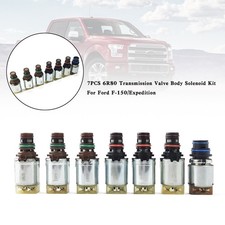
Our 6R80 parts page has solenoid kits, remanufactured valve bodies with solenoids, master and overhaul rebuild kits, and Motorcraft MERCON LV. Checkout is on site.
FAQ
What causes a 6R80 to flare or neutralize on the 3-4 shift?
The 3-4 upshift is the only shift where the direct clutch (B) releases at the same moment the overdrive clutch (E) applies, with the forward clutch (A) staying on through both gears. A flare means B let go before E took hold. A dead spot or neutral feeling, like the ATRA P0771 case that neutralized on the 3-4 shift, means E did not apply at all, whether from a solenoid, a hydraulic leak, or a mechanical failure inside the E clutch.
What codes show up with a 6R80 3-4 clutch problem?
P0734 (4th gear incorrect ratio) sets when the input and output speed ratio does not match commanded 4th gear. P0771 (shift solenoid E performance) sets when the computer cannot get the expected hydraulic result from solenoid E, electrical fault or not. Codes lag the symptom: GEARS Magazine notes the PCM needs four consecutive shift failures before it logs a shift error code, so a 3-4 flare can repeat for a while with nothing stored.
Can a solenoid cause a 6R80 3-4 problem without a bad clutch?
Yes. Sonnax documents that the 6R80's variable bleed solenoids drift off their factory calibration band over time, which throws off the PCM's shift timing and overlap control on any shift, including the 3-4. In the ATRA P0771 case, the transmission neutralized on the 3-4 shift, the pan was clean, and the E clutch air-checked perfectly; the shop condemned the solenoid, not the clutch, and fixed it with a valve body.
How do you tell a bad E clutch piston from a stripped planet on a 6R80?
Both can produce a 3-4 or 4-5 hunt with a clean pan and a good air-check on the bench, which is what makes them elusive. ATRA's fix for this is to apply air to the A and E clutches together while turning the output shaft by hand before you close up the unit. Stripped splines at the 4-5-6 hub show up as grinding you can feel and hear; a cracked E clutch piston usually will not show on a simple air-check at all; a Transmission Digest case only found it on a third teardown.
Will replacing the valve body fix a 6R80 that hunts between 3rd and 4th?
Only if the cause is electrical or hydraulic. In ATRA's documented case, a new valve body fixed a 2014 F-150 that neutralized on the 3-4 shift with P0771. On a 2015 Transit with the identical symptom, a new valve body changed nothing, and the transmission had to come out to find stripped rear planet splines. Run the air-check test before you commit to either repair.
Related guides
- 6R80 Slipping: Causes and Fix
- 6R80 P0730: Incorrect Gear Ratio Causes and Fix
- 6R80 Shift Solenoid Symptoms and Replacement
- 6R80 Valve Body Wear and Fix
- 6R80 Won't Shift Into Overdrive
Sources
- GEARS Magazine (ATRA), "Same Code, NOT The Same Problem! A 6R80 With A Code P0771." Backs the 2014 F-150 that neutralized on the 3-4 shift, the clean pan and good E clutch air-check, the valve body fix, the 2015 Transit with the identical symptom, and the stripped rear planet splines found by air-applying A and E while turning the output shaft. gearsmagazine.com
- Transmission Digest, Wayne Colonna (ATSG), "Transmission slipping in fifth gear: An elusive cause of a common problem," December 2022. Backs the 2014 Ford Expedition 5.4L case, the slightly burned E (4-5-6) clutch plates, the cracked piston found on the third teardown, and the direct statement that this failure type usually shows up as a problem on the shift into 4th rather than 5th. transmissiondigest.com
- GEARS Magazine (ATRA), Lance Wiggins, "Controlling the 6R80," July 2015. Backs the A/B/E clutch identification and which gears each covers, the 3rd and 5th gear failsafe behavior, codes setting after four consecutive shift failures or five TCC failures, solenoid body strategy programming, and the Ford drive cycle procedure. atracom.blob.core.windows.net (PDF)
- Sonnax, Jim Dial, "Troubleshooting Ford 6R80 & 6R140 Timing-Related Shift Issues," August 2022. Backs the variable bleed solenoids drifting off their factory calibration band over time and the resulting shift timing and overlap problems. sonnax.com
- Sonnax, "Troubleshooting Ford 6R80, 6R140 2-3 shift quality issues." Backs the amp-clamp and pressure-trace method used to diagnose off-going versus on-coming solenoid behavior during a shift, the diagnostic approach applied in this article to the B/E handoff on the 3-4 shift. sonnax.com