A 6R80 that makes noise is not automatically a transmission that needs to come apart. "It's whining" or "it clunks" covers a pump bushing, a worn case bearing, a torque converter with a bad pump seal, a valve body that has worn its pressure regulator bore, driveline slop at the U-joint or slip yoke, and at least one documented case where the transmission was completely innocent and the real fault was a failing turbocharger. Guessing which one you have before you road test it properly means a real chance of replacing good parts while the actual cause keeps making noise.
This guide walks through how to characterize the noise first, what a Ford bulletin and two real shop write-ups say about the most common whine and clunk causes on this unit, and how to prove the cause on a scan tool before anything gets pulled. Every source is listed at the bottom.
Step 1: characterize the noise before you touch anything
Transmission Digest technician Brendan Baker lays out the starting point for any 6R80 noise job: figure out what type of noise it is, and exactly when it happens. Whining, moaning and groaning are different animals, and the noise can show up in Park or Neutral, sitting still in gear, or only while driving down the road. Baker's key warning for this specific unit: a 6R80 bearing growl can be heard at all times and is not necessarily coming from the geartrain at all, so a noise that is constant regardless of range, speed or load should point you at the pump and case bearings before you suspect gears or clutches.
Write down the answers to these four questions before you look anything up:
- Does it happen in Park/Neutral with the engine running and the truck not moving? If yes, it is very unlikely to be a gear-mesh or planetary noise, since nothing in the gear train is under load.
- Does it track with engine RPM or with output/road speed? A pump whine tracks engine RPM because the pump turns with the input shaft. A gear or bearing noise downstream of a planetary can track output speed instead.
- Does it only happen during acceleration, and go away once something locks up? That pattern specifically describes the converter-area whine covered by the Ford bulletin below.
- Is it a one-time clunk at a shift or at a gear change (P-R, D-R, coast-down), or a continuous noise? A single clunk event points at mechanical slop or a pressure spike, not a continuous bearing or gear problem.
Whine cause 1: converter-area whine on acceleration (documented Ford TSB)
Ford TSB 13-6-4 covers some 2013 Mustang and 2012 F-150 vehicles built between April 1, 2012 and July 1, 2012, equipped with the 3.7L engine and 6R80. The bulletin describes exactly this symptom: a whining noise from the transmission torque converter housing area during acceleration, which goes away once the torque converter clutch locks up. That disappearing-on-lockup detail is the fingerprint. If your whine matches it, this is a parts-and-labor job, not a full rebuild.
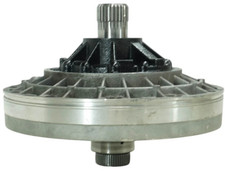
The TSB's repair procedure removes the transmission, pulls the torque converter with Ford's special tool, discards the input shaft oil seal, installs a new front pump seal, and installs a new torque converter. Ford does not call for draining the transmission or dropping the transfer case on 4x4 models for this specific procedure. The parts list calls out a new torque converter (BR3Z-7902-C), a new converter pump seal (6L2Z-7A248-AA), and refill with MERCON LV fluid (part number XT-10-QLV) along with the cooler line O-rings and hardware disturbed during the R&R. Labor time runs 3.8 to 5.5 hours depending on body style and 4x2 vs. 4x4.
The practical takeaway even if your truck falls outside that exact build-date window: a whine that is specifically tied to the converter housing area and clears up once TCC locks up is a pump seal and converter problem pattern on this platform, not a sign the gear train is failing.
Whine cause 2: a pump or case bearing that growls at idle
Per Baker's Transmission Digest write-up, a bearing growl on a 6R80 can be present constantly, independent of the gear train, and the industry has made running upgrades to address it. If your truck growls or whines in Park and Neutral, with the engine running and the truck not moving, you are not dealing with converter lockup behavior or a load-dependent gear noise. That points at the pump assembly or a case-mounted bearing. Pull the pan and filter first and look for metal in the fluid, since a failing pump bushing or gear set sheds material before it gets loud enough to hear from the cab. A pump that is actually starving (wrong filter snout length, low fluid, a cracked pickup) will also run the fluid level down over several drive cycles even though the transmission otherwise still functions, so check fluid level after any noise complaint, not just before.
Whine cause 3: don't assume TCC slip means the transmission is bad
This is the case every 6R80 tech should read before replacing a unit on a whirring-noise complaint. Certified Transmission diagnostician Troy Hopp documented a 2015 Ford Expedition 4WD with a 3.5L EcoBoost V6 and 6R80 that came in with "RPMs fluctuate up and down and there is a whirring noise." The truck had already had one transmission replaced under warranty elsewhere for a torque converter clutch shudder complaint before it reached his shop.
On the road test, Hopp verified an intermittent whirring noise from under the hood during medium-to-heavy acceleration around 30-40 mph, and confirmed a slipping torque converter clutch on the scan tool with an RPM fluctuation at the same time. That is a textbook TCC slip pattern. His shop started a warranty claim, replaced the transmission again, flushed the coolers, reprogrammed the PCM with updated Ford software, installed the correct solenoid strategy and solenoid body ID, cleared adaptive memory, and ran the relearn. Nothing changed. Same TCC slip on the scanner, same RPM fluctuation, with a second, known-good transmission installed.
The actual fix came from outside the transmission entirely. Hopp found a loose, worn-through intercooler duct tube rubbing on the crankshaft pulley, and was able to reproduce the exact noise and RPM fluctuation by power-braking the truck stationary and stalling the torque converter. A check engine light then set P0234, Turbo Boost Pressure Code. A TSB search on that code turned up Ford bulletin 16-0013, which describes drivability symptoms for that code including surging and noises described as an air rush, hiss, whoosh, whistle, grinding or scraping. The vehicle went back to the shop that had done the engine work, which replaced the left turbocharger. All symptoms, including the "TCC slip" on the scanner, were resolved.
The lesson for any turbocharged 6R80 (EcoBoost-equipped F-150s and the Expedition/Navigator) with a whirring or TCC-slip complaint: a boost or intake leak can create an engine surge that the PCM's torque converter clutch control reads as slip, because the transmission is reacting to real torque fluctuation coming from the engine side. Before committing to a second transmission, check for boost-related codes, inspect intercooler piping and clamps, and try to reproduce the noise stationary with a power brake before road testing again.
Clunk cause 1: valve body wear and erratic apply pressure
Sonnax technical specialist Jim Dial, writing for the company's own troubleshooting guide on 6R80 and 6R140 timing-related shift issues, ties a cluster of 6R80 complaints back to a worn valve train in the valve body that lets the clutch control circuit leak. On this unit the C (2-6 clutch) pressure regulator valve has no latch valve; its position is set purely by solenoid output and a balance circuit tied to clutch apply pressure. When the bore or valve wears, or when a solenoid has lost its original calibration (Dial describes solenoids drifting from a factory band rating over time), the regulator can't hold a steady position, and apply pressure swings. Sonnax's own parts data for its accumulator piston kit specifically lists downshift clunk, firm shifts and erratic electronic-disc-stacking control among the complaints it addresses, which is a direct link between valve body-area wear and a clunk on deceleration or a downshift, not just a flare or slide on upshifts.
A companion Sonnax reference, the critical wear areas and vacuum test location chart for the Ford 6R80/6R100, gives techs the actual bore locations to vacuum test on both the upper and lower valve bodies rather than guessing. A low vacuum reading at a given bore means wear at that location. If a clunk shows up specifically around a shift event or TCC apply/release rather than being present all the time, this is where to look before condemning the whole unit.
Clunk cause 2: driveline slop, not the transmission at all
Not every clunk on a 6R80 truck originates inside the case. A clunk that happens specifically on P-R, D-R, or R-D engagement, with no abnormal shift quality once the truck is moving, is a common symptom of worn driveline components: a U-joint with play, a loose driveshaft-to-flange connection, or slack in a slip yoke that only announces itself when torque direction reverses abruptly at a gear change. Ford has documented exactly this on the Mustang. Special Service Message 49083 covers some 2015-2017 Mustangs with the 3.7L or 5.0L and the 6R80, built on or before April 1, 2017, that make a clunk or ping from the driveshaft when shifting from reverse to drive or drive to reverse. Ford's fix is not a transmission part at all: it released a revised driveshaft with better NVH characteristics and lists the driveshaft (4R602) as the causal part. If you work on S550 Mustangs, have a helper cycle the shifter while you listen under the car before you quote a valve body. The same logic applies to a clunk complaint: check driveshaft U-joints, the center support bearing if equipped, and flange torque and play, especially on a 4x4 truck, before assuming the valve body.
How to prove it on the scan tool before you commit to parts
- Log TCC slip and RPM together during the exact speed and load range where the noise happens. If TCC slip and an RPM flutter show up together but the truck is turbocharged, treat a boost leak or failing turbo as a real competing cause, not just the converter, per the case above.
- Reproduce it stationary if you can. Hopp's power-brake test (stall the converter with the truck held stationary) duplicated both the noise and the RPM fluctuation on the Expedition case, which is what let the shop separate engine-side surge from an actual transmission fault.
- Check whether the whine disappears exactly at TCC lockup. That specific pattern matches Ford's documented converter-housing whine fix (TSB 13-6-4): new front pump seal and converter, not a rebuild.
- Vacuum test the valve body bores per Sonnax's wear-location chart if the complaint is a shift-related clunk or erratic pressure rather than a constant noise.
- Check the fluid level and condition with the truck level, engine running, and fluid at operating temperature per Ford's TFT-based fill procedure, since a low or aerated pump feed will make an existing pump whine louder and can itself cause erratic pressure that mimics valve body wear.
Fluid and parts
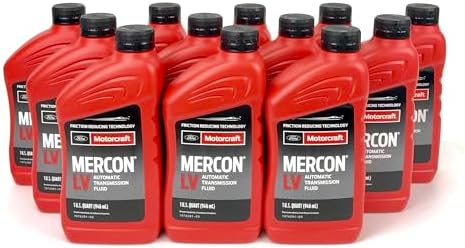
The 6R80 is filled with MERCON LV, confirmed directly in Ford TSB 13-6-4's parts list (XT-10-QLV). It has no conventional dipstick; the level is checked through the side fill plug with the truck level and fluid at operating temperature read on a scan tool. A constant pump whine or growl calls for a pump replacement; a shift-related clunk or erratic pressure calls for addressing the valve body wear directly rather than chasing it with fluid changes alone.
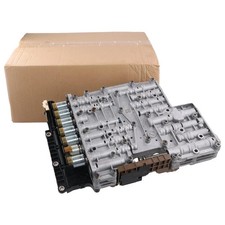
6R80 Valve Body 2012-2014, remanufactured with solenoids
For a 2012-2014 6R80 with a shift-related clunk, flare, or erratic line pressure traced to valve body wear: a direct-fit remanufactured valve body with solenoids. Sold by our sister store, CoreTransmissionParts.
Shop the part for this fix →Need a different year or a solenoid body only? The valve bodies collection lists the other options.
Need parts for this job?
Our 6R80 parts page has pumps, valve bodies, solenoid kits, torque converters, and Motorcraft MERCON LV. Checkout is on site.
FAQ
Why does my Ford 6R80 whine on acceleration?
A whine that rises with engine speed and then disappears once the torque converter clutch locks up points at the converter housing area, not a gear or bearing. Ford TSB 13-6-4 documents this exact symptom on some 2012 F-150 and 2013 Mustang 3.7L/6R80 trucks built between April and July 2012, and the fix is a new front pump seal and torque converter, not a full rebuild. A whine present at all times, including in Park and Neutral, is more likely a pump or case bearing.
Can a bad turbocharger cause a transmission-sounding whirring noise on a 6R80?
Yes. A documented Certified Transmission case on a 2015 Ford Expedition 3.5L EcoBoost 6R80 showed an intermittent whirring noise with RPM fluctuation and a slipping torque converter clutch on the scan tool. A full transmission replacement under warranty did not fix it. The actual cause was a failing turbocharger that set a P0234 overboost code, which Ford's own bulletin lists as capable of producing a rush, hiss, whoosh, whistle, grinding or scraping noise and surging. Rule out boost and intake leaks before condemning the transmission on a turbocharged 6R80.
What does a clunk on a shift or on coast-down mean on a 6R80?
A clunk on a downshift or on torque converter clutch release is a classic symptom of valve body wear, specifically the pressure regulator valve bore and balance bushing wearing enough to let line pressure and clutch apply swing erratically. Sonnax's own repair kit for this wear is listed against flare, harsh shifts and downshift clunk. A clunk that happens specifically on P-R, D-R or R-D engagement, with no relation to shift quality once underway, is more often driveline slop: a worn U-joint, loose driveshaft flange, or slack in the slip yoke.
How do I tell a pump whine from a bearing growl on a 6R80?
Listen for when the noise happens. A worn pump bushing or gear set typically whines with output flow, so it changes with vehicle speed or line pressure demand. A case or pump bearing growl, by contrast, can be present at all times, including sitting still in Park or Neutral with the engine running, because it is not tied to the gear train at all. If the noise is constant regardless of range or speed, start with the pump and bearing before you suspect the planetary gearset.
Does a 6R80 noise complaint always mean the transmission needs to come out?
No. Before any teardown, confirm the noise type (whine, growl, clunk, whirr), when it occurs (Park/Neutral vs. in gear vs. under load), and pull live TCC slip and RPM data. A documented Ford TSB fixes a converter-area whine with just a pump seal and converter swap, not a rebuild, and a real-world case traced an apparent TCC slip whirr to a bad turbocharger with no transmission fault at all. Jumping straight to a rebuild on a noise complaint alone risks replacing a healthy transmission.
Related guides
- 6R80 Torque Converter Shudder: Causes and Fix
- 6R80 Valve Body Problems and Testing
- 6R80 Pressure Control Solenoid Symptoms
- 6R80 Fluid Type and Capacity
- 6R80 Common Problems and Fixes
Sources
- Ford Motor Company, TSB 13-6-4, "3.7L Engine and 6R80 Transmission — Whine Noise on Acceleration," published June 4, 2013 (via NHTSA). Backs the affected models and build date range (2012 F-150, 2013 Mustang, 4/1/2012-7/1/2012), the converter-housing whine symptom clearing at TCC lockup, the front pump seal and torque converter replacement procedure, the MERCON LV fluid spec (XT-10-QLV), and labor times. static.nhtsa.gov (PDF)
- Transmission Digest, Brendan Baker, "Watch: 6R80 Pump Noise," November 5, 2020. Backs the noise-characterization method (type, and whether it occurs in Park/Neutral, in gear stationary, or driving) and that a 6R80 bearing growl can be present at all times and not originate in the geartrain. transmissiondigest.com
- Transmission Digest, Troy Hopp (Certified Transmission), "6R80 Whirring Noise: TCC Slip or Engine Surge?," May 28, 2024. Backs the full 2015 Ford Expedition 3.5L EcoBoost case: the whirring noise and RPM fluctuation with verified TCC slip on the scan tool, the warranty transmission replacement that did not resolve it, the loose intercooler duct found rubbing the crankshaft pulley, the stationary power-brake reproduction test, the resulting P0234 code and Ford TSB 16-0013 symptom description, and the fix (replacing the turbocharger). transmissiondigest.com
- Sonnax, Jim Dial, "Troubleshooting Ford 6R80 & 6R140 Timing-Related Shift Issues." Backs the valve body wear and solenoid calibration drift mechanism, the C (2-6) clutch pressure regulator valve having no latch valve and being positioned by solenoid output and a balance circuit, and the accumulator piston kit's listed complaints including downshift clunk and erratic electronic-disc-stacking control. sonnax.com
- Transmission Digest (Sonnax), "Critical Wear Areas & Vacuum Test Locations for Ford 6R80/6R100," January 24, 2021. Backs the use of vacuum testing at specific OE valve body bore locations on the upper and lower 6R80 valve bodies to confirm wear before parts are replaced. transmissiondigest.com
- Ford Motor Company, Special Service Message 49083, "2015-2017 Mustang 3.7L/5.0L 6R80 - Clunk/Ping Noise When Shifting From Park To Reverse And/Or Park To Drive Engagement" (via NHTSA). Backs the 2015-2017 Mustang 3.7L/5.0L coverage, the April 1, 2017 build cutoff, the driveshaft clunk on reverse/drive engagement, the revised driveshaft remedy and causal part 4R602. static.nhtsa.gov (PDF)