P0776 is a performance code, not a circuit code. The PCM is not telling you a wire is open. It is telling you that it commanded a specific pressure out of pressure control solenoid B, and the clutch that solenoid feeds did not behave the way the calibration says it should. That distinction decides everything about how you chase it, because a solenoid that ohms out perfectly can still set this code all day long.
On a Ford 6R80 there is one more thing you need to know before the code means anything: which clutch solenoid B actually runs.
The short version: On the 6R80, the "B" solenoid is the 3-5-R clutch solenoid, and it is a normally-applied (normally high) variable force solenoid with a black snout. The B clutch is the direct clutch, applied in Reverse, 3rd and 5th. So P0776 almost always shows up as a slip or flare in 3rd and 5th plus a soft or missing Reverse. Because the solenoid is normally applied, a true loss of B-clutch pressure usually is not a dead solenoid at all — it is the Clutch B regulator valve, the Clutch B latch valve, or the solenoid pressure regulator valve that feeds the whole solenoid bank. Vacuum test all three before you buy anything.
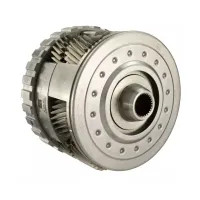
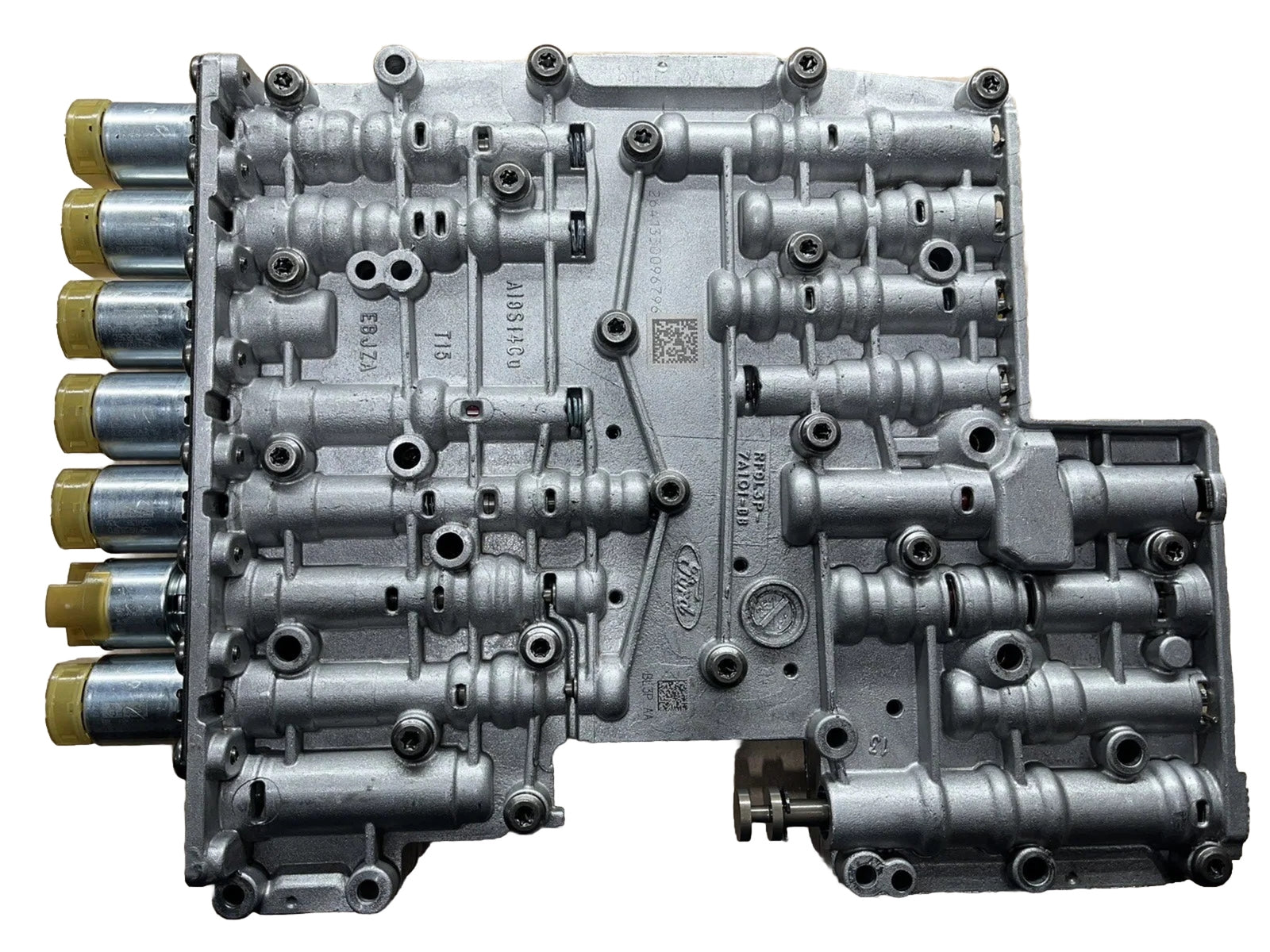
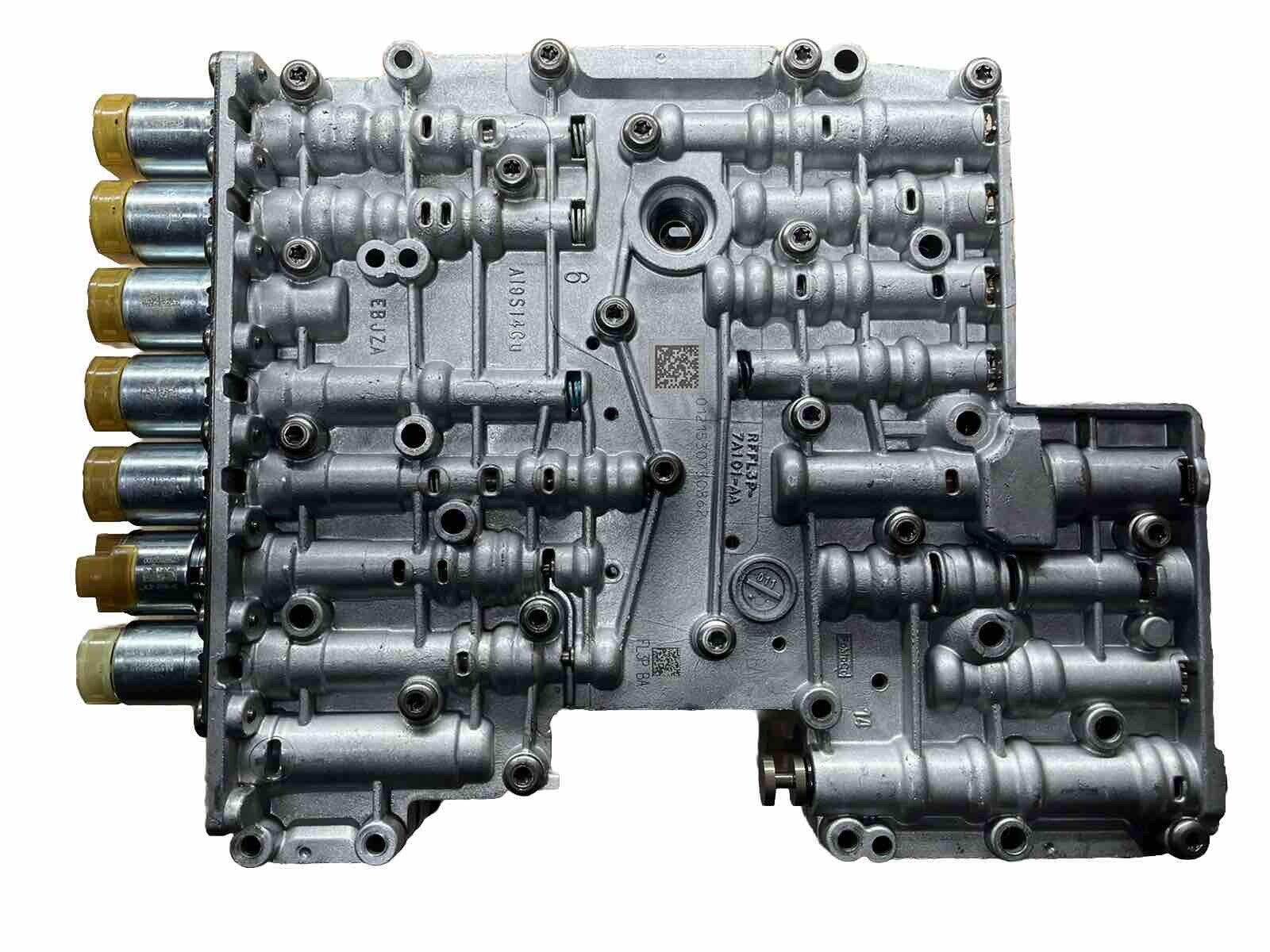
Which Clutch Is B on a 6R80
The 6R80 is Ford's build of the ZF 6HP26 architecture, and the clutch letters carry over from ZF while Ford's own shop language uses gear names. Sonnax technical specialist Jim Dial spells out the mapping in his 6R80 and 6R140 shift-quality writeup: the A clutch is the 1-2-3-4 clutch, the C clutch is the 2-6 clutch, and the B clutch is the 3-5-R clutch. That is not trivia. It is the diagnostic shortcut, because the gears a clutch holds tell you exactly what a customer will complain about when it stops holding.
Run it out: the B clutch is applied in Reverse, 3rd and 5th. Nothing else. So the failure signature for a genuine B-clutch pressure problem is a truck that is fine in 1st, 2nd, 4th and 6th, flares or neutrals on the 2-3 and the 4-5, and has a lazy, high-RPM or missing Reverse. If the complaint is a bad 1-2 or a bad 5-6, you are looking at the wrong solenoid no matter what the code says.
ATRA's Technical Bulletin #1861 publishes the full 6R80 clutch and solenoid apply chart, and it is worth having taped inside the toolbox lid. That bulletin also flags a change that catches people out on 2011-and-later F-150 builds: those units got a one-way clutch, and the D clutch now only applies until roughly 3 mph before releasing, where earlier units held D through all of 1st gear. If you are comparing apply behavior between a 2010 and a 2013 unit, that difference is real and it is not a fault.
Normally Applied Changes How You Read "Stuck Off"
The 6R80 uses a mix of solenoid types, and it matters here. Gears Magazine, ATRA's technical publication, breaks them down by snout color: the brown-snout solenoids are normally vented (VFS 1, 3 and 6, with green and red o-rings), and the black-snout solenoids are normally applied (VFS 2, 4 and 5, with orange and red o-rings). The single on/off solenoid, shift solenoid E, carries blue o-rings.
Solenoid B is one of the black-snout, normally-applied units. Sonnax's shift-quality article confirms it in scan data, calling the 3-5-R solenoid the "B" solenoid and labeling it NH for normally high. What that means on the bench is inverted from what most techs expect: low current gives high output pressure, and the TCM raises current to bleed that pressure down.
Follow that logic and the code gets more useful. If the coil failed open, or the driver quit, the solenoid would default toward full pressure and load the B clutch — a bind-up, not a slip. A complaint of lost 3rd, 5th and Reverse with P0776 in memory is therefore pointing at something that is bleeding B-clutch pressure away downstream of the solenoid, or starving the solenoid's own feed, or a solenoid whose internal valve is mechanically stuck rather than electrically dead. All three are things you find with a vacuum pump and a scan tool, not with a parts catalog.
Scan Tool: The Numbers That Prove It
Before the pan comes off, record a 2-3 upshift with solenoid amperage and solenoid pressure PIDs live. Sonnax published actual captured values off a 6R80 during a 2-3 shift, and they give you a baseline most of us never get in writing:
| Point in the 2-3 shift | B (3-5-R) solenoid | C (2-6) solenoid |
|---|---|---|
| Beginning of the 2-3 upshift | Amperage drops to 0.564 A; solenoid pressure builds to 14.6 psi | Amperage at 1.0 A, solenoid pressure low |
| Mid-transition | Pressure continues building | Amperage dropping off, pressure falling to 0 |
| Shift complete, in 3rd | Amperage 0.073 A; solenoid pressure near 50 psi | Amperage and pressure both stay low |
Read that table with the inverted behavior in mind and it makes sense: B amperage falls as B pressure rises. Watch for two failure patterns. First, the electronics look correct — amperage sweeps the way it should — but the pressure PID never climbs toward that 50 psi number in 3rd. That is a solenoid that is mechanically stuck or a feed problem, not a wiring problem. Second, the amperage itself is erratic or pinned, which sends you to the harness, the lead frame and the connector before anything else.
Make sure you are reading pressure in psi and not kPa on the scan tool. Sonnax calls that out specifically in the same article, because the unit toggle is easy to miss and 50 kPa versus 50 psi will send you down the wrong road entirely.
6R80 7-Piece Shift Solenoid Kit (2007-2014)
If the diagnosis lands on the solenoids, replace the set rather than the one — the rest have the same hours on them and you are already in there. This is the OEM-spec 7-piece kit (AL3P-7G276-AF) for 6R80 F-150, Expedition and Mustang applications. Record your band numbers before you pull the old ones.
See the 6R80 solenoid kit →Band Numbers: Why the New Solenoid Did Not Fix It
This is the single biggest reason a 6R80 comes back with the same code after a solenoid job. Ford 6R and 6F solenoids are banded. Sonnax engineer Eric Streed lays out the mechanics: each solenoid is swept from roughly 0 to 1 amp on a test bench, its output pressure is recorded, and the bandwidth zone it falls into determines its band number, 1 through 5. The zones are about 20 mA wide each. Using 31 psi as a reference point on a 6R80 and 6R140 normally-low solenoid, a band 3 part measured 492 mA, sitting inside the band 3 window of 475 to 495 mA.
Five bands opens roughly an 8 psi window at a given current. The TCM cannot guess which one is in which bore, so it has to be told. Ford handles that with a 13-digit solenoid body strategy code and an 8-digit solenoid body identification code, printed on a tag on the valve body and repeated on the side of the case. Program those into the module and the calibration compensates for the exact parts installed. Skip that step and the module is commanding one pressure curve while the hardware delivers another, which is precisely the mismatch P0776 exists to detect.
Two practical rules come out of this. Replace a solenoid with the same band number that came out of that position unless you are programming a new calibration, and put every solenoid back in its original location. Note also that for the black normally-high solenoids like B, band 1 is the highest pressure output, the reverse of the brown normally-low parts where band 5 is highest. Grabbing a close-enough band off the shelf pushes the shift the wrong direction.
Bench Work: The Three Bores That Fake a Bad Solenoid
If the electronics check out, the valve body is where the answer lives. Vacuum testing is how you find it without guessing — a low reading at a test port means the valve-to-bore clearance has opened up and the circuit is leaking. Sonnax's 6R80 vacuum test guide names the bores and, more usefully, prints the customer complaint each one produces.
Clutch B regulator valve (upper valve body, ID 201)
Symptoms listed: B clutch burned, 3rd and 5th slips, slips in Reverse. That is the P0776 complaint written out word for word. This bore regulates the actual B-clutch apply pressure, so wear here bleeds off the pressure the solenoid is commanding, and the PCM sees a clutch that will not hold what it was told to hold.
Clutch B latch valve (lower valve body, ID 115)
Symptoms listed: B clutch burned, no 3rd and 5th. The latch valve is what keeps the clutch fed once the shift is made. A worn latch bore tends toward the harder failure — not a slip, an outright loss of the gear.
Solenoid pressure regulator valve (lower valve body, ID 113)
This one is the sleeper, and it is worth understanding because it can set codes on solenoids that are perfect. Every linear solenoid in the unit is fed by this single regulator valve. Sonnax's description of the failure is specific: excess valve-to-bore clearance causes shift and pressure problems that change with operating temperature, low feed pressure at idle produces delayed engagement or wrong-gear starts, and excessive feed pressure floods the solenoids and produces gear ratio codes, harsh up and downshifts and high line pressure. The published symptom list for the repair part includes flare shifts, neutral shifts, harsh upshifts and downshifts, gear ratio codes and solenoid performance codes — which is exactly the family P0776 belongs to.
For context on why one valve carries so much weight: Sonnax's technical writing on solenoid modulator and AFL valves explains that this class of valve takes line pressure and regulates it down to a controlled solenoid feed, typically in the 80 to 115 psi range depending on the unit. Every solenoid downstream is only as accurate as that feed. Get it wrong and, in Sonnax's words, a worn modulator valve makes a perfectly functioning solenoid appear to have failed.
The repair parts for that bore are Sonnax 95740-17K (oversized valve kit, requires tool F-95740-TL17 and VB-FIX) or 95740-17A as a straight replacement valve. The broader valve body repair is covered by the Zip Kit, ZF6-6R60-ZIP for 2009-2014 units and 6R80L-6R100-ZIP for 2015-later 6R80 and 6R100. Confirm which generation you have first — the pressure regulator valves and sleeves are different sizes between them, and Sonnax warns plainly that they cannot be interchanged.
Do Not Mix Parts Across the November 2010 Change
While the valve body is off, one more trap. Wayne Colonna, writing in Transmission Digest, documents a running change to the 6R80's one on/off solenoid, shift solenoid E. Units built before November 4, 2010 use a 10.5 ohm solenoid with a tan snout, Ford part 6L2Z-7G484-AA. Units built after November 3, 2010 use an 18 ohm solenoid with a gray snout, Ford part AL3Z-7G484-B. Both use blue o-rings, so the o-rings will not save you. The two are not interchangeable, because the added coil windings change the current the PCM driver expects to see.
That is not the solenoid P0776 points at, but mixed-vintage solenoid sets are common on trucks that have been apart before, and the cheapest moment to catch it is with the pan already down.
Fluid and Fill
The 6R80 takes MERCON LV, Ford specification WSS-M2C938-A, per Ford's own Customer Service Division automatic transmission fluid application chart. MERCON V and MERCON SP are different fluids and are not substitutes here. Viscosity changes how a variable force solenoid meters pressure, so the wrong fluid does not just wear the unit out slowly — it moves the shift pressures the module is trying to hit right now.
Check the fluid before anything else, and check its condition as hard as its level. Contamination is the mechanism behind a genuinely stuck solenoid: fine clutch material and varnish keep the internal valve from stroking freely, which reads on a scan tool as a solenoid that responds electrically and does nothing hydraulically. If the fluid is dark or carries fuzz, the solenoid is a symptom and the clutch pack is the story.
Order of Operations
- Confirm the complaint matches the code. Lost or slipping 3rd, 5th and Reverse fits B. A bad 1-2 or 5-6 does not.
- Check fluid level and condition. Cooked or contaminated fluid changes the whole plan.
- Record a 2-3 upshift with B and C solenoid amperage and pressure PIDs, in psi. Compare against the values above.
- Inspect the harness, connector and lead frame before condemning anything internal.
- Drop the pan and valve body. Photograph the solenoid band numbers and their locations before removing a single one.
- Vacuum test the Clutch B regulator valve, Clutch B latch valve and solenoid pressure regulator valve. Repair the bores that fail with the Sonnax parts above.
- Replace solenoids as a set, matching bands, back in their original bores.
- Program the solenoid body strategy and solenoid body ID codes, clear adapts, and drive the relearn.
Solenoid sets, valve body kits, Sonnax Zip Kits, filter and pan gasket kits and MERCON LV — matched to your 6R80 and shipped fast from the USA.
Shop 6R80 parts →Shop the part for this fix
Core Transmission Parts stocks the 6R80 solenoid sets, valve body assemblies and rebuild kits this job calls for, with fitment listed by year and application.
Browse transmission solenoids →Keeping It From Coming Back
Three things prevent the repeat. Service the fluid on a real interval instead of trusting the fill-for-life label, because contamination is what sticks these solenoids in the first place. Vacuum test the valve body during any overhaul rather than assuming a clean-looking casting is still in clearance, since bore wear is progressive and a marginal bore passes a visual inspection every time. And write down the band numbers and the solenoid body strategy and ID codes before the parts come out, so the calibration matches the hardware when it goes back together.
FAQ
What does P0776 mean on a Ford 6R80?
P0776 is pressure control solenoid B performance or stuck off. On the 6R80 that solenoid controls the 3-5-R clutch, also called the B or direct clutch, which is applied in Reverse, 3rd and 5th. The code is set when the module commands a B-clutch pressure and the resulting clutch behavior does not match the calibration, so it is a performance complaint rather than a broken-wire complaint.
What are the symptoms of 6R80 pressure control solenoid B failing?
Because the B clutch only holds Reverse, 3rd and 5th, the truck usually drives normally in 1st, 2nd, 4th and 6th. Expect a flare or a neutral feeling on the 2-3 and the 4-5 upshift, engine RPM climbing without a corresponding gear, and a soft, delayed or missing Reverse. A harsh 1-2 or a bad 5-6 points at a different solenoid.
Can a bad valve body cause P0776 instead of a bad solenoid?
Yes, and it is common. The Clutch B regulator valve produces 3rd and 5th slipping plus slipping in Reverse when its bore wears, and the Clutch B latch valve produces an outright loss of 3rd and 5th. The solenoid pressure regulator valve feeds every linear solenoid in the unit, so wear there can produce solenoid performance codes with perfectly good solenoids installed. Vacuum test all three before replacing parts.
Do I have to program the TCM after replacing 6R80 solenoids?
Yes, unless every replacement carries the same band number as the part it replaced and goes into the same bore. Ford 6R solenoids are banded 1 through 5 across roughly an 8 psi window, and the module is told which bands are where by a 13-digit solenoid body strategy code and an 8-digit solenoid body identification code found on the valve body tag and the case. Without that programming the module commands one pressure curve while the hardware delivers another.
What fluid does a 6R80 take, and does it matter for P0776?
MERCON LV, Ford specification WSS-M2C938-A. It matters directly. Fluid viscosity affects how a variable force solenoid meters pressure, so the wrong fluid shifts the pressures the module is trying to hit. Contaminated fluid is also the usual mechanism behind a mechanically stuck solenoid, which is why fluid condition gets checked before any part is condemned.
Sources
- Sonnax — "Troubleshooting Ford 6R80 & 6R140 2-3 Shift Quality Issues," Jim Dial, September 16, 2022. Backs the clutch naming (A = 1-2-3-4 clutch, B = 3-5-R clutch, C = 2-6 clutch), the B solenoid being normally high, the captured 2-3 shift values of 0.564 A at 14.6 psi at the start of the shift and 0.073 A at approximately 50 psi with the shift complete, the C solenoid at 1.0 A, the psi versus kPa scan tool warning, and the guidance to replace a solenoid with the same band number and return solenoids to their original locations. sonnax.com/tech_resources/1141
- Sonnax — "Ford 6R100, 6R80 (2015-Later) Vacuum Test Guide," November 11, 2020. Backs the Clutch B regulator valve (upper valve body ID 201) symptom list of B clutch burned, 3rd and 5th slips and slips in Reverse; the Clutch B latch valve (lower valve body ID 115) symptom list of B clutch burned and no 3rd and 5th; the solenoid pressure regulator valve location (lower valve body ID 113) and its flare and harsh shift and wrong gear start symptoms; and the vacuum test method in which a low reading indicates bore wear. sonnax.com/tech_resources/928
- Sonnax — Oversized Solenoid Pressure Regulator Valve Kit 95740-17K product and application data. Backs the fact that all linear solenoids are fed by this one regulator valve, that shift quality changes with operating temperature as the bore wears, that low feed pressure at idle causes delayed engagement and wrong gear starts while excessive feed floods the solenoids and causes gear ratio codes and harsh shifts, the symptom list including solenoid performance codes, the 95740-17A replacement valve, and the F-95740-TL17 and VB-FIX tooling requirement. sonnax.com/parts/2679
- Sonnax — "Breaking Down the Basics of Banded Solenoids," Eric Streed. Backs the solenoid banding process (swept 0 to 1 amp with output pressure recorded), the five bands of roughly 20 mA each, the band 3 example measuring 492 mA within a 475 to 495 mA window at 31 psi, the approximate 8 psi window across bands, the 13-digit solenoid body strategy and 8-digit solenoid body identification codes on the valve body tag and case, and band 1 being highest pressure for the black normally-high solenoids while band 5 is highest for the brown normally-low parts. sonnax.com/tech_resources/1209
- Sonnax — "Uncovering the Root Cause of Pressure Complaints: The Critical Role of Solenoid Modulator & AFL Valves," Maura Stafford, January 25, 2023. Backs the description of the solenoid feed valve regulating line pressure down to a controlled solenoid feed typically in the 80 to 115 psi range, the effect of high and low feed on variable force and linear solenoids, and the point that a worn modulator valve can make a functioning solenoid appear to have failed. sonnax.com/tech_resources/1208
- Sonnax — "Ford 6R80, 6R100 Valve Body Layout," September 16, 2020. Backs the Zip Kit part numbers ZF6-6R60-ZIP for 2009-2014 units and 6R80L-6R100-ZIP for 2015-later 6R80 and 6R100, the solenoid pressure regulator valve repair parts 95740-17K and 95740-17A, and the warning that pressure regulator valves and sleeves differ between the two valve body generations. sonnax.com/tech_resources/885
- ATRA — Technical Bulletin #1861, "6R80 Clutch and Solenoid Apply Charts," July 2018. Backs the published 6R80 clutch and solenoid apply chart, and the 2011-and-later one-way clutch change in which the D clutch applies only until about 3 mph and then releases, where earlier units held D throughout 1st gear. atracom.blob.core.windows.net/bulletins/2018/july/atb1861.pdf
- Gears Magazine (ATRA) — "Updates to the Ford 6R80, Part 2." Backs the solenoid identification by snout color: brown-snout normally vented solenoids VFS 1, 3 and 6 with green and red o-rings, black-snout normally applied solenoids VFS 2, 4 and 5 with orange and red o-rings, and the SSE on/off solenoid with blue o-rings, along with the 10.5 ohm versus 18 ohm SSE resistance split at the November 2010 build change. gearsmagazine.com/magazine/updates-to-the-ford-6r80-part-2
- Transmission Digest — "Ford 6R80 shift solenoid 'E' resistance change: How to tell the difference," Wayne Colonna, April 30, 2024. Backs the November 4, 2010 build break, the 10.5 ohm tan-snout solenoid (Ford 6L2Z-7G484-AA) versus the 18 ohm gray-snout solenoid (Ford AL3Z-7G484-B), the blue o-rings on both designs, and the statement that the two are not interchangeable. transmissiondigest.com/ford-6r80-shift-solenoid-e-resistance-change-difference
- Ford Customer Service Division, Chemicals & Lubricants — Automatic Transmission Fluid Application Chart. Backs MERCON LV, Ford specification WSS-M2C938-A, as the specified fluid for the 6R80. fcsdchemicalsandlubricants.com/quickref/atf2US.pdf