"The pump is going out" gets blamed for a lot on a 6R80 that it did not actually cause. A worn valve body, tired solenoids, a burned clutch and a genuinely failing pump can all produce a soft shift or a hesitant engagement, and guessing wrong means paying for a $250-$350 pump that was never the problem. The pump itself fails in a narrower set of ways than the internet suggests: a whine from the converter housing, a pump that no longer moves enough fluid to build pressure, or bushings inside and around it that wear faster than they should.
This guide covers what a real 6R80 pump failure looks and sounds like, how the design has changed across build years so you order the right part, and the actual Ford procedure and torque spec for the R&R. Every source is listed at the bottom.
What the 6R80 pump actually is
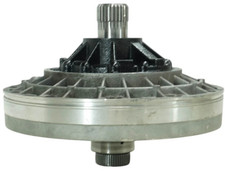
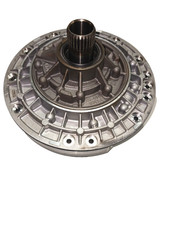
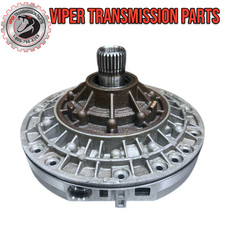
The 6R80 pump is not a simple body-and-cover unit. Transmission Digest's Mike Riley, writing on the 6R60/6R80 family's parts history, describes a small cast-iron pump body, an aluminum pump cover, and an intermediate plate that the stator shaft bolts into. The stator support design is one of the real differences inside the 6R family: the 6R60 and 6R75 stator support uses a front bushing, while the 6R80's does not, and the 6R80's bore is larger to match. If you are cross-shopping a 6R60/6R75 pump against a 6R80 pump thinking they interchange, that bushing and bore difference is why they do not.
The pump has changed more than once since the 6R80 launched. The original service part was 9L3Z-7A103A. Ford later split it into two current numbers at a build-date break: BL3Z-7A103B services units built through March 31, 2014, and FL3Z-7A103A covers April 1, 2014-up. The bigger change is inside. Earlier pumps rode against the torque converter hub on a caged bearing; the 2014-and-later redesign uses a pump-body bushing instead. Riley notes the upgraded pumps are also available as a pump-body-only part (BL3Z-7A104-A and FL3Z-7A104-C) where the earlier assemblies were not. A second, unrelated change landed around the same time: the pump's inner gear drive lugs, which Ford originally carried over from the ZF design, were replaced with flats on the late-2014 gear, matching the rest of Ford's lineup.
None of this is trivia. Order a pump that does not match your torque converter hub design and it will not seat and seal correctly, converter or no converter swap.
Symptoms that actually point at the pump
A whine from the torque converter housing on acceleration
Ford's own documented pump-area failure is narrow and specific. TSB 13-6-4 covers certain 2013 Mustang and 2012 F-150 trucks with a 3.7L engine, built between April 1, 2012 and July 1, 2012, that develop a whining noise from the transmission torque converter housing area during acceleration, which goes away once the converter clutch locks up. The fix in the bulletin is not a new pump. It is a new front pump seal (6L2Z-7A248-AA) and a new torque converter (BR3Z-7902-C), with the transmission removed to do it. If your truck is outside that narrow build window, the same whine can still show up, but you cannot assume the TSB parts list is your fix without confirming the noise source first.
Bearing growl that does not change with the gear train
Transmission Digest's note on 6R80 pump noise draws a useful line: noise can occur in Park, in Neutral, sitting still in gear, or while driving, and on a 6R80 a bearing growl in particular may be heard constantly and is not coming from the gear train. A noise that is present at idle in Park and stays present at speed in every gear, rather than changing with shift points, points at a bearing or bushing in the pump/converter area rather than a clutch or planetary problem.
Delayed or hesitant engagement
Forward and Reverse engagement both depend on the pump building and holding pressure the instant you move the shifter. A pump that has lost volume from worn gears or a worn bushing takes longer to build that pressure, so the truck sits a beat before it takes off, longer when the fluid is hot and thinner. This is the same symptom a worn valve body or a failing accumulator can cause, which is why a pressure test matters more than a guess.
Pressure-related codes that do not track one clutch
Our 6R80 slipping guide covers how to map a slip to a single clutch by which gears it happens in. A real pump or pressure-supply problem breaks that pattern: it shows up in every gear, including Reverse, because every clutch is starving for the same reason. Expect gear ratio codes and pressure control codes rather than a single-clutch ratio code.
Metal or fine debris in the filter
Scored pump gears or a bushing that has started to shed material leaves evidence in the pan. Fine metallic debris in the filter, as opposed to clutch friction material, is a pump or bushing wear signature rather than a burned clutch.
Overheating
Less pump volume means less fluid moving through the cooler circuit. A 6R80 that runs hotter than it used to, especially under tow, with no external cooler or line restriction to explain it, is worth a pump and pressure check alongside the usual cooler inspection in our 6R80 cooler line guide.
Diagnose it before you buy a pump
- Line pressure gauge, Park/Neutral vs. Drive/Reverse. Low pressure across the board, including P/N, points at the pump or a main regulator problem. Pressure that is fine in P/N and drops once a gear is selected points at the valve body or a clutch circuit leak instead.
- Pull the pan and filter. Look for fine metal rather than friction material, and check whether the filter neck or pickup shows wear.
- Inspect the pump itself once it is out. Ford's procedure for the pump assembly calls for inspecting the gears and the mating surfaces for scoring, then inspecting the input shaft bushing and the torque converter hub bushing pressed inside the pump housing. Both are replace-the-pump items; they are not sold or serviced separately from the assembly.
- Check the external stator support and shaft bushings too. These sit further back in the case, not inside the pump housing, but they feed clutch apply pressure and wear for the same underlying reason: Sonnax's listing for the 6R80 input/output shaft bushing says the OE bushings at those journals use a "sub-optimal material composition" that wears out prematurely, and the resulting symptoms are pressure control codes, gear ratio codes, loss of correct pressure to the B-clutch, and eventually a burned B-clutch. A transmission can show all of the pressure-loss symptoms above with a perfectly good pump if these bushings are the real culprit, which is why you check both before you order a $300 part.
Replacement: the real procedure
Ford's workshop manual procedure for the 6R80 pump assembly (Section 307-01) is more specific than "unbolt and swap." The highlights:
| Step | Detail |
|---|---|
| Index mark | Mark the pump body to the pump plate assembly before separating them, so they go back together in the same orientation |
| Pump plate-to-body bolts | 11 bolts (W707871-S300); torque them to the 307-01 torque chart for your model year, not by feel |
| Front pump seal rings | 2 seal rings installed on the stator support, ends hooked together, oriented 180 degrees apart |
| Front pump O-ring and seal | New O-ring seal; new front pump seal installed with Fluid Pump Seal Installer (special tool 307-556) |
| Thrust washer | Lightly lubricate with petroleum jelly before installing |
| Fill | Motorcraft MERCON LV (current quart part number XT-10-QLVC per Ford's fluid quick reference chart) |
On the fluid: Ford's Motorcraft quick reference chart specifies MERCON LV for the 6R80, and Motorcraft's MERCON LV data sheet puts the fluid at 6.0 cSt at 100°C and 29.6 cSt at 40°C. Refill with the specified fluid after a pump job, not whatever multi-vehicle ATF is on the shelf.
Discard and replace the O-ring seal, the seal rings, and the pump body outer seal every time; none of them are reusable. If you are only chasing the whining-noise TSB rather than a confirmed pump failure, note that Ford's fix for that specific condition is the front pump seal and torque converter, not the full pump assembly, which is a meaningfully cheaper repair if that is genuinely your failure.
6R80 Front Pump Seal, OEM 37842 (2009-2017)
If the diagnosis points at the TSB-style converter housing whine rather than worn pump gears, this is the actual part Ford's bulletin replaces, not a full pump. Sold by our sister store, CoreTransmissionParts.
Shop the part for this fix →Need a full rebuild kit instead? The rebuild kits collection lists the 6R80 master and overhaul options.
Need parts for this job?
Our 6R80 parts page has pump assemblies for both build-date ranges, master and overhaul rebuild kits, valve bodies, and Motorcraft MERCON LV. Checkout is on site.
FAQ
What are the symptoms of a failing 6R80 pump?
A whining or moaning noise from the torque converter housing area under acceleration, delayed or hesitant engagement into Drive or Reverse, pressure-related codes that track across multiple gears instead of one clutch, metal or fine debris in the filter, and overheating from reduced cooler flow. Bearing growl that is present at idle, in Park, and while driving is a separate symptom from a pump whine and points at the same general area.
Does a 6R80 pump whine before it fails?
Sometimes, but Ford's own documented case is narrower than that. TSB 13-6-4 covers a whine from the torque converter housing on acceleration on specific 2012 F-150 and 2013 Mustang units with a 3.7L engine built between April and July 2012, and the fix is a new front pump seal and torque converter, not a full pump. A whine on a truck outside that build window still needs a real diagnosis before you order parts.
Can a worn 6R80 pump throw codes without a warning light?
Yes. Pressure control and gear ratio codes set only after the PCM has logged the failure enough consecutive times, so a pump or bushing that is marginal can cause a soft shift or a delayed engagement for a while before anything stores. A line pressure gauge test in Park/Neutral versus Drive/Reverse will catch a pressure problem well before a code does.
Do I need to match the pump to my truck's build date?
Yes. Ford split the 6R80 pump into two current service numbers at the March 31, 2014 build break: BL3Z-7A103B for units built through that date and FL3Z-7A103A for April 1, 2014 and later. The two use a different torque converter hub interface, a caged bearing on the earlier design versus a pump-body bushing on the later one, so ordering the wrong one leaves you with a pump that does not seat correctly on the converter hub.
Is the 6R80 pump bushing a separate replaceable part?
The input shaft bushing and torque converter hub bushing pressed inside the pump housing itself are not sold separately; Ford's procedure is to replace the whole pump assembly if either is worn or damaged. The external stator support and input/output shaft bushings further back in the case are a different story: those are sold as an aftermarket upgrade and commonly wear out early because of the factory bushing material, producing nearly identical pressure-loss symptoms without the pump itself being bad.
Related guides
- 6R80 Slipping: Causes and Fix
- 6R80 Valve Body Wear and Fix
- 6R80 Common Problems and Fixes
- 6R80 Filter and Pan Service
- 6R80 Fluid Type and Capacity
Sources
- Ford Motor Company, TSB 13-6-4, "3.7L Engine and 6R80 Transmission - Whine Noise on Acceleration - Built on 4/1/2012 and Through 7/1/2012." Backs the affected models and build window, the whine symptom and its relation to converter clutch lockup, and the front pump seal (6L2Z-7A248-AA) and torque converter (BR3Z-7902-C) repair. static.nhtsa.gov (PDF)
- Ford Motor Company, Workshop Manual, Section 307-01, "Automatic Transaxle/Transmission - 6R80," Pump Assembly procedure (2014 Mustang edition; current editions by subscription from Ford's Motorcraft Service site). Backs the 11 pump plate-to-body bolts (W707871-S300), the index-marking step, the seal ring and O-ring installation, the Fluid Pump Seal Installer special tool (307-556), and the input shaft/torque converter hub bushing inspection calling for pump replacement if damaged. motorcraftservice.com
- Ford Motor Company / Motorcraft, "Automatic Transmission Fluid Quick Reference" chart, and Motorcraft MERCON LV product data sheet. Backs MERCON LV as the specified 6R80 fluid, the XT-10-QLVC quart part number, and the 6.0 cSt (100°C) and 29.6 cSt (40°C) viscosity typicals. fcsdchemicalsandlubricants.com (quick reference PDF); MERCON LV data sheet (PDF)
- Transmission Digest, Mike Riley, "Ford 6R60/6R80 Component Upgrades, Part 1," August 2016. Backs the pump body/cover/intermediate plate construction, the 6R60/6R75-vs-6R80 stator support bushing and bore difference, the BL3Z-7A103B/FL3Z-7A103A part-number break at the March 31, 2014 build date, the caged-bearing-to-pump-body-bushing redesign, and the late-2014 gear driver lug-to-flats change. transmissiondigest.com
- Sonnax, Input/Output Shaft Bushing, Part No. 95030-05, product listing for ZF6HP19/26/28 and Ford 6R80. Backs the OE bushing's "sub-optimal material composition," the resulting pressure control codes, gear ratio codes, loss of pressure to the B-clutch and burned B-clutch symptoms, and the arbor-press-only installation requirement. sonnax.com