Every few weeks somebody calls asking which transmission is in their Equinox, because the parts counter quoted a 6T40 rebuild kit and the dealer paperwork says 6T45. Both answers can be correct. GM built both transaxles into the same basic vehicle platforms depending on how the car left the factory, and the two units share a case shape, most of their soft parts and the same core architecture. They are not the same transaxle, though, and knowing which one is actually bolted to your engine matters for torque rating, parts ordering and how much abuse the unit tolerates before it lets go.
The facts below come straight from ATRA's original 2008 technical introduction for the 6T40/6T45 family, an SAE engineering paper written by the GM team that designed it, and the aftermarket suppliers who see these units fail on the bench every day. Full citations are at the bottom.

What the 6T40 and 6T45 Actually Are
GM calls this family the "global 6 speed," or GF6. Per ATRA's technical manual, it debuted in the 2008 Chevrolet Malibu and followed in the 2009 Saturn Aura and Pontiac G6, and GM expected it to become its highest-volume front-drive six-speed. It did, eventually landing in the Cruze, Sonic, Equinox, Terrain, Regal, LaCrosse, Verano, Trax and Encore, among others. ATRA's manual is direct about the relationship between the two units: "the 6T40/6T45 share the same architecture and most of the parts are the same. The primary difference is the 6T45 is a heavy duty version of the 6T40." SAE's own engineering paper on the family backs that up from the design side, describing both units as using "components with identical radii" where only the component lengths were "flexed" to produce the torque capacity difference between them.
The Four Hardware Differences
ATRA's manual lists exactly what changes when GM builds the heavy-duty version. These are the parts that separate a 6T45 from a 6T40 on the bench:
- A 1.25 inch wide drive chain, versus the 6T40's 1 inch chain.
- A 5-pinion input planetary assembly.
- A heavier, ribbed case.
- A heavier differential.
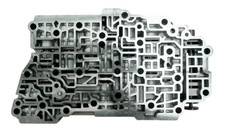
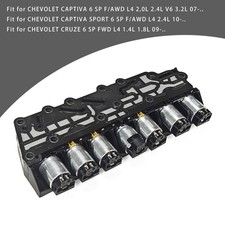
Everything else, including the valve body concept, TEHCM design, clutch-to-clutch shift strategy and most soft parts, carries over between the two. That shared architecture is also why a lot of buyers assume the units are interchangeable when they are not.
Torque Capacity: The Real Line Between Them
| Spec | 6T40 | 6T45 |
|---|---|---|
| Input torque capacity (gas) | 177 lb-ft / 240 Nm | up to 232 lb-ft / 315 Nm |
| Input torque capacity (diesel) | up to 206 lb-ft / 280 Nm | up to 280 lb-ft / 380 Nm |
| Output torque capacity | 277 lb-ft / 375 Nm | not published by ATRA |
| Weight | 178 lb / 81 kg | heavier, per ribbed case and differential |
| Gear ratios | 1st 4.58, 2nd 2.96, 3rd 1.91, 4th 1.44, 5th 1.00, 6th 0.74, Rev 2.94 (shared) | |
| Fluid | DEXRON-VI (shared) | |
The 240 Nm and 315 Nm gas figures come directly from the SAE engineering paper on this transmission family, and they line up with ATRA's 177 lb-ft input rating for the 6T40. That roughly 30 percent gap is the entire reason the 6T45 exists as a separate part number rather than GM just building one transaxle for everything.
RPO Codes and Applications
Both transaxles come in front-wheel-drive and all-wheel-drive form, which is where a lot of the confusion starts. ATRA's manual lists the production codes plainly:
| RPO | Unit | Drive |
|---|---|---|
| MH8 | 6T40 | Front-wheel drive |
| MHB | 6T40 | All-wheel drive |
| MH7 | 6T45 | Front-wheel drive |
| MHC | 6T45 | All-wheel drive |
Don't guess by trim level or engine size. GM used both transaxles across overlapping vehicle lines over a long production run (Cruze, Malibu, Equinox, Terrain, Regal, Verano, Encore, Trax and more), and the only way to know for certain which one you have is to pull the RPO code off the service parts identification label, usually in the glove box or trunk area, or read the casting and chain width once the pan is off.
Which Is Stronger?
On paper, the 6T45 wins outright. A 315 Nm gas rating against the 6T40's 240 Nm is a real, hardware-backed difference, not a marketing number, and it is why the 6T45 carries the wider chain, the extra planetary pinion and the beefed-up case and differential. If you are comparing a 6T40 and a 6T45 of the same generation and similar mileage, the 6T45 tolerates more torque and more abuse before something lets go.
Generation complicates the comparison, though. Transmission Digest's Builder's Bench series covers the Gen 3 6T40, introduced around 2015, which moved from the earlier gerotor pump design to an off-axis, chain-driven pump specifically so the unit could handle a more powerful engine and improve fuel economy. A late Gen 3 6T40 built for a more powerful application is a tougher unit than an early Gen 1 6T40, even though the chain and case are still 6T40-spec. So the honest answer is two-part: model for model, the 6T45 is stronger by design, but generation and condition narrow or widen that gap more than most buyers expect.
What Interchanges and What Doesn't
Because ATRA describes the 6T40 and 6T45 as sharing architecture and most parts, it's tempting to assume full interchangeability. In practice it splits cleanly:
- Interchanges (generation for generation): gaskets, filters, most seals, the general valve body concept, TEHCM family and solenoid control strategy.
- Does not interchange: the drive chain, the input planetary, the case casting and the differential. A 6T45's 1.25 inch chain and 5-pinion planetary are sized for a different case than the 6T40 uses, so you can't drop 6T45 hard parts into a 6T40 housing or the reverse.
That split is exactly why rebuild kits list hard parts separately by model number while a lot of the soft-parts content overlaps. If you're pricing a rebuild, expect the 6T45's hard parts to cost more than the 6T40's, since you're paying for the heavier chain, planetary, case and differential that give it the extra torque rating.
Failure Points They Share
Regardless of which one is on your bench, the complaints that walk through the door most often are the same across the family, because the lockup clutch and valve body hydraulics are shared architecture:
TCC regulator valve bore wear
Sonnax's TCC regulator valve kit page describes bore wear at the TCC regulator valve as a common issue across "GM Gen. 1 and 2 versions of 6T30, 6T40, 6T45, 6T50," producing P0741 and P0742 codes, TCC slip or no lockup, harsh TCC apply, overheated fluid and reduced fuel economy, depending on which direction the worn valve sticks.
Torque converter shudder
GM's own TechLink bulletin for 2024 Envista and Trax models built on the 6T40 (RPO MNH) describes a shudder and growl or humming noise between 28 and 53 mph, traced to an internal torque converter condition causing slip. The bulletin's existence on a current-generation 6T40 shows converter-related shudder is still an active warranty complaint on this family, and because the converter and lockup design are shared, the same symptom shows up on 6T45 applications too.
Gen 3 pump and pressure regulator wear
Transmission Digest's Builder's Bench covers Gen 3 6T40 units coming in with low-mileage forward and reverse slip and burnt clutches, traced to pressure regulator valve wear and the redesigned off-axis pump itself rather than a solenoid or valve body problem. Worth checking before you replace a valve body on a unit that's slipping across the board.
Fluid, Capacity and a Free Fix Before You Chase Parts
Both units take DEXRON-VI. ATRA's capacity figures: roughly 4.2 to 6.3 quarts for a straight fluid change, 5.3 to 7.4 quarts after a valve body cover removal, and 7.4 to 9.5 quarts for a full overhaul fill. Most applications have no dipstick, so the level gets set hot at the check plug, not on a stick.
Before chasing parts on a shift-quality complaint, ATRA/GEARS Magazine's coverage of this family is worth following: frozen or reset adaptive values after a battery disconnect, fluid service or power loss can mimic a flared or slipping shift on a perfectly good transmission. Running the Service Fast Learn Adapts procedure, which lets the TCM relearn individual clutch apply characteristics, has resolved modest shift-quality complaints without any parts replacement at all. Try it before you order a solenoid kit.
Buying or Rebuilding: Which Matters More
If you're shopping for a used car, the RPO code tells you nothing about the condition of the unit in front of you. A low-mileage 6T40 that's been serviced on schedule will outlast a neglected 6T45. Torque rating only matters once you're already comparing two transmissions in similar health.
If you're pricing a rebuild, know which model you have before you call around, since 6T45 hard parts cost more and aren't interchangeable with 6T40 parts. And if you're deciding between a repair and a swap, remember that a 6T45 won't bolt into a car that left the factory with a 6T40 without addressing the mounts, half-shafts and TCM calibration built around the lighter unit; this is a torque-capacity upgrade conversation, not a weekend parts swap.
6T40 and 6T45 master rebuild kits at Core Transmission Parts
Once you've confirmed which unit you have off the RPO code or chain width, Core Transmission Parts carries master rebuild kits for both.
View the 6T40 Master Rebuild Kit →6T40 and 6T45 valve bodies, solenoid kits, filters and rebuild kits, sorted by model — shipped fast from the USA.
Shop 6T40/6T45 parts →Related guides
- 6T40 Identification Guide: 6T40 vs 6T45 and Gen 1, 2, 3
- GM 6T40/6T45 Wave Plate Failure
- 6T40 Rebuild Cost and What Drives It
- 6T40 Valve Body Symptoms and Testing
- 6T40 Common Problems and Fixes
FAQ
What is the actual difference between the GM 6T40 and 6T45 transmission?
Per ATRA's 2008 technical manual, the two share the same case architecture and most of the same parts, but the 6T45 is built as the heavy-duty version: a 1.25 inch drive chain instead of the 6T40's 1 inch chain, a 5-pinion input planetary, a heavier ribbed case and a heavier differential. Those four changes exist to raise the torque ceiling.
Is the 6T45 stronger than the 6T40?
Yes, by design. ATRA rates the 6T40 at 177 lb-ft (240 Nm) input torque capacity, and SAE's engineering paper on the family puts the 6T45 at up to 315 Nm gas and 380 Nm diesel, roughly 30 percent more. That said, a later Gen 3 6T40 with its redesigned chain-driven pump is more durable than an early Gen 1 6T40, so generation and wear matter almost as much as which letter is on the tag.
Do 6T40 and 6T45 parts interchange?
Soft parts, gaskets, filters and most control logic cross over within the same generation, since ATRA describes the family as sharing architecture. The chain, input planetary, case and differential do not interchange, because a 6T45's wider chain and 5-pinion planetary are sized for a different case casting than the 6T40 uses. That is why hard-part rebuild kits are sold separately per model even though many soft parts cross over.
How do I know if my car has a 6T40 or 6T45?
Check the RPO code on the vehicle's service parts identification label. Per ATRA, MH8 is a front-wheel-drive 6T40, MHB an all-wheel-drive 6T40, MH7 a front-wheel-drive 6T45 and MHC an all-wheel-drive 6T45. Do not assume by trim level or engine size alone, since GM used both transaxles across overlapping vehicle lines.
What transmission fluid do the 6T40 and 6T45 use, and how much?
Both use DEXRON-VI. ATRA lists roughly 4.2 to 6.3 quarts for a fluid change, 5.3 to 7.4 quarts after a valve body cover removal, and 7.4 to 9.5 quarts for a full overhaul fill. Most applications have no dipstick, so the level is set hot at the check plug.
Sources
- ATRA — "6T40 (RPO MH8, MHB) / 6T45 (RPO MH7, MHC)," 2008 technical manual. Backs the 2008 Malibu introduction, the shared-architecture statement, the four heavy-duty hardware differences, the RPO code table, torque and output torque ratings, weight, gear ratios, DEXRON-VI fluid type and fill capacities, the check-plug fill method and the EC3 converter. atracom (PDF)
- SAE International — "General Motors Small Front Wheel Drive Six Speed Automatic Transmission Family" (2010-01-0857). Backs the 240 Nm / 315 Nm gas torque capacity figures and the engineering explanation that the 6T40 and 6T45 share component radii with lengths flexed for torque capacity. saemobilus.sae.org
- ATRA / GEARS Magazine — "Why Doesn't My 6T40 Shift Right?" Backs the 6T30/6T40/6T45/6T50 torque-and-case-size family separation and the Service Fast Learn Adapts procedure for resolving flared and slipping shifts caused by adaptive value resets. gearsmagazine.com
- Sonnax — TCC Regulator Valve Kit (144740-38K) technical page. Backs the TCC regulator valve bore-wear failure shared across GM Gen. 1 and 2 6T30/6T40/6T45/6T50 units, including P0741/P0742 codes, TCC slip and harsh apply symptoms. sonnax.com
- Transmission Digest / ATSG Builder's Bench — "Tips for the gen 3 GM 6T40." Backs the 2015 Gen 3 redesign to an off-axis, chain-driven pump for greater durability and fuel economy, and pressure regulator valve wear as a cause of low-mileage slip and burnt clutches. transmissiondigest.com
- GM TechLink — "Transmission Shudder and Noise" bulletin summary. Backs the current-generation 6T40 (2024 Envista/Trax, RPO MNH) shudder and growl complaint between 28-53 mph traced to an internal torque converter condition. gm-techlink.com