Half the 6T40 problems I see on the bench did not start as transmission problems. They started at the parts counter. Somebody ordered a valve body, a TEHCM, a pump or a 4-5-6 drum by "Cruze" or "Malibu," it was the wrong generation, and the car came back slipping, flaring or throwing codes a week later. GM built the 6T30, 6T40, 6T45 and 6T50 in three generations that share a case shape and a lot of part numbers, but the valve bodies, controls, drums and pumps are not interchangeable across all of them.
This guide is how I identify a 6T-series front-wheel-drive unit before I order a single part: first which model (6T40 vs 6T45), then which generation, then what that means for the parts you buy. The biggest facts are cited inline, with the ATRA, Sonnax, GEARS and Transmission Digest references listed at the bottom.

Step 1: Know the Family
GM calls this the "global 6 speed," or GF6. ATRA's 6T40/6T45 introduction manual says the first U.S. car to get it was the 2008 Chevrolet Malibu, followed by the 2009 Saturn Aura and Pontiac G6, and that GM expected it to become its highest-volume six-speed front-drive unit. It did. You will find it in the Cruze, Malibu, Sonic, Equinox, Terrain, Regal, LaCrosse, Verano, Encore and more.
GEARS Magazine's "Why Doesn't My 6T40 Shift Right?" describes the family as four models, the 6T30, 6T40, 6T45 and 6T50, separated by torque capacity, with the 6T30 using a smaller case than the rest. The 6T40 and 6T45 are the ones you will see most, and ATRA notes they share the same architecture and most of the same parts. GM's own engineers put the ceiling at up to 240 Nm of gas engine torque for the 6T40 and 315 Nm for the 6T45 (SAE paper 2010-01-0857), which is the real line between the two.
Core specs every 6T40 shares
| Item | 6T40 spec (per ATRA) |
|---|---|
| Input torque capacity | 177 lb-ft (240 Nm) |
| Output torque capacity | 277 lb-ft (375 Nm) |
| Weight | 178 lb (81 kg) |
| Ratios | 1st 4.58, 2nd 2.96, 3rd 1.91, 4th 1.44, 5th 1.00, 6th 0.74, Rev 2.94 |
| Effective final drive | 2.89, 3.17 or 3.87 |
| Fluid | DEXRON-VI |
| Fluid change | 4.2-6.3 qt (4-6 L) |
| Valve body cover removal | 5.3-7.4 qt (5-7 L) |
| Overhaul fill | 7.4-9.5 qt (7-9 L) |
| Clutches | 5 (3 holding, 2 driving), clutch-to-clutch, plus 1 diode one-way clutch |
| Solenoids | 1 on/off shift solenoid (SS1) and 6 variable bleed solenoids (PCS1-PCS5, TCC) |
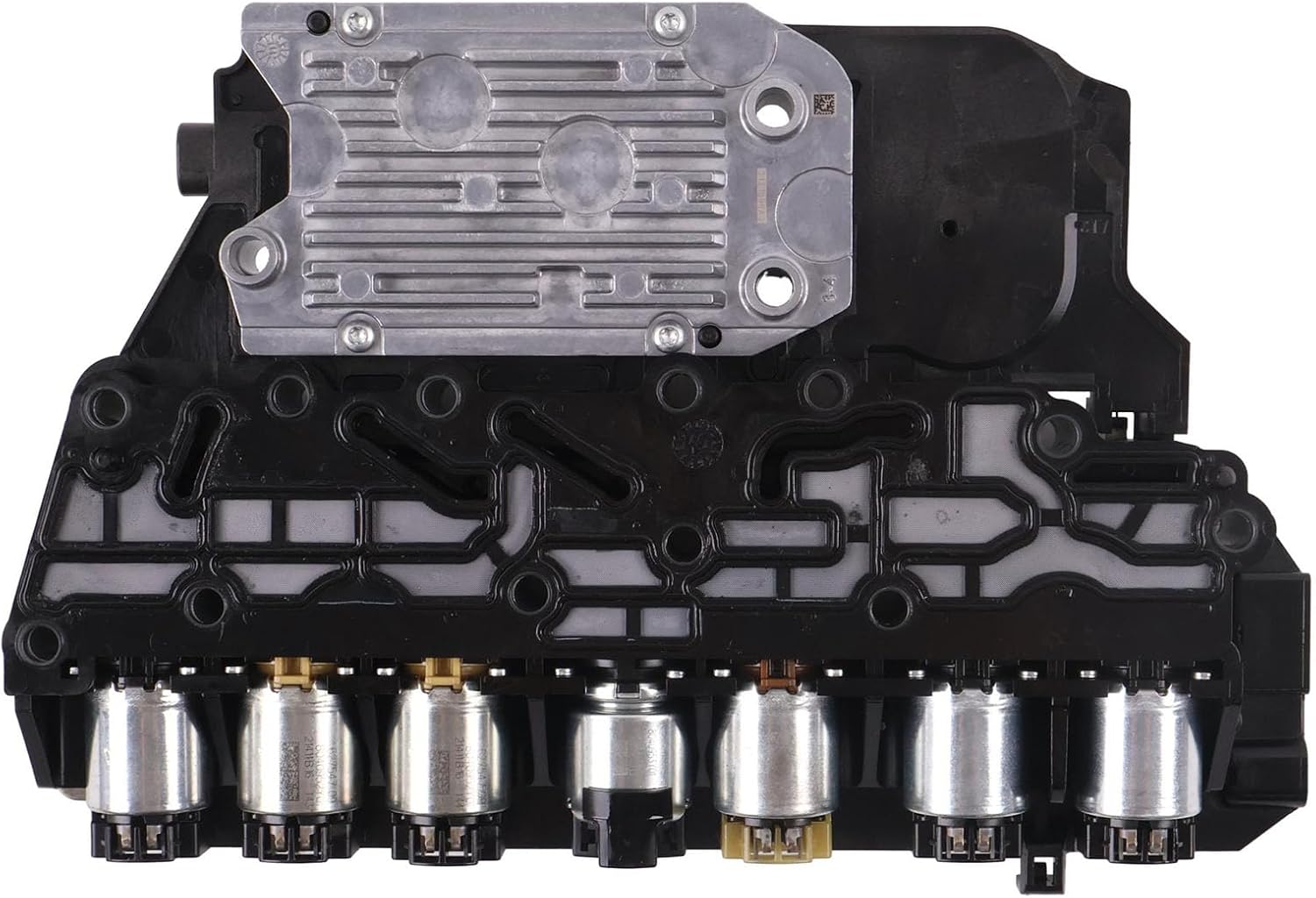
ATRA also notes there is no dipstick on most applications, so the level is set at the check plug, and that the 236 mm EC3 converter has a lip seal that can be damaged if the converter is removed or installed in any position other than vertical (GM special tool J46409). The TCM is not a separate box. It is the TEHCM, a Continental-built 32-bit module bolted to the valve body inside the transmission that carries the solenoids, pressure switches and TFT sensor. That matters for identification, because the TEHCM is the fastest way to read the generation.
Step 2: 6T40 or 6T45?
Start with the RPO codes on the vehicle's service parts identification label, usually in the glove box or trunk area on GM cars. ATRA's manual lists them plainly:
| RPO | Unit | Drive |
|---|---|---|
| MH8 | 6T40 | Front-wheel drive |
| MHB | 6T40 | All-wheel drive |
| MH7 | 6T45 | Front-wheel drive |
| MHC | 6T45 | All-wheel drive |
If the label is missing or the transmission is already on the bench, the hard parts tell you. Per ATRA, the 6T45 is the heavy-duty version and differs in four places. GM Powertrain's 2012 product information confirms the chain, pinion and case differences, and adds that the 6T45 runs a 236 mm converter versus 205 mm on the 6T40:
- A 1.25 inch wide drive chain versus the 6T40's 1 inch chain.
- A 5-pinion input planetary.
- A heavier, ribbed case.
- A heavier differential.
The chain is the quickest check with the side cover off. A 6T45 chain in hand is visibly wider. If you are pricing a rebuild, this is why 6T45 kits and hard parts are listed separately even though most soft parts cross over.
Step 3: Which Generation?
This is where the expensive mistakes happen. The dates below are production-change dates, not hard model-year walls, which is why you verify the hardware instead of trusting the year.
| Gen 1 | Gen 2 | Gen 3 | |
|---|---|---|---|
| Approximate years | 2008-2011 | 2012 onward | 2015 onward |
| TEHCM 8th digit | 1, 2 or 3 | B, C or D | Gen 3 controls |
| Pressure switches | Yes | Removed | Removed |
| 4-5-6 drum | 4 sealing rings, inner fluid dam seal, 4 frictions, wave plate | 3 sealing rings, no inner seal, 5 frictions, no wave plate | Gen 2 style |
| Pump | Gerotor, on-axis, converter-driven | Same layout, revised pressure regulator valve | Off-axis, chain-driven variable vane pump |
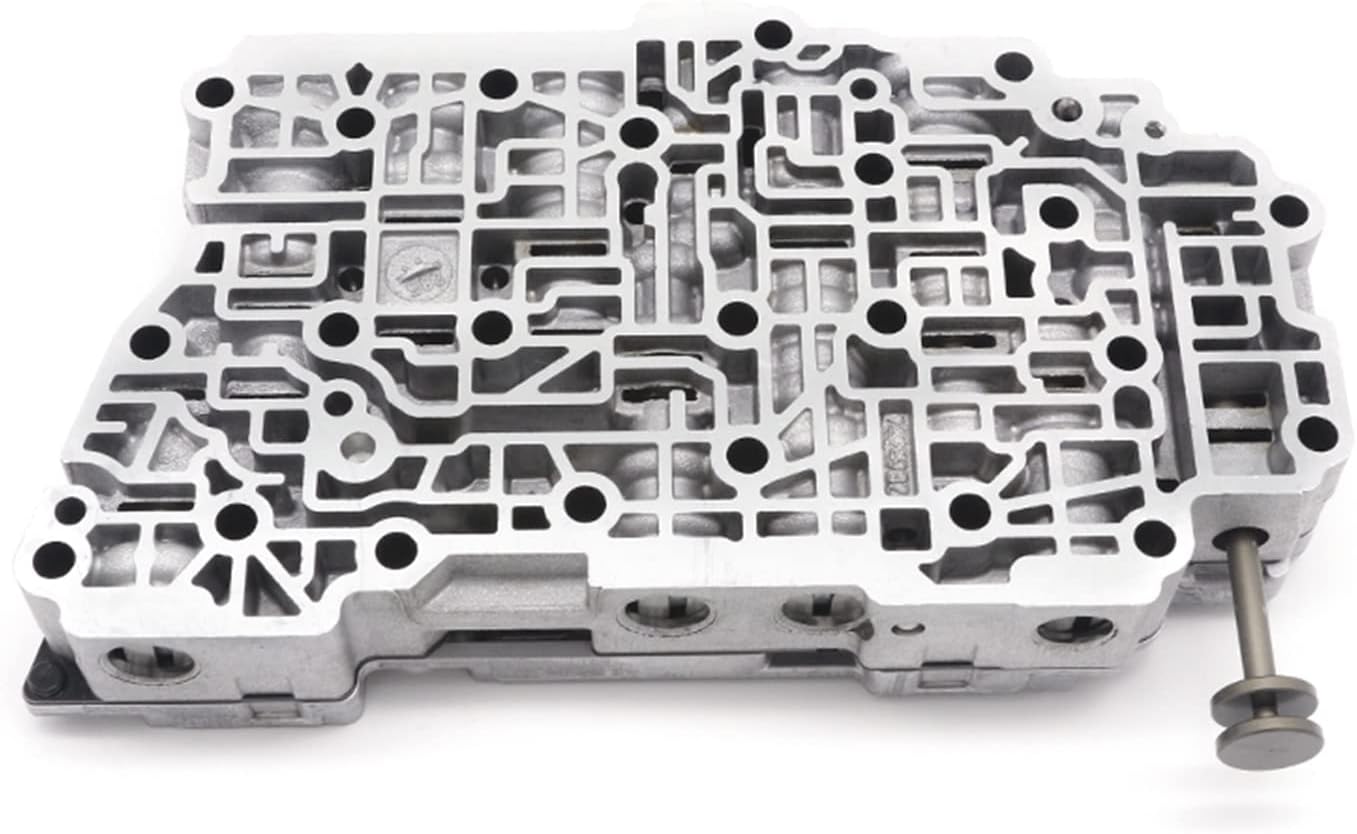
| Valve body | Gen 1 only | Gen 2/3 casting with 5 signal accumulator piston pockets | Gen 2/3 casting |
Read the TEHCM first
GEARS Magazine's "Understanding GM 6T40 Solenoids" gives the simplest rule: on a Gen 1 unit the eighth digit of the TEHCM number is a 1, 2 or 3; on a Gen 2 unit it is a B, C or D. The same article is blunt that the two generations are not interchangeable, and it spells out why. Gen 2 removed the pressure switches, and two solenoids swapped behavior and location: PCS2 went from normally high to normally low, and PCS5 went from normally low to normally high. Line pressure control, PCS3, PCS4 and TCC stayed the same. Resistance specs did not change between generations: 3-5 ohms for the pressure control solenoids and 16-20 ohms for the on/off shift solenoid.
So a Gen 1 TEHCM on a Gen 2 valve body is not a small calibration issue. The oil circuits expect a different solenoid default state. That is a no-drive or a wrong-gear failsafe waiting to happen.
Look at the valve body and pump
Sonnax's "GM Gen. 1, 2 & 3 6T30, 6T40, 6T45, 6T50 Series Identification Guide" is the photo reference I keep open for this. It compares the front pump across all three generations, the pressure regulator valve in the pump port (Gen 1 versus Gen 2 and 3), both sides of the main valve body, the upper cover, and both sides of the TEHCM and its ID plate. The two call-outs that matter most: the channel casting worm tracks differ between Gen 1 and Gen 2/3, and Gen 2 and 3 castings have pockets for five signal accumulator pistons. Sonnax states Gen 1 valve bodies cannot be interchanged with Gen 2 (6T30/40/45/50) or Gen 3 (6T31/35/41/46/51) valve bodies, and it sells separate remanufactured units for each (GM6T40-1 for Gen 1, GM6T40-2-3 for Gen 2 and 3).
Check the 4-5-6 drum
GEARS' article on the 6T40 4-5-6 drum interchange lays out why a road test can fool you. The Gen 1 drum has four sealing rings, an inner fluid dam seal, four frictions and a wave plate, and its balance dam is fed through a compensator feed regulator valve. The Gen 2 drum has three rings, no inner seal, five frictions, no wave plate, and a simple dribble feed.
Drop a Gen 2 drum into a Gen 1 case and it can drive fine on the first road test. But with the inner seal gone, the Gen 1 compensator feed circuit has a large leak, the regulator sits wide open, and GEARS describes the result as low-pressure complaints that end in the unit falling out of gear at a stop. Count the rings and the frictions before the drum goes in.
Spot a Gen 3 by the pump
Sonnax's "GM 6T40 Pump Identification & the Gen. 3 Lube-on-Demand Valve" explains that Gen 1 and Gen 2 used the same pump layout, with Gen 2 getting a slightly different pressure regulator valve, and that Gen 1 phased out during the 2012 model year. The Gen 3 unit, introduced in 2015, got a completely redesigned pump: a remote-axis, chain-driven, variable vane pump instead of the earlier converter-driven gerotor. Transmission Digest's "Tips for the gen 3 GM 6T40" makes the same distinction: earlier units used internal/external positive displacement gears, and Gen 3 uses an off-axis chain-driven pump.
Gen 3 also added a lube-on-demand valve in the pump. Per Sonnax, it stays closed under 87 psi and lube flows through one orifice in the separator plate; above 87 psi it opens a second orifice to roughly double cooler flow during TCC apply. GEARS' Gen 3 write-up adds that the diode one-way clutch got an aluminum pocket plate with spin-loss scallops. If you see an off-axis pump drive on the bench, you have a Gen 3, and none of the Gen 1/2 pump parts apply.
Why the Generation Changes Your Diagnosis
Identification is not just for ordering parts. It changes what you suspect. On a Gen 1 unit with a slip into 3rd, 5th and reverse, the 3-5-R wave plate is high on the list. On a Gen 3 unit with low-mileage slipping in forward and reverse and burnt clutches, Transmission Digest points at pressure regulator valve wear and the pump itself. Sonnax adds that the lube-on-demand valve bore is side-loaded and wears, that some used castings pull 0 in-Hg on a vacuum test, and that a worn bore sends converter feed straight to exhaust. The symptoms are TCC apply problems, poor lube and cooler flow that leads to overheating, and low line pressure. Sonnax recommends vacuum testing that valve on any Gen 3 with those complaints or during any rebuild, and offers kit 144510-19K when the bore is worn.
A tech who treats every 6T40 the same will chase a solenoid on a Gen 3 that actually has a worn pump bore, or will put a Gen 2 drum in a Gen 1 and wonder why it fell out of gear two weeks later.
My Identification Checklist
- Pull the RPO codes from the service parts label: MH8/MHB = 6T40, MH7/MHC = 6T45.
- Scan the TCM and note the calibration and TEHCM part number. Read the eighth digit of the TEHCM ID: 1/2/3 = Gen 1, B/C/D = Gen 2.
- With the side cover off, measure the chain: 1 inch = 6T40, 1.25 inch = 6T45.
- Compare the valve body against the Sonnax ID photos. Look for the five accumulator piston pockets on a Gen 2/3 casting.
- On teardown, count the 4-5-6 drum sealing rings and frictions before ordering a drum or clutch pack.
- Check the pump drive. Off-axis and chain-driven means Gen 3.
- Order parts by the hardware you verified, not the model year. Fill with DEXRON-VI and set the level hot at the check plug, then run the fast learn.
6T40 valve body (2012-2021) at Core Transmission Parts
If your ID check confirms a Gen 2 or later valve body, Core Transmission Parts carries a replacement 6T40 valve body for 2012-2021 units. Match it to the casting you pulled before you order.
View the 6T40 valve body →6T40 and 6T45 valve bodies, TEHCMs, solenoid kits, drums, pumps and rebuild kits sorted by generation — shipped fast from the USA.
Shop 6T40 parts →Related guides
- 6T40 Valve Body Symptoms
- 6T40 Shift Solenoid Symptoms and Replacement
- GM 6T40 / 6T45 Wave Plate Failure
- 6T40 Common Problems and Fixes
- 6T40 Rebuild Cost
FAQ
How do I tell if my car has a 6T40 or a 6T45?
Check the RPO codes on the vehicle's service parts identification label. Per ATRA, MH8 is a front-wheel-drive 6T40, MHB an all-wheel-drive 6T40, MH7 a front-wheel-drive 6T45 and MHC an all-wheel-drive 6T45. On the bench, the 6T45 has a 1.25 inch drive chain instead of the 6T40's 1 inch chain, a 5-pinion input planetary and a heavier ribbed case.
How do I tell a Gen 1 6T40 from a Gen 2?
Read the TEHCM. GEARS Magazine notes that a Gen 1 TEHCM has a 1, 2 or 3 as the eighth digit of its ID, while a Gen 2 unit has a B, C or D. Gen 1 builds run roughly 2008 to 2011, and Gen 2 hardware started in 2012. Inside, a Gen 1 4-5-6 drum has four sealing rings, an inner fluid dam seal and a wave plate, while the Gen 2 drum has three rings, no inner seal and no wave plate.
What makes a Gen 3 6T40 different?
Gen 3 arrived around 2015 and moved the pump off the input axis. Instead of the earlier gerotor pump driven by the converter, it uses a chain-driven, variable-displacement vane pump with a lube-on-demand valve that Sonnax says opens above 87 psi. Sonnax groups the Gen 3 family as 6T31, 6T35, 6T41, 6T46 and 6T51.
Can I swap a Gen 1 and Gen 2 6T40 valve body or TEHCM?
No. Sonnax states Gen 1 valve bodies do not interchange with Gen 2 or Gen 3 units, and GEARS says the two generations are not interchangeable. Gen 2 also removed the pressure switches and changed PCS2 to normally low and PCS5 to normally high, so the hydraulic and electrical logic are different.
What fluid does a 6T40 take and how much?
DEXRON-VI. ATRA lists roughly 4.2 to 6.3 quarts for a fluid change, 5.3 to 7.4 quarts after a valve body cover removal, and 7.4 to 9.5 quarts for an overhaul. Most applications have no dipstick, so the level is set hot at the check plug.
Sources
- ATRA — 6T40 (RPO MH8, MHB) / 6T45 (RPO MH7, MHC) introduction, 2008 technical manual. Backs the 2008 Malibu introduction and early applications, the RPO code table, the 6T45 heavy-duty differences (1.25 inch chain, 5-pinion input planetary, ribbed case, heavier differential), torque ratings, weight, ratios, DEXRON-VI and fill capacities, the check plug, the EC3 converter lip seal and J46409, and the internal Continental TEHCM. atracom (PDF)
- Sonnax — "GM Gen. 1, 2 & 3 6T30, 6T40, 6T45, 6T50 Series Identification Guide." Backs the pump, pressure regulator, valve body, upper cover and TEHCM comparison photos, the worm track differences, the five signal accumulator piston pockets on Gen 2/3 castings, the Gen 1 vs Gen 2/3 valve body non-interchange, and the Gen 3 unit names (6T31/35/41/46/51). sonnax.com
- Sonnax — "GM 6T40 Pump Identification & the Gen. 3 Lube-on-Demand Valve." Backs Gen 1 phasing out in the 2012 model year, the shared Gen 1/2 pump layout, the 2015 Gen 3 remote-axis variable vane pump, the 87 psi lube-on-demand valve, bore wear, the 0 in-Hg vacuum results and kit 144510-19K. sonnax.com
- ATRA / GEARS Magazine — "Understanding GM 6T40 Solenoids." Backs the TEHCM eighth-digit generation rule (1/2/3 vs B/C/D), the non-interchange warning, the removal of pressure switches in Gen 2, the PCS2 and PCS5 normally-high/normally-low changes, and the 3-5 ohm and 16-20 ohm resistance specs. gearsmagazine.com
- ATRA / GEARS Magazine — "It Worked on the Road Test! The 6T40 4-5-6 Drum Interchange Quandary." Backs the Gen 1 and Gen 2 4-5-6 drum differences (rings, inner seal, friction count, wave plate, regulated vs dribble feed) and the fall-out-of-gear failure when a Gen 2 drum goes into a Gen 1 unit. gearsmagazine.com
- Transmission Digest — "Tips for the gen 3 GM 6T40." Backs the 2015 Gen 3 introduction, the change from internal/external gear pumps to an off-axis chain-driven pump, and pressure regulator valve wear and pump failure as causes of low-mileage slipping with burnt clutches. transmissiondigest.com
Also referenced: ATRA / GEARS, "Why Doesn't My 6T40 Shift Right?" for the 6T30/40/45/50 family and the smaller 6T30 case, gearsmagazine.com; and ATRA / GEARS, "Generation Gap: 6T40 Gen v3," for the aluminum diode pocket plate, gearsmagazine.com; GM Powertrain, "2012 Hydra-Matic 6T40 (MH8) / 6T45 (MH7, MHC)" product information, for the 6T45 chain, pinion, case and 205/236 mm converter differences and the 2012 Gen 2 controls, web.archive.org (gmpowertrain.com); and SAE 2010-01-0857 (Singh and Olenzek, General Motors) for the 240 Nm and 315 Nm gas torque capacities, saemobilus.sae.org.