A 6T40 or 6T45 in limp mode usually shows up the same way. The Cruze, Malibu, Equinox, Terrain, Sonic, Encore or Trax pulls away like it is starting in a high gear, never shifts, tops out around highway on-ramp speed, and has a check engine light or a "Service Transmission" message on. Customers call it "stuck in gear." The TCM calls it a failsafe strategy, and it only does that when it has seen something it cannot safely control around.
The good news is that limp mode always leaves a trail. The codes that set it, the gear it is stuck in, and whether the TCM is even talking narrow the job down fast. This is the order I work a limp-mode 6T40, with GM's own bulletins and the published technical references cited inline and listed at the bottom.

How the 6T40 Limp Mode Works
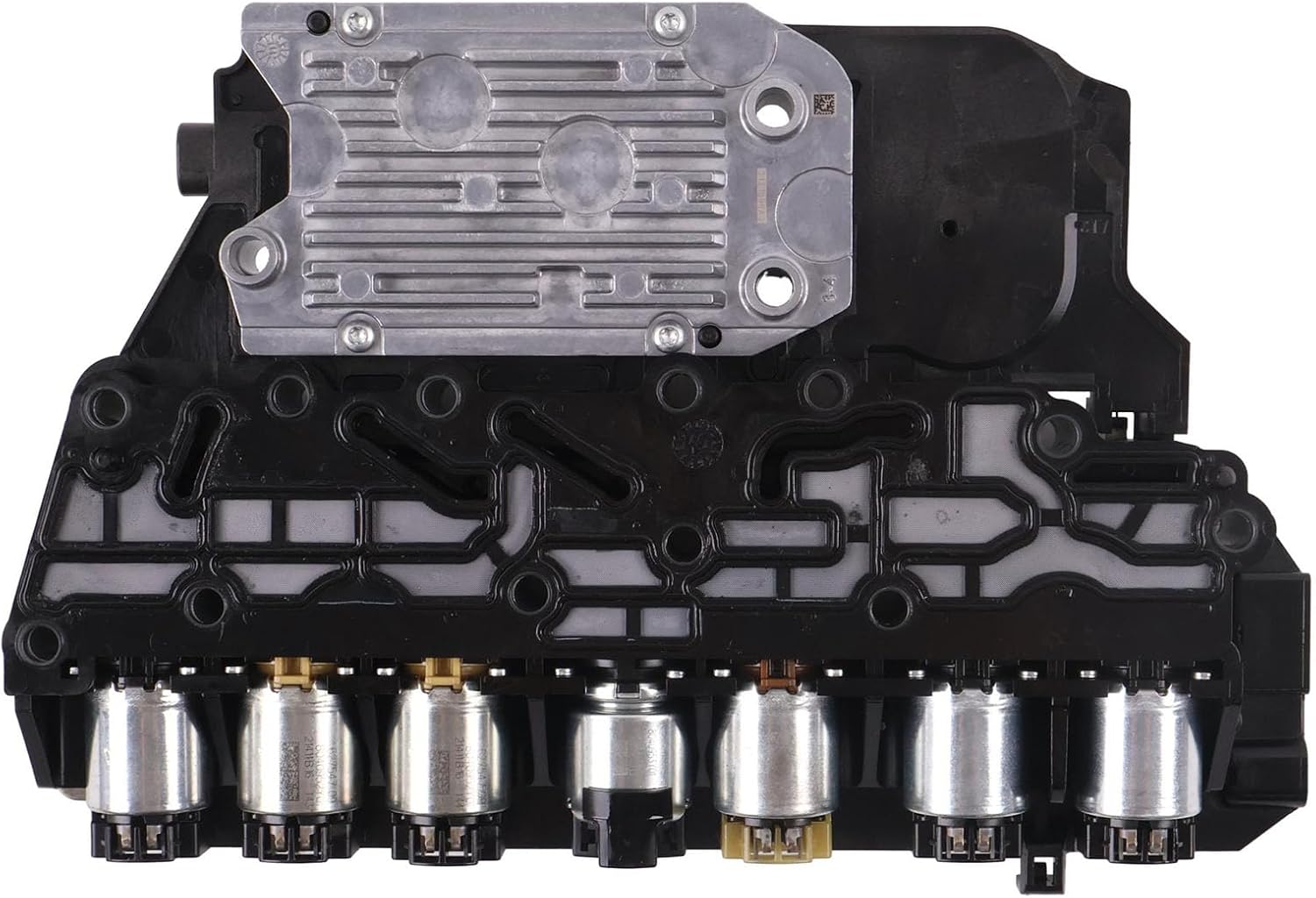
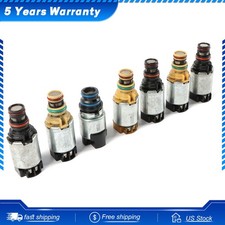
On the 6T30/40/45/50 family the transmission control module is not a box under the hood. It is part of the TEHCM (transmission electro-hydraulic control module, GM's "control solenoid valve and TCM assembly"), bolted to the valve body inside the side cover. It commands five pressure control solenoids (PCS1-PCS5), one on/off shift solenoid and the TCC solenoid, and it reads the input and output speed sensors to confirm that every shift actually happened.
There are two different "limp" conditions, and telling them apart is the first diagnostic step:
- Software failsafe. The TCM is alive and talking, but a code has set that tells it a clutch or solenoid circuit cannot be trusted. It locks out the affected gears, raises line pressure or holds a gear. You will have P07xx, P08xx, P09xx or P2xxx codes stored in the TCM. Electrical circuit codes can trip it fast: per GM's 2011 OBD monitor tables (11OBDG08, 6T40 section), a Shift Solenoid A ground short (P0973) needs only 1.2 seconds of fault in a 1.5 second window, runs with nothing more than 9 volts and a running engine, and lights the MIL on the first trip. The matching open or power-short code, P0974, needs two trips.
- Hydraulic default. The TCM has lost power, lost ground, crashed or stopped communicating, so no solenoid is being commanded at all. Whatever the valve body does with zero current is what you get. This is where U0101 and "no communication with TCM" live.
What gear it defaults to, and why Gen 1 and Gen 2 differ
With no current, a normally high pressure control solenoid gives full output pressure and a normally low one gives none. GEARS Magazine's "Understanding GM 6T40 Solenoids" lists the states. On Gen 1, PCS1 (line pressure), PCS2 (3-5-R clutch) and PCS3 (low/reverse and 4-5-6 clutches) are normally high, while PCS4 (2-6) and PCS5 (1-2-3-4) are normally low. Gen 2 flipped two of them: PCS2 became normally low and PCS5 became normally high.
Run those states through the clutch apply chart in Sonnax's Gen 2 6T40 quick guide and you get the default gears. Fifth gear is 3-5-R plus 4-5-6, which is what a de-energized Gen 1 unit leaves applied in a drive range. Fourth gear is 1-2-3-4 plus 4-5-6, which is what a de-energized Gen 2 unit leaves applied. Either way, the car launches in a gear with far too little ratio, so it feels gutless off the line and the engine lugs. That is not a clutch pack failing. It is the valve body doing exactly what it was designed to do with the lights off.
Know the generation before you interpret anything. Per GEARS, the eighth character of the TEHCM number is 1, 2 or 3 on Gen 1 and B, C or D on Gen 2. GM's 2012 changes also removed the Gen 1 pressure switches, which matters for Cause 5 below.
| Solenoid | Controls | Gen 1 state (no current) | Gen 2 state (no current) |
|---|---|---|---|
| PCS1 | Line pressure | Normally high | Normally high |
| PCS2 | 3-5-R clutch | Normally high | Normally low |
| PCS3 | Low/reverse and 4-5-6 clutches | Normally high | Normally high |
| PCS4 | 2-6 clutch | Normally low | Normally low |
| PCS5 | 1-2-3-4 clutch | Normally low | Normally high |
| Shift solenoid | Clutch select valve | Normally closed, on/off | |
Step 1: Scan Every Module, Not Just the TCM
Pull codes from every module on the car and write down which module set each one. If the scan tool cannot reach the TCM at all, or the ECM, BCM or EBCM are storing U0101 (lost communication with TCM), you are in the hydraulic-default world and the first job is electrical. If the TCM answers and has its own codes, those codes steer the rest of the diagnosis. GM makes the same point in bulletin PIP4990C: gather all codes and the modules they are set in before calling technical assistance.
Then check the fluid level hot at the check plug with DEXRON-VI. GEARS' 6T40/45 diagnosis article puts the check at 85-95°C (185-205°F) and notes that as little as half a quart overfull can push fluid out the vent and set P0218. Low fluid gives aerated oil and low apply pressure, which can set the same performance codes as a failed solenoid.
Cause 1: U0101 and TEHCM Power, Ground or Connector Faults
This is the one that gets expensive TEHCMs replaced for nothing. GM bulletin PIP4990C (February 2016) covers the whole 6T30/40/45 family (RPOs MHC, MHH, MH7, MH8, MH9) across the 2008-2016 Malibu, 2011-2016 Cruze, 2010-2016 Equinox and Terrain, Sonic, Trax, Encore, Verano, Regal, LaCrosse and more. GM states that investigation of several vehicles setting U0101 showed the condition "is frequently caused by issues in areas other than" the TEHCM.
The bulletin's inspection list, before any part is replaced:
- The transmission connector pins, for damaged terminals or poor terminal fit.
- The underhood fuse block, for damaged terminals, poor terminal fit or mispositioned fuses.
- The TCM ground. Find the ground ID (G106, G107 and so on) on the transmission controls schematic, then locate it with the component locator.
- The harness, for rub-through on sharp edges, mainly on top of the transmission where it can contact the engine block.
GM also says powers and grounds "should always be load checked." A test light or a voltmeter with no load will read 12 volts through a corroded terminal that drops out the moment the module draws current.
GEARS Magazine's U0101 article adds the shop-floor causes: spread terminal eyelets from careless connector removal, corrosion, wire loom worn through on body panels, and used or incorrect modules installed. Its most useful trick is a CAN bypass test at the transmission connector, jumping the matching CAN pairs so you can tell whether the fault is in the vehicle wiring or inside the TEHCM. If communication comes back with the bypass in place, the module was never the problem.
One more electrical cause: programming. If a module was just flashed and the car now has a reduced power message or U0101, confirm that the TCM was actually updated along with the ECM. A mismatched calibration will not talk properly.
Cause 2: Low Line Pressure
GM Preliminary Information PI0324F covers 2011-2014 6T30, 6T40, 6T45 and 6T50 applications with complaints that range from harsh shifts and slipping in more than one gear to no forward or reverse. The technician may find P0776, P0796, P2714 or P2723, often on a vehicle under 16,000 km (10,000 miles). GM's cause is no or low line pressure from a damaged fluid pump.
Those four codes are all pressure control solenoid "performance, stuck off" codes, so the TCM sees a clutch that did not apply when commanded and drops into failsafe. On the scan tool they look like a TEHCM or valve body problem. GM's instruction is explicit: perform the line pressure check in service information, and do not replace the TEHCM or valve body before doing it. A gauge on the case is the cheapest test in this whole article.
Cause 3: A Pressure Control Solenoid That Quit
When line pressure is good and the same performance codes keep setting, look at the solenoid for the clutch named in the code. GM bulletin PI1131 (December 2013) covers 2011 6T40/6T45 applications built before April 1, 2011 with missing gears and DTCs P0776, P0796, P0878, P0873, P2714 or P2723. The losses map to the clutch circuits: P0796 with no 4th, 5th or 6th; P2714 or P0873 with no 2nd or 6th. GM's cause is a non-functioning pressure control solenoid inside the TEHCM, and the bulletin notes that only one of the conditions will typically be present at a time.
On the bench, GEARS gives the numbers: every 6T40 pressure control solenoid should read 3-5 ohms, and the on/off shift solenoid 16-20 ohms. It also gives a warning worth taping to the bench: never apply 12 volts directly to the pressure control solenoids. Test them with regulated air at 45 psi and a proper driver, or let a capable scan tool cycle them through the TCM. A solenoid can ohm out perfectly and still stick mechanically, so the air and cycling tests matter more than the meter.
Fluid color is not a diagnosis here. PI1131 notes that 6T40/6T45 fluid tends to turn dark from rust inhibitors used at assembly, so dark ATF alone does not condemn the unit.
Cause 4: Speed Sensor Faults
The TCM cannot confirm a shift without input and output speed, so a lost speed signal will put it in failsafe fast. GEARS describes both sensors as 2-wire units that create a digital signal, powered by the TCM. The input speed sensor sits at the rear cover and reads the 3-5-R clutch housing; the output speed sensor sits under the valve body and reads the park gear. Watch both PIDs on a road test. A signal that drops to zero or goes erratic over bumps points to the sensor, its circuit or the case connector, and on a TEHCM unit the sensor circuit runs through the same internal connections as everything else, so connector condition matters again.
Cause 5: Gen 1 Pressure Switch Failure
Gen 1 TEHCMs carry pressure switches that tell the TCM a clutch circuit has actually pressurized. Sonnax's "Under Pressure" article on TEHCM applications notes that when a switch fails, one or more of P0752, P0872, P0877 and/or P0989 may set and the vehicle might go into limp mode. The switches are the only feedback the Gen 1 TCM has, so a leaking or stuck switch looks to the module like a clutch that never applied.
Sonnax offers a Gen 1 6T40-series pressure switch rebuild kit (144510-09K) for this failure. Gen 2 units eliminated the switches and use clutch pulse learning instead, so these codes on a Gen 2 transmission mean you are looking at the wrong service information.
Diagnostic Order That Saves Time
- Scan every module. No TCM communication or U0101 anywhere means start electrical.
- Check the fluid level hot at the plug with DEXRON-VI.
- For U0101: inspect the case connector pins, underhood fuses, TCM ground and harness chafe, load test power and ground, and use a CAN bypass to split wiring from module.
- For P0776, P0796, P2714, P2723 and friends: run a line pressure test before touching the TEHCM or valve body.
- With good line pressure, test the solenoid for the named circuit: 3-5 ohms, then air or scan-tool cycling. Never 12 volts direct.
- Circuit codes first: a P0973 or P0974 on the shift solenoid (16-20 ohms, the only one you can bench test with 12 volts) blocks other monitors in GM's 6T40 table, so fix it before chasing performance codes.
- Watch ISS and OSS on a road test for dropouts.
- On Gen 1, check for pressure switch codes and service the switches.
- After any repair, clear codes and run the Service Fast Learn.
The Fix, and What to Do After
Fix the fault the codes and tests point to: a terminal, a ground, a fuse, a pump, a solenoid, a sensor, a switch. Replace the TEHCM only when the power, ground, communication and pressure tests say the module itself is bad, and plan on programming it. GEARS' "Why Doesn't My 6T40 Shift Right?" lists TEHCM replacement, valve body service and a TCM software update among the events that require the Service Fast Learn, run in the stall with the fluid at 70-115°C (158-239°F), brakes applied and zero throttle. Skip it and the car you just pulled out of limp mode will shift badly enough to come right back.
If the pan comes off, new filter and pan gasket are part of the job. GM's TechLink fluid chart lists DEXRON-VI at 4.0-6.0 liters (4.2-6.3 quarts) for a 6T40 service on the current Trax and Envista, and the level is always set hot at the plug.
6T40 solenoid valve kit at Core Transmission Parts
If testing shows a dead pressure control solenoid and your TEHCM allows solenoid replacement, Core Transmission Parts carries a 6T40 transmission solenoid valve kit, along with valve bodies and rebuild parts.
View the 6T40 solenoid kit →6T40 and 6T45 control modules, solenoid kits, valve bodies, filters and master rebuild kits — shipped fast from the USA.
Shop 6T40 parts →Related guides
- 6T40 Common Problems and Fixes
- 6T40 Shift Solenoid Symptoms and Replacement
- 6T40 P0973: Shift Solenoid A Control Circuit Low Causes & Fix
- 6T40 Harsh Shift Causes and Fix
- 6T40 Slipping: Causes and Fix
- 6T40 Won't Shift Into Overdrive: Causes and Fix
FAQ
What causes a 6T40 to go into limp mode?
The TCM puts the 6T40 in a failsafe strategy when it sees a fault it cannot control around: lost communication (U0101), bad power or ground to the TEHCM, pressure control solenoid performance codes, low line pressure, speed sensor faults or, on Gen 1 units, a failed pressure switch. The stored codes tell you which of those groups to start in.
What gear is a 6T40 stuck in during limp mode?
It depends on the fault. A code-based failsafe may just lock out certain gears, while a full loss of solenoid control leaves only the normally high solenoids applying clutches. Working that through the solenoid states and apply chart gives 5th gear on a Gen 1 unit and 4th gear on a Gen 2 unit, which is why the car pulls away very slowly and tops out low.
Can a bad battery or ground put a 6T40 in limp mode?
Yes. The TCM lives on the TEHCM inside the transmission, and GM bulletin PIP4990C says U0101 on these units is frequently caused by connector pins, the underhood fuse block or the TCM ground rather than the TEHCM itself. Load test the power and ground circuits before condemning the module.
Should I replace the TEHCM if my 6T40 is in limp mode?
Not first. GM tells technicians to check connector terminals, fuses, grounds and harness chafe before replacing the TEHCM for U0101, and to run a line pressure test before replacing the TEHCM or valve body for P0776, P0796, P2714 or P2723. Replace the TEHCM only after those checks point to it, and plan on programming it.
How do I get a 6T40 out of limp mode?
Fix the fault that set the code, clear codes and cycle the ignition, then verify the repair on a road test. After any TEHCM, valve body or solenoid work, run the Service Fast Learn with the fluid at 70-115 C (158-239 F) so the TCM relearns clutch fill and apply pressures.
Sources
- General Motors — Preliminary Information PIP4990C, "MIL Setting DTC U0101 Current Or History," February 2016 (via NHTSA). Backs the 6T30/40/45 applications and RPOs, U0101 frequently being caused outside the TEHCM, the connector pin, underhood fuse block, TCM ground and harness chafe inspections, and load checking powers and grounds. static.nhtsa.gov (PDF)
- General Motors — Preliminary Information PI0324F, December 2013 (via NHTSA). Backs low or no line pressure from a damaged pump on 2011-2014 6T30/6T40/6T45/6T50 units, DTCs P0776, P0796, P2714 and P2723, the low-mileage note, and the line pressure check before replacing the TEHCM or valve body. static.nhtsa.gov (PDF)
- General Motors — Preliminary Information PI1131, "Various Missing Gears, DTC P0776, P0796, P0878, P0873, P2714 or P2723 Set," December 2013 (via NHTSA). Backs the 2011 pre-April 1, 2011 build applications, the missing-gear conditions and their DTCs, the non-functioning pressure control solenoid cause, the one-condition-at-a-time note and the dark-fluid note. static.nhtsa.gov (PDF)
- ATRA / GEARS Magazine — "Understanding GM 6T40 Solenoids." Backs the normally high and normally low states of PCS1-PCS5 on Gen 1 and Gen 2, the clutch each solenoid controls, the 3-5 ohm and 16-20 ohm resistance specs, the never-apply-12-volts warning and 45 psi air test, and TEHCM generation identification by the eighth character. gearsmagazine.com
- ATRA / GEARS Magazine — "Yes, U Can! Conquering U0101 On Your GM Vehicles." Backs the shop-floor U0101 causes (spread eyelets, corrosion, loom wear-through, incorrect or used modules) and the CAN bypass test at the transmission connector on a 6T40 Malibu. gearsmagazine.com
- Sonnax — "Under Pressure: Shift Quality & Pressure Switches in TEHCM Applications." Backs Gen 1 pressure switch failure setting P0752, P0872, P0877 and/or P0989 with possible limp mode, the Gen 2 removal of the switches and clutch pulse learning, and kit 144510-09K. sonnax.com
- General Motors — 2011 OBD monitor tables, "11OBDG08 TRANS Diagnostics," 6T40 Unique Section (pages 67-68 of 108). Backs the P0973 ground-short and P0974 open/power-short definitions for Shift Solenoid A (Mode 2 Solenoid), the 1.2 s of 1.5 s fail timer, the one-trip versus two-trip MIL, the 9 V and running-engine enables, and P0973/P0974 appearing in other monitors' disable lists. gsi.ext.gm.com PDF
Also referenced: ATRA / GEARS, "6T40/45 Diagnosis and Fixes," for the 85-95°C level check, the half-quart overfill and P0218 warning, and the ISS and OSS locations, gearsmagazine.com; ATRA / GEARS, "Why Doesn't My 6T40 Shift Right?," for the Service Fast Learn requirements and conditions, gearsmagazine.com; Sonnax 6T40-GEN2-ZIP quick guide for the clutch apply chart, sonnax.com (PDF); and GM TechLink, "Transmission Capacities and Fluids (2025)," for the DEXRON-VI service capacity, gm-techlink.com (PDF).