A 6T40 or 6T45 that bangs into gear is one of the most common complaints on the Cruze, Malibu, Equinox, Terrain, Sonic, Regal, Encore and Trax. The customer says "it slams into second," "it clunks when I put it in Drive," or "it thumps coming to a stop." Some of those cars need a valve body. A lot of them need nothing more than a calibration, a correct fluid level, or a set of adapts that finally get a chance to learn.
This is how I sort a harsh-shift 6T40 before anything comes out of the car: which shift is harsh, which clutch that points to, what GM has already published about it, and where the valve body wears when it really is hydraulic. Bulletin numbers and specs are cited inline, with the full source list at the bottom.
Step 1: Pin Down Exactly Which Shift Is Harsh
The 6T40 is a clutch-to-clutch unit. Every shift is one clutch releasing while another applies, and the TCM times that handoff with pressure control solenoids. "Harsh" by itself tells you nothing. The shift that is harsh tells you which clutch and which solenoid circuit to look at. Using the clutch apply chart from Sonnax's Gen 2 6T40 quick guide:
| Shift | Applying clutch | Releasing clutch |
|---|---|---|
| Park/Neutral to Drive | 1-2-3-4 | — |
| Park/Neutral to Reverse | 3-5-R + low/reverse | — |
| 1-2 | 2-6 | (one-way clutch overruns) |
| 2-3 | 3-5-R | 2-6 |
| 3-4 | 4-5-6 | 3-5-R |
| 4-5 | 3-5-R | 1-2-3-4 |
| 5-6 | 2-6 | 3-5-R |
Road test with a scan tool and record commanded gear, input speed, output speed, transmission fluid temperature and throttle position at the moment of the bang. Note whether it happens cold or hot, on light or moderate throttle, and whether the driver was lifting off the pedal. That last detail matters more than most techs expect, as the first bulletin below shows.
Cause 1: The TCM Calibration
Before you touch a wrench, check the calibration in the TEHCM against what is current. GM has fixed more than one 6T-family harsh shift with software alone.
GM Preliminary Information PI0724B (January 2013) covers 2011 Captiva, Equinox and Terrain with the 2.4L (RPO LAF) and the 6T45 (RPOs MHC, MH7). The condition is a harsh 2-3 upshift, and GM gives a very specific way to duplicate it: accelerate at moderate throttle and release the throttle just before or during the 2-3. If the harsh shift only happens that way, the correction is a TCM reprogram with the latest calibration through SPS. Nothing mechanical is replaced.
That bulletin also spells out the programming rules that keep a reflash from turning into a dead module: battery above 12 and below 16 volts before starting, held at 12 to 15.5 volts during programming with an approved maintainer, no battery charger on the car, no public Wi-Fi, and if the event is interrupted, do not cycle the ignition and do not replace the TCM. On a 6T40 the TCM is part of the TEHCM bolted to the valve body, so a botched flash means dropping the pan.
The lesson carries past the 2011 Equinox. If the harsh shift has no codes and follows a pattern like "only on a tip-out" or "only at low speed," look for a calibration update first.
Cause 2: Adapts That Were Reset, Frozen or Never Learned
The TCM watches input and output speed during every shift and adjusts the pressure commands so the shift lands in the calibrated time. If a clutch applies too fast, the shift is harsh and the TCM pulls pressure on the next one. That only works if the adapts are allowed to learn.
GEARS Magazine's article "Why Doesn't My 6T40 Shift Right?" lists the situations that break it: frozen adaptive values, adapt resets from power loss or voltage fluctuation, and bad power or ground connections to the module. It also points out a customer-side cause that is easy to miss. A car that only makes short trips may never reach the temperature the TCM needs to adapt, so the shift quality never improves.
The fix for this group is the Service Fast Learn, run with a capable scan tool. Per GEARS it is required after an overhaul or replacement, valve body service, speed sensor replacement, TEHCM replacement, a TCM software update, and for any shift quality complaint. The procedure is done in the stall with the transmission fluid temperature between 70 and 115°C (158-239°F), parking and service brakes applied, wheels blocked and zero throttle. GEARS adds one caution worth repeating: some aftermarket scan tools offer the same function for the 6T70 family, and it should not be run on those units. Know which transmission you have before you press the button.
A quick check before the Fast Learn: look for anything that would keep resetting the module. A weak battery, a loose ground, or a car that just had a battery replaced will all lose learned values. Fix the power supply first or the harsh shift comes back after the next reset.
Cause 3: Wrong Fluid Level or Wrong Fluid
The 6T40 has no dipstick. Level is checked at the plug, hot. GEARS' 6T40/45 diagnosis article puts the check at 85-95°C (185-205°F) and warns that as little as half a quart overfull can vent fluid and set P0218, transmission fluid over temperature. Low fluid starves the pump and aerates the oil, which gives inconsistent apply pressure: some shifts soft, some banging.
Fluid type is DEXRON-VI. GM's current TechLink capacity chart lists the 2025 Trax and Envista 6T40 (RPO MNH) at 4.0 to 6.0 liters (4.2 to 6.3 quarts) of DEXRON-VI for a service. Do not top off with a universal multi-vehicle fluid on a car that is already complaining about shift feel. If someone has been in the pan recently, confirm what went in before you diagnose anything else.
Cause 4: Low Line Pressure From a Damaged Pump
Harsh shifts are not always too much pressure. GM Preliminary Information PI0324F (December 2013) covers a long list of 2011-2014 6T30, 6T40, 6T45 and 6T50 applications, from the Cruze and Sonic to the Equinox, Terrain, Encore and Trax. Harsh shifts are on its list of customer concerns, along with no forward or reverse, slipping in more than one gear, and even a no-crank. The technician may see P0776, P0796, P2714 or P2723, often on a vehicle under 16,000 km (10,000 miles).
GM's stated cause is no or low line pressure from a damaged transmission fluid pump. The instruction that saves money is this one: perform the line pressure check in SI, and do not replace the TEHCM or the valve body before you have done it. Those four DTCs look like a solenoid or valve body problem on the scan tool. A pressure gauge is what separates a pump from a valve body.
The later Gen 3 units have their own pressure story. Transmission Digest's Builder's Bench notes on the Gen 3 6T40 (introduced for 2015 with an off-axis chain-driven pump) point to the pressure regulator valve wearing and sticking as a low line pressure cause, alongside the pump itself.
Cause 5: Valve Body Bore Wear
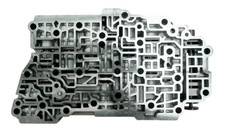
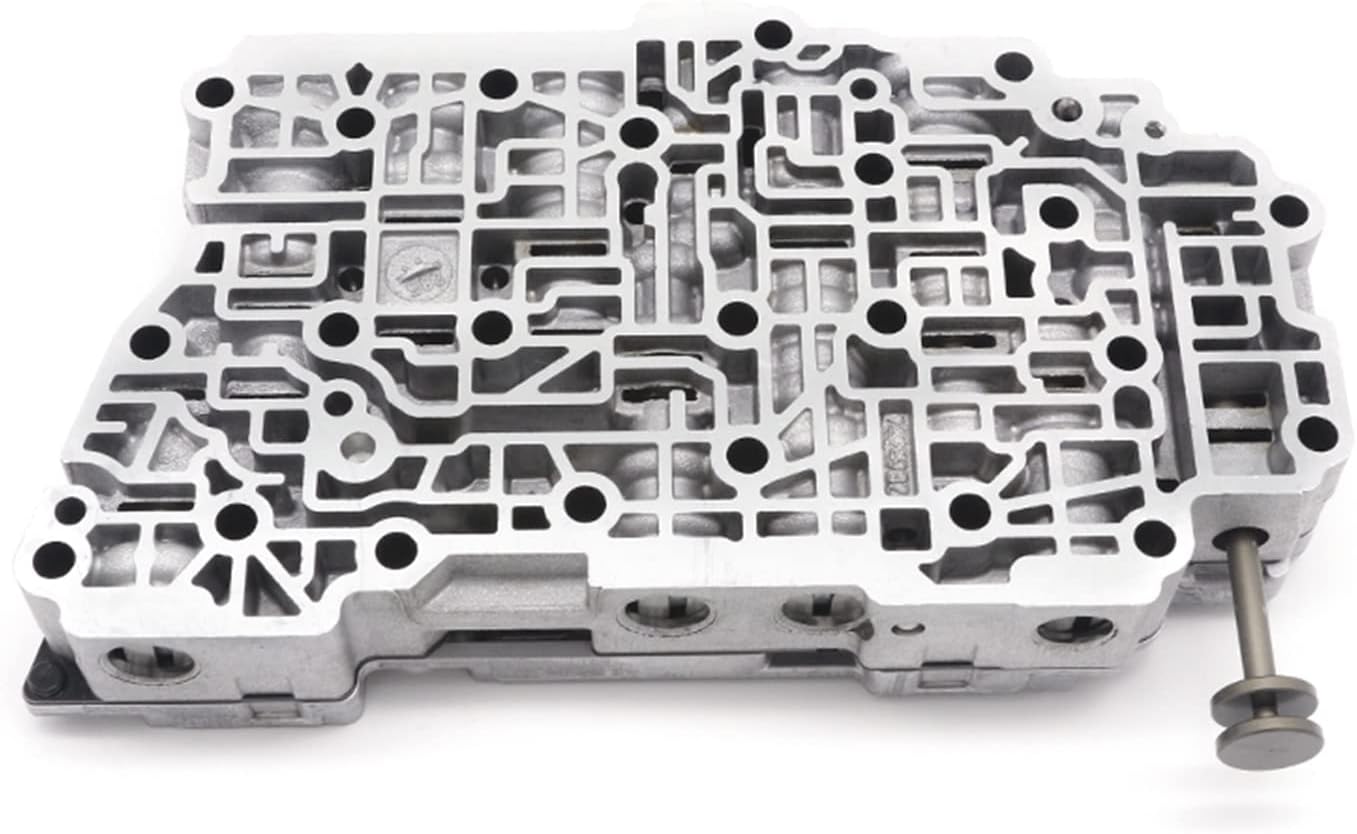
When calibration, adapts, fluid and line pressure all check out and the harsh shift stays, the valve body is next. The 6T40 valve body is aluminum and the valves run in it directly, so the bores wear and leak. A leaking regulator circuit cannot hold a steady clutch pressure, and the TCM cannot adapt around a leak that changes with temperature.
The best documented one is the actuator feed limit (AFL) valve. The AFL feeds the solenoids, so every clutch regulator downstream depends on it. Sonnax describes the failure plainly: wear in the AFL bore causes low clutch pressure, which results in slips and harsh shifts and eventually a loss of 4th through 6th gears. Their repair kit, 144740-39K, is a drop-in sleeve and valve that seals off moderate bore wear, with a new spring for correct limit pressure, and it fits Gen 1 and Gen 2 6T30/40/45/50 and the Gen 3 units. If you have a harsh-shift car that is also starting to flare or drop the upper gears, the AFL circuit belongs at the top of your list.
GM itself revised a lot of this hardware for the 2012 Gen 2 units. GM's PI0604C lists revised 1-2-3-4, 2-6, 3-5-R and low-reverse/4-5-6 clutch regulator valves and a revised 1-2-3-4 clutch boost valve, and it removed the Gen 1 pressure switches. That is the reason Gen 1 and Gen 2 valve bodies do not interchange. Identify the generation before you order anything.
On the bench, a vacuum test of each regulator bore tells you which circuit leaks. Clean solenoids will not fix a worn bore. Either the bore is sleeved and oversized, or the valve body is replaced.
When the harsh shift is a failing 3-5-R waved plate
One harsh-shift pattern is mechanical, not calibration. If the complaint is a harsh reverse engagement together with harsh 2-3 and 4-5 shifts, look at the 3-5-R clutch, because that is the clutch applied in 3rd, 5th and reverse. Sonnax lists harsh reverse engagement, harsh 2-3 and 4-5 shifts, flares and P0776 among the symptoms of a failing 3-5-R waved plate, and GM bulletin PI0780A traces slip or no reverse and 3rd with P0776 on units built through January 15, 2011 to a broken 3-5-R apply (waved) plate. No adapt reset fixes a cracked plate; it needs a teardown, a new 3-5-R piston and waved plate, a cleaned case and new filters. The full workup is in our 6T40 no reverse diagnosis and fix guide.
Cause 6: The 2025-2026 Trax and Envista Garage Shift
The newest one on the list is a harsh garage shift. GM bulletin PIP6095C (February 2026, NHTSA copy) covers 2025-2026 Chevrolet Trax and Buick Envista with the 6T40 (RPOs MNH or MNK), listing builds from June 1, 2025 in its header while its correction step says to confirm the vehicle was built after 5/1/25. The earlier January 2026 release, PIP6095, described the complaint as a harsh garage shift into Drive or Reverse; revision C narrows the title to a harsh shift into Drive. GM traced it to the normally high solenoids in the TEHCM having a valve over-travel condition that contacts or ruptures the solenoid screen.
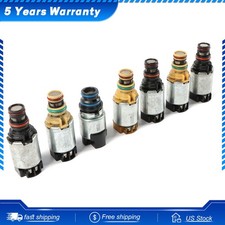
The correction is a new control solenoid valve and TCM assembly (TEHCM) plus a new control valve body, with an inspection of the solenoid screens. The bulletin legend marks CBR1/C456, C1234 and Line as the normally high (NH) solenoids and TCC, C35R and CB26 as normally low. Listed parts include control valve body 24265971 and control solenoid valve filter plate 24263196. GM allows 3.0 hours under labor operation 8481328, and cars inside the powertrain warranty get the repair covered. If you have one of these in the bay with a harsh Park-to-Drive or Park-to-Reverse engagement, send it to the dealer before you spend the customer's money.
One related check: the line pressure solenoid is normally high, so a fault in its control circuit also shows up as hard engagements. On the 6T40 that circuit has its own codes, P0961 through P0963, and GM's 2011 OBD tables define P0961 as an electrical rationality check on the line pressure VBS driver rather than a pressure reading. If one of those is stored, work the circuit first; our 6T40 P0961 guide walks through it.
Diagnostic Order That Saves Time
- Identify the shift that is harsh, cold or hot, and the throttle condition. Map it to the applying clutch in the table above.
- Pull codes in every module. Note P0776, P0796, P2714, P2723, P0218 and any U-codes that point to TEHCM power or communication.
- Check fluid level hot at the plug and confirm DEXRON-VI.
- Check the calibration against the current release and look up bulletins for that VIN. Reflash if one applies, following the battery rules.
- Verify battery, powers and grounds, then run the Service Fast Learn and road test again.
- If it is still harsh, or you have pressure codes, run the line pressure check before condemning the TEHCM or valve body.
- Only then pull the valve body and vacuum test the AFL and clutch regulator bores.
The Fix
Match the repair to what you found, not to the symptom:
- Calibration pattern (no codes, tip-out or low-speed harsh shift): reflash, then Service Fast Learn.
- Adapts reset or never learned: fix power and grounds, run the Fast Learn, and give the car real driving at operating temperature.
- Level or fluid wrong: correct it hot at the plug with DEXRON-VI, then re-evaluate before anything else.
- Low line pressure: the pump, or on Gen 3 the pressure regulator valve, not the TEHCM.
- Worn bores: sleeve the AFL and any leaking regulator bores, or replace the valve body with one of the correct generation. Transfer or replace the TEHCM as the job requires, then Fast Learn.
- 2025-2026 Trax or Envista garage shift: dealer, under PIP6095C.
After any valve body or solenoid work, a new filter and pan gasket and a correct hot level check are part of the job. A harsh shift that returns a week after a valve body swap is almost always an adapt or level problem, not a bad part.
6T40 valve body at Core Transmission Parts
If your bores are worn and the valve body has to be replaced, Core Transmission Parts carries a 6T40 valve body for 2012-2021 units, plus solenoid kits, filters and rebuild kits.
View the 6T40 valve body →6T40 and 6T45 valve bodies, solenoid kits, filters and master rebuild kits — shipped fast from the USA.
Shop 6T40 parts →Related guides
- 6T40 Common Problems and Fixes
- 6T40 Slipping: Causes and Fix
- 6T40 Shift Solenoid Symptoms and Replacement
- 6T40 Won't Shift Into Overdrive: Causes and Fix
- GM 6T40/6T45 Wave Plate Failure
- 6T40 No Reverse: Diagnosis and Fix
FAQ
Why does my 6T40 shift hard?
The most common causes are an outdated TCM calibration, shift adapts that were reset or never learned, an incorrect fluid level, low line pressure from a damaged pump, and worn valve body bores such as the actuator feed limit valve. Identify which shift is harsh first, then check software, adapts and fluid before replacing parts.
Will resetting the adapts fix a 6T40 harsh shift?
It can, if the problem is frozen or lost adaptive values. Run the Service Fast Learn with the fluid at 70-115 C (158-239 F), then drive the car at operating temperature so the TCM can refine each shift. If a worn valve body bore or low line pressure is the cause, the harsh shift will return.
Is there a GM bulletin for 6T40 or 6T45 harsh shifts?
Yes, several. PI0724B covers a harsh 2-3 upshift on 2011 Equinox, Terrain and Captiva 2.4L 6T45 models and is fixed with a TCM calibration. PI0324F lists harsh shifts among the symptoms of low line pressure from a damaged pump on 2011-2014 units. PIP6095C covers a harsh garage shift on 2025-2026 Trax and Envista.
What fluid does a 6T40 use and how much?
The 6T40 uses DEXRON-VI. GM's TechLink capacity chart lists the 6T40 in the 2025 Trax and Envista at 4.0 to 6.0 liters (4.2 to 6.3 quarts) for a service. Check the level hot at the plug, since the unit has no dipstick and even half a quart overfull can set P0218.
Do I need a new valve body for a harsh-shifting 6T40?
Only after software, adapts, fluid level and line pressure are ruled out. Sonnax documents actuator feed limit bore wear causing low clutch pressure, slips and harsh shifts on these units. A vacuum test of the valve body bores tells you if the valve body is really the problem.
Sources
- General Motors — Preliminary Information PI0724B, "Harsh 2-3 Shift," January 2013 (via NHTSA). Backs the 2011 Captiva, Equinox and Terrain 2.4L LAF with 6T45 (MHC, MH7) applications, the throttle-release duplication method, the TCM calibration correction and the battery voltage programming rules. static.nhtsa.gov (PDF)
- General Motors — Preliminary Information PI0324F, December 2013 (via NHTSA). Backs harsh shifts as a symptom of no or low line pressure from a damaged fluid pump on 2011-2014 6T30/6T40/6T45/6T50 units, DTCs P0776, P0796, P2714 and P2723, the low-mileage note, and the instruction to perform a line pressure check before replacing the TEHCM or valve body. static.nhtsa.gov (PDF)
- ATRA / GEARS Magazine — "Why Doesn't My 6T40 Shift Right?" Backs the adaptive value causes (frozen values, resets from power loss or bad grounds, short-trip driving), when the Service Fast Learn is required, its 70-115°C conditions, and the caution about the 6T70 family. gearsmagazine.com
- Sonnax — Actuator Feed Limit Valve Kit, 144740-39K. Backs AFL bore wear causing low clutch pressure, slips, harsh shifts and loss of 4th-6th, the sleeve-and-valve repair, and Gen 1, Gen 2 and Gen 3 6T40-family fitment. sonnax.com
- General Motors TechLink — Transmission Capacities and Fluids (2025). Backs DEXRON-VI and the 4.0-6.0 L (4.2-6.3 qt) service capacity for the 6T40 (RPO MNH) in the Trax and Envista. gm-techlink.com (PDF)
- GM Bulletin PIP6095C (NHTSA copy, February 2026) — 6T40 Harsh Shift into Drive; original PIP6095 (January 2026). Backs the 2025-2026 Trax and Envista (MNH/MNK) coverage and build dates, the TEHCM normally high solenoid over-travel and screen damage cause, the NH/NL solenoid legend, the TEHCM and valve body replacement, parts 24265971 and 24263196, and the 3.0-hour labor operation 8481328. static.nhtsa.gov PIP6095C (PDF) / PIP6095 (PDF)
- General Motors — Preliminary Information PI0780A, "Slip or No Reverse or 3rd Gear, No Forward, DTC P0776," June 2015 (via NHTSA). Backs the broken 3-5-R apply (waved) plate cause on 6T30/40/45/50 units built on or before January 15, 2011, and the 3-5-R piston and waved plate replacement. static.nhtsa.gov (PDF)
- Sonnax — "Protect Against 6T40 & 6T70 3-5-R Failures & Salvage Damaged Drums with Sonnax Drum Saver Kits." Backs harsh reverse engagement and harsh 2-3 and 4-5 shifts as 3-5-R waved plate failure symptoms. sonnax.com
Also referenced: GM 2011 OBD monitor tables (11OBDG08, 6T40 Unique Section) for the P0961-P0963 line pressure VBS circuit definitions, gsi.ext.gm.com (PDF); ATRA / GEARS, "6T40/45 Diagnosis and Fixes," for the hot level check at 85-95°C and the half-quart overfill and P0218 warning, gearsmagazine.com; GM PI0604C for the Gen 2 clutch regulator and boost valve revisions and removal of the pressure switches, static.nhtsa.gov (PDF); Sonnax 6T40-GEN2-ZIP quick guide for the clutch apply chart, sonnax.com (PDF); and Transmission Digest, "Tips for the Gen 3 GM 6T40," for the chain-driven pump and pressure regulator valve wear, transmissiondigest.com.