The 6T40 and 6T45 went into a long list of front-drive GM cars and crossovers: Cruze, Sonic, Malibu, Equinox, Terrain, Regal, LaCrosse, Trax and Encore among them. When one comes in with flared upshifts, missing gears or a string of pressure control solenoid codes, the usual guesses are the TEHCM, the 3-5-R wave plate or "it needs a rebuild." The valve body sits in the middle of all of those, and it gets blamed and cleared less carefully than anything else in the unit.
This guide covers what the 6T40 valve body actually does, which bores wear and what each one does to the drive, how to tell a valve body problem from a solenoid or clutch problem, the air and vacuum tests that settle it, and what to know about generations, torque specs and the relearn before you bolt a replacement in. The Sonnax, ATRA/GEARS and GM bulletin data behind it is cited inline and listed at the bottom.
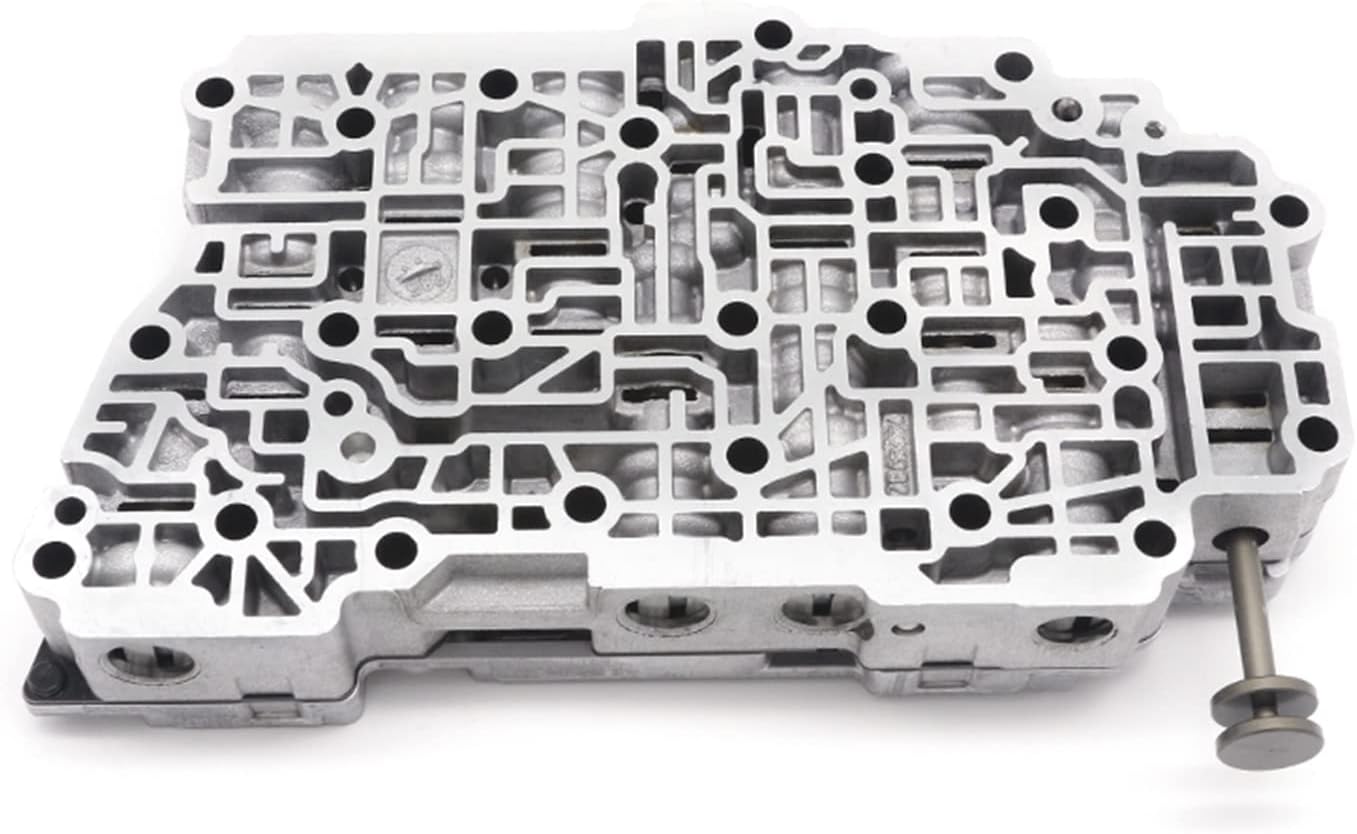
What the 6T40 Valve Body Does
The 6T40 has no separate TCM on the body harness. The control solenoid valve and transmission control module assembly, the TEHCM, bolts directly to the valve body and carries the line pressure control solenoid, five clutch pressure control solenoids, the TCC solenoid and one on/off shift solenoid. Per GEARS Magazine's "Understanding GM 6T40 Solenoids," each clutch solenoid feeds its own clutch regulator valve in the valve body: PCS2 controls the 3-5-R clutch regulator, PCS3 the Low/Reverse and 4-5-6 regulator, PCS4 the 2-6 regulator and PCS5 the 1-2-3-4 regulator. The shift solenoid controls the clutch select valve, and the TCC solenoid signals the TCC control and TCC regulator valves.
So the solenoids only make a signal. The valve body turns that signal into clutch apply pressure, and it can only do that if three supply circuits are healthy:
- Pressure regulator valve. Sets line pressure. The spring end of this valve is where the line pressure solenoid's boost signal acts.
- Actuator feed limit (AFL) valve. Takes line pressure and limits it to the feed pressure for the solenoids. Sonnax puts the typical AFL output in the 80-115 psi range across the units that use one. Every clutch solenoid in the TEHCM is working from this oil.
- TCC regulator and control valves. Set converter clutch apply pressure and converter charge and cooler flow.
That is why one worn bore can produce complaints that look like three different failures. If AFL feed drops, every solenoid has less to work with, and the clutch regulators cannot build full apply pressure no matter what the TCM commands.
The Symptoms, Circuit by Circuit
Sonnax's 6T valve body layouts list the complaints that go with each wear point. These are the ones that matter on a 6T40:
| Valve / circuit | What the driver or scan tool shows | Generations |
|---|---|---|
| Actuator feed limit valve | No 4th, 5th or 6th; low clutch oil pressure; harsh shifts; flare shifts | Gen 1 and Gen 2 |
| Pressure regulator valve (boost end) | Burnt clutches, low line pressure, unstable line pressure, shift concerns, slow pressure boost | All; Sonnax lists a separate kit for Gen 3 |
| TCC regulator valve | P0741, P0742, no lockup, TCC slip, lower fuel economy, low TCC apply pressure | Gen 1, 2 and 3 |
| TCC control valve | Excess TCC slip, low cooler flow, overheating, TCC codes, TCC lining failure | Gen 1 and Gen 2 |
| Lube on demand valve | Low cooler flow, no converter apply, low line pressure, overheated converter | Gen 3 only |
| Signal accumulator piston | Shift concerns, burnt clutches, soft shifts | Gen 2 and Gen 3 |
TransGo's Gen 1 repair kit description fills in the code side. It lists erratic or hunting TCC, soft shifts or flare on shifts, burned friction plates and slow pressure boost response, and a long run of DTCs: P0741, P0751, P0752, P0757, P0776, P0777, P0796, P0797, P0842, P0843, P0872, P0873, P0877, P0878, P0989, P0990, P2714, P2715, P2723 and P2724. TransGo attributes most of them to two places: wear at the AFL valve, and wear at the spring end of the pressure regulator valve where the boost signal oil is lost. The result is a lazy boost response, low line pressure, clutch slip, and solenoid performance and gear ratio codes that make the TEHCM look guilty.
Missing gears point to a circuit
GM's Preliminary Information PI1131 for 2011 6T40/6T45 cars ties each missing-gear complaint to a code: no 1st with P2723, no 2nd or 6th with P2714, no 4th, 5th or 6th with P0796, and no reverse, 3rd or 5th with P0776. Those are the pressure control solenoid performance codes for the 1-2-3-4, 2-6, Low/Reverse-4-5-6 and 3-5-R circuits. GM's fix in that bulletin is a TEHCM when diagnostics point at the solenoid, but a solenoid that cannot get enough feed from a worn AFL, or a clutch regulator that leaks in its bore, sets the same code. If more than one circuit is complaining, the problem is upstream of the solenoids.
Valve Body, TEHCM or Clutch Pack?
Before you order a valve body, rule out the parts that cause the same symptoms. Sonnax's own installation sheets for its 6T40 valve bodies list the non-valve-body causes it sees most often:
- Hard shifts and/or P0776: a broken 3-5-R wave plate.
- No 3rd, 5th or reverse: the 3-5-R clutch snap ring has come out of its groove.
- Slipping, noise, possible P0776, P0796, P2714, P2723: low line pressure from pump damage or wear.
- P0713 or P06AE after a TEHCM swap: the wrong generation TEHCM was installed.
- P0218 fluid overtemperature: overfill.
- Pulse or surge at 30-50 mph, or harsh or flare upshifts above 30 mph: GM has released calibration updates for these, so reflash before you replace anything.
- TCC slip codes on Gen 2 and Gen 3: check the stator bushings. A 2-3 flare can also be 3-5-R clutch clearance.
Then check the solenoids. GEARS gives 3-5 ohms for every pressure control solenoid and 16-20 ohms for the shift solenoid, and Sonnax specifies those values at 70°F. GEARS also warns never to apply 12 volts to the pressure control solenoids. For a functional test, GEARS describes the Kent-Moore DT-47825 kit, which lets you cycle each solenoid with a scan tool using 90-100 psi of regulated shop air and a gauge, and a 45 psi air check with the solenoid block off the unit. A solenoid that measures good and holds and exhausts air correctly is not your problem. If they all pass and you still have multiple pressure complaints, the bores in the valve body are.
On Gen 1, look hard at the TEHCM pressure switches. GEARS reports GM removed them in 2012 because of their failure rate, and that their retaining rivets work loose. Sonnax recommends replacing all the pressure switch seals and laminated discs (kit 144510-09K) any time an original Gen 1 TEHCM is reused, because contaminated switches set pressure switch codes and cause a range of shift complaints.
Testing the Valve Body
Air check the case passages
With the valve body out, Sonnax recommends air-checking the clutch circuits at the case using low, regulated air pressure. Its Gen 1 sheet identifies the test ports for the Low/Reverse, 1-2-3-4, 4-5-6, 2-6 and 3-5-Reverse clutches plus the compensator feed; the Gen 2/3 sheet shows the same five clutch ports. A clean apply you can hear, with no loud leak, means the piston seals are holding. A big leak means the problem is in the clutch pack or case, and a new valve body will not fix it.
Vacuum test the bores
Sonnax's recommended method for finding a worn AFL, pressure regulator or regulator valve bore is a vacuum test: seal the circuit, pull vacuum on the bore with the valve in place, and see whether it holds. A bore that leaks down quickly is worn past the point where the valve can hold pressure. Sonnax says AFL bores wear actively and should be checked on every rebuild, not only when there is a complaint. This is the test that proves the valve body is the problem, and it is how remanufacturers qualify every bore on a core.
What the repair looks like
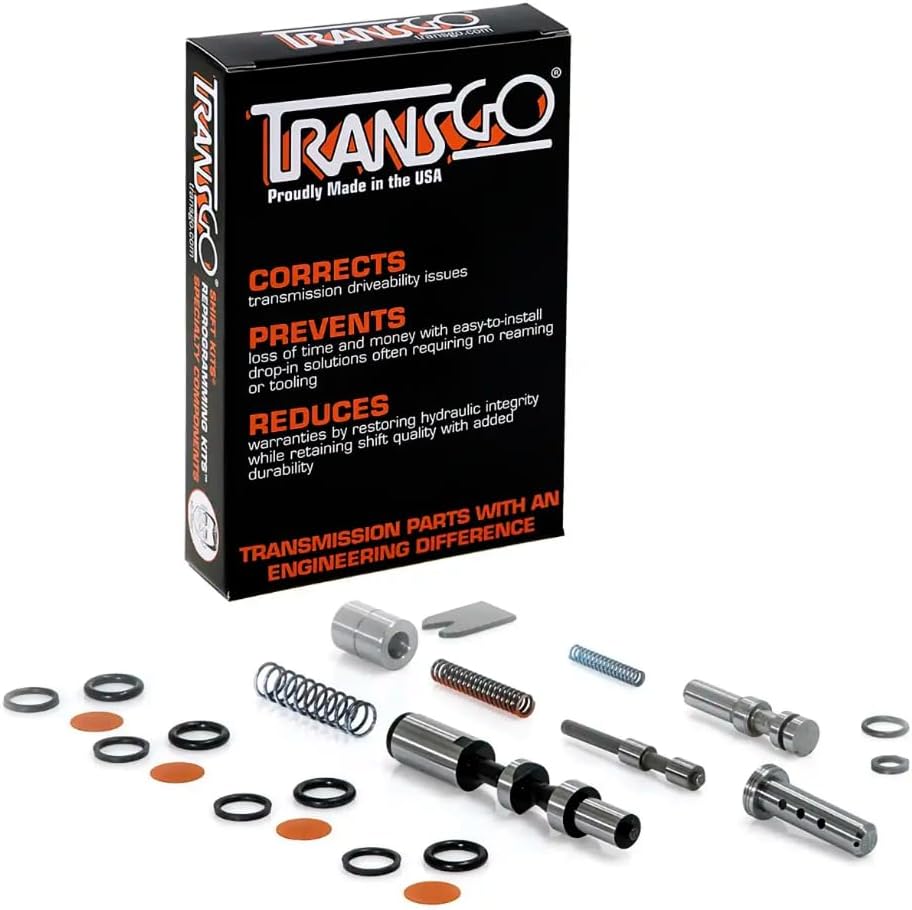
If a bore fails, the fixes are drop-in or ream-and-oversize. For the AFL, Sonnax lists the drop-in kit 144740-39K and the oversized valve 144740-01 for Gen 1 and Gen 2. For the TCC regulator, it lists 144740-38K and the oversized 144740-16K. TransGo's Gen 1 kit covers the AFL valve with a new bushing, valve, spring and spacer, a longer-land pressure regulator valve, a hardened TCC regulator valve with a sealing ring for worn bores, and new pressure switch diaphragms and O-rings. TransGo says plainly that its Gen 1 kit does not fit Gen 2. If you do not have the reamers and a vacuum test rig, a known-good or remanufactured valve body is usually the faster and cheaper path.
Gen 1 vs Gen 2: Check Before You Order
The single most common valve body mistake on these units is the wrong generation. Sonnax is explicit that Gen 1 valve bodies cannot be interchanged with Gen 2 (6T30/40/45/50) or Gen 3 (6T31/35/41/46/51) valve bodies. GM's PI0604C documents the 2012 change to Gen 2, including revised clutch regulator valves, a revised TCC regulator apply valve and a new filter plate, and notes that the 2012 Cruze and Sonic 1.8L, 2012 Captiva Sport 3.0L and 2012 Orlando stayed Gen 1. To confirm on the car:
- TEHCM ID: the eighth digit under the bar code is 1, 2 or 3 on Gen 1 and B, C or D on Gen 2.
- Pressure switches: Gen 1 TEHCMs have them; Gen 2 do not.
- Filter plate: many screens on Gen 1, three on Gen 2.
- Upper valve body cover: Sonnax's guide shows exhaust ports and a check valve on Gen 2 that Gen 1 does not have.
Solenoid cap color does not tell you the generation. Sonnax notes it is not generationally significant; teal caps are normally high and yellow caps are normally low. Also remember that GEARS documents PCS2 and PCS5 swapping between normally high and normally low from Gen 1 to Gen 2, so solenoids do not move between generations either.
Installing a Valve Body: Torques, Filter Plate and Relearn
These are the values from Sonnax's installation sheets for its 6T40 remanufactured valve bodies. Tighten in the published sequence, snug everything finger tight first, and align the manual valve with the detent lever as the body goes in.
| Fastener | Gen 1 | Gen 2 / Gen 3 |
|---|---|---|
| Valve body to case, 53 mm (2) and 60 mm (9) | 106 in-lb | 97 in-lb |
| TEHCM to valve body, long bolts (12) | 106 in-lb (105 mm) | 106 in-lb (30 mm) |
| TEHCM to valve body, 40.5 mm (3) | 71 in-lb | 71 in-lb |
| Main control cover (pan) | 106 in-lb | Per GM service information |
- Filter plate: replace the filter plate on the TEHCM. Sonnax warns the seals take a set and leak if reused.
- TEHCM programming: the TEHCM must carry the correct, latest calibration. A used TEHCM from another car will not simply bolt on and work.
- Connector seal: check the 20-pin TEHCM connector seal sits inside the main control cover, or it will leak.
- Fluid: DEXRON-VI only. Set the level at the check plug with the engine idling, the car level and TFT at 185-203°F. GEARS notes that as little as half a quart overfull can push fluid out the vent.
- Relearn: run Service Fast Learn Adapts with a scan tool. It will not start outside 185-203°F and aborts at 230°F. Sonnax says downshift clunks, a slight 3-4 bind and a 2-3 flare are common during relearn and typically clear within 10-15 upshift and downshift cycles.
Diagnostic Order
- Scan all modules. Note which pressure control solenoid codes are set and which gears are missing.
- Check the level hot at the plug and look at the fluid. Burnt fluid and debris mean the unit comes out anyway.
- Check for calibration updates and reflash before replacing parts.
- Measure solenoid resistance (3-5 ohms PCS, 16-20 ohms shift) and air test the solenoids.
- On Gen 1, inspect or reseal the TEHCM pressure switches.
- With the valve body out, air check the clutch circuits at the case.
- Vacuum test the AFL, pressure regulator and TCC regulator bores. Repair or replace the valve body based on what fails.
- Confirm the generation, torque to spec, set the level hot and run the Fast Learn.
6T40 valve body at Core Transmission Parts
If the bores are worn and you would rather bolt in a tested unit than ream and sleeve, Core Transmission Parts carries a replacement 6T40 valve body for 2012-2021 (Gen 2) units.
View the 6T40 valve body →6T40 and 6T45 valve bodies, valve body repair kits, solenoid kits and rebuild kits — shipped fast from the USA.
Shop 6T40 parts →Related guides
- 6T40 Shift Solenoid Symptoms and Replacement
- 6T40 Torque Converter Lockup Shudder Fix
- 6T40 Harsh Shift Causes and Fix
- 6T40 Limp Mode Causes and Fix
- 6T40 Slipping: Causes and Fix
FAQ
What are the symptoms of a bad 6T40 valve body?
The common ones are soft or flared upshifts, harsh shifts, burnt clutches, missing 4th, 5th and 6th gears, delayed engagements, erratic TCC apply and pressure control solenoid performance codes such as P0776, P0796, P2714 and P2723. Most of them trace back to bore wear at the actuator feed limit valve, the pressure regulator valve or the TCC regulator valve rather than a cracked casting.
How do I know if it is the valve body or the TEHCM on a 6T40?
Check the solenoids first: the pressure control solenoids should read 3-5 ohms and the shift solenoid 16-20 ohms, and none of them should ever get 12 volts applied. If the solenoids check good and air-test clean, but you still have pressure-related codes or several shift complaints at once, the worn bores in the valve body are the likely cause. On Gen 1 units, also check the TEHCM pressure switches, which GM removed in 2012 because they failed so often.
Can a Gen 1 6T40 valve body be used on a Gen 2?
No. Sonnax states that Gen 1 valve bodies cannot be interchanged with Gen 2 or Gen 3 units. Read the eighth digit under the bar code on the TEHCM: 1, 2 or 3 is Gen 1 and B, C or D is Gen 2. A Gen 1 filter plate has many screens and a Gen 2 plate has three.
What are the 6T40 valve body bolt torque specs?
Per Sonnax's installation sheets, the valve body-to-case bolts are 106 in-lb on Gen 1 and 97 in-lb on Gen 2 and Gen 3. The long TEHCM-to-valve body bolts are 106 in-lb and the three 40.5 mm bolts are 71 in-lb on both, all tightened in the published sequence. The pan (main control cover) bolts are 106 in-lb.
Do you have to relearn a 6T40 after replacing the valve body?
Yes. Run the Service Fast Learn Adapts procedure with a scan tool, with fluid between 185 and 203 degrees F. Sonnax notes the procedure aborts if fluid reaches 230 degrees F, and that downshift clunks, a slight 3-4 bind and a 2-3 flare are common until the TCM finishes learning over 10-15 shift cycles.
Sources
- Sonnax — GM6T40-1 Remanufactured Valve Body, "Tech & Install Tips" (6T40/6T45/6T50 Gen 1). Backs the Gen 1 vs Gen 2 identification guide (eighth digit, pressure switches, filter plate screens, cover exhaust ports and check valve, cap color not significant), the air test ports, the pressure switch reseal recommendation (144510-09K), filter plate replacement, the Gen 1 bolt torques, the 20-pin connector seal, the fluid fill steps, the Fast Learn temperature limits, and the non-valve-body failure list. sonnax.com (PDF)
- Sonnax — GM6T40-2-3 Remanufactured Valve Body, "Tech & Install Tips" (Gen 2 and Gen 3). Backs the no-interchange warning between Gen 1 and Gen 2/3, the teal normally high and yellow normally low caps, 3-5 and 16-20 ohms at 70°F, the Gen 2/3 bolt torques, the relearn notes and 10-15 shift cycles, and the stator bushing and 3-5-R clearance notes. sonnax.com (PDF)
- Sonnax — "GM 6T30/40/45/50 (Gen. 2) & 6T40 (Gen. 3) Valve Body Layout." Backs the circuit-by-circuit symptom table: AFL valve (144740-39K, 144740-01), TCC regulator (144740-38K, 144740-16K), TCC control, Gen 3 pressure regulator, isolator and lube on demand valves, and the signal accumulator piston. sonnax.com
- Sonnax — "Uncovering the Root Cause of Pressure Complaints: The Critical Role of Solenoid Modulator & AFL Valves." Backs the AFL function, the typical 80-115 psi solenoid feed range, the symptoms of AFL bore wear, vacuum testing as the diagnostic method, and checking AFL bores on every rebuild. sonnax.com
- ATRA / GEARS Magazine — "Understanding GM 6T40 Solenoids." Backs which clutch regulator valve each solenoid controls, the normally high/low states and the Gen 2 PCS2/PCS5 change, the 3-5 and 16-20 ohm specs, the no-12-volt warning and the 45 psi air check. gearsmagazine.com
- General Motors — Preliminary Information PI1131, "Various Missing Gears, DTC P0776, P0796, P0878, P0873, P2714 or P2723 Set," December 2013 (via NHTSA). Backs the missing-gear to DTC pairings for 2011 6T40/6T45 vehicles and the TEHCM replacement when diagnostics point to the solenoid. static.nhtsa.gov (PDF)
Also referenced: ATRA / GEARS Magazine, "6T40/45 Diagnosis and Fixes," for the DT-47825 solenoid test at 90-100 psi, the 2012 removal of the Gen 1 pressure switches and loose rivets, and the half-quart overfill vent leak, gearsmagazine.com; GM Preliminary Information PI0604C for the 2012 Gen 2 valve body changes and the 2012 models that stayed Gen 1, static.nhtsa.gov (PDF); and TransGo, SK 6T40-A Gen 1 Shift Kit, for the listed complaints and DTCs and the AFL and pressure regulator boost-end wear explanation, transgo.com.