A 6T40 fluid change is one of the cheaper services on a Cruze, Malibu, Equinox, Terrain, Sonic or Trax, and it is also one of the easiest to get wrong. There is no dipstick, there is no filter you can reach, and the level has to be set hot with the engine running. That last part is where most of the cost lives, and it is where most of the damage comes from when the job is done cheap.
This is what the job actually involves on the 6T40 and 6T45, what the parts cost, what you are paying a shop for, and which line items on a quote should make you ask questions. Every spec here comes from GM service literature, ATRA or the parts manufacturer, cited at the bottom.
What GM Specifies: Fluid, Quantity, Interval
Fluid: DEXRON-VI. The Recommended Fluids and Lubricants table in both the 2013 and 2018 Chevrolet Cruze owner manuals lists DEXRON-VI Automatic Transmission Fluid for the automatic. GM's 2025 TechLink capacity chart still lists DEXRON VI for the current 6T40 (RPO MNH) in the Trax and Envista. ATRA technical bulletin #1725, which covers the 6T35, 6T40 and 6T50, puts it as a caution: use DEXRON VI only, because the wrong fluid can cause internal transmission damage. Do not let anyone talk you into DEXRON-HP or ULV because it is what the newer GM units take. It is a different fluid for different transmissions.
Quantity: 4.0-6.0 liters (4.2-6.3 quarts) per fluid change. That is GM's published fluid-change capacity for the 6T40 on the TechLink chart. Note the word "change." It is roughly what comes out of the drain, not the total the unit holds, and it is a range because how much drains depends on temperature and how long the vehicle sat.
Interval: severe service only. This surprises people. In the 2018 Cruze owner manual, the "Additional Required Services — Normal" chart runs out to 150,000 miles with no automatic transmission fluid change on it at all. The "Change automatic transmission fluid" line shows up only on the Severe chart, marked at 45,000, 90,000 and 135,000 miles. GM defines severe as vehicles mainly driven in heavy city traffic in hot weather, mainly driven in hilly or mountainous terrain, frequently towing, used for high-speed driving, or used for taxi, police or delivery service.
Read that list again and think about how most of these cars are driven. A Cruze doing stop-and-go commuting in a southern summer, or an Equinox hauling kids up and down hills, is severe service by GM's own definition. On the bench, I treat 45,000 miles as the interval for any 6T40 with unknown history.
| Item | GM / ATRA spec |
|---|---|
| Fluid | DEXRON-VI only |
| Fluid-change capacity | 4.0-6.0 L (4.2-6.3 qt) |
| Interval (severe) | 45,000 / 90,000 / 135,000 mi |
| Interval (normal) | Not listed |
| Level check temperature | 85-95°C (185-203°F), engine running, in Park |
| Filter | Internal, serviced at disassembly |
Why the Filter Is Not Part of the Price
On a 4L60E or a 6L80, "fluid and filter" means you drop the pan and change the filter under it. The 6T40 does not work that way. The filter, GM part numbers 24230708 and 24246194, sits inside the case. Raybestos lists its replacement filter for the 2008-2011 6T40/6T45 (their 515699) with the service type as "Disassembly" — no pan kit, no pan bolts, because there is no pan-drop filter job on this unit. You change it when the transmission is apart.
GM's own maintenance wording reflects that. The 2016 Cruze Limited schedule says to change the automatic transmission fluid and, "if filter is serviceable," change the filter. On a 6T40 it is not serviceable in the car.
So if a shop quotes a 6T40 "fluid and filter service" at a normal service price, ask them where the filter is. Either they are not really changing it, or they are about to find out it requires pulling the transmission. That is the single most useful thing to know before paying for this job.
Why One Drain Only Replaces About Half
GEARS magazine (ATRA) is specific about this: if you pull the drain plug in the bottom of the case while the transmission is warm, only about 50 percent of the fluid drains. The rest is in the converter, the cooler and lines, the clutch circuits, and the control valve body cover.
That cover matters. The 6T40 has a fluid level control valve, a thermally controlled standpipe with a bimetal strip. Below about 60°C (140°F) it lets fluid drain out of the valve body cover. Above that it closes and holds fluid there, raising the working level. That is why the level check has to happen hot, and why a cold drain behaves differently from a warm one.
The math on repeat drains is simple. If each pass swaps about half, one pass leaves you with about 50 percent new fluid, two passes about 75 percent, three about 87 percent. For a car on its first change at 45,000 miles with red fluid, one pass is reasonable. For a car at 100,000 miles on original fluid that has gone dark, do two with a drive cycle between them. That doubles the fluid cost, but it is still fluid money, not transmission money.
What the Parts Cost
The parts list is just DEXRON-VI. Here is how it pencils out at our prices:
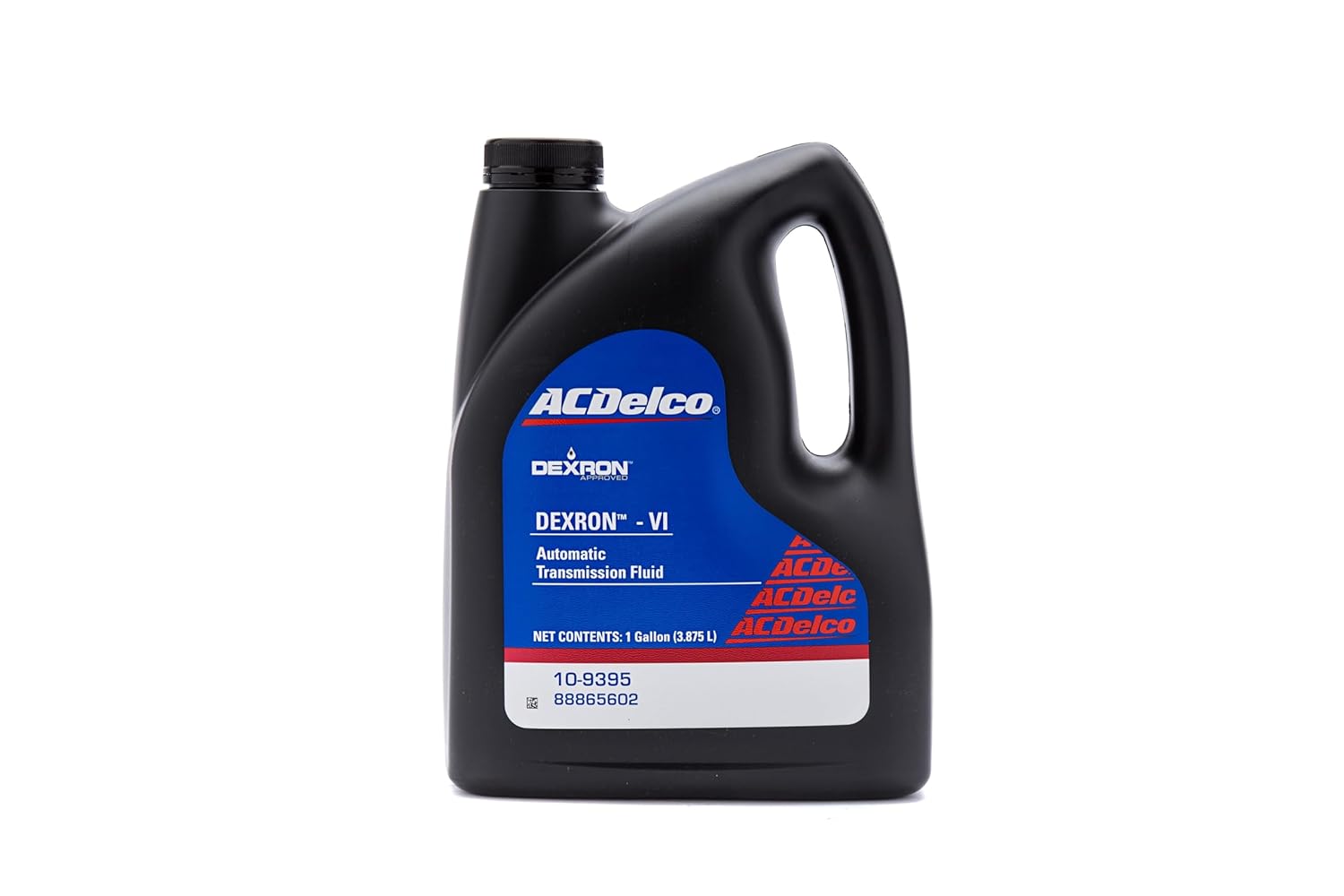
- One drain-and-fill: up to 6.3 quarts. Two gallons of ACDelco DEXRON-VI ($59.99 each) covers the top of the range with enough left for the level check. About $120, with a couple of quarts on the shelf for the next top-off.
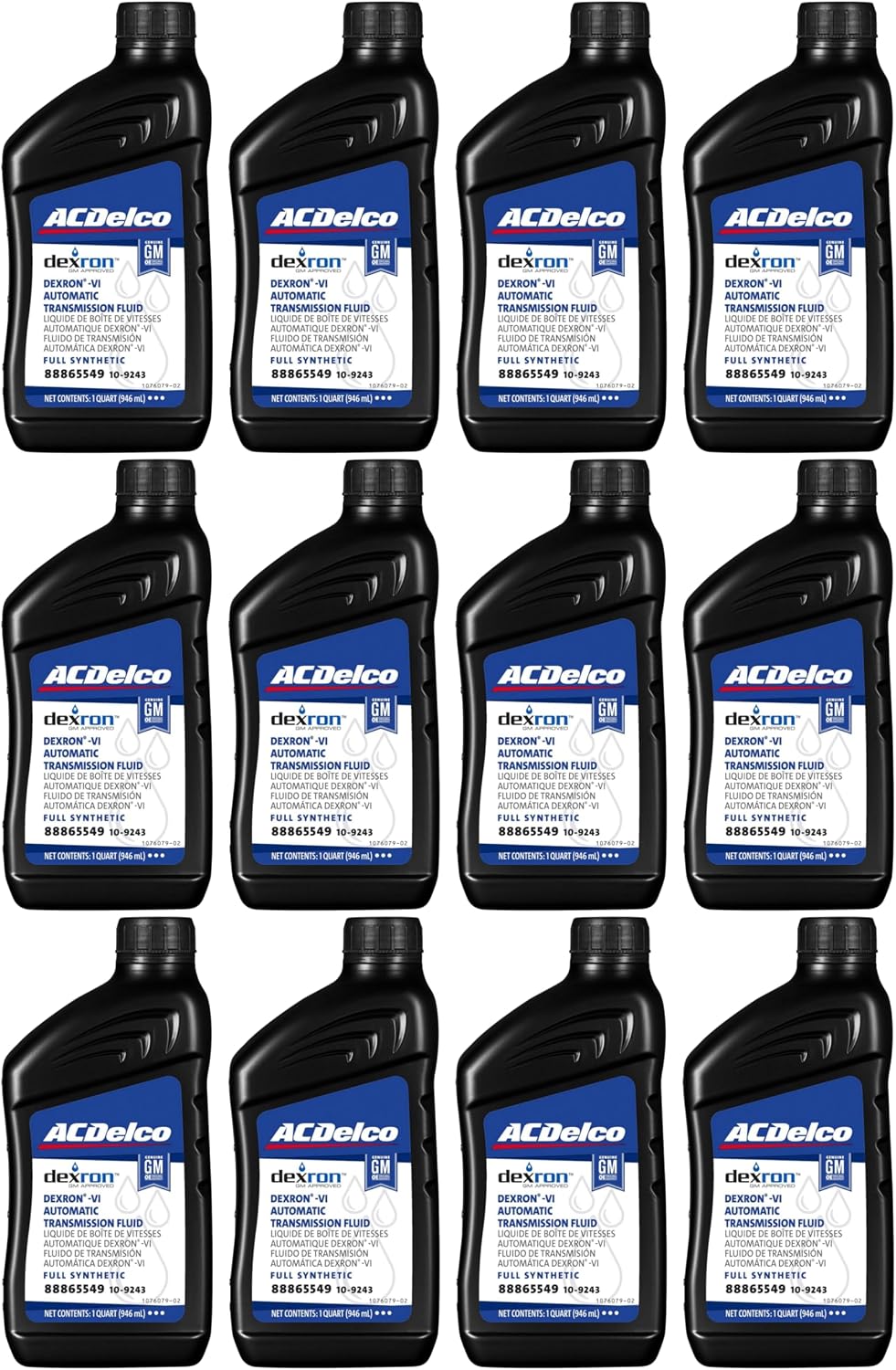
- Two passes: up to 12.6 quarts. Three gallons, about $180. A 12-quart case ($203.99) works too if your first drain comes in under the maximum.
- Crush washer for the drain plug: a few dollars at the parts counter. Do not reuse the old one.
Buy licensed DEXRON-VI in sealed containers. A universal multi-vehicle ATF that says it is "suitable for" DEXRON-VI applications is not the same thing as a licensed fluid, and the 6T40's clutch control is tuned around the friction characteristics of the real thing.
What You Are Paying a Shop For
Draining the fluid takes minutes. Setting the level correctly is the job. ATRA bulletin #1725 lays out the procedure for these units without a dipstick:
- Make sure there is enough fluid to start safely. With the vehicle off and fluid at about 20-25°C (68-77°F), fluid must at least drain out of the level hole.
- Start the engine. With your foot on the brake, move the shifter through each range, pausing about 3 seconds in each, then back to Park.
- Idle at 500-800 rpm for at least 3 minutes to let foam dissipate and the level stabilize.
- Read transmission fluid temperature on the scan tool or driver information center. It must be 85-95°C (185-203°F). If it is low, drive the vehicle in second gear until it gets there.
- With the vehicle level on a lift, engine running, in Park, remove the level set plug. If fluid streams, wait until it drips. If nothing comes out, add fluid until it drips.
- Inspect fluid color and look for external leaks. Reset the transmission oil life monitor if the vehicle has one.
ATRA is blunt about the temperature window. Set the level at 95°C and the unit ends up underfilled; set it at 85°C and it ends up overfilled. Underfill causes premature wear. Overfill pushes fluid out of the vent tube, foams the fluid or cavitates the pump. GEARS adds that as little as half a quart overfull can leak from the vent, and that an overfilled 6T40 can overheat and set P0218, transmission fluid over temperature.
So a shop is billing for lift time, a scan tool, and the minutes spent idling and driving the car until the fluid is in the window. To compare quotes, do the math yourself: fluid (about 1.5 gallons per pass) plus the shop's hourly rate times the time they book. As an example, if a shop books one hour at a $150 labor rate, one pass comes to about $240: roughly $90 for six quarts at $15 a quart plus the hour, before any markup on the fluid. Two passes cost more fluid, but not twice the labor if they do both in one visit. A quote far below that range is usually a drain-and-fill by the quart with no hot level check, and that is the job that causes vent leaks and P0218.
Machine Flush or Drain-and-Fill?
GM's service literature for these cars describes a check-and-change procedure, not a flush. The owner manuals call it a "special procedure" that is "difficult" and should be done at the dealer, which is really a warning about the level check. A machine exchange can swap more fluid in one visit, but the level still has to be set hot at the check plug afterward, exactly the same way. If you use a machine, pay for the level check too. If the shop cannot tell you the fluid temperature they set it at, it was not done right.
When a Fluid Change Is the Wrong Purchase
Fresh fluid is maintenance. It does not repair anything. If the car already has a complaint — no reverse, slipping into 3rd or 5th, falling out of gear at a stop, a P0776 or P2723 in memory — the fluid change will not fix it. On the 6T40 those complaints point at the 3-5-R wave plate and piston or a cracked 1-2-3-4 piston, which are covered in our 6T40 common problems guide.
Look at what comes out, though. ATRA's condition check says fluid should be red or dark brown. Very dark or black fluid with a burnt smell, with large pieces or metal particles, means flush the cooler and lines and overhaul the transmission. Milky or cloudy fluid means coolant or water contamination. Some fine friction material is normal. Steel slivers are not — on a 6T40, that usually means the 3-5-R wave plate has started breaking up.
One caution before you judge by color alone. GM's PI1131 notes that fluid in early 6T40/6T45 units (2011 models built before April 1, 2011) tends to turn dark because of the rust inhibitors used on internal parts during assembly, and tells technicians not to replace the transmission or the fluid based only on its appearance. Dark with no smell and no debris is not a death sentence; dark, burnt and full of metal is. If the car is also missing specific gears, read our 6T40 shift solenoid symptoms guide before anyone quotes a rebuild.
There is one complaint where fresh fluid genuinely is the repair: a light-throttle converter clutch shudder caused by worn-out fluid. GM's bulletin 23-NA-072 grades that shudder with scan data, and when turbine speed ripples 50-200 rpm on a light launch, or TCC slip ripples near 60 rpm at a steady 30-50 mph, GM calls it ATF degradation and the correction is a drain and refill, not a converter. GM also says that if both tests are normal, do not sell the fluid change for that complaint at all. If the shudder comes back after fresh DEXRON-VI, Sonnax points to wear in the TCC regulator valve bore, which lowers converter apply and charge pressure and can set P0741 or P0742. Our 6T40 torque converter shudder guide walks through the full test.
Here is the cost argument in one line. Every 45,000 miles, a correct service costs about $120 in fluid, or a few hundred dollars at a shop. A master rebuild kit alone for this unit is $300 or more before labor, a valve body, a converter or a cooler. The fluid change is the cheap part.
6T40 Filter & Pan Gasket Kit 24230708
If the unit is coming apart anyway, this is when the internal filter gets changed. The kit covers the GM 24230708 filter and gasket for the rebuild.
Shop the 6T40 filter kit at Core Transmission Parts →DEXRON-VI by the gallon or case, plus 6T40 and 6T45 rebuild kits, bonded pistons, valve bodies and pumps — shipped fast from the USA.
Shop 6T40 parts →Related guides
- 6T40 Common Problems and Fixes
- 6T40 Torque Converter Lockup Shudder Fix
- GM 6T40/6T45 Wave Plate Failure
- 6T40 Shift Solenoid Symptoms and Replacement
- 6L80 Fluid Change Cost
- 6L80 Fluid Type and Capacity
FAQ
How much does a 6T40 fluid change cost?
The parts are just fluid. GM lists a 4.2-6.3 quart fluid-change capacity of DEXRON-VI, so buy two gallons per drain-and-fill, roughly $120 at our ACDelco price. A second pass adds about another gallon. At a shop, add labor for the hot level check at 185-203 degrees F, which is the part that takes time.
What fluid does a 6T40 take?
DEXRON-VI. GM's Cruze owner manuals list DEXRON-VI Automatic Transmission Fluid, GM's 2025 TechLink capacity chart lists DEXRON VI for the current 6T40 (RPO MNH), and ATRA's bulletin for the 6T35/6T40/6T50 warns that the wrong fluid can cause internal damage.
How often should a 6T40 fluid be changed?
GM's 2018 Cruze manual has no transmission fluid change on the normal maintenance chart. It appears only on the severe-service chart, at 45,000, 90,000 and 135,000 miles. Severe covers hot-weather city traffic, hilly terrain, towing, and taxi, police or delivery use, which describes a lot of Cruzes and Equinoxes.
Can you change the filter on a 6T40 without removing the transmission?
No. The 6T40/6T45 filter (GM 24230708 and 24246194) is serviced at disassembly, which is how Raybestos lists it. GM's own maintenance sheet says to change the filter only if it is serviceable. A plain fluid-change quote that includes a 6T40 filter should be questioned.
Why does a 6T40 only drain about half its fluid?
GEARS magazine notes that pulling the drain plug on a warm 6T40 releases only about 50 percent of the fluid. The rest stays in the converter, cooler, valve body cover and clutch circuits. Two drain-and-fills with a drive between them replace roughly three quarters of it.
Sources
- GM TechLink — "2025 Transmission Capacities & Fluids." Backs the 6T40 (RPO MNH) fluid-change capacity of 4.0-6.0 L (4.2-6.3 qt) and DEXRON VI as the specified fluid. gm-techlink.com (PDF)
- General Motors — 2018 Chevrolet Cruze Owner Manual. Backs the automatic transmission fluid change appearing only on the Additional Required Services — Severe chart (at 45,000, 90,000 and 135,000 mi), GM's definition of severe service, the no-dipstick "special procedure" note, and DEXRON-VI in Recommended Fluids and Lubricants (p. 359). chevrolet.com (PDF)
- General Motors — 2013 Chevrolet Cruze Owner Manual. Backs the absence of a transmission dipstick, the statement that checking and changing the fluid is a difficult special procedure best done at the dealer, and DEXRON-VI as the automatic transmission fluid. assets.gm.com (PDF)
- ATRA — Technical Bulletin #1725, "6T35, 6T40, 6T50 Fluid Level and Condition Check Procedures," February 2016. Backs the DEXRON VI-only caution, the cold starting-fluid check at 20-25°C, the range-cycling and 3-minute idle steps, the 85-95°C (185-203°F) level window with under/overfill consequences, the drive-in-second warm-up, the drip check at the level set plug, and the fluid condition criteria. atracom.blob.core.windows.net (PDF)
- ATRA / GEARS Magazine — "6T40/45 Diagnosis and Fixes." Backs the roughly 50 percent warm drain, the half-quart overfill vent leak and P0218, and the fluid level control valve and its 60°C (140°F) behavior. gearsmagazine.com
- Raybestos Powertrain — Allomatic filter 515699, GM 6T40/6T45 2008-2011. Backs the OE filter numbers 24230708 and 24246194 and the filter's service type listed as disassembly. raybestospowertrain.com
- General Motors — Preliminary Information PI1131, "Various Missing Gears, DTC P0776, P0796, P0878, P0873, P2714 or P2723 Set," December 2013 (via NHTSA). Backs the note that 6T40/6T45 fluid tends to turn dark from assembly rust inhibitors and should not be condemned on appearance alone. static.nhtsa.gov (PDF)
- General Motors — Service Bulletin 23-NA-072, "Shudders or Shakes at Low Speeds," January 2024 (via NHTSA). Backs the launch and steady-state TCC slip grading, the degraded-fluid drain and refill correction, and the do-not-proceed-if-normal instruction. Written for GM's nine-speed transaxle and cited here for the grading method. static.nhtsa.gov (PDF)
- Sonnax — TCC Regulator Valve Kit 144740-38K. Backs TCC regulator bore wear in 6T30/40/45/50 units reducing TCC apply and converter charge pressure, with P0741/P0742 among the listed symptoms. sonnax.com
Also referenced: GM maintenance schedule for the 2016 Chevrolet Cruze Limited, chevrolet.com (PDF) — "Change automatic transmission fluid... If filter is serviceable, change filter" under severe service.