A Cruze, Sonic, Trax, Encore, Equinox, Terrain or four-cylinder Malibu with a 6T40 or 6T45 comes in with a light-throttle shake somewhere between 30 and 50 mph. It feels like running over rumble strips, it goes away if you stab the throttle, and it comes right back when you settle into a cruise. The customer has already read that "the torque converter is going out."
Sometimes it is. More often on these small GM six-speeds, the converter is the victim: worn-out fluid, a worn TCC regulator bore in the valve body, or low converter charge pressure that lets the clutch chatter. Replacing a converter without fixing what cooked it gets you a second shudder in 20,000 miles. This is how the 6T40 controls its converter clutch, how to prove the shudder is actually TCC, how to grade it with a scan tool, and what to replace at each stage. The GM bulletins, ATRA procedures and Sonnax data behind it are cited inline and listed at the bottom.


How the 6T40 Applies Its Converter Clutch
The converter clutch in the 6T30/40/45/50 family is controlled by the TCC pressure control solenoid inside the TEHCM, the combined solenoid body and TCM that bolts to the valve body. Per GEARS Magazine's "Understanding GM 6T40 Solenoids," the TCC solenoid is a normally low solenoid: with low current it sends little or no oil to the TCC control valve and TCC regulator valve, and as the TCM raises current it sends a controlled flow of oil to those two valves to apply the clutch. GEARS lists it among the four solenoids that did not change between Gen 1 and Gen 2, with the same operation and location, and gives 3-5 ohms as the resistance spec for all the pressure control solenoids, the TCC unit included.
That matters because the TCM does not just slam the clutch on and off. At light cruise it holds a small, controlled slip to damp engine firing pulses. The solenoid sets a signal, and the TCC regulator valve turns that signal into actual clamping pressure. If the regulator valve leaks in its bore, the clutch gets less pressure than the TCM asked for, slip rises, the TCM commands more, and the loop hunts. Add fluid whose friction modifiers are used up and that hunting turns into a shudder you can feel.
GM kept working on this circuit. Preliminary Information PI0604C (May 2013), which documents the 2012 "Gen 2" updates to the 6T30/40/45/50, lists a revised Torque Converter Clutch Regulator Apply Valve among the control valve body changes, alongside revised clutch regulator valves and a new filter plate. The same bulletin notes that the 2012 Cruze and Sonic with the 1.8L (LUW), the 2012 Captiva Sport 3.0L and the 2012 Orlando stayed on the Gen 1 design, while all the 2013 vehicles it covers are Gen 2. Know which one you have before you order valve body parts.
Step 1: Prove It Is TCC Shudder
Plenty of "converter shudders" are not in the converter. GM's bulletin 18-NA-358 for the bigger 6T70/6T75 spells out the right first move for this whole family: validate that the concern is not an engine misfire or driveability problem, then confirm the shudder is TCC shudder by monitoring TCC slip while the TCC is engaged during the event. That is the whole diagnosis in one line, and it applies to a 6T40 just as well.
- Misfire first. The 1.4L turbo and 1.8L cars shudder at light load with a weak coil or a fouled plug, and from the driver's seat it feels exactly like TCC chatter. Check misfire counters on every cylinder during the road test.
- Mounts and tires. A collapsed mount passes engine roughness into the body at the same speeds where the converter clutch applies. A tire with a shifted belt shakes at a road speed regardless of gear or throttle. True TCC shudder depends on gear, load and whether the clutch is applied.
- Watch the data. Log engine speed, turbine (input) speed, TCC slip speed and commanded TCC state during the complaint. If the shake happens with the converter clutch released and slip high, the converter clutch did not cause it. If it happens only with the clutch applied or in controlled slip, and it stops the instant you command the clutch off or the TCM releases it, you have TCC shudder.
Also check for codes. P0741 (TCC stuck off / performance) and P0742 (TCC stuck on) are the two Sonnax lists alongside no lockup, TCC slip, harsh TCC apply and overheated fluid and lining as symptoms of TCC regulator bore wear in these units. A stored P0741 with a shudder complaint is a strong hint that the hydraulics, not just the fluid, are part of the problem.
Step 2: Grade It With the Scan Tool
GM has not published a 6T40-specific grading chart, but it has published a clear one for the same failure on its later transaxles. Bulletin 23-NA-072 (January 2024) is written for the nine-speed in the Traverse, Blazer, Enclave, Acadia and XT5/XT6, and it is the best documented way to put a number on a converter clutch shudder. The PIDs are standard GM TCM data, and the physics of a clutch in controlled slip is the same in a 6T40. Use it as a structured guide, not as a 6T40 warranty spec.
Launch test
Graph engine speed, TCC slip speed, engine torque and ISS (turbine speed). Launch from a stop at 15-20 percent pedal to 30 mph. GM's condition is present when TCC slip is under 150 rpm maximum and the ISS trace oscillates. Read the ISS oscillation peak to peak:
| ISS peak to peak | GM grade | Action |
|---|---|---|
| Under 50 rpm | Normal | Not a converter or ATF issue. Do nothing to the transmission. |
| 50 to 200 rpm | Degraded | ATF degradation. Check fluid condition, then drain and refill. |
| Over 200 rpm | Damaged | Hardware damage likely. Replace the converter. |
Steady-state slip control test
Collect TCC data at a steady 30-50 mph and steady throttle for at least 15 seconds. GM grades TCC slip peak to peak as normal below 20 rpm, degraded near 60 rpm and repeating, and damaged near 100 rpm and erratic. A regular, rhythmic ripple points at fluid. A ragged, irregular trace points at lining or cover damage.
GM also adds a warning worth copying onto the work order: if both tests come out normal, do not proceed with a fluid change or a converter replacement. Save the log either way. It is the difference between a fluid service and a transaxle-out converter job, and it is the easiest thing to show the customer.
Step 3: Level and Fluid Condition
Most 6T40 cars have no dipstick, so the level gets guessed at more than it gets checked. ATRA Technical Bulletin #1725 for the 6T35/6T40/6T50 lays out the correct procedure: engine running, shift through every range pausing about 3 seconds in each, idle at 500-800 rpm for at least 3 minutes, and check at the level set plug with the vehicle level and the fluid at 85-95°C (185-203°F). ATRA notes that checking at 95°C leaves it underfilled and at 85°C leaves it overfilled, which is why you read TFT on the scan tool instead of guessing. If the fluid is cold, ATRA says to drive it in second gear until it comes up to temperature. Low fluid starves the converter charge circuit and will make a marginal clutch chatter all by itself.
Then look at what came out. The ATRA bulletin and GM's 23-NA-072 agree on the grading:
- Red or brown and transparent: normal.
- Very dark or black with no burnt smell: still acceptable for a drain and fill. GM's PI1131 notes that fluid in early 2011 6T40/6T45 units darkens from assembly rust inhibitors, so do not condemn it on color alone.
- Very dark or black with a burnt odor: clutch damage has already happened. The unit needs to come out.
- Milky or cloudy: coolant or water contamination. Find the source before anything else.
- Large pieces, metal or a gritty feel between your fingers: hardware damage. A little friction material and fine silver streaks from manufacturing are normal.
ATRA's instruction when there is burnt fluid but no sign of internal damage is to replace the fluid, repair the oil cooler and flush the cooler lines. That applies directly to a shudder job: a restricted cooler means low converter flow and a hot clutch.
Step 4: The Fix for Each Grade
Degraded: DEXRON-VI drain and refill
If the scan data says degraded and the fluid shows no burnt smell, metal or coolant, the correction is fresh fluid. ATRA's caution is blunt: DEXRON-VI only, because the wrong fluid may cause internal damage. A universal multi-vehicle ATF defeats the purpose of this repair, since the friction modifier package is what stops the shudder. One drain only replaces part of the fill, because a lot of fluid stays in the converter and cooler, so plan on two or three drain and fills with a drive cycle between them. GM TechLink's capacity chart puts the 6T40 fluid change at 4.0-6.0 L (4.2-6.3 qt), which gives you a sense of how much fluid never leaves the unit on a single pan drain. Set the level hot at the plug each time, reset the oil life monitor, and drive it a couple of hundred miles before you call it fixed.
Degraded but it comes back, or P0741 with it: the TCC regulator
When a fresh fill helps for a few weeks and the shudder returns, or there is a P0741 on file, look at the valve body. Sonnax states that bore wear at the TCC regulator valve in Gen 1, Gen 2 and Gen 3 6T units reduces TCC apply and converter charge pressure, and that the valve train can stick, giving a harsh apply or no apply depending on where it hangs. Its drop-in kit 144740-38K uses extended spool lands that ride in the unworn part of the bore, plus a modified shuttle valve to stop the train from sticking, with no reaming needed. For a badly worn bore it offers the oversized 144740-16K.
Sonnax's 6T valve body layout lists two more circuits that feed the same complaint. On Gen 2, the TCC control valve kit (144510-05K) targets excess TCC slip, low cooler flow, low converter and lube flow, overheating and TCC lining failure. On Gen 3 units, which Sonnax lists as the 6T31/35/41/46/51, the lube on demand valve kit (144510-19K) targets low cooler flow, no converter apply and an overheated converter. The pattern is the same: a worn valve starves the converter of charge oil, the lining overheats, and the fluid breaks down faster. If you do not have the tooling to test and repair individual bores, a known-good valve body is the practical path.
Damaged: converter out, and find out why
If the data grades damaged, or the fluid is burnt with debris, the converter has to be replaced and the unit comes out. Do not stop at the converter:
- Seal. GM PI0950A says to install a new torque converter seal any time the transmission is removed, and lists the revised seal as 24266675. While you are at the input shaft, check the input shaft seal fit too. Transmission Digest documented a rebuilt 2012 Cruze that kept killing converters because the input shaft seal had too little drag: the converter clutch was applied just enough to drag, the unit hit 260 F and set P0218, and the fix was a new seal pressed (not hammered) to the original depth.
- Cooler. Flush the lines and flow-check or replace the cooler. Debris from a failed lining that stays in the cooler goes straight into the new converter.
- Valve body. Check or repair the TCC regulator and TCC control circuits. A replacement converter fed by a worn regulator will shudder again.
- Filter. On the 6T40 the filter is inside the unit and only changed on teardown, so a converter job is the time to do it.
- Relearn. Refill with DEXRON-VI, set the level hot, and run the adapt relearn before the road test.
Diagnostic Order That Saves a Comeback
- Road test with misfire counters and TCC slip on the scan tool. Rule out misfire, mounts and tires.
- Confirm the shake only happens with the converter clutch applied or in controlled slip.
- Read TCM codes, especially P0741 and P0742.
- Grade it with the launch and steady-state tests. Save the log.
- Set the level hot at the plug per ATRA TB #1725 and grade the fluid.
- Degraded: DEXRON-VI drain and fills, then retest.
- Returns, or P0741 present: repair the TCC regulator circuit or replace the valve body.
- Damaged: converter, seal, cooler flush, filter, valve body check, relearn.
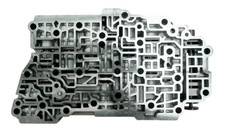
6T40 valve body at Core Transmission Parts
The TCC regulator and TCC control valves live in the valve body, and a worn regulator bore is what keeps a new converter from staying fixed. Core Transmission Parts carries a replacement 6T40 valve body for 2012-2021 units.
View the 6T40 valve body →6T40 and 6T45 valve bodies, DEXRON-VI fluid, filter and pan gasket kits and rebuild kits — shipped fast from the USA.
Shop 6T40 parts →Related guides
- 6T40 Slipping: Causes and Fix
- 6T40 Harsh Shift Causes and Fix
- 6T40 Fluid Change Cost
- 6T40 Common Problems and Fixes
- 6T70 Torque Converter Lockup Shudder Fix
- 6T40 Shudder on Acceleration: Causes and How to Diagnose Each One
FAQ
What causes torque converter shudder on a 6T40?
Most 6T40 shudder comes from degraded fluid whose friction modifiers are worn out, which makes the converter clutch grab and release during controlled slip. A worn TCC regulator valve bore in the valve body, low converter charge or cooler flow, and a damaged converter lining are the other common causes. An engine misfire or bad mount can feel the same, so rule those out first.
Will a fluid change fix 6T40 shudder?
It will if the shudder grades as degraded and the fluid has no burnt smell, metal or coolant in it. Use DEXRON-VI only and plan on two or three drain and fills, because a single drain leaves much of the old fluid in the converter and cooler. If the shudder returns after fresh fluid, look at the TCC regulator circuit in the valve body.
How do I know if my 6T40 torque converter is bad?
Log TCC slip and turbine speed with a scan tool. In GM's grading method, turbine speed oscillation over 200 rpm on a light launch, or erratic TCC slip near 100 rpm at a steady 30-50 mph, points to converter hardware damage. Burnt-smelling fluid with debris also means the converter and unit need to come out.
What do P0741 and P0742 mean on a 6T40?
P0741 means the TCM saw the converter clutch fail to apply or hold as commanded, and P0742 means it stayed applied when it should have released. Sonnax lists both codes as symptoms of TCC regulator valve bore wear in the 6T family, so check the valve body before blaming the converter or the TEHCM.
What fluid does a 6T40 take?
DEXRON-VI. ATRA's 6T35/6T40/6T50 fluid bulletin cautions that using anything else may cause internal damage, and the level must be set at the check plug with the fluid at 85-95 degrees C (185-203 degrees F).
Sources
- General Motors — Service Bulletin 23-NA-072, "Shudders or Shakes at Low Speeds," January 2024 (via NHTSA). Backs the launch test setup and 150 rpm slip condition, the ISS peak-to-peak normal, degraded and damaged thresholds, the 30-50 mph steady-state slip control test and its 20/60/100 rpm grades, the do-not-proceed-if-normal note, and the fluid condition criteria. Written for GM's nine-speed transaxle and used here as a grading guide. static.nhtsa.gov (PDF)
- General Motors — Preliminary Information PI0604C, "Information on 6T30/6T40/6T45/6T50 Automatic Transmission Product Updates," May 2013 (via NHTSA). Backs the Gen 2 revised torque converter clutch regulator apply valve and other valve body changes, and the 2012 vehicles that stayed on Gen 1. static.nhtsa.gov (PDF)
- ATRA — Technical Bulletin #1725, "6T35, 6T40, 6T50 Fluid Level and Condition Check Procedures," February 2016. Backs the DEXRON-VI-only caution, the range-cycling and 3-minute idle steps, the 85-95°C level window and under/overfill note, the drive-in-second warm-up, and the fluid condition and cooler flush instructions. atracom.blob.core.windows.net (PDF)
- ATRA / GEARS Magazine — "Understanding GM 6T40 Solenoids." Backs the TCC pressure control solenoid being normally low, feeding the TCC control and TCC regulator valves, its unchanged Gen 1/Gen 2 operation and location, and the 3-5 ohm resistance spec. gearsmagazine.com
- Sonnax — TCC Regulator Valve Kit 144740-38K. Backs the Gen 1, 2 and 3 6T applications, the P0741/P0742, no lockup, TCC slip, overheated fluid and lining and harsh apply symptoms, bore wear reducing TCC apply and converter charge pressure, the extended-land and shuttle valve design, and the oversized 144740-16K. sonnax.com
- Sonnax — "GM 6T30/40/45/50 (Gen. 2) & 6T40 (Gen. 3) Valve Body Layout." Backs the Gen 2 TCC control valve kit 144510-05K and the Gen 3 lube on demand valve kit 144510-19K with their converter, cooler flow and overheating symptoms, and the Gen 3 unit designations. sonnax.com
- Transmission Digest — "Looking for the cause of repeated 6T40 torque converter failure." Backs the 2012 Cruze case where an input shaft seal installed with too little drag let the converter clutch drag, overheated the unit to 260 F with P0218 stored, and destroyed replacement converters until the seal was pressed in correctly. transmissiondigest.com
Also referenced: GM Preliminary Information PI0950A for the torque converter seal replacement guidance and part 24266675, static.nhtsa.gov (PDF); GM Service Bulletin 18-NA-358 (6T70/6T75) for the rule-out-misfire and confirm-TCC-slip steps, static.nhtsa.gov (PDF); and GM TechLink, "2025 Transmission Capacities & Fluids," for the 6T40 fluid change capacity, gm-techlink.com (PDF); and GM Preliminary Information PI1131 for the note that fluid in early 2011 6T40/6T45 units darkens from assembly rust inhibitors and should not be condemned on color alone, static.nhtsa.gov (PDF).