"Shudder when I accelerate" is one complaint that covers at least three unrelated failures on a GM 6T40. GM's own paperwork proves it: there is a documented bulletin for a half-shaft wobble through the 1-2 shift, a separate bulletin for torque converter clutch shudder caused by depleted fluid additives, and a Sonnax-documented clutch pack failure that can flare and shake under load. Treating all three as "it's the transmission" is how a shop replaces a part that was never broken. Here is how to separate them using GM's and Sonnax's own diagnostic criteria.
For more GM transmission coverage, visit our GM transmission hub and Chevy transmission hub.
Three Different Things Feel Like "Shudder on Acceleration"
The 6T40 and its 6T45/6T30/6T50 siblings run behind the Ecotec four-cylinder in the Cruze, Sonic, Malibu, Verano, Encore and current Gen 3 Trax and Envista. A driver who says "it shudders when I give it gas" could be describing any of these, and they have nothing in common mechanically:
- A wobble tied to the 1-2 shift, worse with a passenger up front or while turning right — GM's own documented half-shaft defect on the 2012 Cruze.
- A shudder-plus-growl that shows up in a speed band during a steady pull, commonly 28-53 mph on later units — torque converter clutch (TCC) slip.
- A flare or shake at the 3-5-R shift under load, often with code P0776 — a broken clutch pack waved plate on Gen 1/Gen 2 units.
Each one has a different root cause, a different GM or Sonnax document behind it, and a different parts bill. Here is each one broken out.
Cause 1: Worn Front Half-Shafts (Wobble Through the 1-2 Shift)
GM bulletin PI0770C, issued for the 2012 Chevrolet Cruze with the 1.4L LUJ engine and automatic transmission RPO MH8 (a 6T40 variant), documents "a wobble felt in the vehicle or steering wheel when accelerating from a stop through the 1-2 shift," sometimes with a slip/stick feel as the vehicle shifts up to about 20 mph. GM states the concern is more prevalent with a passenger in the front seat, or while turning to the right during acceleration — both of which load the front half-shafts unevenly.
GM's duplication test is specific and worth running before anything is condemned: drive the vehicle in a long, gradual turn with the transmission in 2nd gear, use the brakes to hold about 15 mph (24 km/h), and keep the engine around 2,000 RPM. If the wobble reproduces under that exact condition, GM's fix is to replace both front wheel drive shafts — RH (GM P/N 13399510) and LH (P/N 13399511) — with the redesigned shafts, then run a specific break-in procedure: from a stop, accelerate wide open throttle through the 1-2 shift to 40 mph, decelerate to a stop, and repeat that cycle 20 times.
The keyword list GM attaches to this bulletin is "shake, shudder, vibration" — the exact words a service writer hears from the customer, even though the fix has nothing to do with the transmission's internals. If a 6T40-equipped car shudders specifically on acceleration through the 1-2 shift and is worse loaded or turning right, check the half-shafts before touching the transmission.
Cause 2: Torque Converter Clutch (TCC) Slip
A second, completely different mechanism produces a shudder during acceleration: the torque converter clutch slipping instead of locking cleanly. GM TechLink documents this on 2024 Trax and Envista models with the 6T40 (RPO MNH) as a shudder plus a growl or humming sound between roughly 28 and 53 mph, attributed to an internal torque converter condition causing slip, with bulletins #23-NA-194 and #24-NA-242 covering the diagnostic order and converter replacement parts.
Separately, GM bulletin 20-NA-142 ("Shudder/Surging While Driving," revised May 2022) documents the underlying mechanism on other GM transmissions sharing the same TCC design philosophy: friction-modifying additives in the ATF deplete over time and stop regulating a consistent clutch slip rate, which presents to the driver as a surging or shuddering sensation. GM's bulletin applies that fix only under 30,000 miles, and it's a specific three-stage procedure: drain the pan and inspect for metallic debris (which, if present, means the converter and filter get replaced instead), then perform three separate fill-and-drive-and-drain cycles with 6 quarts of DEXRON VI each time, running the transmission through all gears between each drain. Past 30,000 miles, GM's own guidance shifts straight to torque converter and filter replacement rather than the fluid exchange.
This is a deep enough topic on its own that we cover the full scan-tool test sequence, the TCC regulator valve angle, and the P0741/P0742 code path in a dedicated writeup — see 6T40 Torque Converter Shudder: How to Diagnose It and What Actually Fixes It for that walkthrough. The short version that separates it from a half-shaft wobble: TCC shudder shows up on a straight-line pull through a speed band, not specifically tied to the 1-2 shift or to turning, and it will disappear if you command the torque converter clutch open on a scan tool and come back once it's commanded locked again.
Cause 3: 3-5-R Clutch Pack Waved Plate Failure
The 6T40 architecture uses three simple planetary gear sets driven by three brake clutches and two rotating clutches, shifting clutch-to-clutch from 2nd gear up, per the SAE paper that documents the 6T40/6T45 family's design. One of those clutch packs, the 3-5-R clutch, has a documented weak point: Sonnax's technical writeup on the 6T40/6T70 Drum Saver kits identifies a waved plate inside the 3-5-R clutch pack on Gen 1 and Gen 2 units that commonly breaks apart in service, setting diagnostic trouble code P0776 and causing harsh or flare shifts, or a complete loss of 3rd, 5th and Reverse. Sonnax notes that GM's own shot-peened replacement plate, intended to fix the original design, still fails in the field on some units, and that broken plate fragments frequently damage the drum splines on the way out, turning a plate failure into a drum replacement.
This failure reads differently than TCC shudder or half-shaft wobble: it's tied to the moment the 3-5-R clutch applies under load, so it tends to show up as a flare, a bang, or a shake specifically on the 2-3 or 4-5 upshift under acceleration, rather than a steady vibration through a speed band. If a scan tool shows P0776, or the shudder is reproducible right at a specific upshift under load rather than across a speed range, the clutch pack and drum belong on the inspection list before the converter does.
Fluid Condition Comes Before Any of This
GM specifies DEXRON VI for the 6T40 across its current applications. GM's own 2026 TechLink transmission capacities chart lists a drain-and-fill capacity of 4.0 to 6.0 liters (4.2 to 6.3 quarts) for the Trax 6T40 (RPO MNH), varying slightly by vehicle and cooler circuit. Low or degraded fluid changes converter apply characteristics and clutch slip behavior across all three failure paths above, so checking fluid level and condition — and doing a full service if it's dark or past interval — costs nothing and should happen before any parts are ordered.
Ruling Out False Positives
Not every acceleration shudder on a 6T40-equipped car originates in the drivetrain's transmission-adjacent parts at all. An engine misfire under load can feel exactly like a shudder from the driver's seat, especially on a four-cylinder where a single dead cylinder is a larger percentage of total output — pull codes and check for a misfire counter before assuming it's mechanical. A worn or broken engine or transmission mount lets the whole powertrain shift slightly under torque before it loads the driveline, producing a single shake on hard acceleration that can be mistaken for a clutch or converter event. Both are faster and cheaper to rule out than pulling a valve body or a converter.
Diagnostic Order
- Pull codes first. P0776 points at the 3-5-R clutch pack. P0741/P0742 point at TCC performance. No codes at all pushes the half-shaft and mount checks higher on the list.
- Check fluid level and condition. Correct to 4.2-6.3 quarts of DEXRON VI if low, and service it if it's dark or past interval, before doing anything else.
- Reproduce it with GM's own test for the half-shaft wobble: a long, gradual turn in 2nd gear, holding about 15 mph on the brakes at 2,000 RPM. If it reproduces there and is worse loaded or turning right, check the front half-shafts per PI0770C before touching the transmission.
- If it's a steady shudder-plus-growl through a speed band (commonly 28-53 mph), suspect TCC slip and run the full test sequence in our dedicated TCC shudder guide.
- If it's a flare, bang, or shake specifically at the 3-5-R upshift under load, with or without P0776, inspect the 3-5-R clutch pack and drum splines for the Sonnax-documented waved plate failure.
- Rule out a misfire or a worn motor/transmission mount before any transmission teardown if nothing above reproduces cleanly.
Chasing a 6T40 shudder this week?
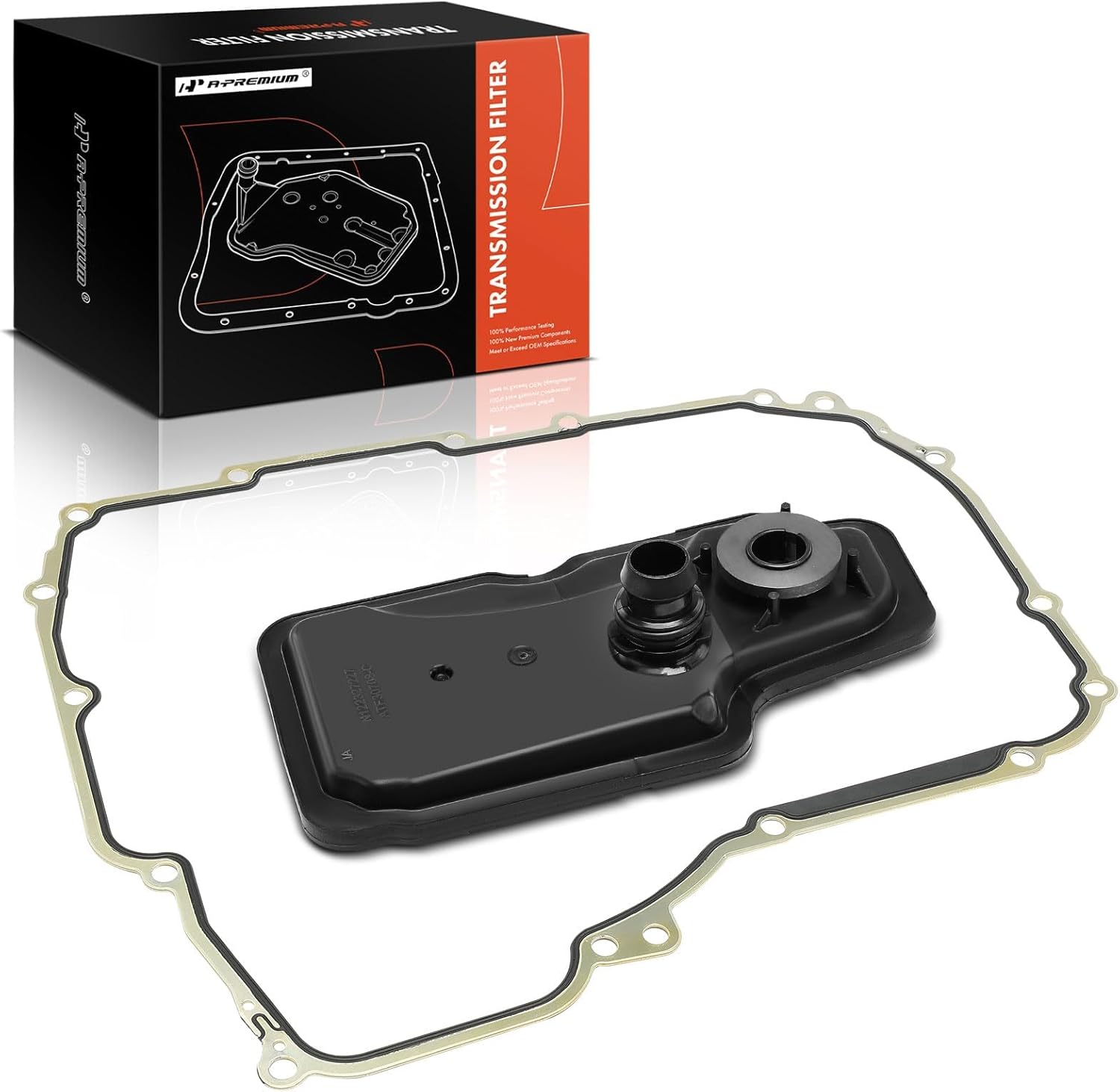
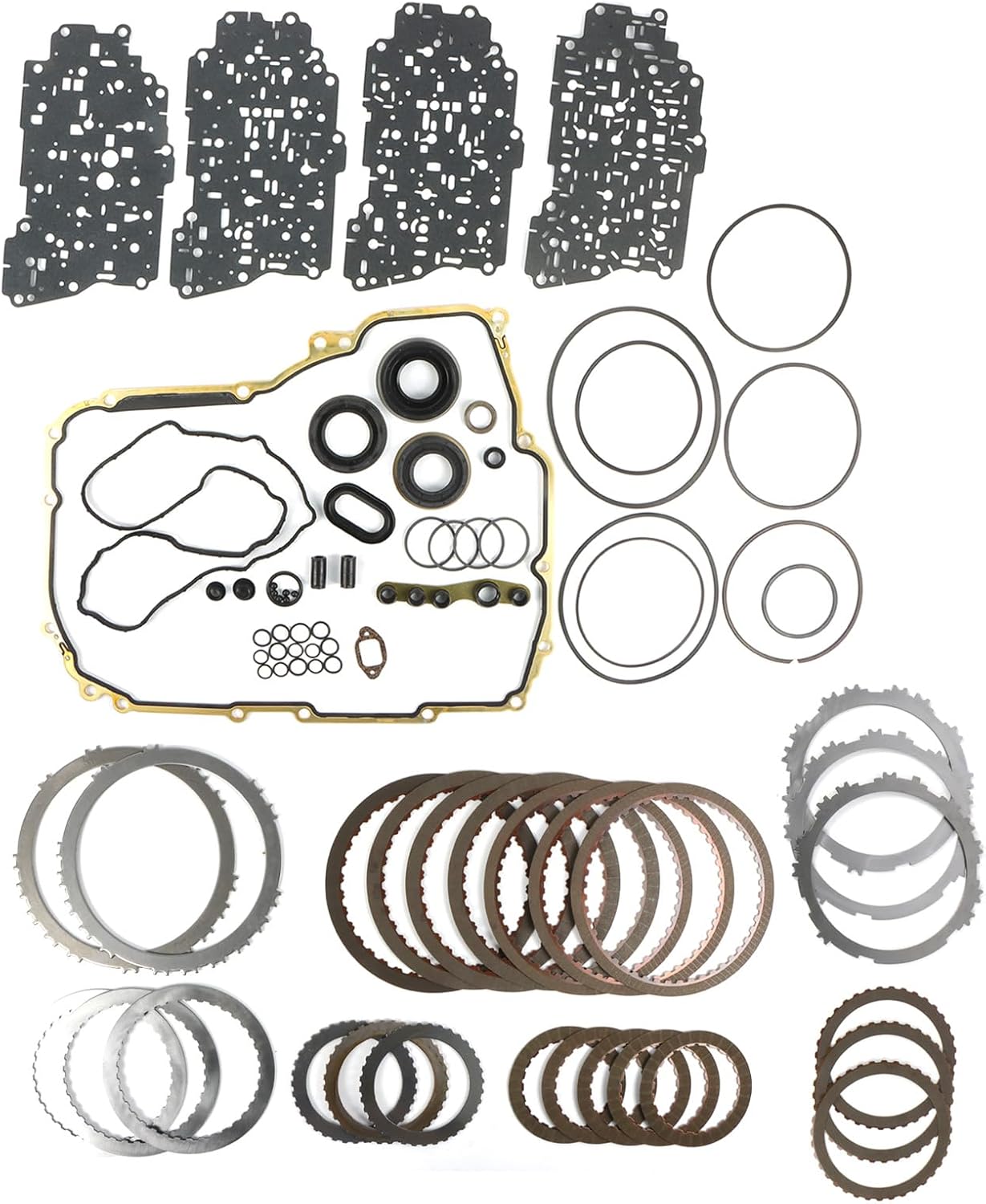
Filter and gasket kits, clutch modules and full rebuild kits for the 6T40/6T45, shipped from the USA.
Shop 6T40 parts →FAQ
What causes a 6T40 to shudder when accelerating?
There are three distinct, documented causes. GM bulletin PI0770C describes a wobble through the 1-2 shift on 2012 Cruze models caused by a front half-shaft design issue, fixed by replacing both front wheel drive shafts. GM TechLink and bulletin 20-NA-142 describe a torque converter clutch shudder caused by depleted friction-modifying additives in the ATF. And Sonnax documents a 3-5-R clutch pack waved plate that breaks apart on Gen 1 and 2 units, setting code P0776 and causing flare or harsh 3-5-R engagement that can feel like a shudder under load.
Is a shudder on acceleration always a transmission problem on a 6T40?
No. GM's own bulletin PI0770C traces a documented acceleration wobble on the Cruze to the front half-shafts, not anything inside the transmission. A worn engine or transmission mount, or a misfire under load, can also produce a shudder that feels identical from the driver's seat. Pull codes and rule out the half-shafts and mounts before any transmission teardown.
How do I tell half-shaft wobble apart from torque converter shudder on a 6T40?
GM's own duplication test for the half-shaft wobble is specific: drive a long, gradual turn in 2nd gear, holding about 15 mph with the brakes at roughly 2,000 RPM, and the condition is more noticeable with a front passenger or while turning right. Torque converter shudder, by contrast, shows up on a straight-line pull through a speed band, commonly 28-53 mph on later Gen 3 units, and will disappear if you disable the torque converter clutch and return once it is re-enabled.
What does code P0776 mean on a 6T40?
P0776 is a pressure control solenoid B performance code, and Sonnax ties it directly to the 3-5-R clutch pack's waved plate breaking apart on Gen 1 and Gen 2 6T40, 6T45 and 6T50 units. The same failure shows up as harsh or flare shifts, or a complete loss of 3-5-R, and broken plate fragments commonly damage the drum splines on the way out.
What fluid does the 6T40 use and how much?
GM specifies DEXRON VI for the 6T40 across its applications. GM's own 2026 TechLink transmission capacities chart lists a drain-and-fill capacity of 4.0 to 6.0 liters (4.2 to 6.3 quarts) for the Trax 6T40 (RPO MNH), and the fluid-exchange procedure in bulletin 20-NA-142 calls for three separate 6-quart fills with drive cycles between each one.
Sources
- General Motors — Bulletin PI0770C, "Wobble Felt in Vehicle Acceleration from Stop Through 1-2 Shift," 2012 Chevrolet Cruze (RPO MH8). Backs the half-shaft design defect, the 2nd-gear/15 mph/2,000 RPM duplication test, the RH/LH front drive shaft replacement part numbers, and the 20-cycle break-in procedure. static.nhtsa.gov
- General Motors / GM TechLink — "Transmission Shudder and Noise," 2024 Trax/Envista 6T40 (RPO MNH). Backs the 28-53 mph shudder-plus-growl symptom and the diagnostic order against Bulletins #23-NA-194 and #24-NA-242. gm-techlink.com
- General Motors — Bulletin 20-NA-142, "Shudder/Surging While Driving," revised May 2022. Backs the additive-depletion cause of torque converter clutch shudder and the three-stage, 6-quart DEXRON VI fluid exchange procedure, with the 30,000-mile cutoff for the fluid fix versus converter/filter replacement. static.nhtsa.gov
- General Motors — 2026 Transmission Capacities & Fluids chart (GM TechLink), Trax 6T40 (RPO MNH). Backs the DEXRON VI fluid specification and the 4.0-6.0 liter / 4.2-6.3 quart fluid-change capacity. gm-techlink.com
- Sonnax — "GM 6T40/6T70 Drum Saver Kits: Unbeatable Protection Against 3-5-R Failures/Comebacks," tech resource 765. Backs the 3-5-R waved plate failure mechanism on Gen 1/2 units, code P0776, the harsh/flare/loss-of-3-5-R symptom set, and the drum spline damage that follows plate breakage. sonnax.com
- SAE International — "General Motors Small Front Wheel Drive Six-Speed Automatic Transmission Family," paper 2010-01-0857. Backs the 6T40/6T45 architecture: three simple planetary gear sets, three brake clutches and two rotating clutches, with clutch-to-clutch shift strategy from 2nd gear up. saemobilus.sae.org