The 6T40 and its 6T45/6T30/6T50 siblings are the six-speed FWD transaxles GM has run behind the Ecotec four-cylinder since 2008, across the Cruze, Malibu, Equinox, Sonic, Encore and, in the current Gen 3 form, the Trax and Envista. A torque converter clutch (TCC) lockup complaint on one of these is one of the more common comebacks a shop sees, and it is also one of the more commonly misdiagnosed, because a flashing check-engine light with P0741 or P0742 and a cruise-speed shudder with no code at all are two different failures with two different fix paths. This is how TCC apply actually works on the 6T40, what the codes mean, and where the real wear point is.
For more GM transmission coverage, visit our GM transmission hub and Chevy transmission hub.
How TCC Apply Works on the 6T40
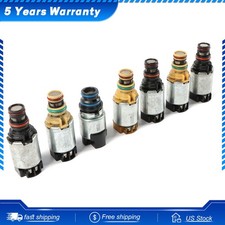
The 6T40 controls converter lockup with a dedicated TCC pressure control solenoid (PCS) that lives in the TEHCM, the combined transmission control module and solenoid body bolted to the valve body. Per GEARS Magazine's breakdown of the 6T40 solenoid family, the TCC PCS is a normally low solenoid: with low current applied, it sends little to no oil to the TCC control valve and TCC regulator valve, and increasing current allows a controlled flow of oil to those valves to apply the converter clutch. That is the opposite behavior of the line pressure and PCS2/PCS3 solenoids on Gen 1 units, which are normally high. Mixing up which solenoids are normally high versus normally low is a common source of bad diagnoses on this family, because a solenoid that tests fine at rest can still be the wrong one commanding the fault.
Gen 1 and Gen 2 TEHCMs are not interchangeable, and the two generations are identified by the eighth digit of the TEHCM part number: 1, 2 or 3 for Gen 1, and B, C or D for Gen 2. The TCC solenoid itself stays the same in location and operation between generations, but Gen 1 units carry pressure switches (normally closed, open when pressure is present) that Gen 2 units do not have. That distinction matters directly for TCC diagnosis, because a release-pressure-switch code is only possible on a Gen 1 unit. On the bench, all 6T40 pressure control solenoids including the TCC solenoid should measure 3 to 5 ohms resistance, and GEARS is explicit that you should never apply 12 volts to a pressure control solenoid during testing the way you can with an on/off shift solenoid — that is for shift solenoids only and will damage a PCS.
Reading the Codes: P0741, P0742 and P1887
These are generic GM TCC performance codes shared across the electronically controlled transmission lineup, and Sonnax's writeup on the family explains what each one is actually checking for. P0741 (TCC stuck off / performance) sets when the control module sees high converter slip while the TCC is commanded on, with the fault condition required to repeat twice in the same ignition cycle before the code sets. Documented causes include worn TCC valve bores, a damaged or worn pump bearing seal, a defective TCC PWM or apply solenoid, a restricted separator plate solenoid feed orifice, a defective converter, or sealing ring damage at the channel plate sleeve or turbine shaft. P0742 (TCC stuck on) is the mirror image: the module detects low slip speed while the TCC is commanded off, with a sticking TCC apply valve or a defective TCC PWM/apply solenoid as the usual suspects.
What the 6T40 TCM actually checks. The Sonnax writeup describes the family-wide logic, but GM publishes the exact 6T40 numbers in its OBD monitor tables [7]. For P0742 on the 6T40, the TCM flags a fail when TCC slip stays between -50 and +30 RPM for at least 1.2 seconds while TCC mode is OFF. It sets the code after 5 fail counts and turns on the lamp in one trip. The test only runs in a 2.7565-3.1715 gear ratio window, which is 2nd gear, above 16 km/h (10 mph), with at least 80 Nm of engine torque and sump temperature between -7 and 130 C. GM disables it when input or output speed sensor codes (P0716, P0717, P0722, P0723) or the TCC solenoid circuit codes P2763/P2764 are present, so fix those first. On the 6T70 sister unit, GM bulletin PI0999 traced P0742 with an engine shudder or stall when coming to a stop to a TCC solenoid in the TEHCM stuck by debris [8]. Our 6T40 P0742 guide walks through the full diagnosis.
The 6T40 P0741 numbers. The same GM tables spell out the stuck-off test [7]. The TCM first needs at least 500 kPa (about 73 psi) of commanded TCC pressure for 2 seconds. It then logs a fail if TCC slip in On mode stays above a calibrated limit, or slip in full Lock On mode stays at 130 RPM or more, for 5 seconds. Six fail counts set the code and the lamp needs two trips. Unlike the stuck-on test, it runs in every gear from 2nd through 6th, with at least 50 Nm of engine torque, 8 percent throttle and fluid between -7 and 130 C. Sonnax tags the TCC regulator apply valve bore with exactly these codes, P0741 and P0742, plus no lockup and TCC slip [9]. Our 6T40 P0741 guide covers the stuck-off diagnosis step by step.
P1887 is specific to units with a TCC release pressure switch — which, on the 6T40 family, means Gen 1 only. It sets when the TCC is commanded on and slip indicates the clutch is applied, but the release switch reports that it is not. Sonnax notes this can be a genuinely healthy converter clutch that still trips the code, because cross-leaks at the pump bearing seal, turbine shaft, or inside the converter can leave enough residual pressure in the release circuit to hold the switch open even with the clutch doing its job. On a Gen 1 6T40 chasing a P1887, check the wiring and the TFP switch assembly before you condemn the converter.
The 6T40's Known TCC Weak Point: Regulator Valve Bore Wear
If you only take one thing from this article, make it this: the most common 6T40-specific cause of P0741 and P0742 is not the solenoid. Sonnax sells a TCC Regulator Valve Kit, part number 144740-38K, specifically for the 6T30/6T40/6T45/6T50 Gen 1 and Gen 2 family (with a parallel kit covering the Gen 3 6T31/6T35/6T41/6T46/6T51 variants). The listed symptoms are P0741, P0742, no lockup, TCC slip, loss of fuel economy, low TCC apply pressure, overheated fluid and TCC lining, and harsh TCC apply — essentially the entire spread of TCC complaints this transmission generates. The root cause Sonnax identifies is wear in the bore at the TCC regulator valve, which reduces TCC apply pressure and converter charge pressure. If the worn valve sticks toward apply, the result is harsh engagement; if it sticks toward release, the result is no apply or slip, which is exactly the P0741/P0742 split described above.
The kit addresses this with longer valve lands on both the inboard and outboard spools so the valve seals against unworn bore surface, a modified shuttle valve that engages the regulator valve directly to reduce cocking in the bore, hardcoat anodized aluminum construction for wear resistance, and an O-ringed end plug to seal solenoid apply pressure. It installs as a drop-in replacement through Sonnax's Zip Valve process without a full valve body teardown. Sonnax is clear that this kit is built for moderately worn bores — a vacuum test failure or visible scoring at the regulator valve bore is the signal that it is needed, not a guess. This is also why a TCC solenoid swap alone so often fails to fix the complaint: the solenoid is upstream of the regulator valve, and a worn bore downstream will still misregulate apply pressure no matter how good the solenoid signal is.
Shudder Is Not the Same Failure as Stuck-On or Stuck-Off
Customers describing a vibration or light shake at steady cruise, usually in the 28 to 55 mph range, are not necessarily describing a P0741/P0742 condition at all. GM TechLink documented exactly this on 2024 Trax and Envista models with the 6T40: a shudder plus a growl or humming noise between 28 and 53 mph, attributed to an internal torque converter condition causing slip. GM's own troubleshooting path there is worth following in order — check Bulletin #23-NA-194 first, since a similar-feeling symptom on some 2024 Trax units traces to the Active Noise Canceling system and a radio software update, not the transmission at all. Only if the shudder or noise persists after confirming current radio software does GM's guidance move to converter replacement, with part numbers covered in Bulletin #24-NA-242.
To separate true TCC shudder from other vibration sources before condemning a converter, GM publishes a three-mode road test methodology — demonstrated in Bulletin 16-NA-175 for the 8L90, but built on the same TCC-disable/enable logic that applies across GM's electronically controlled torque converter systems, including the 6T40's TEHCM. The vehicle is driven at a steady speed and load in three states: normal operation, TCC forced open with a scan tool, and TCC forced locked with a scan tool. If the vibration shows up only in normal operation and disappears in both the forced-open and forced-locked states, the root cause is confirmed as TCC shudder. If the vibration persists with the clutch forced open, or is still present with the clutch forced locked and slip speed at zero, the problem is not shudder and the diagnosis needs to go elsewhere — engine mounts, driveline, or tire/wheel balance are common false positives that get blamed on the transmission.
A Related Failure on the Same Hardware: TEHCM Solenoid Screen Contact
Worth knowing even though it is a different symptom: GM issued Preliminary Information bulletins PIP6095 (January 2026) and the updated PIP6095C (February 2026) for 2025–2026 Buick Envista and Chevrolet Trax models built after May 1, 2025, covering the current Gen 3 6T40 (RPO MNH/MNK). The complaint there is harsh shift into drive or reverse, not TCC lockup, caused by the normally high solenoids in the TEHCM experiencing valve over-travel that contacts or ruptures the solenoid's filter screen. The bulletin's solenoid legend for this assembly lists seven solenoids: CBR1/C456 and C1234 and the line pressure solenoid as normally high, and the TCC solenoid, C35R and CB26 as normally low, with a separate on/off clutch select solenoid. The TCC solenoid is not the one implicated in this particular bulletin's harsh-shift complaint, but it lives in the same TEHCM assembly, and GM's correction procedure — pull the control solenoid valve and TEHCM, inspect each solenoid for screen contact, replace the TEHCM and control valve body as a set if contact is found — is the same hardware-level repair path a shop ends up on for a confirmed TCC regulator or solenoid failure on current Gen 3 units.
Fluid Condition Before Anything Else
GM specifies DEXRON VI for the current 6T40 (confirmed in GM's 2026 TechLink transmission capacities chart for the Trax and Envista, RPO MNH), with a drain-and-fill capacity of 4.2 to 6.3 quarts depending on the vehicle and cooler circuit. Degraded or oxidized ATF changes the friction coefficient at the converter clutch lining and the separator plate orifices that feed the TCC circuit, and it is a genuinely common contributor to soft lockup, shudder, and marginal P0741 slip readings that are not yet bad enough to be a clean regulator-valve-bore diagnosis. Before you pull a valve body or order a TEHCM, check fluid level and condition, and if it is dark or past-interval, do the fluid service first. It costs a fraction of a solenoid or valve body and it rules out the cheapest explanation.
Diagnostic Walkthrough
- Pull codes and check fluid. Confirm whether you have P0741, P0742, or no code at all with a shudder complaint. Check fluid level and condition before anything else.
- Check for a GM reprogram. GM addresses some TCC-related codes with TCM software updates; verify using the VIN on GM's service information site before replacing parts.
- Monitor TCC slip and duty cycle on a scan tool. Compare commanded TCC state against actual input/engine speed delta during a road test.
- If shudder with no code: run GM's three-mode test (normal, TCC forced open, TCC forced locked) to confirm the vibration tracks clutch state before condemning the converter.
- If P0741/P0742 with no reprogram available: pull the valve body and vacuum test the TCC regulator apply valve bore in the control valve body, and on Gen 2 and Gen 3 units the TCC control valve in the pump body, per Sonnax's 6T40 vacuum test guide [9]. Visible wear or a failed vacuum test points to the regulator valve, not the solenoid.
- Bench-test the TCC solenoid at 3 to 5 ohms resistance, and air test it at low pressure without ever applying 12 volts to it.
- On Gen 1 units with P1887, check the TFP release pressure switch and wiring before suspecting the converter itself.
Chasing a 6T40 TCC code this week?
Solenoid kits, individual pressure control solenoids, and valve bodies for the 6T40 and 6T45, shipped from the USA.
Shop 6T40 parts →FAQ
What does a 6T40 TCC lockup code actually mean?
P0741 means the torque converter clutch is not applying when the TCM commands it on, usually seen as excess slip between engine and input speed. P0742 means the opposite: the clutch is not releasing when commanded off. Both are performance codes, not simple open/short circuit codes, which is why fluid condition and valve wear are usually bigger suspects than a dead solenoid.
Can I drive with a P0741 or P0742 code?
Short term, yes, but it is not free. A stuck-off converter runs hotter because the fluid coupling is always slipping, which cooks the fluid and accelerates clutch and seal wear elsewhere in the unit. A stuck-on converter can stall the engine at idle or on light braking and loads the drivetrain abnormally. Diagnose it before it turns into a bigger repair.
Is TCC shudder the same thing as a lockup code?
No. Shudder is a vibration felt during light-throttle cruise, usually with no code set at all, because the clutch is applying and releasing in a way the TCM considers within range. Lockup codes are a hard failure to apply or release on command. GM diagnoses shudder with a three-mode road test that forces the TCC open and locked with a scan tool to confirm the vibration tracks the clutch state.
What fluid does the 6T40 use and does it matter for TCC problems?
GM specifies DEXRON VI for the 6T40 across its current applications, with a drain-and-fill capacity of roughly 4.2 to 6.3 quarts depending on the vehicle. Old, oxidized fluid changes the friction coefficient at the converter clutch lining and is a common contributor to shudder and soft lockup complaints, so a fluid service is the first and cheapest diagnostic step, not the last resort.
Does replacing the TCC solenoid fix every lockup complaint?
No. The TCC pressure control solenoid itself is one possible failure point, but Sonnax documents bore wear at the TCC regulator valve inside the valve body as a separate and common cause of the same P0741 and P0742 symptoms. Swapping only the solenoid does not fix worn valve bores, which is why a valve body inspection belongs in the diagnostic sequence, not just a parts-cannon solenoid swap.
Sources
- GEARS Magazine (ATRA) — "Understanding GM 6T40 Solenoids," June 2017. Backs the TCC pressure control solenoid's normally-low behavior, its role feeding the TCC control and regulator valves, the Gen 1/Gen 2 TEHCM identification by the eighth part-number digit, the presence of pressure switches on Gen 1 only, the 3-5 ohm resistance spec for pressure control solenoids, and the warning against applying 12 volts to a PCS. gearsmagazine.com
- Sonnax — "TCC Regulator Valve Kit," Part No. 144740-38K. Backs the 6T30/6T40/6T45/6T50 Gen 1 and Gen 2 fitment, the P0741/P0742/no-lockup/slip/harsh-apply symptom list, the TCC regulator valve bore wear root cause, and the longer-land drop-in valve repair. sonnax.com
- Sonnax — "Beyond 1870: GM Converter Codes P0741, P0742 and 1887." Backs the P0741 stuck-off and P0742 stuck-on code logic and causes, the P1887 release-switch mechanism and the cross-leak explanation for a false P1887 on an otherwise healthy converter. sonnax.com
- General Motors / GM TechLink — "Transmission Shudder and Noise," 2024 Trax/Envista 6T40 (RPO MNH). Backs the 28-53 mph shudder-plus-growl symptom, the order of diagnosis against Bulletin #23-NA-194 for an Active Noise Canceling/radio software cause, and torque converter replacement per Bulletin #24-NA-242 as the corrective action. gm-techlink.com
- General Motors — 2026 Transmission Capacities & Fluids chart (GM TechLink), Trax/Envista 6T40 RPO MNH. Backs the DEXRON VI fluid specification and the 4.2-6.3 quart fluid-change capacity. gm-techlink.com
- General Motors — Preliminary Information Bulletin PIP6095C, "6T40 Harsh Shift into Drive," February 2026 (2025-2026 Buick Envista / Chevrolet Trax, RPO MNH/MNK). Backs the Gen 3 6T40 TEHCM solenoid legend including the TCC solenoid as normally low, the normally-high solenoid screen-contact failure mode, and the TEHCM/control valve body replacement correction. static.nhtsa.gov
- General Motors — 2011 OBD monitor tables, "11OBDG08 TRANS Diagnostics," 6T40 Unique Section. Backs the 6T40 P0742 set criteria (-50 to +30 RPM slip for 1.2 s with TCC off, 5 fail counts, one trip), the P0741 set criteria (500 kPa commanded TCC pressure precondition, 130 RPM Lock On slip for 5 s, 6 fail counts, two trips, 2nd-6th gear, 50 Nm and 8 percent throttle enables), the 2nd-gear ratio window, the speed, torque and temperature enables, and the disable codes. gsi.ext.gm.com PDF
- GM bulletin PI0999 (June 2013), via NHTSA. Backs the 6T70 TCC solenoid stuck by debris, the coast-down shudder or stall, and P0742 active or history. static.nhtsa.gov PDF
- Sonnax — GM 6T30/40/45/50 (Gen 2) and Gen 3 6T40 Vacuum Test Guide (PDF). Backs the TCC regulator apply valve location in the control valve body and the TCC control valve in the pump body, with their symptom lists. sonnax vacuum test guide PDF