A 6T40 with P0742 usually comes in with one of two complaints. The car stalls as it rolls to a stop. Or it shudders and bogs right before it stops, like a manual car braked with the clutch still out. Some come in with only a check engine light and P0742 in history. In every case the TCM is telling you the same thing: it commanded the converter clutch off, and the clutch kept holding.
The generic definition is "Torque Converter Clutch Circuit Stuck On." GM's own OBD documentation calls it TCC System Stuck ON [1]. That wording matters, because P0742 is a performance code, not an electrical one. The TCM is not looking at volts or ohms. It is comparing engine speed against turbine speed and seeing a locked converter when it asked for an unlocked one. The fault can be in the solenoid, a valve, the converter or the wiring and data that feed the test. This guide covers the 6T40 and 6T45 family in the Cruze, Sonic, Malibu, Equinox, Terrain, Encore, Trax and their cousins.
What GM's monitor actually checks on the 6T40
GM publishes the OBD set criteria for every transmission code, and the 2011 tables have a section just for the 6T40 [1]. Here is the P0742 test in shop terms:
| Item | 6T40 value (GM 2011 OBD tables) |
|---|---|
| Fail condition | TCC slip speed between -50 and +30 RPM for 1.2 seconds or longer while TCC mode is OFF |
| Fail count to set | 5 fail counts, then the code sets |
| MIL | One trip |
| Gear ratio window | 2.7565 to 3.1715 (2nd gear, nominal 2.96:1) |
| Vehicle speed | 16 km/h (10 mph) or more |
| Engine torque | 80 Nm or more (50 Nm for the stuck-on-during-upshift check) |
| Throttle | Hysteresis high 10 percent or more |
| Sump temperature | -7 to 130 C |
| Other | No 1st-gear lock, not in Neutral or Reverse, no downshift in progress, no clutch air purge active |
| Will not run with | P0716, P0717, P0722, P0723, P2763, P2764 (plus several engine codes) |
Two things in that table steer the diagnosis.
The test only runs in 2nd gear. The ratio window only fits 2nd, so that is the only gear where GM checks for a converter that will not release. If you are trying to reproduce the code, you need a warm unit, a 2nd-gear pull above 10 mph with real throttle, and a scan tool showing slip speed. Cruising in 6th at 60 mph will not run the test.
Slip speed comes from the speed sensors. GM disables P0742 when input or output speed sensor codes (P0716, P0717, P0722, P0723) are present, because the slip math is meaningless without good sensor data. It also disables it when the TCC solenoid's own electrical codes (P2763 high, P2764 low) are set. Clear up any of those first. A P0742 that shows up alongside them is usually a symptom, not the root fault.
How TCC apply works on this unit
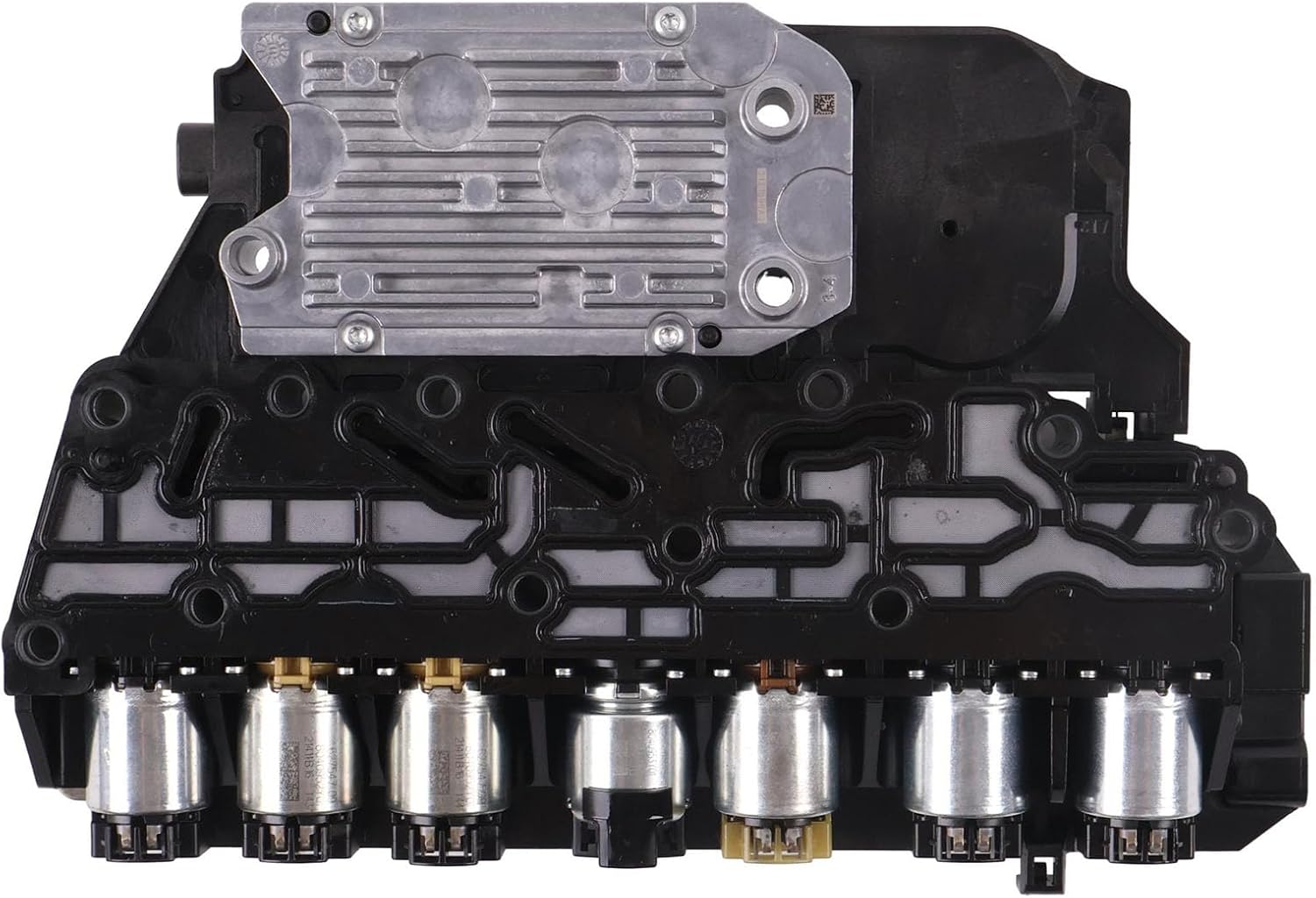
The 6T40 has no separate TCC solenoid on a harness. The TCC pressure control solenoid is one of the solenoids built into the TEHCM, the combined solenoid body and TCM that bolts to the valve body. Gears magazine's solenoid breakdown lists it as normally low: zero current means no TCC apply. As the TCM raises the current, the solenoid strokes the TCC control and TCC regulator valves, and the converter clutch applies harder [2]. Gears lists the pressure control solenoids at 3 to 5 ohms on both generations, measured with the solenoid off the TEHCM [2].
That gives three hydraulic points where a stuck-on condition can start. Sonnax's 6T40 vacuum test guide puts them in two places [4]:
- TCC pressure control solenoid (in the TEHCM). If it is held open mechanically, the TCC circuit stays pressurized even when the TCM commands zero current.
- TCC regulator apply valve (control valve body). Sonnax tags this bore with "Code P0741, 742," no lockup, slip, overheated fluid and lining, and harsh TCC apply [4]. The Sonnax kit page is direct about it: a valve stuck in apply means a harsh TCC apply, and one stuck in release means no apply or slip [5].
- TCC control valve (pump body on Gen 2 and Gen 3). This bore wears from constant valve movement. Sonnax lists TCC apply and release concerns, TCC codes, low converter and lube flow, and lining failure for it [4].
The converter itself is the fourth suspect. A damaged clutch can drag even with release oil on it. That diagnosis is what you are left with after the solenoid and valves test good.
The GM pattern: debris holding the TCC solenoid
GM has documented this failure on the 6T70, the larger sister unit with the same TEHCM design. Bulletin PI0999 (June 2013) covers 2013 Equinox, Malibu, Terrain, Traverse, Acadia, Enclave, SRX, XTS and the 2014 Impala with the 6T70. It describes a TCC solenoid in the TEHCM sticking "due to debris in the transmission." At the end of a coast-down, the stuck solenoid fails to release the converter, the engine gets pulled below idle and may stall, and P0742 sets as active or history. GM's fix was a complete TEHCM, part 24264346 [6].
PI0999 is not a 6T40 bulletin, and I would not quote its part number for a Cruze. But the mechanism carries over directly. The TCC solenoid is a variable bleed solenoid with a screen, sitting in the same oil as the clutches. When there is debris in the pan, the solenoid is where it ends up.
Diagnosis, in the order I run it
1. Fix the codes that block the test
Pull every code from the TCM and ECM and save the freeze frame. Fix speed sensor codes, TCC solenoid electrical codes (P2763/P2764) and engine misfire or airflow codes first, since GM's monitor will not trust its own result with those present [1]. Check for TSBs and calibration updates on the VIN before you take anything apart. Gears magazine's 6T40 diagnostic piece describes a car where a reflash fixed a problem after the transmission had already been pulled [3].
2. Fluid level and condition
The 6T40 is easy to overfill. Check the level with the engine running, in Park, through the check plug near the axle seal, with the fluid at 85 to 95 C (185 to 205 F), per Gears [3]. A cold check reads low and tempts people to add fluid that is not needed. Then look in the pan. Clutch material or fine metal in the oil means debris has been going through the solenoid screens, and that changes the job from a module swap to an overhaul.
Do not condemn a 6T40 on color alone. GM bulletin PI1131, covering 2011 6T40/6T45 (RPOs MHC, MH7, MH8), warns that the ATF in these units can look very dark because of rust inhibitors used at assembly, and tells technicians not to replace the transmission or fluid based only on how it looks [7]. Smell it and check the pan for material.
3. Watch slip speed on a road test
On a scan tool, watch TCC mode or commanded state, TCC slip speed, the TCC pressure control solenoid's commanded pressure or current, and gear. Data list names vary by tool and model year. A healthy unit with the TCC commanded off shows clear positive slip under load. A P0742 unit shows slip near zero with the TCC commanded off, which is exactly the -50 to +30 RPM window GM watches for [1]. Note whether it happens cold, hot, or only after a long drive. A solenoid that sticks once it warms up behaves differently from a converter clutch that drags all the time.
4. Run the solenoid cleaning routine
Gears magazine's advice is to run the scan tool's solenoid cleaning routine while the system is pressurized before you go further [3]. It cycles the solenoids to try to clear debris. If P0742 never comes back after the routine and a fluid and filter service, you may have caught it early. If it comes back, the solenoid is still the main suspect, but now you need proof.
5. Air test the TCC solenoid
GM's method, as Gears describes it, uses the Kent-Moore DT-47825 kit. Remove the control solenoid assembly, install the DT 48616 test plate at 5 Nm (44 lb-in), apply 90 to 100 psi of regulated air, and cycle each solenoid through the DT48616-10 cable while you watch the gauge. A solenoid that does not change the gauge as it is commanded has failed [3]. For the TCC solenoid, which is normally low, look for low output at zero command and rising output as the command goes up. Output that stays high with no command is a stuck-on solenoid.
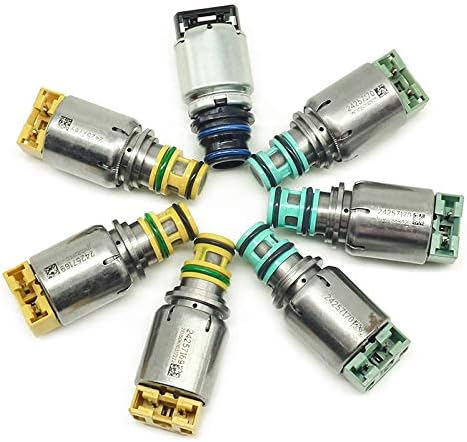
Without the GM fixture, Gears gives a bench check with the solenoids out of the TEHCM: 45 psi of air with the solenoids unenergized. Do not put 12 volts on a pressure control solenoid; only the on/off shift solenoid takes direct 12 V. Every variable bleed solenoid leaks some air, and normally high units leak more [2]. Compare the TCC solenoid against its neighbors and you will usually spot the odd one out.
6. Vacuum test the valves
If the solenoid tests good and P0742 persists, the valve body comes out. Vacuum test the TCC regulator apply valve bore in the control valve body and the TCC control valve bore in the pump body at the locations in Sonnax's guide [4]. Check for scoring or debris holding either valve. A stuck-on code on a clean valve body with a good solenoid points at the converter.
The fix
- TCC solenoid sticking or failing the air test: GM services the TEHCM as an assembly, so the dealer repair is a complete module, which then needs programming. Rebuilders often replace the solenoid set instead. Either way, match the generation first. Gears says the eighth character of the TEHCM number tells you: 1, 2 or 3 is Gen 1, and B, C or D is Gen 2. The two are not interchangeable [2].
- Worn or sticking TCC regulator apply valve: Sonnax kit 144740-38K is a drop-in for moderately worn bores. Kit 144740-16K is the oversized version and needs the F-144740-TL16 tooling and VB-FIX fixture [4][5].
- Worn TCC control valve (pump body, Gen 1/2): Sonnax oversized kit 144510-05K, which needs F-144510-TL5C and VB-FIX [4].
- Debris in the pan: find the source before you install anything new. A new solenoid set in dirty oil will stick again. Overhaul the unit, clean the cooler circuit, and replace the filter.
- Everything tests good and it still locks: replace the converter. Flush or replace the cooler and lines, since a failed converter clutch sheds lining material into them.
- After any repair: refill with DEXRON VI. GM's 2026 TechLink capacity chart lists the current 6T40 at 4.0 to 6.0 liters (4.2 to 6.3 quarts) [8]. Check the level hot. Clear codes, reset the transmission adapts, and road test through the 2nd-gear conditions above until the TCM runs the test and reports a pass.
One practical note on the road test: a P0742 car can stall at low speed, so do the verification drive somewhere you can coast to a stop safely, not in traffic. If it stalls during the drive, you have confirmed the complaint.
TCC solenoid failed the air test?
Core Transmission Parts carries a 6T40 solenoid valve kit for 2008-up units. That covers the solenoid set when the TCC solenoid is sticking and the module housing and TCM are good. Check your TEHCM generation before you order.
View the 6T40 solenoid kit →FAQ
What does P0742 mean on a 6T40?
It means the TCM saw the torque converter clutch holding when it had commanded the clutch off. On the 6T40, GM's monitor looks for converter slip between -50 and +30 RPM for at least 1.2 seconds with the TCC commanded off. It needs 5 failed checks to set, and the lamp comes on in one trip.
Can a stuck-on converter clutch stall the engine?
Yes. If the converter clutch does not release as the car rolls to a stop, the engine stays tied to the wheels and RPM gets pulled below idle. GM bulletin PI0999 describes this on the 6T70 sister unit: a shudder like braking a manual-transmission car without pushing the clutch in, and sometimes a stall. A 6T40 with P0742 can do the same.
Is P0742 the TCC solenoid or the valve body?
It can be either. The TCC pressure control solenoid lives in the TEHCM, and debris can hold it applied. The TCC regulator apply valve in the control valve body and the TCC control valve in the pump body can also stick. Sonnax notes that a regulator valve stuck in the apply position gives a harsh TCC apply. Run the solenoid air test before buying a module, and vacuum test the valves when the valve body comes out.
Can I drive with P0742?
Short trips only. The main risk is a stall at low speed or when you come to a stop, which can happen in traffic or in the middle of a turn. A stuck TCC solenoid can also be the first sign of debris in the oil, so get it diagnosed before you drive it as normal.
What fluid does the 6T40 take after the repair?
DEXRON VI. GM's 2026 TechLink capacity chart lists 4.0 to 6.0 liters (4.2 to 6.3 quarts) for the current 6T40 applications. Check the level hot through the check plug: Gears magazine gives 85 to 95 C (185 to 205 F). Do not judge the unit by fluid color alone. GM bulletin PI1131 says early 6T40 fluid darkens from rust inhibitors used at assembly.
Shop the 6T40 solenoid kit →
Need parts for this job?
6T40 TEHCM modules, solenoid sets, valve bodies, overhaul kits and rebuild kits, with secure checkout.
Shop 6T40 parts →Sources
- General Motors — 2011 OBD monitor tables, "11OBDG08 TRANS Diagnostics," 6T40 Unique Section. Backs the "TCC System Stuck ON" descriptor, the -50 to +30 RPM / 1.2 s / 5-count / one-trip criteria, the 2.7565-3.1715 ratio window, the 16 km/h, 80 Nm, throttle and -7 to 130 C enables, and the P0716/P0717/P0722/P0723/P2763/P2764 disable list. The same tables list P0961-P0963 for line pressure and no P0748 for the 6T40. gsi.ext.gm.com PDF
- GEARS Magazine (ATRA) — "Understanding GM 6T40 Solenoids." Backs the TCC pressure control solenoid being normally low with current increasing apply, the 3-5 ohm PCS spec, the 45 psi unenergized air check and no-12-volt warning, and the eighth-character TEHCM generation ID. gearsmagazine.com
- GEARS Magazine (ATRA) — "6T40/45 Diagnosis & Fixes." Backs the TSB and reflash check, the 85-95 C hot level check, the scan tool solenoid cleaning routine, and the DT-47825 / DT 48616 air test at 5 Nm and 90-100 psi. gearsmagazine.com
- Sonnax — GM 6T30/40/45/50 (Gen 2) and Gen 3 6T40 Vacuum Test Guide (PDF). Backs the TCC regulator apply valve location and its P0741/P0742 symptom list, the pump body TCC control valve and its symptoms, and kits 144740-38K, 144740-16K and 144510-05K with their tooling. sonnax vacuum test guide PDF
- Sonnax — TCC Regulator Valve Kit 144740-38K. Backs the stuck-in-apply (harsh apply) and stuck-in-release (no apply or slip) behavior and the Gen 1/2/3 fitment. sonnax.com
- GM bulletin PI0999 (June 2013), via NHTSA. Backs the 6T70 TCC solenoid sticking from debris, the coast-down stall and shudder, P0742 active or history, and the TEHCM replacement (24264346). static.nhtsa.gov PDF
- GM bulletin PI1131 (December 2013), via NHTSA. Backs the 2011 6T40/6T45 RPOs MHC, MH7 and MH8, and the dark ATF from assembly rust inhibitors note. static.nhtsa.gov PDF
- GM TechLink — 2026 Transmission Fluid Capacities chart. Backs DEXRON VI and the 4.0-6.0 L (4.2-6.3 qt) capacity for the current 6T40 (RPO MNH). gm-techlink.com PDF