The 6T40 and its 6T45/6T30/6T50 siblings are the six-speed FWD transaxles GM has run behind the Ecotec four-cylinder since 2008, across the Cruze, Malibu, Sonic, Equinox, Terrain, Encore and, in current Gen 3 form, the Trax and Envista. Noise complaints on this family show up in two very different flavors, and shops that treat them as the same thing end up replacing the wrong part. A whine is continuous and tracks engine or road speed. A clunk is a single, discrete thump tied to a specific event: shifting into gear, a torque reversal, or coming off the throttle. Here is how to tell them apart and where each one actually comes from on this transmission.
For more GM transmission coverage, visit our GM transmission hub and Chevy transmission hub.
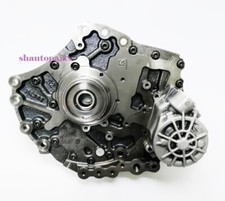
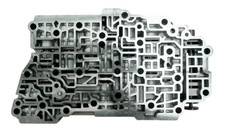
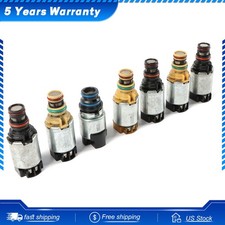
Whine vs. Clunk: Two Different Failure Families
A whine is a rotating-component noise. It comes from a gear, bearing, chain, or a pump drawing aerated fluid, and it has a pitch that tracks either engine RPM or road speed continuously, with no single trigger point. A clunk is a mechanical event noise. It happens once, at a specific moment — the instant a clutch applies, a gear reverses direction, or the driver lifts off or stabs the throttle — and then it is gone until the next trigger. This distinction is not academic. The 6T40's documented whine sources live in the pump and torque converter, while its documented clunk sources live in the solenoid body and line-pressure timing. Ordering a pump because of a clunk complaint, or a TEHCM because of a steady whine, is how comebacks happen.
Whine Source #1: The Gen 3 Pump's Lube-On-Demand Valve
In 2014, GM redesigned the 6T40 pump for Gen 3 units, moving from the earlier positive-displacement internal/external gear pump to an off-axis, binary vane design intended to cut pump flow demands and torque requirements for better fuel economy. Sonnax's technical writeup on this pump identifies a lube-on-demand regulating valve added to the design, which doubles cooler and lube flow once converter feed pressure climbs above 87 psi. Sonnax describes this valve as a highly active component and a significant source of pump wear: as the bore wears, it opens a path that lets converter feed pressure exhaust, which Sonnax ties to converter apply problems, reduced line pressure, and overheating. Its lube-on-demand valve kit 144510-19K (Gen 3 6T31/6T35/6T41/6T46/6T51) lists the symptoms as low cooler flow, no converter apply, low line pressure, an overheated converter and overheated fluid.
That same wear mechanism is the leading explanation for a Gen 3 6T40 whine that tracks engine RPM, including at idle in Park. A worn regulating-valve bore disturbs the pump's internal flow balance, and a pump that is not flowing cleanly tends to cavitate and pull in air at the margins, producing an audible whine that climbs as RPM rises. Sonnax's corrective part, valve kit 144510-19K, is a drop-in Zip Valve replacement that reroutes fluid to a sleeved limit valve and seals the path that was allowing converter feed pressure to escape, without requiring a full pump teardown.
Whine Source #2: Pressure Regulator Valve Wear (Any Generation)
Transmission Digest's Builder's Bench series, with ATSG's Rino Partipilo, covers a separate but related 6T40 Gen 3 issue: a transmission arriving with relatively low mileage and a complaint of slipping in forward and reverse. On teardown, the clutches are burnt — the classic signature of chronic low line pressure. ATSG points to the pressure regulator valve wearing and sticking as a frequent root cause, in addition to pump wear itself. Sonnax's documentation for its Gen 3 pressure regulator valve kit 144510-17K explains why: continuous oscillation of the regulator valve wears the bore, and wear at the inboard end lets PCS oil cross-leak into converter feed, producing low or unstable line pressure, shift concerns and burnt clutches. A regulator valve that is sticking rather than fully failed does not always announce itself as a slip complaint first; on some units it shows up earlier as an audible whine or growl under load as pressure hunts, before it progresses to the burnt-clutch stage. If a whine complaint on any 6T40 generation comes with a hint of delayed or soft engagement, the pressure regulator valve belongs on the suspect list alongside the pump.
Whine or Growl Source #3: Torque Converter Internal Slip
GM TechLink documents a specific growl-or-humming-plus-shudder complaint on 2024 Chevrolet Trax and Buick Envista models with the 6T40 (RPO MNH), occurring between 28 and 53 mph. GM attributes this to an internal torque converter condition causing slip. Critically, GM's own diagnostic order puts a different check first: Bulletin #23-NA-194 covers a near-identical-feeling low drumming or booming sound heard through the speakers at 1,500 to 2,000 RPM under steady load, traced to the Active Noise Canceling system, and corrected with an A11 radio software update rather than any transmission work. GM's guidance is to rule out the radio/ANC cause first; only if the growl or shudder persists after confirming current radio software does the diagnosis move to torque converter replacement, with part numbers covered in Bulletin #24-NA-242. Earlier-generation 6T40 units without a matching bulletin number can still fail the same way internally — a converter clutch that is slipping produces the same growl-and-shudder signature regardless of model year, even though GM has not published a bulletin specific to the older hardware.
Clunk Source: TEHCM Solenoid Screen Contact (Current Gen 3)
For a clunk rather than a whine, GM TechLink's "Harsh Garage Shift into Drive or Reverse on Envista and Trax Models" covers some 2025-2026 Envista and Trax models with the 6T40 (RPO MNK, MNH), referencing Preliminary Information Bulletin PIP6095 and its update PIP6095C. The complaint is a harsh shift into Drive or Reverse noticed in the garage — effectively a clunk at the moment of engagement. GM's stated cause is that the normally-high solenoids inside the control solenoid valve and TEHCM (transmission control module and solenoid body assembly) can experience a valve over-travel condition that causes contact with, or rupture of, the solenoid's own filter screen. The repair path is to remove the control solenoid valve and TEHCM, physically inspect the solenoid locations GM lists (CBR1/C456, C1234, and the Line solenoid) for screen contact, and replace the control solenoid valve, TEHCM, and control valve body together if contact is found.
Earlier 6T40 generations (2008-2017 Cruze, Malibu, Sonic, Equinox) run a different gear-type pump and do not have this specific documented screen-contact failure, but a hard clunk into Drive or Reverse on those units still points to the same category of problem: line pressure that is not ramping the way the TCM expects at the moment of clutch apply. Given the pump and pressure regulator valve wear already documented above for this family, a worn pump or sticking regulator valve on an earlier-generation unit is the most likely explanation for the same symptom, even without a bulletin number attached to it.
Fluid Condition Comes Before Any of This
GM specifies DEXRON VI for the current 6T40 (confirmed in GM's 2026 TechLink transmission capacities chart for the Trax and Envista, RPO MNH), with a drain-and-fill capacity of 4.2 to 6.3 quarts depending on the vehicle and cooler circuit. A pump that is not getting a full, air-free supply because the fluid is low draws air in at the inlet, and that aerated fluid produces a whine that behaves almost identically to the pump wear described above — it tends to climb with RPM and often worsens as the fluid warms and expands. Checking fluid level and condition costs nothing and takes minutes. It belongs at the very top of the diagnostic sequence, before a pump, valve body, or TEHCM is ever ordered.
Ruling Out False Positives
Not every noise blamed on the 6T40 originates in the 6T40. A clicking or clunking noise specifically on turns, especially at low speed, usually points to a worn CV joint on the half-shaft rather than the transmission. A single thunk on hard launch or on an abrupt throttle lift can be a worn motor or transmission mount letting the whole powertrain shift slightly before it loads the driveline. Both are cheaper and faster to check than pulling a valve body, and both should be ruled out before any transmission teardown begins.
Diagnostic Walkthrough
- Characterize the noise first. Continuous and RPM- or speed-linked means whine or growl. A single thump tied to a shift, torque reversal, or throttle change means clunk. Write down exactly when it happens before touching anything.
- Check fluid level and condition. Correct to 4.2-6.3 quarts of DEXRON VI if low, and do a full fluid service if it is dark or past-interval. This rules out the cheapest explanation for a whine.
- Note whether the whine is present in Park at idle. A whine present at idle in Park, independent of vehicle speed, points to the pump or converter rather than the gear train, which only loads under drive.
- Pull codes. P0716/P0717 point to the input speed sensor circuit and P0721/P0722 point to the output speed sensor circuit; either can produce an electrical noise complaint that masquerades as a mechanical one on a scan tool's live data, and should be cleared before a mechanical teardown.
- For a 28-53 mph growl with shudder on a current Gen 3 Trax or Envista, confirm current radio/ANC software per Bulletin #23-NA-194 before condemning the torque converter per #24-NA-242.
- For a harsh clunk into Drive or Reverse on a 2025-2026 Gen 3 unit, pull the control solenoid valve and TEHCM and inspect the solenoid screen locations per PIP6095C before ordering a replacement.
- For a whine with soft or delayed engagement on any generation, inspect the pump and pressure regulator valve area for the wear ATSG and Sonnax document, rather than replacing the solenoid body alone.
Chasing a 6T40 noise this week?
Pumps, valve bodies, and solenoid kits for the 6T40 and 6T45, shipped from the USA.
Shop 6T40 parts →FAQ
Why does my 6T40 transmission whine when I accelerate?
On the Gen 3 6T40 (2014-up), the most documented cause is wear at the pump's lube-on-demand regulating valve bore. Sonnax identifies this valve as a highly active component that opens a path for converter feed pressure to exhaust as it wears, which disturbs pump flow and is a common source of a whine that tracks engine RPM. Low or aerated fluid produces a similar rising whine on any generation and should be ruled out first since it costs nothing to check.
What does a clunk when shifting into Drive or Reverse mean on a 6T40?
On 2025-2026 Envista and Trax models with the current Gen 3 6T40, GM documents this in Preliminary Information Bulletin PIP6095C as a normally-high solenoid inside the TEHCM making contact with, or rupturing, its own filter screen during valve over-travel. On earlier 6T40 generations without that specific bulletin, a hard clunk into gear is more often a line-pressure timing issue at the pump or pressure regulator valve, which applies a clutch more abruptly than the TCM intends.
Is 6T40 transmission noise expensive to fix?
It depends entirely on which failure it is. A fluid service that fixes an aeration whine costs a fraction of a pump or valve body. A worn pump lube-on-demand valve is addressed with a drop-in Sonnax valve kit without a full rebuild. A confirmed torque converter failure or a TEHCM-and-control-valve-body replacement on a current Gen 3 unit are the expensive end, which is exactly why correctly separating whine from clunk before ordering parts matters.
Can low transmission fluid cause a whining noise in a 6T40?
Yes. A pump that is not getting a full, air-free supply of fluid draws in air at the inlet, and the resulting aerated fluid produces a whine that generally rises with engine RPM and gets worse as the fluid warms and expands. This is one of the first things to rule out because checking fluid level and condition takes minutes and costs nothing before you condemn a pump or torque converter.
What transmission fluid does the 6T40 use?
GM specifies DEXRON VI for the 6T40 across its current applications, confirmed in GM's own TechLink transmission capacities chart, with a drain-and-fill capacity of roughly 4.2 to 6.3 quarts depending on the vehicle and cooler circuit. Old, oxidized, or low fluid changes pump behavior and converter apply characteristics and is a common contributor to noise complaints that get blamed on hardware.
Sources
- Sonnax — "Lube On Demand Valve Kit" (144510-19K), Gen 3 6T40 family technical documentation. Backs the off-axis binary vane pump design, the lube-on-demand valve doubling cooler/lube flow when converter feed exceeds 87 psi, the bore wear from continuous oscillation that exhausts converter feed pressure, and the symptom list (low cooler flow, no converter apply, low line pressure, overheated converter and fluid). sonnax.com
- Sonnax — "Pressure Regulator Valve Kit" (144510-17K), Gen 3 6T40 family technical documentation. Backs pressure regulator bore wear from continuous valve oscillation, the PCS-to-converter-feed cross-leak at the inboard end, and the resulting low or unstable line pressure, shift concerns and burnt clutches. sonnax.com
- Transmission Digest — "Tips for the gen 3 GM 6T40," Builder's Bench with ATSG, June 2025. Backs the pressure regulator valve wearing and sticking as a documented cause of low line pressure and burnt clutches on low-mileage Gen 3 6T40 units. transmissiondigest.com
- General Motors / GM TechLink — "Transmission Shudder and Noise," 2024 Trax/Envista 6T40 (RPO MNH). Backs the 28-53 mph growl-plus-shudder symptom, the diagnostic order against Bulletin #23-NA-194 for an Active Noise Canceling/radio software cause, and torque converter replacement per Bulletin #24-NA-242. gm-techlink.com
- General Motors / GM TechLink — "Harsh Garage Shift into Drive or Reverse on Envista and Trax Models," referencing PIP6095/PIP6095C, 2025-2026 6T40 (RPO MNK, MNH). Backs the TEHCM normally-high solenoid screen-contact mechanism, the affected solenoid locations, and the TEHCM/control valve body replacement correction. gm-techlink.com
- General Motors — 2026 Transmission Capacities & Fluids chart (GM TechLink), Trax/Envista 6T40 RPO MNH. Backs the DEXRON VI fluid specification and the 4.2-6.3 quart fluid-change capacity. gm-techlink.com