When a 6T40 sets a speed sensor code, most people reach for a sensor. Sometimes that is the right call. Just as often the sensor is fine and the problem is the internal harness, the part it reads, or a clutch that is slipping and making the numbers look wrong. The 6T40 makes this harder than older GM units because the sensors are inside the case and wired straight into the control solenoid valve body and TCM assembly (the TEHCM). You cannot just back-probe a connector on the side of the case.
This is how I work through input and output speed sensor complaints on the GM 6T40 and 6T45 (Cruze, Malibu, Equinox, Terrain, Sonic, Regal, LaCrosse, Verano, Encore, Trax and the rest): what each sensor actually reads, what the codes and symptoms look like, how to prove the sensor bad before you pull the side cover, and the relearn you cannot skip afterward. The GEARS, Transmission Digest and GM references are listed at the bottom.
What the Two Sensors Read
Both sensors are internal. Per GEARS Magazine's 6T40/45 diagnosis article, the input speed sensor (ISS) sits on the rear cover, with its harness routed inside the case to the TEHCM, and it generates a signal as the 3-5-R clutch assembly rotates past it. The output speed sensor (OSS) sits underneath the valve body and reads the park gear. The TCM uses the ISS to calculate gear ratio and clutch slip, and uses the OSS as vehicle speed for shift pattern control and ratio calculations.
That tells you what breaks when a signal goes bad. With no good ISS number, the TCM cannot calculate ratio or slip, so it cannot run closed-loop shift control or converter clutch slip control. With no good OSS number, it does not know road speed, so it does not know when to shift. Either way, it falls back to a protective strategy.
Transmission Digest's 6T30 overview notes that the ISS, OSS and internal mode switch are the same between the 6T30 and 6T40, so the diagnosis below applies to the whole family.
How These Sensors Work (and Why Your Voltmeter Lies)
GEARS describes the 6T40 sensors as 2-wire sensors that create a digital signal. The TEHCM supplies the operating voltage, and as the target teeth pass, the sensor produces a digital signal whose frequency the TCM reads as speed.
Here is the part that trips people up. These are active 2-wire sensors, and they signal by changing the current on the circuit, not by swinging a voltage. In GEARS' "Advanced Speed Sensors, Part 2," the magneto-resistive example switched the circuit between about 7 mA and 14 mA, and the voltage change seen at the sensor was only about 20 mV. Put a voltmeter or a scope on the signal wire the old way and you will see almost nothing, and you will condemn a good sensor.
The fix from that article is simple: put a 10-ohm resistor in series with the sensor and scope the voltage drop across the resistor while the target turns. You get a clean square wave. The example GEARS used to show that crisp signal was a 6T40 input speed sensor on the bench.
Codes You Will See
- P0716 — input speed sensor performance. Per GM's 6T40 OBD tables, it sets when input speed drops 1350 RPM or more within 0.8 second with the car moving 10 km/h or more, one trip [7]. In other words, a signal dropout. Full walkthrough: 6T40 P0716 causes and fix.
- P0717 — input speed sensor circuit low. GM sets it when input speed reads under 50 RPM for 4.5 seconds with 50 Nm or more of engine torque at 16 km/h or more, or when P0722 has failed and input speed is under 1000 RPM, because the controller uses a single power supply for the speed sensors [7].
- P0721 — output speed sensor circuit range/performance.
- P0722 — output speed sensor circuit, no signal.
- P0723 — output speed sensor circuit intermittent.
That shared supply is why P0717 and P0722 together point at the harness or TEHCM, not two bad sensors. And remember the ISS reads a target on the 3-5-R side of the unit. On the 6T70/6T75 family, GM bulletin 16-NA-013 traced no reverse, no 3rd and P0716/P0717 to the input shaft speed sensor reluctor ring retainer ring coming out of its groove, and the repair replaced the retainer, reluctor wheel, 3-5-R piston and the 3-5-R/4-5-6 housing [8]. A speed sensor code can be a hard-parts problem.
A "no signal" code points toward an open circuit, a dead sensor, or a harness problem. A "range/performance" code is the one to be careful with, because a slipping clutch, a damaged target or debris on the sensor tip can make a perfectly good sensor report a number the TCM does not believe.
Symptoms of a Bad 6T40 Speed Sensor
- Check engine light with one of the codes above, often intermittent at first and worse once the unit is hot.
- Harsh or banging shifts. Without a trusted speed signal the TCM cannot adapt the shift, so it commands firm, protective pressure.
- Stuck in one gear or a limp-home default range, especially with an OSS fault, since the TCM no longer knows road speed.
- Converter clutch will not apply, because slip cannot be calculated without a good input speed.
- Flared or erratic shifts with a range/performance code, where the signal drops out for a moment during the shift.
None of those symptoms is unique to a sensor. Harsh shifts and missing gears on a 6T40 are also classic valve body, solenoid and 3-5-R clutch complaints. GM's bulletin PI1131, for example, traced single missing-gear complaints on early 2011 6T40 and 6T45 units to a non-functioning pressure control solenoid inside the TEHCM. That is why the diagnosis matters more than the part.
How I Diagnose It, in Order
- Pull every code and the freeze frame. Note whether the code is current or history and what TFT and gear it set at. A code that only sets hot usually points to a harness joint or a sensor that fails with heat.
- Check the fluid level hot, at the check plug. Low fluid can cause slip that looks like a range/performance problem.
- Watch the data. GEARS is blunt that scan data is the only way to look at solenoid commands, ISS, OSS and internal mode switch function on this unit, because everything connects internally to the TEHCM. Graph input speed, output speed and engine RPM together on a road test.
- Use engine RPM as your reference. My rule of thumb: with the converter clutch fully applied on a steady cruise, input speed should track engine RPM almost exactly. If input speed drops out to zero or spikes while engine RPM is steady, suspect the ISS circuit. If input tracks engine but output speed drops out while the car is clearly still moving, suspect the OSS circuit.
- Look for the clutch problem hiding behind the code. If the car also slips or flares into reverse, 3rd or 5th, you may be looking at a 3-5-R clutch failure rather than a sensor. GM's bulletin PI0670A for P0776 (slip or no reverse, 3rd, 5th) says to inspect the valve body, pump, 3-5-R housing and 3-5-R piston, and not to replace the TEHCM before visually inspecting the 3-5-R clutch and piston.
- Only then pull the sensor. Inspect the tip for metal fuzz. These sensors sit next to a spinning target and pick up ferrous debris, and a coated tip can drop the signal. Inspect the internal harness for rubbed-through insulation and check the connector at the TEHCM for spread terminals or fluid wicking. If you can get it on the bench, the 10-ohm resistor test above will tell you whether the sensor switches cleanly.
Do not trust an air check
GM makes a point in PI0670A that is worth repeating: an air check of the 3-5-R clutch through the case oil feed ports has been found to frequently lead to an incorrect diagnosis of the piston. The only reliable check is teardown and visual inspection. So if the data says the input signal is fine but the ratio is wrong in reverse, 3rd and 5th, do not talk yourself into a sensor.
Why the ISS Target Matters on a Rebuild
Because the ISS reads the 3-5-R clutch assembly, anything that damages that housing or leaves debris near it can show up as an input speed problem. When the unit is apart for the common 3-5-R failure, I clean the sensor tip, inspect the tooth surface on the housing, and replace the sensor if its body or tip is damaged. Pushing a known-weak sensor back into a fresh rebuild saves a few dollars and risks a comeback.
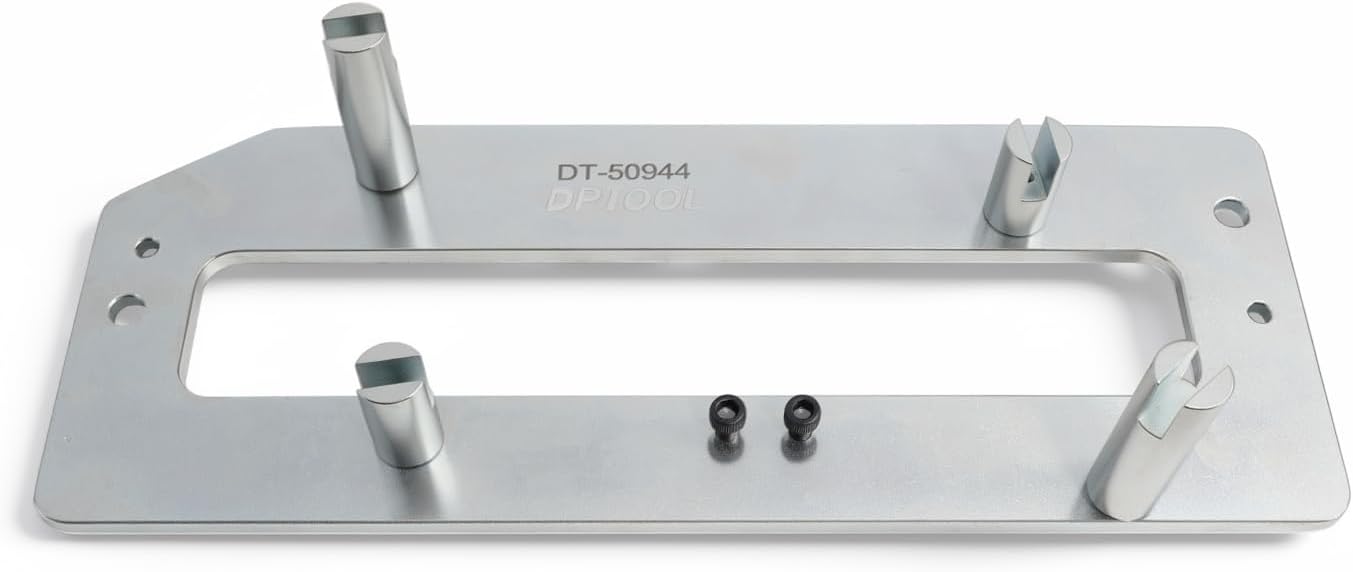
The OSS lives under the valve body, so replacing it means removing the valve body. On reassembly, the valve body has to go back on with the internal shift mechanism held in its neutral position, or you can create a missing gear or a no-move condition that has nothing to do with the sensor you just installed. A locating tool makes that step repeatable.
After the Repair: Service Fast Learn Is Not Optional
GEARS' "Why Doesn't My 6T40 Shift Right?" lists speed sensor replacement among the repairs that require the Service Fast Learn adapt procedure, along with valve body or TEHCM replacement, overhaul and TCM software updates. The preconditions from that article:
- Drive wheels blocked, parking brake and service brake applied.
- Zero throttle, with no external engine RPM control.
- Transmission fluid temperature between 158-239 F (70-115 C).
- Selector cycled Park to Reverse three times before starting.
Run it from the scan tool's functional tests, follow the prompts, then key off, unplug the scan tool, open and close the driver's door, and restart. GEARS warns that a failed procedure can leave the vehicle in a neutral state with no movement in any range, and skipping it risks shift complaints and premature failure because the clutch adapts never get learned. Plenty of "new sensor did not fix it" stories are really "nobody ran the fast learn" stories.
Sensor, Harness or Something Bigger?
| What you see | Most likely | Next step |
|---|---|---|
| P0717 or P0722, signal at zero, drives otherwise normal until the code sets | Open sensor or harness | Inspect internal harness and TEHCM connector, bench test sensor |
| Code only when hot, clears cold | Heat-sensitive sensor or harness joint | Graph the signal hot, flex the harness, replace the sensor |
| P0716 with slip or flare into R, 3rd or 5th, maybe P0776 | 3-5-R clutch or piston | Follow P0776 diagnostics; teardown, per GM PI0670A |
| Metal on the sensor tip, dark fluid | Internal wear upstream | Find the source before replacing parts |
| New sensor installed, now no movement | Adapts not learned or valve body misaligned | Run Service Fast Learn; recheck valve body installation |
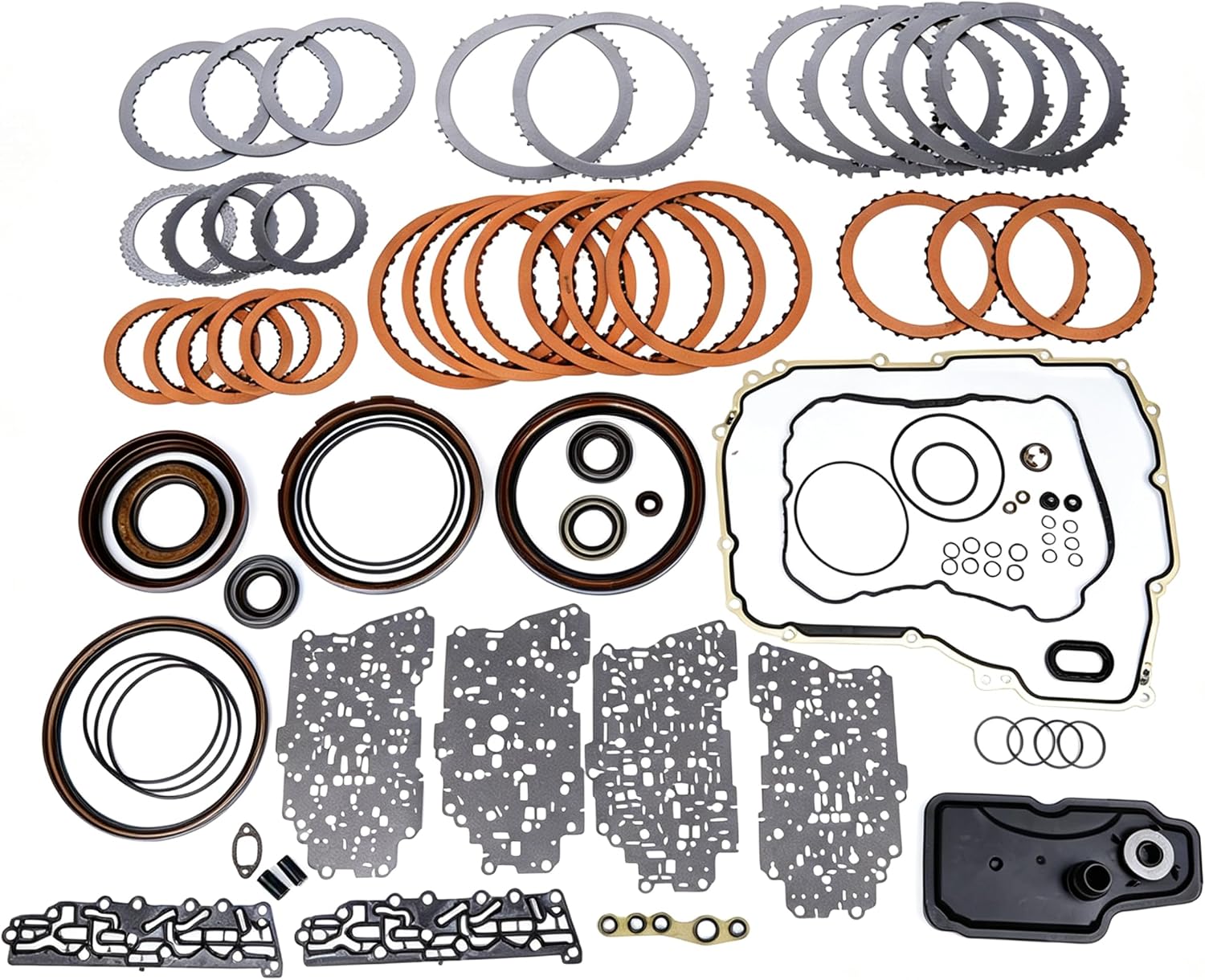
6T40 master rebuild kit at Core Transmission Parts
When the speed sensor code turns out to be a failed 3-5-R clutch, this is the kit for the teardown: frictions, steels, seals and gaskets in one box.
View the 6T40 master rebuild kit →6T40 and 6T45 rebuild kits, valve bodies, solenoids and valve body tools — shipped fast from the USA.
Shop 6T40 parts →Related guides
- 6T40 Shift Solenoid Symptoms
- 6T40 Limp Mode Causes and Fix
- 6T40 No Reverse Fix
- 6T40 Harsh Shift Causes
- 6T40 Valve Body Symptoms
FAQ
Where are the input and output speed sensors on a 6T40?
Both are inside the transmission. Per GEARS Magazine, the input speed sensor is on the rear cover and reads the 3-5-R clutch assembly, and the output speed sensor sits underneath the valve body and reads the park gear. Both are wired internally to the TEHCM, so replacing the output sensor means removing the valve body.
What are the symptoms of a bad 6T40 speed sensor?
The usual signs are a check engine light with P0716, P0717, P0721, P0722 or P0723, harsh or banging shifts, a stuck gear or limp-home range, and a converter clutch that will not apply. Those symptoms overlap with valve body, solenoid and 3-5-R clutch failures, so confirm the signal on the scan tool before buying a sensor.
Can I test a 6T40 speed sensor with a multimeter?
Not reliably by voltage. These are 2-wire active sensors that signal by changing current, and GEARS measured only about 20 mV of voltage change at the sensor. Put a 10-ohm resistor in series and scope the voltage drop across it while the target turns to see a clean square wave.
Do I need a relearn after replacing a 6T40 speed sensor?
Yes. GEARS lists speed sensor replacement among the repairs that require the Service Fast Learn procedure, run with TFT between 158 and 239 F with the wheels blocked and brakes applied. A failed or skipped learn can leave the car in neutral with no movement, or with poor shift quality.
Can a slipping 3-5-R clutch look like a speed sensor problem?
It can, because the input speed sensor reads the 3-5-R clutch assembly and the TCM compares speeds to judge ratio. GM bulletin PI0670A says to inspect the 3-5-R housing and piston before replacing the TEHCM on a P0776 slip in reverse, 3rd or 5th, and warns that air checking that clutch through the case is unreliable.
Sources
- ATRA / GEARS Magazine — "6T40/45 Diagnosis and Fixes." Backs the ISS location on the rear cover reading the 3-5-R clutch assembly, the OSS under the valve body reading the park gear, the 2-wire digital sensors powered by the TEHCM, and scan data being the only way to check ISS, OSS and IMS function. gearsmagazine.com
- ATRA / GEARS Magazine — "Advanced Speed Sensors, Part 2." Backs 2-wire active sensors signaling by current change (about 7 mA to 14 mA in the MR example), the roughly 20 mV voltage change, and the 10-ohm series resistor scope method shown on a 6T40 input speed sensor. gearsmagazine.com
- ATRA / GEARS Magazine — "Why Doesn't My 6T40 Shift Right?" Backs speed sensor replacement requiring Service Fast Learn, the 158-239 F (70-115 C) TFT window and other preconditions, the procedure steps, and the neutral no-movement result of a failed learn. gearsmagazine.com
- General Motors — Bulletin PI0670A, "Diagnostic Tips for DTC P0776, Slips in or No Reverse, Third, Fifth" (February 2012). Backs inspecting the valve body, pump, 3-5-R housing and 3-5-R piston before replacing the TEHCM, and that air checking the 3-5-R clutch through the case frequently leads to incorrect diagnosis. static.nhtsa.gov (PDF)
- General Motors — Bulletin PI1131, "Various Missing Gears, DTC P0776, P0796, P0878, P0873, P2714 or P2723 Set" (December 2013). Backs missing-gear complaints on 2011 6T40/6T45 units (RPOs MHC, MH7, MH8) being caused by a pressure control solenoid inside the TEHCM, one of the non-sensor causes to rule out. static.nhtsa.gov (PDF)
- Transmission Digest — "GM 6T30 Six-Speed Automatic: Junior Addition, Part 1." Backs the ISS, OSS and internal mode switch being the same between the 6T30 and 6T40. transmissiondigest.com
- General Motors — 2011 OBD monitor tables, "11OBDG08 TRANS Diagnostics," 6T40 Unique Section. Backs the P0716 1350 RPM / 0.8 s / one-trip criteria and the P0717 50 RPM / 4.5 s and P0722 single-power-supply cases. gsi.ext.gm.com PDF
- General Motors — Bulletin 16-NA-013, "No Reverse, No Third, DTC P0716, P0717" (January 2016). Backs the reluctor ring retainer cause and housing/piston repair on 6T70/6T75-family vehicles. static.nhtsa.gov (PDF)