An Acadia that slips is a heavy three-row crossover leaning on a front-drive six-speed, and the slip almost always points at one clutch or one pressure circuit. The trick is reading which one before the pan comes off. This guide works the problem the way I do on a slipping Acadia: identify the unit, read the slip by gear, prove pressure and converter on the scan tool, then match the fix to the model year. GM bulletin numbers, specs and part numbers are bracketed to the Sources list at the bottom.
The 2007-2016 first-generation Acadia runs a 3.6L V6 (VIN code D in the 2012 manual) backed by GM's 6T70/6T75 family automatic, filled with DEXRON-VI [6]. GM's shudder bulletin 18-NA-358 lists the 2014-2019 Acadia under four transmission RPOs: M7V and M7X, plus M7U and M7W [2]. ATRA identifies M7V/M7X as 6T75 codes and M7U/M7W as 6T70 codes [4]. So a late Acadia can carry either unit. Read the RPO label in the glovebox before you order a single part.
Step 1: check the fluid hot, not cold
Before anything else, get the level right. On the first-generation Acadia the transmission has a dipstick, and GM's owner manual notes the fluid does not reach the stick until it is at operating temperature [6]. ATRA's checking procedure: level surface, parking brake set, start the engine and move the selector through the ranges, idle one minute, and read the dipstick only with transmission fluid temperature between 180 and 200 degrees F [4]. If the unit is cold, ATRA's tip is to drive it in 2nd to bring the temperature up [4].
I see two mistakes over and over on Acadias. The first is a cold check that reads low, gets topped off, and leaves the unit overfilled and aerating, which shows up as slip and flare once it gets hot. The second is a "fluid change" with the wrong fluid. It is DEXRON-VI only [6]. A drain-and-refill is 5.0 L (5.3 qt) [6], which is a partial exchange, so a burnt, varnished fill needs more than one round.
Step 2: read the slip by gear
The 6T70/6T75 has five clutches and one low one-way clutch. Sonnax's clutch apply chart for the family shows every forward gear holding two elements [5]:
| Gear | Clutches applied | If only this gear slips, suspect |
|---|---|---|
| 1st | 1-2-3-4 + low one-way clutch (Low/Reverse in manual low) | 1-2-3-4 clutch or one-way clutch |
| 2nd | 1-2-3-4 + 2-6 | 2-6 clutch |
| 3rd | 1-2-3-4 + 3-5-R | 3-5-R clutch |
| 4th | 1-2-3-4 + 4-5-6 | 4-5-6 clutch |
| 5th | 3-5-R + 4-5-6 | 3-5-R or 4-5-6 |
| 6th | 2-6 + 4-5-6 | 2-6 or 4-5-6 |
| Reverse | 3-5-R + Low/Reverse | 3-5-R or Low/Reverse |
Cross-reference the gears that slip. Slip in 3rd, 5th and reverse together lands on the one clutch they share: 3-5-R. Slip in 4th, 5th and 6th lands on 4-5-6. Slip in 1st through 4th but a solid 5th and 6th lands on 1-2-3-4. When every gear slips, stop thinking clutches and start thinking pressure, fluid or converter.
Step 3: put numbers on it with the scan tool
GM's 6T70/6T75 road test gives you the pass/fail values [3]. Set up a data list with Commanded Gear, Gear Ratio, Transmission ISS, Transmission OSS, Engine Speed, TCC Slip Speed, TCC PC Sol. Pressure Cmd., Line PC Sol. Pressure Cmd. and transmission oil temperature [3].
- Garage shifts. Brake on, park brake set, pause 2-3 seconds in each range. Each engagement should complete in under 2 seconds with fluid above 20 degrees C. ISS dropping to 0 RPM confirms when the engagement actually happened [3].
- Upshifts. Hold 15-20 percent throttle. The shift feel or engine speed change should follow the commanded gear change within 1 to 2 seconds [3]. A shift that takes longer, or an RPM flare while Gear Ratio wanders between two ratios, is the oncoming clutch filling slowly or slipping.
- Step-in downshifts. At 5-15 percent throttle, 3-2, 4-3, 5-4 and 6-5 should happen within 2 seconds [3].
- Converter. With steady throttle and TCC commanded on, TCC Slip Speed should stay below 100 RPM; GM's road test sends you to torque converter diagnosis if slip exceeds 100 RPM for more than 6 seconds [3]. In 2nd-6th the controlled-capacity (ECCC) strategy holds about 20 RPM of slip on purpose, so a small steady number is normal [3].
The deciding PID is Gear Ratio. If engine RPM climbs but Gear Ratio holds the commanded gear's ratio, the slip is ahead of the gearbox, in the converter. If Gear Ratio drifts off the commanded value, a clutch inside the unit is slipping, and the apply chart tells you which.
Step 4: prove line pressure
When everything slips, or pressure switch codes are stored, put a gauge on it. GM's procedure: brakes applied, check level and codes first, install gauge DT 21867-A in the line pressure test hole, then use the scan tool's Line PC Solenoid output control to step pressure up and down in roughly 200 kPa (29 psi) increments. The scan tool will only command it in Park or Neutral below 1,500 RPM. Run the sweep at least three times, compare against the solenoid valve pressure chart, and torque the test plug to 12 Nm (106 lb in) when you are done [3].
If pressure is off, GM's checklist for high or low fluid pressure runs in this order: loose pump bolts, leaking or damaged pump outlet seals and filter seal, a mis-installed or damaged filter, a sticking line pressure blow-off valve, the drive gear support converter seal and fluid tube, upper and lower valve body gaskets, a worn or sticking pressure regulator valve or spring, the control valve filter plate seals, and a variable bleed solenoid stuck high or low [3]. On Gen 1 units with pressure switches, ATRA ties P0752, P0872, P0877 and P0989 to low idle line pressure and says to inspect the pump outlet seal [4].
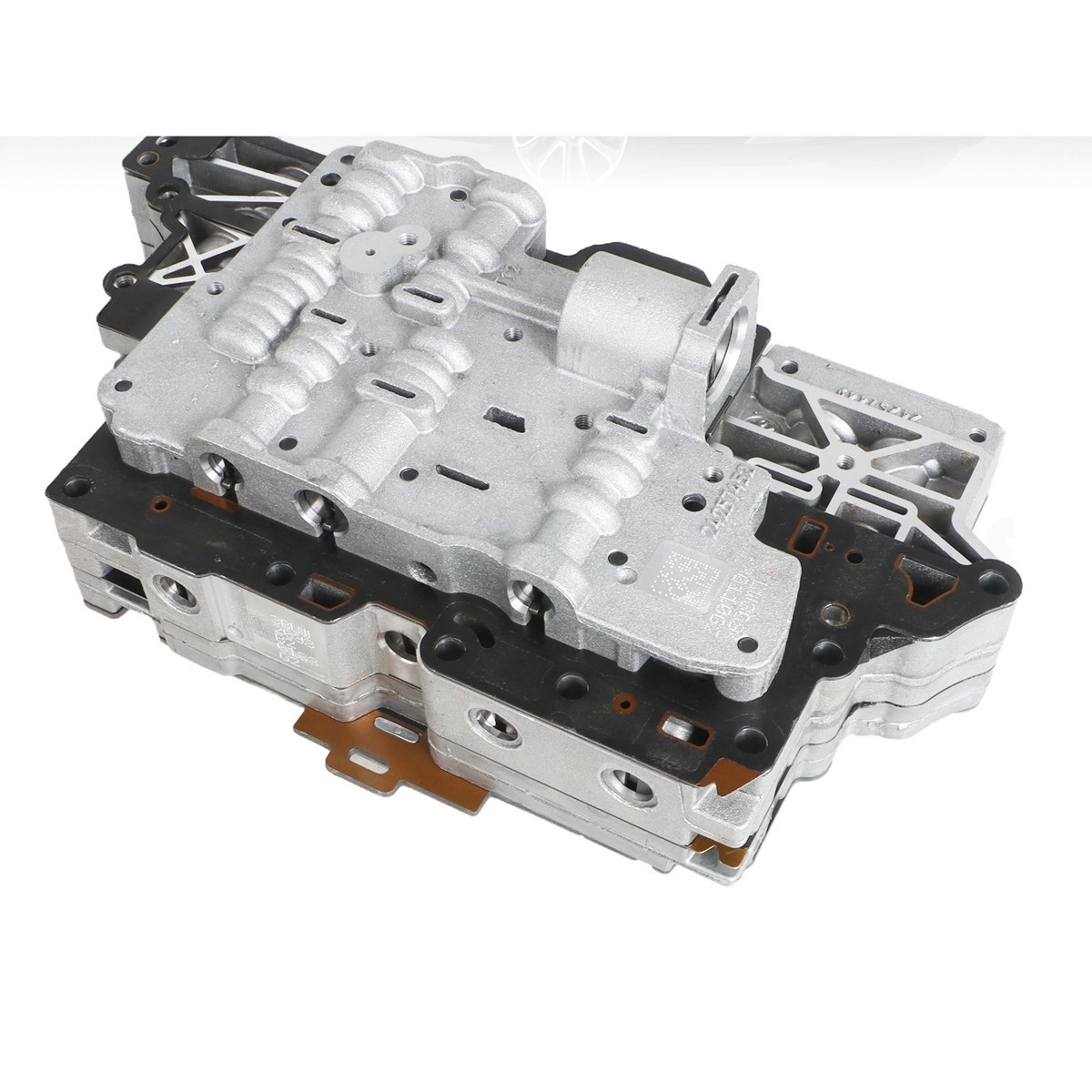
Sonnax lists what a worn pressure regulator valve does on these units: erratic line pressure, burnt clutches, low converter and lube flow, TCC apply and release concerns, overheating and poor shift quality [5]. That is a slipping Acadia in one list. Sonnax also explains why the bores wear: scrubbing from solenoid frequency and duty-cycle control, the valve body material, and valve designs that allow side-loading [5]. A vacuum test on the valve body tells you before you hang a new one.
The four Acadia slip patterns
2007-2009: slip or flare in 3rd and 5th, no reverse
This is the one most Acadia owners have heard about. GM bulletin 09-07-30-012F covers a check engine light, no reverse, and slip, flare or harsh shifts in 3rd and/or 5th, usually with P0776 (Clutch Pressure Control Solenoid 2 Stuck Off) and possibly P0777, P2723, P0717, P0716, P2715 or P2714 [1]. The 3-5-R waved plate cracks, the apply piston over-strokes, the seal leaks and the clutch loses apply [1]. That matches the apply chart exactly: 3rd, 5th and reverse share 3-5-R.
GM's repair is a new plate (P/N 24254103), a case split to clean debris out of the whole unit, and new pump fluid filter and control solenoid filter plate, because skipping the clean-out leads to repeat damage [1]. ATRA recommends the updated waved plates in every clutch while you are in there: 1-2-3-4 (24259063), 2-6 (24259816), 3-5-R (24254103) and Low/Reverse (24259817) [4]. Sonnax notes those plates back-service earlier years and are common to all models [5]. Do not condemn the control solenoid valve and TCM assembly on P0776 alone; GM says not to replace it unless SI diagnostics call for it [1].
2014-2019: flare, slip or shudder on 2-3 and 3-2
GM bulletin 18-NA-358 covers the 2014-2019 Acadia for a severe launch shudder in 1st, shudder in 4th or on the 2-3 upshift or 3-2 downshift, with flare, slide/bump, slip or harsh shift as companion complaints [2]. The cause is debris in the upper and/or lower valve bodies, or scratched and scored valves that do not move properly [2].
GM's correction is specific. You can duplicate launch shudder by power braking in 1st, but for 5 seconds or less so you do not hurt the 1-2-3-4 clutch. Rule out a misfire, and watch TCC slip during the event to rule out converter shudder. Do not replace the TEHCM; GM says that has not fixed this condition. If power braking reproduces it, replace the upper and lower valve bodies together (upper 24281084, lower 24257450, body kit 24264343) [2]. Then check ISS and OSS for collected debris; debris there means an internal component failure. Scored valves or bores with clean sensors point GM to a final drive bearing failure [2]. In other words, a new valve body on a unit that is shedding metal is a comeback waiting to happen.
Any year: burned frictions from heat and load
The Acadia is a heavy truck for this transaxle, and it tows. When the unit overheats, the manual's TRANSMISSION HOT IDLE ENGINE message is the warning to stop driving it [6]. Burned frictions, black fluid and a slip that worsens as the fluid warms are a rebuild, not a valve body. Gen 1 and Gen 2 are not the same inside: the 2013 controls update on M7W, M7U, M7V and M7X units brought a new TEHCM without pressure switches, variable feed solenoids, a new valve body and spacer plate, and new Low/Reverse frictions and wave plate, and it is not designed to back-service Gen 1 [5]. Buy the kit by RPO and build date, not by model year alone [4].
4th-6th slip after a rebuild
Slip in 4th, 5th and 6th points at the 4-5-6 clutch. Sonnax lists 3-4 flare, burned 4-5-6 clutch, ratio codes and slipping as symptoms of a worn 4-5-6 accumulator piston bore [5]. ATRA adds a 3-4 or 4-3 bind with possible P0797 from a worn case cover hub ring groove that leaks between the 3-5-R and 4-5-6 circuits; maximum ring-to-groove clearance is 0.007 in. [4].
After the repair: relearn, or it will feel like it still slips
The TCM controls every shift by clutch fill volume it has learned. ATRA's notes: run Service Fast Learn Adapts with the scan tool after any transmission repair, then shut the engine off and let the TCM power down before restarting. The ongoing CP Learn runs at steady conditions: the 4-5-6 clutch in 3rd, the 1-2-3-4 and 2-6 clutches in 5th, and the 3-5-R clutch in 6th, and it aborts on rough roads [4]. A replacement transaxle needs the internal TCM programmed [4]. Skip the relearn and a good rebuild can flare its first few hundred miles and get blamed on your work.
For prevention, ATRA lists a fluid-only service at 50,000 miles for severe service and 100,000 miles for normal; the filter is non-serviceable and only replaced after an internal repair [4]. Most Acadias that tow, idle in school lines or live in the heat belong on the severe schedule.
Quick reference
| Slip pattern | Codes | Likely cause | Years |
|---|---|---|---|
| 3rd, 5th and reverse | P0776 plus P0777, P2723, P0717, P0716, P2715, P2714 | Broken 3-5-R wave plate [1] | 2007-2009 |
| Shudder, flare or slip on 2-3 / 3-2, launch shudder | Often none | Valve body debris or scored valves [2] | 2014-2019 |
| All gears, worse hot | P0752, P0872, P0877, P0989 (Gen 1) | Low line pressure, pump outlet seal, regulator wear [3][4][5] | Any |
| 4th, 5th and 6th | Ratio codes, P0797 possible | 4-5-6 clutch, accumulator bore or hub ring wear [4][5] | Any |
| RPM rises, gear ratio correct | TCC codes possible | Torque converter, slip over 100 RPM for 6 s [3] | Any |
Shop the part for this fix: 6T75 friction clutch kit
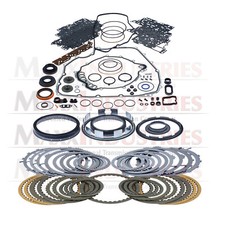
When the Acadia unit comes apart for burned clutches, CoreTransmissionParts carries Raybestos friction kits by generation. The 2007-2012 kit fits the early Gen 1 units that broke their 3-5-R plates; the 2013-up kit is for Gen 2.
View the 2007-2012 6T75 friction kit at CoreTransmissionPartsGen 2 unit? See the 2013-up 6T75 friction kit or browse all 6T75 parts at CoreTransmissionParts.
Need parts for this job?
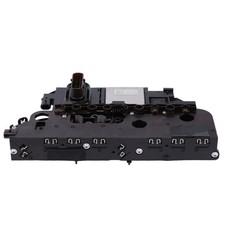
Our 6T75 parts page has clutch modules, valve bodies, master rebuild and overhaul kits, pumps and solenoid kits for the Acadia, all on our own checkout. If the RPO label on a 2014-2019 Acadia shows M7U or M7W, use the 6T70 parts page instead. For fluid specs across every unit, see the transmission fluid spec chart.
FAQ
Why is my GMC Acadia transmission slipping?
On a 2007-2009 Acadia, slip in 3rd and 5th with no reverse is usually a broken 3-5-R wave plate covered by GM bulletin 09-07-30-012F. On 2014-2019 models, GM bulletin 18-NA-358 traces slip, flare and shudder on the 2-3 and 3-2 shifts to valve body debris. Low or wrong fluid, low line pressure and burned frictions cause slip on any year.
Can low transmission fluid cause an Acadia to slip?
Yes, and so can overfilling. The fluid does not reach the dipstick until the transmission is at operating temperature, so check it at 180 to 200 degrees F on a level surface with the engine idling. Use DEXRON-VI only; a drain-and-refill takes about 5.0 L (5.3 qt).
How do I tell if it is the torque converter or the transmission slipping?
Watch TCC Slip Speed and Gear Ratio on a scan tool. GM says TCC slip should stay below 100 RPM once the converter clutch is commanded on. If RPM rises but the gear ratio stays correct, look at the converter; if the gear ratio drifts off the commanded gear, a clutch inside the transmission is slipping.
Will a new valve body fix my Acadia slipping?
Only if the valve body is the cause. GM's 18-NA-358 fix replaces both upper and lower valve bodies on 2014-2019 Acadias that reproduce the shudder in a short power-brake test. If the speed sensors are collecting debris, GM says there is an internal failure, and a valve body alone will not hold.
Do I need a relearn after an Acadia transmission repair?
Yes. Run Service Fast Learn Adapts with a scan tool after any repair, then power the TCM down before restarting. A replacement transaxle also needs its internal TCM programmed, or it can flare and slip while it relearns.
Related guides
Sources
- General Motors, Service Bulletin 09-07-30-012F, "No Reverse, 3rd or 5th, Check Engine Light Illuminated, DTC P0776," October 2012 (2007-2009 GMC Acadia and other 6T70/75 models). Backs the 3rd/5th slip and no-reverse symptoms, P0776 and companion codes, the broken 3-5-R wave plate and piston over-stroke cause, plate P/N 24254103, the case-split clean-out with new pump fluid filter and control solenoid filter plate, and the do-not-replace caution for the control solenoid valve and TCM. static.nhtsa.gov (PDF)
- General Motors, Service Bulletin 18-NA-358, "Shudder, 2-3 Upshift or 3-2 Downshift Concern," December 2021. Backs the 2014-2019 Acadia listing under RPO M7V, M7X, M7U and M7W, the shudder, flare, slip and harsh shift symptoms, the valve body debris cause, the 5-second power brake limit, the TCC slip check, the TEHCM caution, the ISS/OSS debris and final drive bearing checks, and parts 24281084, 24257450 and 24264343. static.nhtsa.gov (PDF)
- General Motors 6T70/6T75 service information (fault diagnosis section, as mirrored on SAAB WIS Online): Road Test (scan tool PIDs, garage shifts under 2 s above 20 C, 15-20 percent throttle upshifts within 1-2 s, step-in downshifts within 2 s, ECCC about 20 RPM, TCC slip under 100 RPM / 6 s rule); Line Pressure Check (DT 21867-A, 200 kPa steps, Park/Neutral below 1,500 RPM, three runs, plug 12 Nm / 106 lb in); Fluid Pressure High or Low (pump, seal, filter, blow-off valve, regulator and VBS checklist). Road Test · Line Pressure Check · Fluid Pressure High or Low
- ATRA, "6T70 Product Issues and Updates" seminar. Backs the 6T70/6T75 RPO codes and 2013 Gen 1 / Gen 2 split, the four updated wave plate part numbers, the pressure switch codes and pump outlet seal check, the 0.007 in. hub ring clearance and P0797, the 180-200 degree F fluid check, Service Fast Learn, the CP Learn gears, TCM programming, and the 50,000/100,000-mile service intervals. atracom (PDF)
- Sonnax, "6T70/6F50 Transaxle" technical webinar. Backs the clutch apply chart, the wave plate back-service note, the Gen 2 change list, the pressure regulator and 4-5-6 accumulator symptom lists, and the causes of valve bore wear. sonnax (PDF)
- GMC, 2012 Acadia Owner Manual. Backs the 3.6L V6 (VIN D) with automatic, DEXRON-VI, the 5.0 L (5.3 qt) drain-and-refill, the dipstick-at-operating-temperature note, and the TRANSMISSION HOT IDLE ENGINE message. assets.gm.com (PDF)