A GM 6T70 or 6T75 that won't move in any gear gets the same reflex diagnosis as every other automatic: "it's the converter." On this transaxle that is rarely where the problem actually lives. GM built the 6T70/6T75 pump as a non-serviceable part from the factory, which means one of the most common ways a shop creates its own no-move comeback is during a rebuild, not from ordinary wear. There is also a documented GM bulletin for a no-shift complaint that has nothing to do with hydraulics at all. Work the causes in the order below before the unit comes back out a second time.

Rule Out the Non-Transmission Causes First
Before anything hydraulic gets blamed, two cheap checks can save the whole job. Lift the drive wheels and spin each one by hand: a stripped half-shaft or an axle that has popped out of the differential side gear will spin one wheel freely with zero resistance, and that has nothing to do with the transaxle. Then check fluid level and condition on the dipstick-equivalent fill procedure for the vehicle — fluid low enough to aerate at the pump inlet produces the exact same low-pressure symptoms as a mechanical pump fault, and it costs nothing to rule out first.
GM Bulletin PI0269B: No PRNDL Display, DTC P182E
Not every "it won't move" call is hydraulic. GM Technical Service Bulletin PI0269B [1], which covers 6T70/6T75-equipped vehicles built February 2009 through July 2010 (RPO codes MH2, MH4, MH6 and MY9 — the 2009-2011 Buick Enclave, 2010-2011 Buick LaCrosse, 2010-2011 Cadillac SRX, 2009-2011 Chevrolet Equinox, Malibu and Traverse, 2009-2011 GMC Acadia, 2010-2011 GMC Terrain, 2009 Pontiac G6 and Torrent, and 2009-2010 Saturn Aura, Outlook and Vue), documents a check-engine light with DTC P182E stored active or in history in the transmission control module. In some cases the customer also reports no PRNDL display at all, which from the driver's seat can look exactly like a dead transmission even though nothing hydraulic has failed.
GM's diagnostic path, straight from the bulletin: verify proper shift cable adjustment, verify the ECM Park/Neutral switch reads correctly in every range, then verify the internal mode switch (IMS) A/B/C/P parameters in all ranges. Drive the vehicle under the Conditions for Running the DTC to try to duplicate the fault. If P182E does not reset, the fix is to replace the IMS — GM's part description is the lever, manual shift detent with shaft position switch assembly. The bulletin also flags that DTC U0101, if it sets in the electronic brake control module during this diagnosis, has been found to set falsely and should be ignored rather than chased as a separate fault.
The Self-Inflicted No-Move: Pump Screws That Strip on Their Own Thread
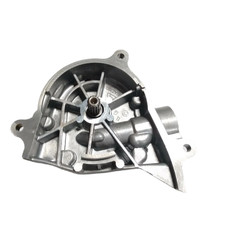
This is the cause worth knowing before you ever pull a 6T70/6T75 pump apart, because it is the one most likely to come back as a comeback on your own work. GM designed this pump as a non-serviceable component: the five Torx-head screws that hold the pump cover to the pump body are self-tapping, cutting their own threads into the pump body on the assembly line. Pull those screws out during a rebuild and they come out partially stripped every time, leaving metal shavings sitting in all five holes.
Reinstall the screws into those same holes without clearing the debris first and they will not torque down evenly. The pump cover and pump body end up clamped unevenly instead of flat, and the result is low pump pressure across the board — which on a six-speed FWD transaxle with this many clutches reads as weak engagement or no movement at all, showing up right after the rebuild goes back in the car. Transmission Digest's Wayne Colonna documented this exact failure and the fix [2]: blow all five bolt holes clear of metal shavings, chase the threads with an M6x1.0 bottom tap, clean the holes again, then install the five pump assembly screws and torque them to 120 in-lbs. Skipping the tap step and just reinstalling the original screws is the mistake that creates the comeback.
If the Pump Checks Out: Testing the Valve Body for Worn Bores
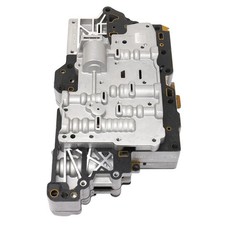
When pump pressure is confirmed good at the test port but the unit still won't move, or moves inconsistently, the valve body is the next suspect. Sonnax markets a vacuum test plate kit (part 124740-VTP) built specifically for the 6T70/6T75, covering both Gen 1 and Gen 2 valve bodies (it also crosses to the Ford 6F50/6F55, which shares the platform). The kit is designed to give a repeatable, documentable number for individual valve bore wear instead of a guess based on a pressure chart alone — useful on a used-core valve body where you cannot be certain how many miles are on the bores.
In practice: if line pressure is low everywhere and the valve body bores test tight on the vacuum plate, the fault sits upstream at the pump or the filter. If specific bores bleed off vacuum fast, that bore's valve or bushing is worn enough to leak regulated pressure internally, which can produce exactly the kind of no-movement or intermittent-engagement complaint that looks electrical until you actually test the hardware.
Fluid: DEXRON-VI Only
The 6T70/6T75 family is built around GM's DEXRON-VI specification, documented as the global service-fill standard in an SAE technical paper covering the spec's introduction to match GM's factory fill fluid [4]. Shared-platform service data for the Saab 9-4X, which used this same GM 6T70 transaxle, lists total fluid capacity at roughly 9.0 liters (9.5 US quarts) [5]. There is no approved substitute fluid for this family — a non-DEXRON-VI fluid, or fluid low enough to aerate at the pump inlet, produces the same low and unstable pressure symptoms as the mechanical faults above, which is why fluid level and type belong at the top of the checklist, not the bottom.
GM's No-Drive Checklist and the Post-Repair P2723 Trap
GM's own 6T70/6T75 service information, under "No Drive in All Ranges," lists the pump drive before anything else: a disengaged, worn, binding or failed drive sprocket, driven sprocket or drive link, worn sprocket thrust washers, stripped pump shaft or driven sprocket splines, loose or missing pump bolts, a leaking fluid outlet seal, and a damaged, clogged or improperly installed pump filter or filter neck seal. The same page adds stripped turbine shaft splines, missing converter-to-flywheel bolts, and a disengaged or broken 1-2-3-4 clutch piston spring retainer [6]. ATRA's 6T70 seminar gives the quick check that separates those: put a gauge on line pressure at idle, and if it is low, inspect the pump outlet seal for damage [7].
One more no-move only shows up after a repair. ATRA documents a no-drive condition, often with DTC P2723, on Traverse, Acadia, Outlook, Enclave, Malibu, G6, Aura and Vue units after the reaction planetary carrier was replaced. Many publications show the reaction carrier and input ring gear as one assembly, but the carrier, input ring gear and ring gear snap ring are serviced as separate pieces, and leaving the ring gear off means no drive [7]. Those units were usually opened for a broken 3-5-Reverse wave plate, the failure GM covered under special coverage 14404B on 2007-2009 crossovers and 2008-2009 Malibu and Equinox; GM's repair calls for cleaning the debris out of the whole unit and replacing the pump fluid filter and control solenoid filter plate [8].
Repair Order That Does Not Waste a Removal
- Lift check the drive wheels to rule out a stripped or popped half-shaft before touching the transaxle.
- Check fluid level and confirm it is DEXRON-VI. Low or wrong fluid mimics a mechanical pump fault.
- Scan for codes, specifically P182E. If present with no PRNDL display or an erratic range signal, follow GM bulletin PI0269B: shift cable adjustment, Park/Neutral switch status, then IMS A/B/C/P parameters in every range.
- Pull line pressure at the test port with the engine running and compare to spec. Low pressure everywhere points at the pump or a restricted filter.
- If the unit was recently rebuilt, suspect the pump screws first — stripped self-tapping threads from the teardown, reinstalled without a thread chase, is a documented cause of exactly this complaint.
- If pump pressure checks out, vacuum test the valve body bores (Sonnax 124740-VTP or equivalent) to isolate a worn bore from a true supply-side fault.
- Confirm the IMS has not been damaged if the valve body or range sensor area was serviced previously, since that assembly ties directly into the P182E failure path above.
Need parts for this job?
Pumps, valve bodies, filter and gasket kits, solenoid packs and full rebuild kits for the GM 6T70/6T75, priced for shops and shipped from the USA.
Shop 6T70 parts →FAQ
What causes a GM 6T70 or 6T75 to have no movement in any gear?
After the basics (fluid level, a lift check for a popped axle), the three real internal causes on this transaxle are a pump that cannot build pressure, a worn valve body bore that cannot regulate it, and the internal mode switch sending the TCM a signal it will not act on. GM's own bulletin PI0269B covers the switch-related version, which sets DTC P182E and can show no PRNDL display even though the hydraulics are fine.
Can rebuilding a 6T70 pump cause its own no-movement comeback?
Yes, and it is common enough that Transmission Digest wrote a specific fix for it. GM built the 6T70/6T75 pump as a non-serviceable unit sealed with five self-tapping Torx screws that cut their own threads at the factory. Removing them during a rebuild partially strips those threads and leaves metal shavings in the holes, and reinstalling the screws without clearing that debris leaves the pump halves clamped unevenly, which shows up as low pump pressure after the unit goes back in the car.
What does DTC P182E mean on a 6T70 or 6T75, and does it mean no movement?
P182E is stored in the transmission control module and, per GM bulletin PI0269B, is tied to the internal mode switch (IMS) sending park/neutral and A/B/C/P range signals the TCM does not recognize as valid. The bulletin notes the complaint is usually a check-engine light, and in some cases no PRNDL display, rather than a literal failure to move. GM's fix path is verifying shift cable adjustment and Park/Neutral switch status, then testing IMS parameters in every range before replacing the switch.
What fluid does the 6T70 and 6T75 take?
DEXRON-VI only. GM's DEXRON-VI global service-fill specification, documented in an SAE technical paper, is the factory-fill and service-fill standard for this transaxle family, and shared-platform service data for the Saab 9-4X (which used the same GM 6T70 unit) lists total fluid capacity at roughly 9.0 liters (9.5 US quarts). Fluid low enough to aerate at the pump inlet will produce the same low-pressure symptoms as a mechanical pump fault.
How do you tell a 6T70 pump failure from a valve body failure during diagnosis?
Line pressure testing narrows it down, but a vacuum test isolates the valve body specifically. Sonnax sells a vacuum test plate kit (124740-VTP) built for 6T70/6T75 Gen 1 and Gen 2 valve bodies that checks individual bores for wear with a repeatable number instead of a guess. If pressure is low everywhere and the valve body bores test tight, the fault is upstream at the pump; if specific bores leak off vacuum, the valve body itself is the fault.
Sources
- General Motors Technical Service Bulletin PI0269B, "Malfunction Indicator Lamp (MIL)/Check Engine Light On, DTC P182E," October 2016 (NHTSA-hosted). Backs the affected models/RPOs/production window, the no-PRNDL-display and P182E symptom, and the full diagnostic path: shift cable adjustment, Park/Neutral switch verification, IMS A/B/C/P parameter testing, IMS replacement if the code does not reset, and the false-set note on DTC U0101. static.nhtsa.gov
- Transmission Digest — Wayne Colonna, "How to get around non-serviceable GM 6T70/75 self-tapping pump screws," April 26, 2024. Backs the pump's non-serviceable design, the self-tapping screw mechanism, the metal-shaving/low-pump-pressure failure mode, and the fix: M6x1.0 bottom tap and torquing the five pump screws to 120 in-lbs. transmissiondigest.com
- Sonnax — 124740-VTP-SL replacement seal product page. Backs the vacuum test plate kit's fitment across 6T70/6T75 Gen 1 and Gen 2 (and Ford 6F50/6F55) and its purpose of testing valve and bore wear with a repeatable method. sonnax.com
- SAE International — "General Motors DEXRON-VI Global Service-Fill Specification," Technical Paper 2006-01-3242. Backs DEXRON-VI as the service-fill specification for this GM transmission family. saemobilus.sae.org
- Saab 9-4X shared-platform technical data, "Automatic Transmission 6T70/6T75: Transmission General Specifications." Backs the total fluid capacity figure (approximately 9.0 L / 9.5 US qt) for the GM 6T70/6T75 transaxle used across this platform. saabwisonline.com
- GM 6T70/6T75 service information, "No Drive in All Ranges" (as published in the 2011 Saab 9-4X workshop information, same unit). Backs the pump drive sprocket, driven sprocket and drive link, thrust washers, pump bolts, outlet seal, filter and neck seal, turbine shaft splines, converter bolts and 1-2-3-4 spring retainer causes. saabwisonline.com
- ATRA — "6T70 Product Issues and Updates" seminar. Backs the idle line pressure and pump outlet seal check, and the P2723 no-movement after reaction carrier replacement caused by a missing input ring gear. atracom (PDF)
- General Motors Special Coverage 14404B, "Transmission Clutch Wave Plate" (NHTSA-hosted). Backs the covered 2007-2009 crossovers and 2008-2009 Malibu/Equinox, the loss of 3rd, 5th and reverse, and the debris clean-out with new pump fluid filter and control solenoid filter plate. static.nhtsa.gov