A 722.6 in a C-Class that "slips" can mean four different things, and the fix for each one costs a very different amount of money. The engine can flare between gears on the shift, the car can feel like it lost a gear once it is already in it, the converter clutch can slip and make the tach wander at cruise, or the TCM can decide the ratio is wrong when nothing inside is actually slipping at all. The W202 and the 2001-2007 W203 C230, C240, C280 and C320 cars are old enough now that all four show up on the same lift. This is how to sort them out with a scan tool and the apply chart before you commit to a valve body or a rebuild.
Slip vs Flare vs a Code That Only Says Slip
A true clutch slip is a clutch or brake pack that is applied but cannot hold torque. The engine climbs, road speed does not, and it gets worse with load and heat. A flare is different: it happens during the shift, when the off-going element lets go before the on-coming one has pressure. A flare can come from perfectly good clutches fed by a worn valve body. The third case is the converter clutch. ATSG's 722.6 manual describes partial converter clutch operation in which "some slip does occur" by design at low speed and light throttle, so a little lock-up slip at 35 mph is normal and is not the same as a slipping gear. The Mercedes fault table in the same manual lists torque converter clutch slipping as its own fault, separate from gear-ratio faults.
The fourth case catches people who buy a used transmission. Per ATSG, the 722.6 was built in several planetary ratio sets and clutch capacities to suit 4, 6, 8 and 12 cylinder engines. If a unit with the wrong ratio, or a car with the wrong rear axle ratio, goes in, "the computer system will observe this as a slipping transmission and produce gear ratio error codes." On a C-Class that just had a junkyard swap, read the designation stamped on the raised boss on the left side of the case and confirm it matches the car before you go looking for burnt clutches.
Know the Apply Chart Before You Drive It
The 722.6 uses three driving clutches (K1, K2, K3), three brake clutches (B1, B2, B3) and two sprags (F1, F2). Each gear uses a specific combination, which is what lets you narrow a slip to one pack from the driver's seat. This is ATSG's component application chart for the unit, with drive-state elements only. Ratios shown are for the chart's ratio set; your variant may differ.
| Range | Elements holding under power | Ratio (ATSG chart) |
|---|---|---|
| D 1st | B2, F1, F2 (B1 and K3 added on coast) | 3.59 |
| D 2nd | K1, B2, F2 (K3 added on coast) | 2.19 |
| D 3rd | K1, K2, B2 | 1.41 |
| D 4th | K1, K2, K3 | 1.00 |
| D 5th | B1, K2, K3 (F1 holds on coast) | 0.83 |
| Reverse, S mode | B1, B3, F1 | 3.16 |
| Reverse, W mode | K1, K3, B3 | 1.93 |
Read it the way a rebuilder does: find the element common to every gear that slips and missing from every gear that holds.
- Slips in 1st, 2nd and 3rd, holds in 4th and 5th: B2 is the only element in all three and absent from 4th and 5th. Sonnax's 722.6 vacuum test guide ties a worn B2 shift valve directly to "burnt B2 brake" and "slipping 1st, 2nd, 3rd," so check the valve as well as the pack.
- Slips in 2nd, 3rd and 4th only: K1.
- Slips in 3rd, 4th and 5th: K2.
- Slips in 4th and 5th and in W-mode reverse: K3.
- Slips in 5th and in S-mode reverse: B1.
- Reverse slips in both S and W mode, forward gears fine: B3, the only element shared by both reverse ratios.
- Slips in 1st and 2nd under power, solid in 3rd up: look hard at F2, which holds in both of those gears.
The S/W switch trick is worth using. Switching to W changes which elements make reverse, so a reverse slip that comes and goes with the switch splits B1 from K1/K3 without pulling a pan.
Scan Tool Diagnosis
ATSG's Daimler/Chrysler OBD-II table for the 722.6 shows how the TCM reports it: P0730 incorrect gear ratio, then P0731 through P0735 for a gear ratio error in 1st through 5th. The gear number in the code is your first clue and you can line it up against the chart above. A P0732 plus P0733 points you at the elements shared by 2nd and 3rd (K1 and B2) before you drive the car at all.
Then confirm it live. Log input speed from the N2 and N3 input speed sensors against output shaft speed, divide one by the other, and compare the result to the commanded gear's ratio. A healthy unit holds that number steady under a full-throttle pull. A slipping pack shows the calculated ratio drifting above the target as load comes in, and it usually gets worse as fluid temperature climbs. Watch converter slip on its own: if engine rpm and turbine rpm separate while the computed gear ratio stays flat, the problem is in the converter clutch circuit, not a gear pack.
Keep in mind what the scan tool cannot show you. There are no pressure taps on a 722.6, so any "pressure" value in the data list is the TCM's command to the modulating solenoids, not a measurement. ATSG notes the shift pressure control solenoid sets both the cutback during a shift and "the clamping force needed to prevent a clutch from slipping," which is why electrical problems in that circuit can look exactly like worn clutches. Clear the solenoid and conductor plate checks covered in our C-Class common problems guide before you condemn friction material.
Check the Fluid Like Mercedes Says To
Low fluid is still the cheapest slip there is, and most C-Class cars make it easy to get wrong because there is no dipstick, only a sealed fill tube. Daimler's WIS procedure AR27.00-P-0100AC calls for the car level on its wheels and the level read in range A at about 25 C or, for the accurate check, range B above 80 C, with fluid temperature confirmed on a scan tool with the selector in R or D. The same document lists an initial charge of 7.3 to 7.7 liters for the 722.612/697/698 variants used in the W202 and warns that both under-fill and over-fill can cause malfunctions and transmission damage. A unit that is a liter low will flare and slip on hard turns and hard stops long before it sets a code.
The fluid itself has to be right. Mercedes-Benz USA Star Bulletin S-B-00.40/89d limits the 722.6 to fluid meeting operating fluid sheet 236.14, part number A001 989 68 03 10, and says 236.14, 236.15 and 236.16 oils must never be mixed. The current approved-products list lives on the Mercedes-Benz BeVo 236.14 sheet. A C-Class that was topped up with a generic multi-vehicle ATF, or with the blue 722.9 fluid, can develop shift flare and erratic apply feel even with good hard parts. Smell what you drain: a burnt odor and dark fluid with friction material in the pan means the packs are already damaged and a fluid change will not bring them back.
When the Valve Body Is the Slip
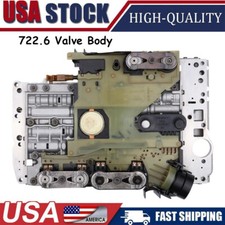
On a C-Class with clean codes, correct fluid and a flare that gets worse with throttle, the valve body is the usual suspect. Sonnax's technical article by Mio Cundl explains the mechanism: the outer bore of the working pressure regulator valve wears and lets pMod solenoid signal oil leak past the boost end of the valve, so working pressure (the 722.6's line pressure) does not rise with engine load. The result is flare or loss of gear under load. The 1-2/4-5, 2-3 and 3-4 overlap sleeves sit in the same signal circuit, wear on their inside diameter and leak on the outside, which pulls working pressure down further.
Sonnax's 722.6/NAG1 vacuum test guide gives you the map. It lists the pressure regulator valve for "slip codes," soft shifts under acceleration, no 2-3, 4-3 neutral and delayed engagement; each overlap control valve and sleeve for flare on its shift plus "slipping gears"; and the B2 shift valve for the burnt B2 and 1st-2nd-3rd slip pattern above. Vacuum test those locations on the bench. A worn bore is repaired with an oversize valve or sleeve kit; a casting that fails several locations is usually cheaper to replace with a known-good valve body. Either way, if B2 or another pack is already burnt, a valve body alone will not fix it. It only keeps the new clutches from burning again.
Hard Parts That Show Up as Slip
Two internal updates are worth knowing on any C-Class you open up.
F2 sprag. ATSG notes the F2 sprag was upgraded from 14 to 20 elements, Mercedes part number 220 270 01 31, and that the 14-element sprag "is known to slip," creating gear ratio error codes. Since F2 holds in 1st and 2nd, an old unit with gear ratio codes in those gears and a clean B2 deserves a look at the sprag. Install the 20-element version only.
K2 drum bushing. The early K2 clutch drum uses a bushing to pilot the output shaft, and ATSG calls premature failure of that bushing common, to the point of "complete planetary failure." Later units use a Teflon seal ring and a caged needle bearing. The two designs are not interchangeable piece by piece: ATSG gives the output shaft snout diameter as 22.97 mm (0.904 in) for the bushing drum and 21.99 mm (0.866 in) for the bearing drum, and the Mercedes upgrade package replaces the drum and the output shaft together. Match the gear ratio package too, or the TCM will see a ratio error after the rebuild.
The Repair Path, Cheapest First
- Confirm the unit and variant from the case designation, and confirm the axle ratio matches if the transmission was ever swapped.
- Scan for P0730-P0735 and any solenoid or speed sensor faults. Fix electrical faults first.
- Set the level hot in range B with 236.14 fluid, then road test and log input versus output speed.
- Use the apply chart to name the element. Slip limited to shifts with good holding in gear points at the valve body; slip that grows inside a gear points at a pack.
- If a pack is burnt, overhaul it with new frictions and steels, vacuum test or replace the valve body, and check the F2 sprag and K2 drum design while the unit is apart.
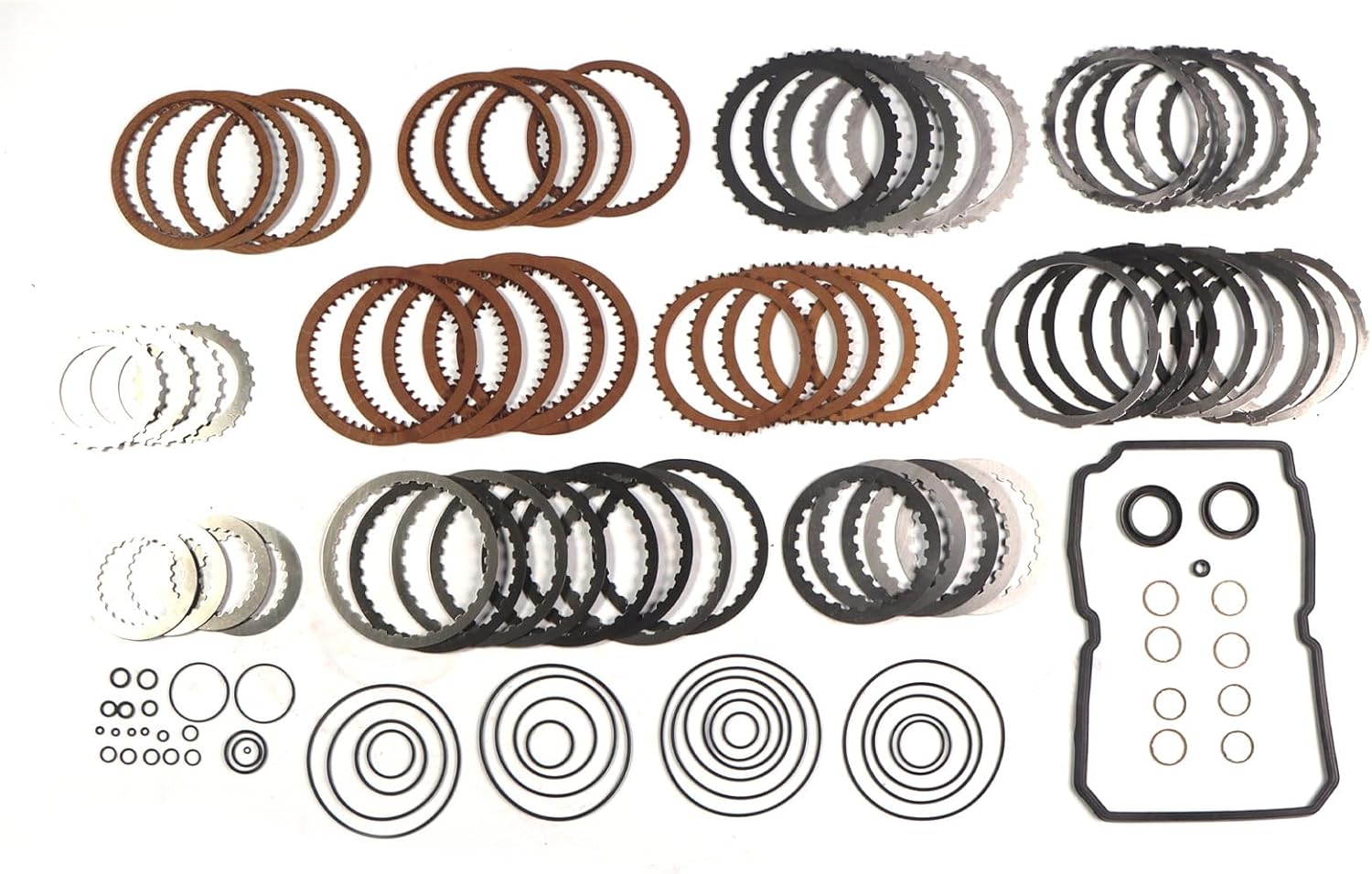
722.6 Master Transmission Rebuild Kit, 1996-Up
If the apply chart and the pan both say a pack is burnt, CoreTransmissionParts carries a master rebuild kit for the 722.6 so the clutches and seals go back in together.
View the rebuild kit →Shop the 722.6 rebuild kit →
Frequently Asked Questions
Why does my Mercedes C-Class 722.6 slip only in 1st, 2nd and 3rd?
The B2 brake is applied in 1st, 2nd and 3rd and released in 4th and 5th, so a slip limited to those three gears points at B2. Sonnax's vacuum test guide ties a worn B2 shift valve to a burnt B2 brake and that exact slip pattern, so check the valve body as well as the pack.
Can low fluid make a 722.6 slip?
Yes. Most C-Class cars have no dipstick, and Daimler's level procedure warns that under-fill can cause malfunctions and damage. Set the level with the car on its wheels and the fluid above 80 C in range B, using only MB 236.14 fluid.
What codes does a slipping 722.6 set?
The TCM reports P0730 for an incorrect gear ratio and P0731 through P0735 for a ratio error in 1st through 5th. Match the gear in the code to the apply chart to narrow down which clutch or brake is slipping.
Is 722.6 slipping a valve body problem or a clutch problem?
If the engine flares during the shift but holds once in gear, the valve body is the likely cause, usually a worn working pressure regulator bore or overlap sleeves. If the ratio drifts while already in gear under load, a clutch or brake pack is slipping and needs an overhaul.
Sources
- ATSG (Automatic Transmission Service Group), "Mercedes, Jaguar, Daimler/Chrysler 722.6 5 Speed" technical manual (2009). Backs the K1/K2/K3, B1/B2/B3, F1/F2 component application chart and ratios, partial EMCC slip, the wrong-ratio/axle gear ratio error warning, the SPC solenoid clamping-force function, the P0730-P0735 gear ratio codes, the 20-element F2 sprag (220 270 01 31) upgrade, and the K2 drum bushing failure and 22.97 mm / 21.99 mm output shaft dimensions. w124performance.com (PDF)
- Sonnax, "Mercedes 722.6/Chrysler NAG1 Vacuum Test Guide." Backs the pressure regulator valve "slip codes" listing, the overlap control valve and sleeve "slipping gears" listings, and the B2 shift valve "burnt B2 brake, slipping 1st, 2nd, 3rd" listing. sonnax.com
- Sonnax Technical Resource 129, "Mercedes 722.6, Daimler W5, Porsche W5, Jaguar 722.6" (Mio Cundl). Backs the working pressure regulator bore wear, pMod signal leakage, failure of working pressure to rise with load, and overlap sleeve wear. sonnax.com
- Daimler AG WIS AR27.00-P-0100AC, "Check oil level in automatic transmission and correct if necessary," Transmission 722.6. Backs the level-on-wheels requirement, the range A (25 C) and range B (above 80 C) checks, the scan-tool temperature check in R or D, the 7.3-7.7 L W202 capacity, and the under/over-fill warning. mbclub.ru (PDF)
- Mercedes-Benz USA Star Bulletin S-B-00.40/89d, "Operating Fluid Specification Changes for Automatic Transmission" (NHTSA-hosted). Backs the 236.14-only requirement for the 722.6, part number A001 989 68 03 10, and the never-mix rule for 236.14, 236.15 and 236.16. static.nhtsa.gov (PDF)
- Mercedes-Benz BeVo operating fluids sheet 236.14. Backs the current list of approved 236.14 automatic transmission fluids. operatingfluids.mercedes-benz.com
Shop overhaul kits, valve bodies, sprags and solenoids for the C-Class 722.6, on our own secure checkout.
Shop 722.6 parts →