Most 722.6 comebacks that get blamed on "a bad solenoid" are actually the aluminum valve body casting itself wearing out. This transmission has run since 1996 across Mercedes-Benz, Jeep, Dodge, Chrysler (as the NAG1), Jaguar and Porsche, and the valve body material in the early and mid-production runs simply isn't hard enough to survive two decades of high-speed valve movement without the bores opening up. Once a bore wears, the valve riding in it stops sealing against its neighbor passages, pressure that's supposed to build with load instead leaks sideways, and you get a flare, a soft shift, or a stuck gear that looks electrical but has nothing to do with wiring. Knowing which bore wears, what symptom it throws, and how to confirm it before you order parts is what separates a one-and-done repair from a comeback.
Valve Body Wear vs. a Solenoid or Wiring Fault
Before you chase a bore, rule out the electrical side, since the two failure types overlap in how they feel from the driver's seat. A failed shift solenoid or a leaking NAG1 case connector tends to set a solenoid-circuit code and affects one gear range cleanly — the transmission is stuck or harsh on one shift and fine everywhere else. A worn valve body bore is messier: it often throws no hard code at all, the flare or soft shift tends to show up across more than one gear range, and it typically gets worse as the fluid warms up and thins out, because a hot, thin fluid leaks past a worn bore faster than cold fluid does. If you've already ohm-tested the solenoids and checked the case connector for fluid intrusion (covered in our 722.6 shift solenoid guide) and everything there reads clean, the casting itself is the next place to look.
The Working-Pressure Regulating Valve Bore: The #1 Wear Point
The single most common valve body failure on this transmission is wear at the line pressure (working-pressure) regulating valve bore, in the lower valve body. As the bore's outer section wears, the modulated pMod solenoid-signal oil that's supposed to act on the valve leaks past the boost end instead of building pressure against it. The practical effect is that line pressure stops climbing the way it should when you put the engine under load, so the clutch or band applying that shift doesn't get the holding pressure it needs. The result is engine-speed flare on a 2-3 or 4-5 upshift, or a neutral-feeling flare on a 5-4 or 3-2 downshift, and on high-mileage 1998-and-up units this wear can progress far enough that the TCM drops the transmission into limp mode. Sonnax's own wear chart for this unit lists the same bore under "Manual Valve / Line Pressure Regulating Valve" with an identical symptom list: reduced line pressure, delayed drive or reverse engagement, loss of the 2-3 shift, a 4-3 neutral condition on downshift, soft shifts, slip codes, and loss of lockup. The repair is an oversized, hard-anodized replacement valve (Sonnax 68942-07K) or an oversized sleeve (68942-06), each requiring its own fitting tool, rather than a plain stock-sized replacement that will wear the same way in the same worn bore.
Overlap Sleeve and Regulating Valve Wear, by Gear Range
Three more wear points sit on the overlap circuits that blend one gear's release with the next gear's apply, and each one is tied to a specific shift. The 1-2/4-5 overlap sleeve and plunger valve and its regulating valve wear on the inside diameter and leak on the outside diameter, and when they do, you get a harsh, bumped, or flared 1-2 or 4-5 shift along with slipping-gear complaints; Sonnax addresses this wear with part 68942-02 (sleeve and plunger) and 68942-19K (regulating valve, requiring tool F-68942-TL19). The 2-3 overlap sleeve and plunger valve and its regulating valve produce the same style of harsh or flared 2-3 shift, fixed with parts 68942-03 and 68942-27K. The 3-4 overlap sleeve and plunger valve, along with the 3-4 overlap regulating valve and 3-4 command valve, cause a harsh, bumped, or flared 3-4 shift and are addressed with parts 68942-04 and 68942-31K. These three circuits explain why a 722.6 can flare on one specific shift while every other gear feels normal — the wear is isolated to whichever overlap bore has opened up, not spread evenly across the valve body.
The Regulating Pressure Control Valve Spring That Snaps in Half
Not every valve body complaint on this transmission is bore wear. On 1999-and-earlier units, which use two valves stacked in a single control-pressure regulator bore, the spring that loads those valves is known to fracture near its midpoint. Once it breaks, the two halves can thread into each other like a jackscrew and change the spring's effective length, which throws off how the valve regulates line pressure even though the bore itself is fine. The symptom list for this specific failure is delayed engagement and flare on the 2-3, 3-4, or 4-5 shift — broad enough that it's easy to misdiagnose as bore wear or a solenoid fault until you actually pull the valve body apart and find a two-piece spring where a one-piece spring should be. Sonnax sells the direct replacement as part 68942-01 specifically for these earlier two-valve bores.
Lube Pressure Regulator Wear: Two Different Failure Directions
The lubricating pressure control valve is unusual because wear at one end of its bore causes the opposite problem of wear at the other end. Wear at the outboard spool shows up as delayed engagement, higher-than-normal stall speeds, and generally poor shift performance, because lube and converter apply pressure are running low. Wear at the inboard spool does the reverse: it drives TCC apply and lube pressure too high, which cooks the torque converter over time and shows up eventually as converter overheat or outright lube-related failures elsewhere in the unit. That's worth testing for even when the primary complaint is a shift flare, since a transmission that's run hot from a stuck-high lube circuit will often show secondary wear everywhere else. Sonnax's fix for the lube pressure control valve itself is part 68942-14K, and a related control-pressure regulating valve covering poor line rise and long shift duration is addressed with 68942-17K.
How to Confirm the Bore Before You Buy Parts
The standard shop method for confirming which bore has actually worn is a vacuum test, not a tear-down guess. With the valve body apart and the valve in question sitting in its rest position, a vacuum gauge is pulled on the test port behind that bore; a bore that's still sealing well holds vacuum, and a bore that's worn bleeds vacuum down quickly because air (and in operation, fluid) is passing the worn section instead of being sealed against it. Comparing a reading against a known-good bore, or simply inspecting the bore's surface for the step and discoloration that worn aluminum develops next to a still-smooth section, tells you definitively whether you're looking at a casting problem before you spend money on a valve or a whole replacement unit. This is also the point to decide whether you're dealing with a single isolated wear point or a casting that's worn in several places at once, since that decision changes which repair makes sense.
Repairing the Bore vs. Replacing the Whole Valve Body
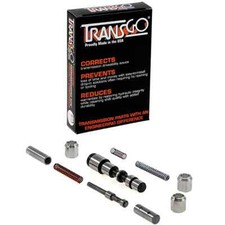
If the vacuum test and inspection point to one or two worn bores on an otherwise sound casting, the Sonnax oversized valve and sleeve kits above are the more economical fix: each is machined and hard-anodized slightly larger than stock to fill the worn bore, restoring the original seal without replacing the whole unit, though each kit needs its own specific installation tool to set the valve correctly. If the casting shows wear at several bores, if the conductor plate also needs replacing, or if you're already pricing out solenoids and a shift kit for the same job, a complete replacement valve body is usually the better call — you're not paying for four or five individual tools and kits, and you're not gambling on a casting that may have wear you haven't found yet. Either way, reset the TCM's adaptation values with a scan tool before the first road test; skipping that step leaves the computer compensating for the old hardware's wear characteristics against a freshly repaired valve body, which can look like a comeback when it's really just an adaptation issue.
| Symptom | Likely worn bore/part | Sonnax fix |
|---|---|---|
| 2-3 or 4-5 flare under load; neutral flare on 5-4/3-2 downshift | Working-pressure (line) regulating valve bore, outer section | 68942-07K oversized valve or 68942-06 oversized sleeve |
| Harsh, bumped, or flared 1-2 / 4-5 shift | 1-2/4-5 overlap sleeve & plunger / regulating valve | 68942-02 (sleeve) / 68942-19K (regulating valve) |
| Harsh, bumped, or flared 2-3 shift | 2-3 overlap sleeve & plunger / regulating valve | 68942-03 (sleeve) / 68942-27K (regulating valve) |
| Harsh, bumped, or flared 3-4 shift | 3-4 overlap sleeve & plunger / regulating valve | 68942-04 (sleeve) / 68942-31K (regulating valve) |
| Delayed engagement, 2-3/3-4/4-5 flare, no code (pre-2000 units) | Broken regulating pressure control valve spring | 68942-01 replacement spring |
| Delayed engagement, high stall speed, converter overheat | Lube pressure control valve, outboard or inboard spool wear | 68942-14K (valve) / 68942-17K (related regulating valve) |
Frequently Asked Questions
How do I know if a 722.6 problem is the valve body and not a solenoid or wiring fault?
A solenoid or wiring fault usually sets a specific solenoid-circuit code and the symptom tracks one gear range cleanly. A worn valve body bore tends to produce flare, soft shifts, or delayed engagement that shows up across multiple gear ranges, doesn't always set a hard code, and often gets worse as the transmission warms up and line pressure drops further. Ohm-testing the solenoids and checking the case connector first rules out the electrical side before you blame the casting.
What is the single most common valve body wear point on a 722.6?
The working-pressure (line pressure) regulating valve bore in the lower valve body. Its outer bore wears enough to let modulated signal oil leak past the boost end of the valve, which keeps line pressure from rising with engine load. That produces the classic 2-3 or 4-5 flare under acceleration and a neutral-feeling flare on 5-4 or 3-2 downshifts, and on high-mileage 1998-and-up units it can progress to limp mode.
Can a broken spring inside the valve body cause shifting problems on a 722.6?
Yes. The regulating pressure control valve spring on 1999-and-earlier units, which use two valves stacked in one bore, is known to fracture near its midpoint. The two broken halves can screw into each other and change the spring's effective length, which throws off line pressure regulation and shows up as delayed engagement or flare on the 2-3, 3-4, or 4-5 shift, with no wiring or solenoid fault involved at all.
Do I need a whole new valve body, or can the bores be repaired?
In most cases the casting can be salvaged. Sonnax sells oversized, hard-anodized replacement valves and sleeves sized to the actual worn bore for the line pressure valve, the overlap regulating valves, and the lube pressure control valve, each requiring its own installation tool. That is usually cheaper and faster than sourcing a full replacement valve body, unless the casting shows wear in several bores at once or the conductor plate and solenoids need replacing in the same job.
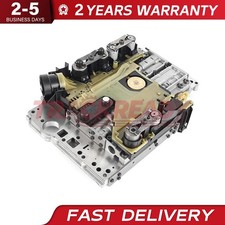
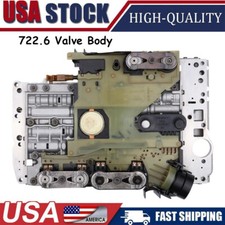
722.6 Valve Body
A direct replacement valve body for units with widespread bore wear, where repairing individual valves and sleeves no longer makes sense.
View the valve body →Sources
- Transmission Digest, "Mercedes 722.6, Daimler W5, Porsche W5, Jaguar 722.6," by Mio Cundl, June 1, 2009. Backs the working-pressure regulator bore wear mechanism, the pMod signal oil leaking past the boost end of the valve, the 2-3/4-5 flare and 5-4/3-2 neutral-flare symptoms, the limp-mode progression on high-mileage 1998+ units, and the 1-2/4-5, 2-3 and 3-4 overlap sleeve wear. transmissiondigest.com
- Sonnax Technical Resource 129, "Mercedes 722.6, Daimler W5, Porsche W5, Jaguar 722.6." Corroborates the valve body wear mechanisms and symptom set above from the parts-manufacturer side. sonnax.com
- Sonnax Industries, "722.6/NAG1 Critical Wear Areas & Vacuum Test Locations" (doc. 722_6_VacTestLocations, rev. 01-16-14). Backs the specific per-bore symptom lists and Sonnax part numbers cited throughout this article (68942-01 through 68942-31K), the vacuum-test diagnostic method, and the "OE valves tested in rest position, low vacuum reading indicates wear" testing standard. Sonnax vacuum test chart (PDF)
- Sonnax Part 2319, "Oversized Pressure Regulator Valve Kit" (68942-07K). Backs the oversized-valve repair for the line pressure regulating bore and its full symptom list (no 2-3 shift, 4-3 neutral, soft shifts, slip codes, delayed engagement, loss of lockup). sonnax.com
- Sonnax Part 2313, "Regulating Pressure Control Valve Spring" (68942-01). Backs the spring-fracture failure mechanism on 1999-and-earlier two-valve bores and its delayed-engagement/flare symptom list. sonnax.com
- TransGo Shift Kit Instructions, SK 722.6 (06 Sept 2016 revision). Backs the recommendation to reset TCC/TCM adaptation values with a scan tool after any valve body repair, and the broader context that O-ring and spring wear inside this valve body are routine service items, not rare failures. res.cloudinary.com (PDF)
Shop valve bodies, shift kits, solenoids and conductor plates for the 722.6, shipped fast from the USA.
Shop 722.6 parts →