Every 722.6 owner who calls a shop asks some version of the same question: what is this going to cost? The honest answer is that "722.6 rebuild" covers three very different repairs with very different price tags, and the single biggest mistake I see is a shop or a DIYer jumping straight to the most expensive one before confirming which failure they actually have. This transmission, built by Mercedes-Benz and also sold under the designations W5A580 and NAG1 in Chrysler, Jeep and Dodge products, has a handful of well-documented failure points, and most of them do not require touching the clutch packs or planetary gearsets inside the case.
This piece breaks the cost down by what actually fails, not a flat "rebuild" number, using the documented failure mechanisms from Transmission Digest and Sonnax, plus Daimler's own factory fluid and fill specifications.
The short version: Three cost tiers. Tier one is a conductor plate or sensor failure, which causes the classic second-gear-only limp mode and is by far the cheapest and most common 722.6 repair. Tier two is valve body work, worn overlap sleeves or a worn pressure regulator valve causing flare shifts, or a torque converter clutch problem causing shudder; the transmission usually still has to come out partway for this one. Tier three is a genuine internal rebuild, worn clutch packs, planetary damage or a failed torque converter, and it is the most expensive because it is a full transmission removal and teardown. Diagnose before you pay for tier three.

One Transmission, Three Names
Before pricing anything, confirm what you actually have. The 722.6 is Mercedes-Benz's internal type designation, running from 1996 production through later revisions covering dozens of sub-codes (722.600 through 722.699). The same hardware is classified W5A580 under Mercedes/Chrysler's shared naming system, where "W5A" means a 5-speed automatic and, per Sonnax, the last three digits give the maximum input torque in newton-meters. [2] In Chrysler products the unit is called the NAG1, from the German for "new automatic gearbox," version one; Sonnax lists the U.S. variants as the W5A580, W5A380, W5A330 and the Jeep W5J400. [2] All three names point at the same 5-speed, electronically controlled, hydraulically actuated transmission, and parts generally cross over between Mercedes and Chrysler applications once you match the correct valve body revision.
That interchange matters for cost. A conductor plate or valve body sourced for the NAG1 side of the family is typically cheaper than a Mercedes-branded part number for the identical physical component, because the Chrysler/Jeep/Dodge volume is much higher.
Tier 1: Conductor Plate and Electrical Failures
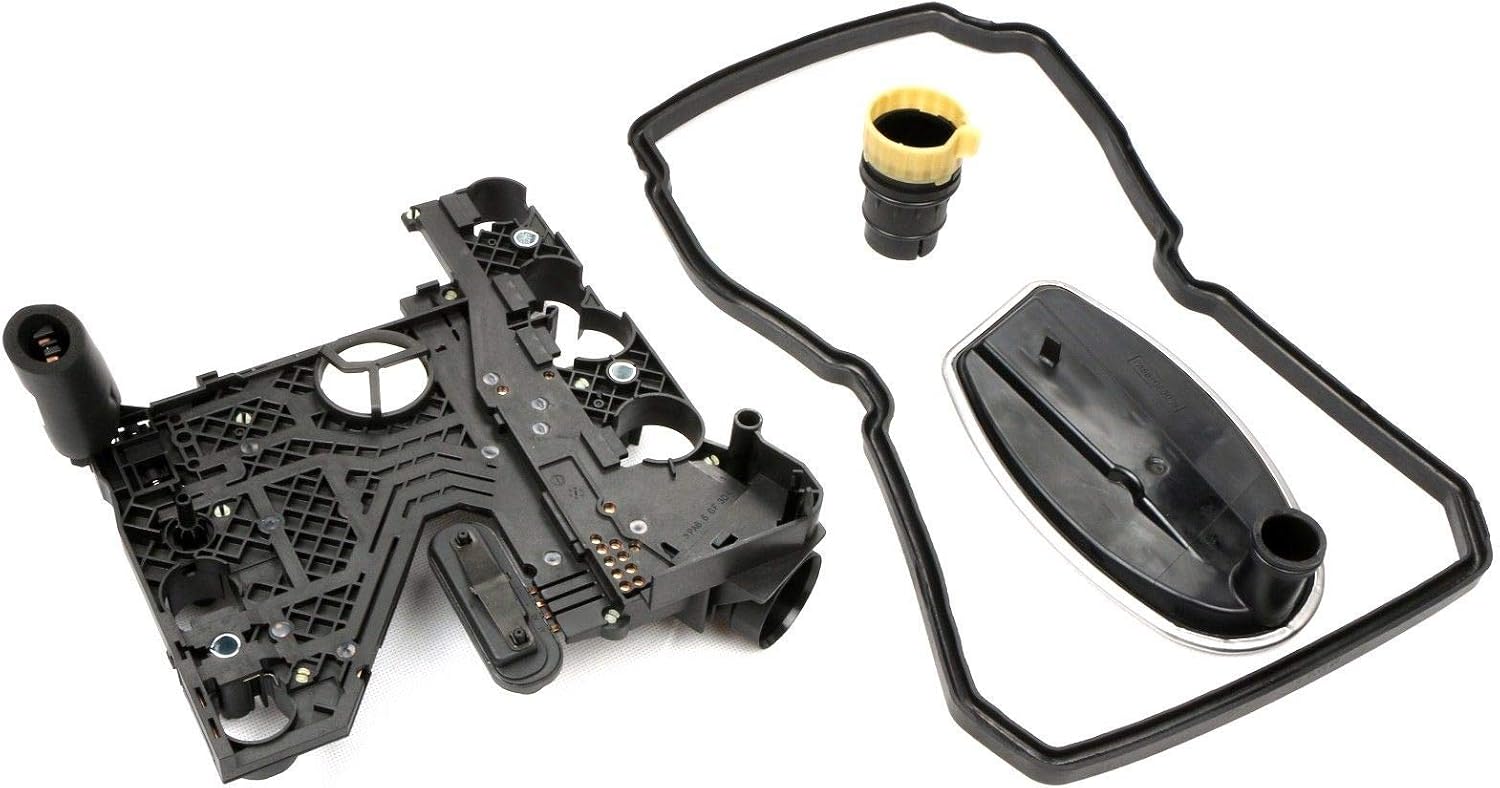
The conductor plate is a circuit board mounted directly on top of the valve body. It carries the input and output speed sensors and routes the PCM's solenoid commands into the hydraulic section. It is also the single most common point of failure on this transmission, and when it fails the transmission defaults into limp mode, typically locking the car in second gear with the shift indicator flashing or locked. Sonnax and Transmission Digest both identify a leaking transmission adapter plug or sleeve as a frequent root cause: the O-ring fails, fluid wicks up the wiring harness, and it reaches the conductor plate's exposed circuitry or the transmission control module, corroding contacts or shorting sensor signals.
This is the cheapest tier by a wide margin because the fix does not require opening the transmission case. The pan comes off, the old conductor plate, filter and pan gasket come out, the new assembly goes in, the fluid level gets reset, and the transmission's adaptive shift memory typically needs to relearn or be reset with a scan tool. Total shop time is usually measured in a couple of hours, most of it fluid service and reassembly rather than diagnostic time, which is why this repair costs a fraction of anything below.
Tier 2: Valve Body Wear and Torque Converter Issues
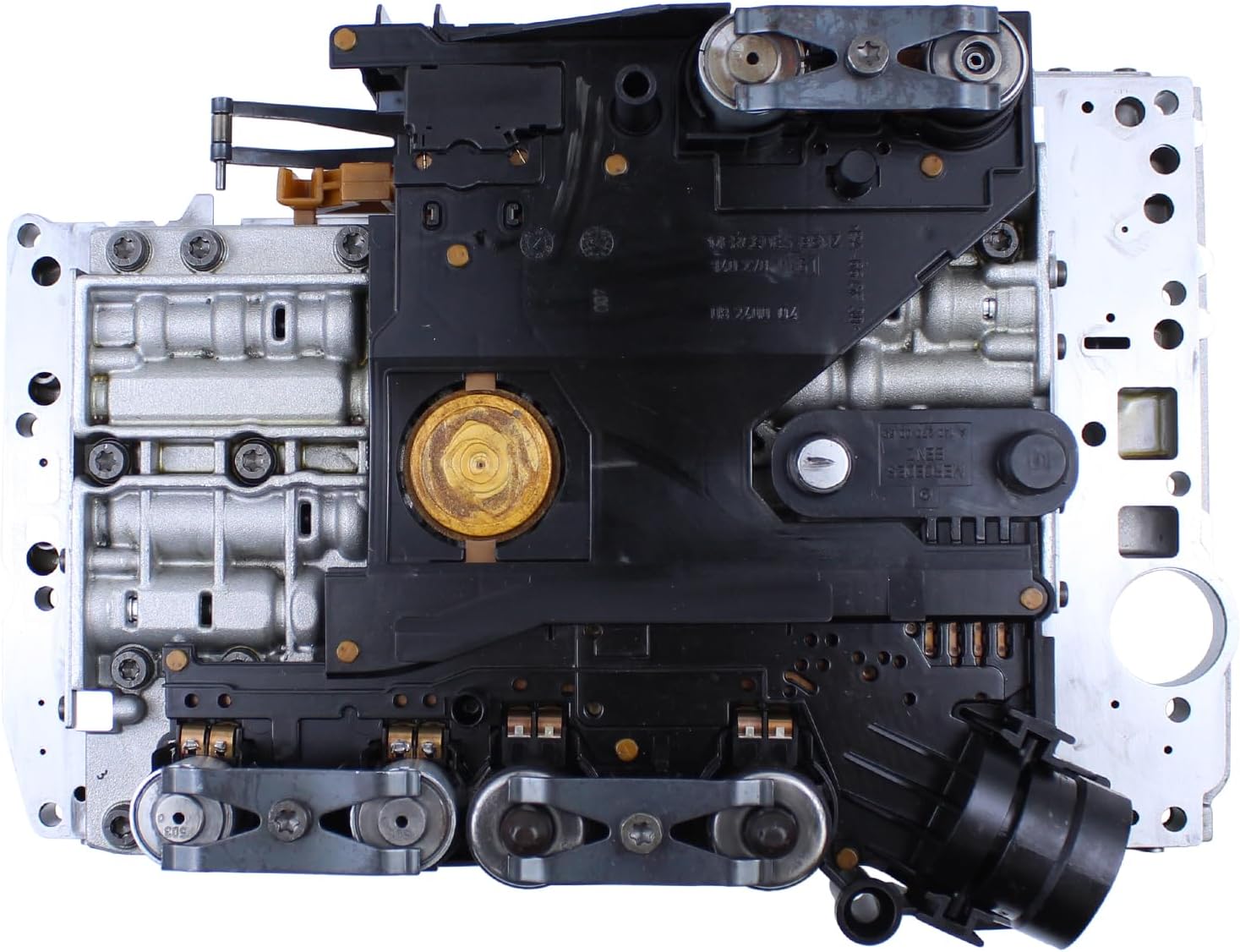
The next tier up is mechanical wear inside the valve body itself, and it produces a different symptom: not limp mode, but flare shifts, engine rpm flaring on the 2-3, 4-5 upshift or on 5-4, 3-2 downshifts. Transmission Digest traces this to the working-pressure regulator valve [1], whose outer bore wears because the valve design loads both ends of the bore unevenly. As the bore wears, pMod solenoid-signal oil leaks past the boost end of the valve, so working pressure stops rising with engine load and the shift flares or drops out of gear momentarily. A broken regulating pressure control valve spring produces a similar complaint on its own; the spring commonly breaks near the middle, and the two halves screw into each other and change the spring's effective length, which changes line pressure. [4] Sonnax lists that failure against delayed engagement into Drive or Reverse, 2-3, 3-4 and 4-5 flares and flared forced kickdowns, and its replacement spring (68942-01) fits '99-earlier units with two valves in the control pressure regulator bore, installs with the valve body in the car and needs no bore work. [4] That is the cheapest flare repair on this transmission, so rule it out before quoting a valve body.
A second wear point in the same family is the 1-2/4-5, 2-3 and 3-4 overlap control sleeves, which wear on their inside diameter and leak at the outside diameter, again reducing pressure at the working-pressure valve. Sonnax sells an oversized regulator valve kit specifically to repair the worn bore rather than replace the whole valve body casting, and separate oversized sleeve kits for the overlap bores, which is the parts-level version of the same repair a rebuilder does by hand.
Separately, this transmission uses a multi-disc torque converter clutch, which Transmission Digest notes was unusual for its era and depends on a tight hydraulic seal. A converter clutch that will not release cleanly, shudders on apply, or starves the cooler circuit of flow is a converter-level problem, not a valve body problem, and it is diagnosed differently: by the shudder's rpm/load signature and cooler flow testing rather than a scan-tool flare complaint.
Repair at this tier costs more than a conductor plate swap because the transmission typically has to come down out of the car, or at minimum the valve body has to be fully removed, inspected on a bench and either repaired with oversized valve/sleeve kits or replaced outright with a tested, updated assembly. Labor runs several times longer than a pan-and-conductor-plate job, which is the main reason this tier costs noticeably more even though the parts themselves are not dramatically more expensive.
Tier 3: Full Internal Rebuild
The most expensive tier is a genuine internal rebuild: worn or burnt clutch packs, planetary gear damage, a failed pump, or torque converter internals beyond the clutch seal. This only gets confirmed by pulling the transmission and tearing it down, or by a pressure test that rules out the valve body and points at clutch apply pressure instead. This is the tier where cost jumps the most, because it is full transmission removal, full disassembly, new frictions and steels, seals, a reconditioned or new torque converter, and full reassembly with the shift adapts reset. Labor alone on a job like this runs many times what a conductor plate swap takes, before parts are even counted.
This is also the tier most often oversold. If nobody has confirmed internal wear with a pressure test or teardown, and the complaint is limp mode or a flare shift, there is a real chance the fix is tier one or tier two, not tier three. Ask for the specific failure before agreeing to pay for a full rebuild.
| Tier | Typical symptom | What's actually repaired | Relative cost |
|---|---|---|---|
| 1. Conductor plate | Limp mode, stuck in 2nd gear | Conductor plate, filter, pan gasket; no case opening | Lowest |
| 2. Valve body / converter | Flare shifts, TCC shudder, cooler flow loss | Pressure regulator valve, overlap sleeves, or converter | Moderate |
| 3. Full rebuild | Confirmed internal wear via pressure test/teardown | Clutch packs, planetary, pump, converter internals | Highest |
Fluid: Get the Spec Right Before You Pay for Anything
Whatever tier your repair lands in, the fluid going back in matters, and the 722.6 is picky about it because it is tuned around a specific friction spec. Per Daimler's own Specifications for Operating Fluids sheet BB00.40-P-0236-14A, referenced directly on the factory oil-level-check procedure for transmission 722.6, the majority of 722.6 production calls for MB 236.14. Approved equivalents on the market include Fuchs Titan ATF 4134 and Pentosin ATF134. The 236.14 spec is backward compatible into older 722.6 and 722.3 applications originally filled with 236.10 or 236.12, meaning you can run the newer fluid in an older transmission, but never the reverse.
Capacity is not one number across the whole 722.6 family. Daimler's factory fill chart breaks it out by the specific transmission code stamped on the case and the vehicle it is installed in, and the initial charge capacity ranges from 7.3 liters up to 9.2 liters depending on which variant you have. The procedure itself is exact for a reason: this transmission is designed to be checked cold, at roughly 25 degrees C, against a "min/max" window on the dipstick, with a second, more precise check available at operating temperature above 80 degrees C using a scan tool to read actual fluid temperature. Guessing at the level with the engine cold and skipping the warm re-check is a common way to end up overfilled or underfilled after a service, which can itself cause shift complaints that look like a valve body problem.
Most 722.6 limp-mode calls are the conductor plate, not the case internals
If your 722.6 is stuck in second with a flashing shift indicator, start here before paying for anything bigger. This kit replaces the conductor plate, filter and pan gasket in one service, no case opening required.
View the conductor plate kit →Diagnose Before You Pay
The fastest way to overpay on this transmission is to let someone quote a full rebuild off a limp-mode complaint alone. A reasonable diagnostic sequence, in order:
- Pull codes and check the symptom. Second-gear-only limp mode with speed sensor or solenoid circuit codes points straight at the conductor plate.
- Check for a fluid-contaminated connector. A leaking adapter plug or sleeve lets fluid wick into the harness and cause intermittent electrical faults that mimic a bad conductor plate or a bad PCM.
- Road test for flare, not limp mode. Engine-speed flare on specific upshifts or downshifts, with no hard fault code, points at the valve body's working-pressure regulator valve or the overlap sleeves, not the conductor plate.
- Isolate converter shudder separately. A shudder under light throttle at steady highway speed is a torque converter clutch complaint, diagnosed by its rpm/load pattern and cooler flow, not by the shift-flare symptoms above.
- Confirm internal wear before a full rebuild. Only after the above are ruled out does a pressure test or teardown justify tier-three pricing.
Prevention
Most of what drives 722.6 repair cost up is deferred maintenance on the fluid and a leaking adapter seal that nobody caught early. Keep the correct 236.14-spec fluid in it, verify the level with the proper cold and warm checks rather than a quick cold-only guess, and if you ever see fluid residue near the case connector or transmission wiring harness, address that O-ring before it takes the conductor plate or control module down with it. A $20 seal caught early is a lot cheaper than the electrical damage it causes once fluid reaches the circuitry.
Need parts for this job? Conductor plates, valve bodies and master rebuild kits for the 722.6 and NAG1 family are all in one place. Shop 722.6 parts →
FAQ
How much does it cost to rebuild a 722.6 transmission?
It depends entirely on which failure you actually have. A conductor plate replacement, the single most common 722.6 repair, typically runs a few hundred dollars in parts plus an hour or two of labor. A valve body overhaul to fix flare shifts or torque-converter-clutch complaints costs more because the unit comes out partway. A full internal rebuild, with clutches, a reconditioned torque converter, planetary and pump, is the most expensive tier because it is a full transmission removal with 6 to 10 hours of shop labor on top of the parts.
What is the cheapest fix for a 722.6 stuck in second gear?
Stuck in second, also called limp mode, is the classic symptom of a failed conductor plate, the circuit board mounted on top of the valve body that carries the speed sensors and solenoid wiring. In most cases replacing just the conductor plate, filter and pan gasket restores normal operation without opening the transmission case, which is why it is the lowest-cost 722.6 repair by a wide margin.
What transmission fluid does a Mercedes 722.6 use?
Most 722.6 production calls for Mercedes-Benz fluid specification 236.14, per Daimler's own Specifications for Operating Fluids sheet BB00.40-P-0236-14A. Approved equivalents include Fuchs Titan ATF 4134 and Pentosin ATF134. The 236.14 spec is backward compatible into earlier 722.6 and 722.3 applications that called for 236.10 or 236.12, but you should never run an older spec fluid in a transmission built for the newer one.
Is it worth rebuilding a 722.6 or should I replace the whole transmission?
If the failure is electrical, conductor plate, sensors, or a worn valve body bore, rebuilding that specific assembly is almost always the right call because the rotating assembly inside the case is untouched. A full rebuild only makes sense once you have confirmed internal wear, worn clutch packs, a damaged planetary, or torque converter clutch failure, through a pressure test or teardown. Jumping straight to a full rebuild without that diagnosis step is how shops and DIYers overpay for a simple electrical fix.
How much transmission fluid does a 722.6 hold?
Capacity varies by the specific 722.6 variant and application. Daimler's factory fill chart lists initial charge capacities from 7.3 liters up to 9.2 liters depending on the transmission code and the vehicle it is installed in, so you need to confirm the exact transmission number, stamped on the case, before buying fluid or planning a service.
Sources
- Transmission Digest / ATRA — "Mercedes 722.6, Daimler W5, Porsche W5, Jaguar 722.6." Backs the working-pressure regulator valve bore wear mechanism causing 2-3/4-5 upshift and 5-4/3-2 downshift flare, the broken regulating pressure control valve spring failure, the 1-2/4-5, 2-3 and 3-4 overlap control sleeve wear points, the multi-disc torque converter clutch design, the conductor plate's input/output sensor role, and the leaking adapter plug/sleeve wicking fluid into the wiring. transmissiondigest.com
- Sonnax — same technical article, "Mercedes 722.6, Daimler W5, Porsche W5, Jaguar 722.6," tech resource #129. Corroborates the Transmission Digest failure analysis, backs the NAG1 name origin, the W5A torque-rating code and the U.S. NAG1 variant list (W5A580, W5A380, W5A330, W5J400), and backs Sonnax's oversized working-pressure regulator valve kit and overlap sleeve kits as the parts-level repair for the worn bores described. sonnax.com
- Daimler AG — Mercedes-Benz WIS document AR27.00-P-0100AC, "Check oil level in automatic transmission and correct if necessary," transmission 722.6. Backs the MB 236.14 fluid spec (sheet BB00.40-P-0236-14A) for the majority of 722.6 variants, the per-variant initial fill capacities from 7.3 to 9.2 liters, and the cold (25°C) versus warm (>80°C, Star Diagnosis-verified) dipstick check procedure. Factory WIS document (PDF)
- Sonnax — Regulating Pressure Control Valve Spring 68942-01 (722.6). Backs the OE spring breaking near its middle and the halves screwing together to change line pressure, the delayed engagement, 2-3 / 3-4 / 4-5 flare and flared kickdown symptoms, the fit on '99-earlier two-valve units only (not late single-valve castings), and in-car installation with no bore modification. sonnax.com
- w220.wiki — "WIS 27.00 Transmission Types" and "WIS 27.00 Transmission - General." Community-maintained mirror of Mercedes WIS service content; corroborates the 236.12/236.13 fluid measured at 35°C note for early 722.6 applications and the one-time fluid change service bulletin referenced for early production. w220.wiki