A shudder on torque converter lockup is one of the most misdiagnosed complaints on the Mercedes 722.6, because the symptom points at the converter but the first three things most shops swap — a TCC solenoid, a fluid and filter service, sometimes a whole valve body — are not where the problem usually lives. This unit has a well-documented, factory-level design quirk inside the torque converter itself that Sonnax has published detailed teardown data on, and understanding it is the difference between fixing the complaint once and chasing it for three visits.
This post is built from Sonnax's own two-part technical teardown of the 722.6 cold-stall/TCC shudder condition, Transmission Digest's coverage of the same failure, Sonnax's clutch release repair kit documentation, and Mercedes-Benz fluid specification data corroborated by a current MB-approved fluid maker. Sources are listed at the end.

Why This Symptom Gets Misdiagnosed
Torque converter clutch (TCC) shudder shows up as a light, buzzing vibration right around the speed and throttle position where the converter locks up — often 40-55 mph on a light cruise, sometimes on a 3-4 or 4-5 upshift, sometimes as a tugging sensation on deceleration as the TCC unlocks. On most transmissions that symptom sends a tech straight to fluid condition or a TCC solenoid, and on the 722.6 both of those genuinely can contribute. But Transmission Digest's coverage of this unit and Sonnax's own two-part teardown both point to something most techs don't expect: a structural weakness inside the converter itself that has nothing to do with the valve body or the control solenoid, and that no fluid change will fix.
The Root Cause: A Converter With No Positive Release
Sonnax's documentation explains that the 722.6 torque converter was never given a dedicated release-pressure circuit. Instead, the TCC piston is designed to let go purely by exhausting the apply-side oil back through the control circuit — there is no opposing pressure actively pushing the piston off the clutch surface. That design works fine as long as the apply circuit exhausts cleanly. The problem is what happens once the unit has some miles on it: residual oil gets trapped in the cavity between the TCC piston and the converter cover, and centrifugal force acting on that trapped oil pushes the piston back toward apply even when the control circuit has fully exhausted. The clutch partially grabs and releases instead of cleanly locking and unlocking, and the driver feels it as a shudder.
The oil gets into that cavity in the first place because of input shaft sealing ring wear. Sonnax's teardown data gives real numbers here: factory tolerance on those sealing ring bores is around .002" of clearance, and worn units they measured came in as loose as .021" — roughly ten times the factory spec — which Sonnax calculated allows about 7.5 gallons per minute of cross-leakage past the rings. Early-production sealing rings, a dark gray, scarf-cut design, are documented as more prone to this cross-leak than the later tan, interlocking-cut rings Mercedes moved to, and several vehicles in Sonnax's case data had their cold-stall complaint resolved simply by updating to the later ring design during a converter rebuild.
How Clutch Wear Makes It Worse Over Time
The second half of Sonnax's documentation covers what happens to the friction material itself. Their teardown measurements found up to 0.040" of wear on individual TCC friction plates, and noted that thickness uniformity and parallelism across the pack directly affects whether the trapped-oil condition produces a stall or a shudder. As the friction plates wear, the piston has to travel further to reach the clutch hub and can end up running closer to, or even lightly contacting, the hub even when it should be fully released — which both reduces the clamping force available when the clutch is actually commanded on and makes the trapped-oil condition worse, since the worn clearances change how oil moves through the cavity. This is the mechanical reason the complaint tends to start subtle (a faint buzz on lockup) and get progressively worse with mileage rather than appearing suddenly.
The Permanent Fix: Forcing the Oil Out
Sonnax's resolution for both the cold-stall and shudder presentations of this condition is mechanical, not hydraulic: a modified middle steel clutch plate with ten notched lugs that accommodate a set of piston return springs, so the piston is physically pushed back and the trapped oil in the piston-to-cover cavity is purged every time the clutch releases, instead of depending on centrifugal force to let go on its own. Sonnax packages this as its MB-CP-11KA clutch release kit — ten release springs at .510" free length plus two notched steel clutch plates — built specifically for 722.6/722.9 converters using the three-friction-plate clutch pack (a separate, shorter-spring version, MB-CP-10KA, exists for the earlier two-plate converters). Sonnax's own fitment notes are explicit that installing this kit should be paired with replacing the worn input shaft sealing rings with the updated tan interlock-cut design, since fixing one wear path without the other leaves the cross-leakage that caused the problem in the first place.
This is converter disassembly and rebuild work. It requires opening the torque converter, which on most 722.6 units means separating a welded or riveted shell, replacing the clutch pack and sealing rings, and rewelding or re-securing the housing with the correct tooling and balance check before it goes back in the car. That is a job for a shop or supplier set up to rebuild torque converters specifically — it is not a bolt-on parts swap, and it is not something we stock, since we don't carry torque converters or converter-internal rebuild components.
What You Can Actually Fix With Parts (Rule These Out First)
Before sending a converter out for rebuild, Sonnax and Transmission Digest both flag several compounding causes that produce an identical-feeling shudder and that are straightforward, stocked repairs. Rule these out in order, because fixing one of these can resolve a borderline case on its own, and at minimum it tells you clearly that what's left is the converter itself:
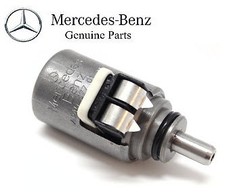
- TCC solenoid condition. A sticking or electrically weak TCC solenoid changes how smoothly the apply circuit fills and bleeds down, which can produce a shudder that feels identical to the converter's trapped-oil condition. It's the cheapest single part to check and replace. Keith Clark's NAG1 shudder write-up in ATRA's GEARS Magazine (March 2023) adds that the solenoid's O-rings go brittle and leak with age, so inspect them every time it comes out.
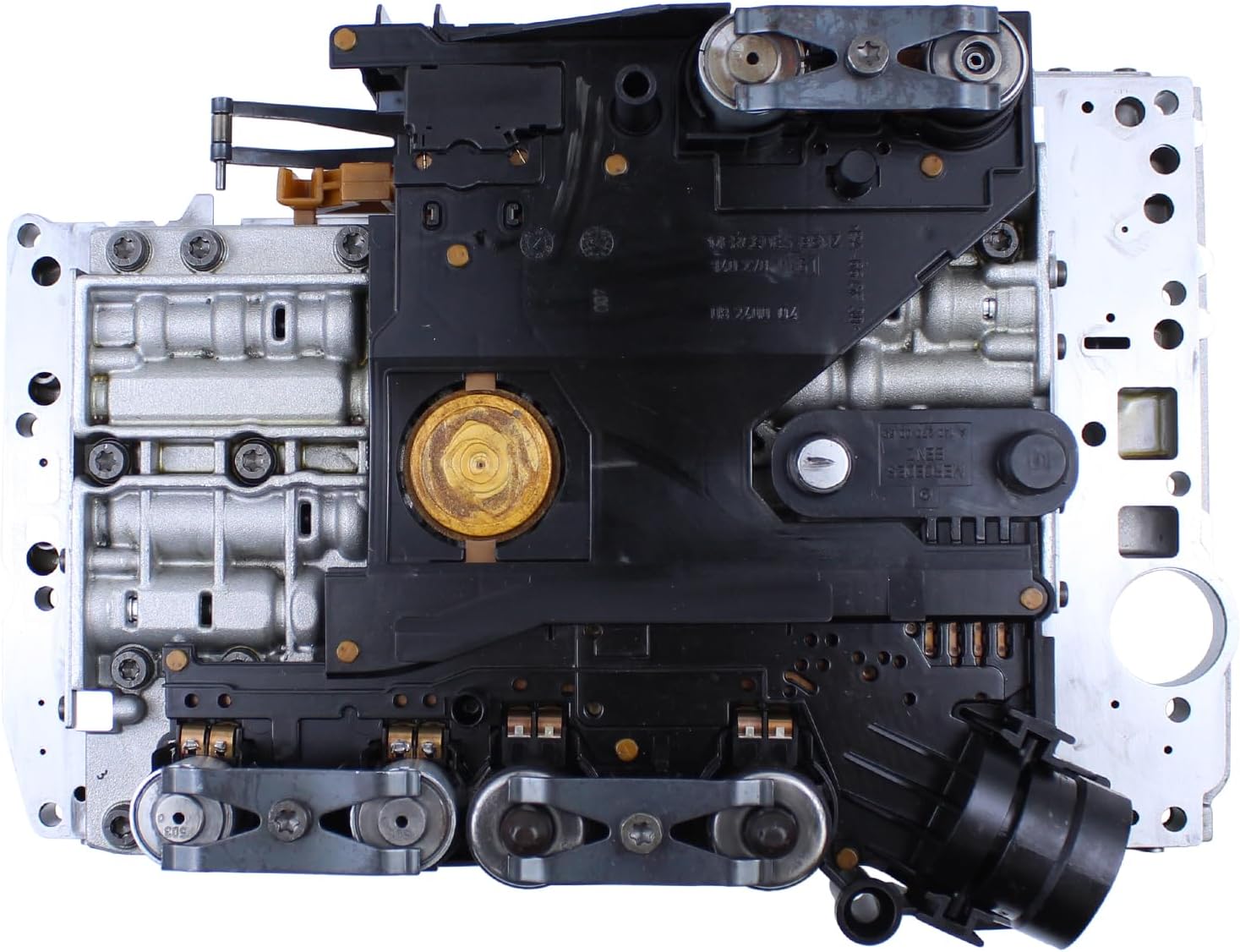
- TCC control valve and TCC damper valve wear in the valve body. Both circuits regulate how the apply pressure ramps and releases; wear or sticking in either valve changes lockup apply quality independent of anything happening inside the converter.
- Lube pressure regulator valve bore wear. This bore sits in the same wear-prone area of the valve body casting that Sonnax documents for other 722.6 complaints, and when it wears it changes system pressures broadly enough to affect how firmly and how smoothly the TCC applies.
- Cooler circuit cross-contamination and fluid condition. Debris or degraded fluid moving through the cooler circuit changes friction coefficient at the TCC clutch surface. A full drain, filter and fluid service with the correct spec fluid is cheap insurance and should be done regardless of what else is found.
Fluid Matters More Than Most Techs Assume
The 722.6 is factory-specified for Mercedes-Benz fluid sheet 236.14, which is backward compatible with the earlier 236.12 specification; both are thinner, friction-modified fluids distinct from the 236.15 and 236.16 fluids used on later 722.9 and 725.0 units. Liqui Moly's current Top Tec ATF 1600, which carries active MB-Approval 236.14 and is listed as suitable for the 236.12 requirement, is one of several fluids that correctly meet this spec. Using a fluid without the correct friction-modifier package won't create a shudder in a converter with healthy clearances, but in a unit that already has some sealing ring or clutch wear, the wrong fluid removes the small margin that may have been masking the condition, and a correct fluid and filter service is part of ruling fluid-related causes out before committing to a converter rebuild.
How to Work the Diagnosis in Order
- Confirm the shudder pattern. Note the exact speed, throttle position and whether it happens on lockup apply, lockup release, or both — this helps separate a converter issue from a shift-quality issue elsewhere in the valve body. Per GEARS Magazine (Clark, March 2023), lockup normally applies at about 35 to 50 mph under moderate throttle on this family, so drive it from a cold start all the way to operating temperature and graph commanded TCC state against TCC slip in that band. If the shudder only shows up from a stop, before lockup, look at the engine, mounts and driveline instead; our 722.6 shudder on acceleration guide walks through that split.
- Check fluid level and condition, and confirm it's the correct MB 236.12/236.14 spec fluid. Service it if there's any doubt, since this is the cheapest step and rules out a real contributing cause.
- Scan for codes and test the TCC solenoid on the bench or with a scan tool commanded test, since a sticking or weak solenoid produces the same symptom and is the next cheapest part to rule out. If P0741 is stored, know how it sets: per Rob Faucett's NAG1/722.6 case in GEARS Magazine (December 2020), actual converter slip has to exceed 60 rpm while the TCM is in slip mode, three times in one key cycle. His converter passed an air check at 35 psi but blew back at full shop air and turned out to have a cracked piston, so a low-pressure air test alone does not clear the converter.
- Inspect or test the valve body's TCC control valve, TCC damper valve and lube pressure regulator bore for the documented wear patterns, especially if the complaint has no stored code.
- If everything above checks out clean, the remaining cause is the converter itself — send it to a converter rebuilder for teardown, sealing ring replacement, and the notched clutch release kit repair.
The Fix and What It Costs
If a TCC solenoid is the cause, that's typically a $130-$150 part plus the labor to drop the pan and valve body — the least expensive outcome. If the valve body itself has worn TCC control, damper or regulator valve bores, a direct-fit replacement valve body with solenoids is the more reliable repair most independent shops choose over reaming and sleeving individual bores. A full fluid, filter and cooler service with the correct MB-spec fluid runs a few hundred dollars in parts and should be done either way. If none of that resolves it, the converter has to come out and go to a rebuilder for the sealing ring and clutch release kit repair — budget for converter rebuild labor and parts on top of the R&R to pull and reinstall the transmission, since this is not a repair that can be done with the unit still in the car.
722.6 TCC Solenoid and Valve Body
The two most common fixable, non-converter causes of 722.6 lockup shudder — check these before sending a converter out for rebuild.
Shop 722.6 rebuild parts on CoreTransmissionParts →Shop 722.6 parts →
Frequently Asked Questions
Why does my 722.6 shudder when the torque converter locks up?
On most 722.6 units the shudder traces back to a converter design that has no dedicated release-pressure circuit; it relies entirely on exhausting the apply circuit to let go. Once the input shaft sealing rings wear, apply-circuit oil leaks into the cavity behind the TCC piston and gets trapped there by centrifugal force, so the clutch partially grabs and releases instead of locking up cleanly. Worn valve body components, a sticking TCC solenoid, or the wrong fluid can all make the same symptom worse, which is why the diagnosis has to rule those in or out before blaming the converter.
Is this the same as the 722.6 cold-stall problem?
Yes, they are the same underlying mechanical condition showing up in different ways. Sonnax's own documentation on this unit describes trapped oil applying the TCC piston at idle, which stalls a cold engine the instant it's put in gear. The identical trapped-oil condition, worsened by friction plate wear, also produces shudder on lockup apply and release, downshift shudder, tugging, and flared upshifts at normal operating temperature. A shop that has only seen the cold-stall version may not immediately connect a highway shudder complaint to the same cause.
Could a bad TCC solenoid cause this instead of the converter?
It can contribute, and it's the cheapest thing to rule out first. A sticking or electrically failing TCC solenoid changes how smoothly the apply circuit fills and exhausts, which can produce a shudder that looks identical to the converter's trapped-oil condition. The difference is that a solenoid or valve body problem is fully fixed by replacing that part, while the classic 722.6 shudder keeps coming back after a solenoid swap because the actual trapped oil is still sealed inside the converter.
What actually fixes 722.6 torque converter shudder for good?
The permanent fix documented by Sonnax is a converter-internal repair: the torque converter has to be opened, the worn input shaft sealing rings replaced with the later tan interlock-style rings, and a notched clutch release kit installed so the piston mechanically purges trapped oil on release instead of relying on centrifugal force to let go on its own. That is converter disassembly and rebuild work, done by a shop or supplier that rebuilds torque converters. Alongside it, replace a worn valve body or TCC solenoid and do a full fluid and cooler service, since those are common compounding causes that are easy to fix on their own.
Does the wrong transmission fluid cause TCC shudder on a 722.6?
It can make an existing shudder noticeably worse. The 722.6 is specified for Mercedes-Benz sheet 236.14 fluid (backward compatible with 236.12), and using a fluid with the wrong friction modifier package changes how the TCC clutch grabs and releases, which can turn a marginal trapped-oil condition into a clearly noticeable shudder. It will not cause shudder in a converter that has no wear, but it removes the margin that was masking early wear in one that does.
Sources
- Sonnax — "Mercedes 722.6 Cold Stall/TCC Shudder, Part 1." Backs the no-positive-release converter design, the input shaft sealing ring wear data (.002" factory clearance vs. up to .021" measured on worn units, roughly 7.5 GPM of cross-leakage), and the dark gray scarf-cut vs. tan interlock-cut sealing ring distinction. sonnax.com
- Sonnax — "Mercedes 722.6 Cold Stall/TCC Shudder, Part 2." Backs the friction plate wear measurements (up to 0.040" per plate), the thickness-uniformity/parallelism effect on stall vs. shudder presentation, and the notched middle steel plate and piston return spring repair concept. sonnax.com
- Sonnax — MB-CP-11KA Clutch Release Kit product documentation. Backs the ten .510" release springs plus two notched steel clutch plate specification, the 722.6/722.9 three-friction-plate application, and the documented symptom list of cold engine stall, shudder, engine lugging and clutch wear. sonnax.com
- Transmission Digest — "Mercedes 722.6: Cold Stall/TCC Shudder." Backs the broader symptom set (downshift shudders, tugging sensations, upshift flares, low-speed vibration) and the characterization of this as a long-documented, factory-level design issue across 722.6-equipped models. transmissiondigest.com
- Liqui Moly — Top Tec ATF 1600 technical product page. Backs the current MB-Approval 236.14 specification and 236.12 compatibility used to confirm correct 722.6 fluid specification and its distinction from the 236.15/236.16 fluids used on later Mercedes units. liqui-moly.com
- ATRA, GEARS Magazine — Keith Clark, "Nagging TCC Issues! NAG1 TCC Shudder Complaints" (March 2023). Backs the 35-50 mph lockup window, the cold-to-hot road test while graphing TCC command against slip, and TCC solenoid O-rings going brittle and leaking. gearsmagazine.com
- ATRA, GEARS Magazine — Rob Faucett, "Nag 1/722.6 P0741 TCC Slip" (December 2020). Backs the P0741 set conditions (over 60 rpm actual slip in slip mode, three times per key cycle) and the converter that passed at 35 psi but failed at full shop air with a cracked piston. gearsmagazine.com
Shop 722.x TCC solenoids, valve bodies and fluid service kits, shipped fast from the USA.
Shop 722.x parts →