A Mercedes 722.6 that won't climb into 5th shows up two ways on the bench: either the car never gets there at all and sits turning high RPM on the highway, or it hunts, flares into 5th and drops back out. Both point at the same part of the transmission. Fifth gear on this unit is not its own separate system — it rides on the exact same clutch group and shift solenoid that make the 1-2 shift. That single fact rules out or rules in most of the usual suspects before you ever pull a pan.
This post works through the real failure modes in order of how often they actually show up on a 722.6: a bad conductor plate taking out a sensor or solenoid circuit, wear inside the valve body's pressure regulator bore, and the mechanical clutch/brake hardware itself. It's built from Transmission Digest's factory-sourced breakdown of the 722.6 shift strategy, Sonnax's documented valve body wear modes for this unit, and Mercedes-Benz's own fluid service bulletin. Sources are listed at the end.
Why the 1-2 Shift Matters When You're Diagnosing 5th Gear
Transmission Digest's technical breakdown of the 722.6, written from the factory shift strategy, lays out how this transmission achieves its five forward speeds with only three shift solenoids. Each solenoid controls one "shift group" — a specific set of clutches, brakes and hydraulic valves — and some shift groups do double duty. The group that matters here is K1/B1: it uses the K1 clutch, the B1 brake, a set of 1-2/4-5 command and shift-pressure valves, and a single shift solenoid, Y3/6y3, to control both the 1-2 upshift/2-1 downshift and the 4-5 upshift/5-4 downshift.
That shared hardware is the single most useful diagnostic fact on this unit. If the 1-2 shift is clean, quick and firm, the K1 clutch, B1 brake and Y3/6y3 solenoid itself are almost certainly fine mechanically and electrically — which means a missing or flared 4-5 shift is more likely a valve body wear condition in the shared pMod/overlap circuit, a conductor plate fault feeding bad sensor data to the TCM, or a programming/adaptation issue, not a dead clutch pack. If the 1-2 shift is also rough, flared or missing, you're looking at the shared mechanical hardware directly.
The other two solenoids — the 2-3 (Y3/6y5) and 3-4 (Y3/6y4) — have nothing to do with the 4-5 shift, so a clean 2-3 and 3-4 shift tells you very little about why 5th isn't engaging.
Cause 1: Conductor Plate Failure (Most Common)
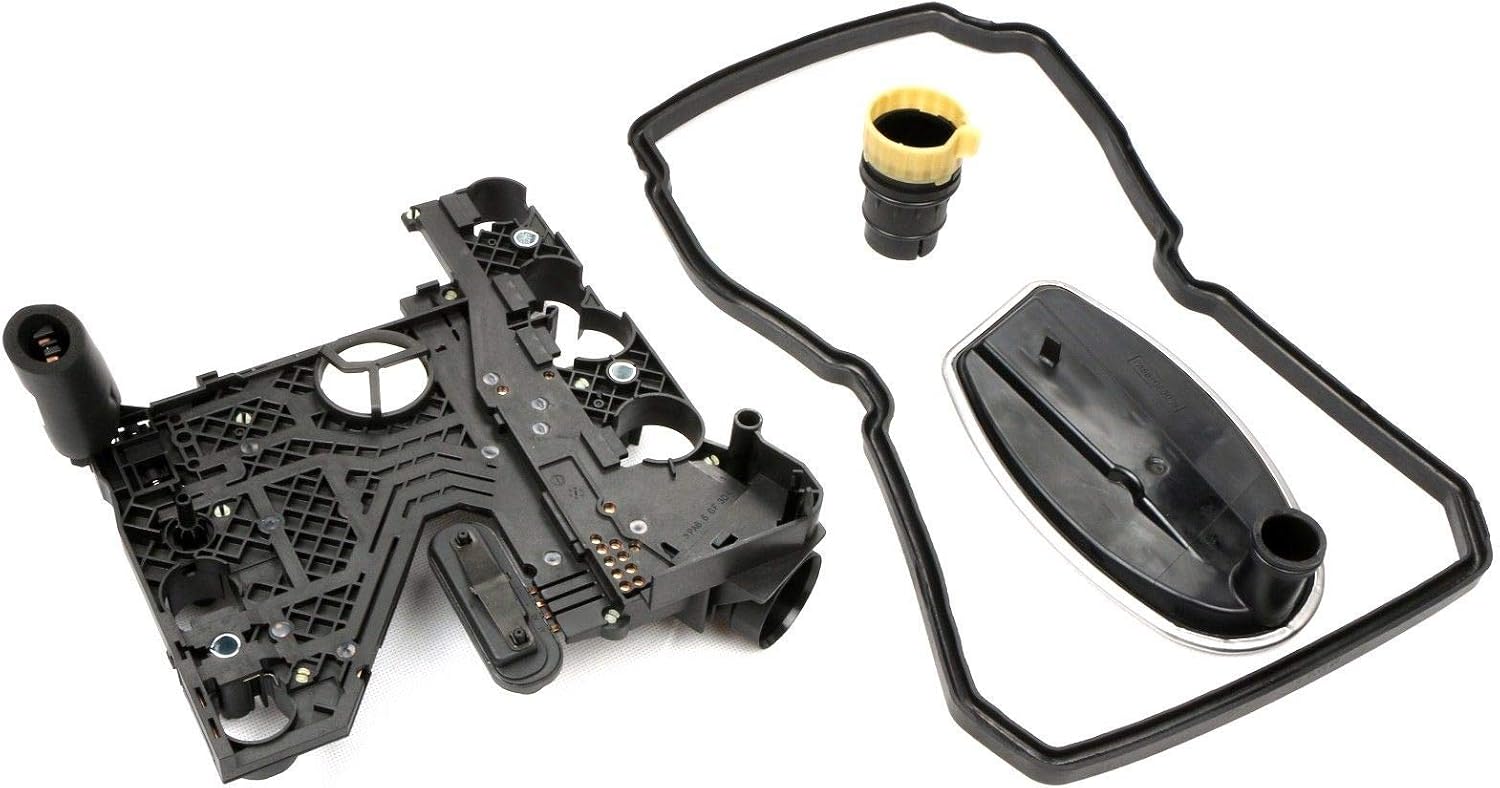
The conductor plate is the internal wiring harness and connector board bolted inside the valve body. It carries signal and control wiring for both input/output speed sensors and all six solenoids between the external 13-pin connector and the valve body itself. On the 722.6 it is a documented high-failure part: the plastic housing and internal traces crack and corrode from years of ATF heat cycling, and the contacts in the 13-pin connector itself wear and lose continuity.
When a conductor plate fault drops a speed-sensor signal or a solenoid circuit, the TCM treats it as a safety fault and fails the transmission safe. According to the shift-solenoid logic in Transmission Digest's breakdown, each shift solenoid is simply toggled on or off to make its one shift and otherwise sits idle while the transmission holds a gear — which is why, when the TCM detects the fault, the transmission holds whatever gear it was in at that moment, and will default to second gear if the ignition is cycled afterward. Drivers typically describe this as the engine revving to 4,000+ RPM with the car capped around 25-30 mph, a check engine light, and a transmission warning lamp. It will never reach 5th in this state because the TCM has stopped commanding any further upshifts.
A conductor plate fault often sets speed-sensor codes (input/turbine sensor circuit or output sensor circuit faults) even though the sensors themselves test fine on the bench, because the break is in the plate's wiring or connector, not the sensor. Confirm this before condemning a sensor: wiggle-test the 13-pin connector and conductor plate wiring with a scope or meter while watching the live sensor PIDs on a scan tool.
Cause 2: Worn Pressure Regulator Bore (No Code, Shift-Feel Complaint)
If the conductor plate and sensors check out, the next place to look is the valve body itself. Sonnax documents a specific, common wear condition on the 722.6: the outer bore of the working pressure regulator valve wears oversize, which lets modulated solenoid feed pressure (pMod signal oil) leak past the valve's boost end instead of doing its job. The direct result is that working/line pressure stops increasing properly with engine load. Sonnax's listed symptoms for this exact wear condition are delayed engagement, flare shifts, low line rise, long shift duration and shift-related trouble codes — and because the 1-2/4-5 overlap circuit shares this same modulated-pressure signal oil, a worn bore here can manifest as a weak, flared, or missing 4-5 shift specifically, even while lower gears feel mostly normal.
Sonnax also documents wear specifically at the 1-2/4-5 overlap control sleeve — the sleeve inside the valve body that manages shift overlap timing for this exact shift group. Continuous plunger oscillation wears the sleeve's I.D. over time and lets oil escape the bore instead of being directed to control the clutch/brake overlap. Sonnax lists the symptoms for this wear as 1-2 flare, bump shifts, harsh shifts and slipping gears — again centered on the K1/B1 shift group that also runs 5th gear.
This is a mechanical wear condition, not a broken circuit, so it will frequently show no fault code at all. The way to catch it is a line-pressure test or a scan-tool pressure/adaptation readout under load, not a code scan alone.
Cause 3: Clutch/Brake Hardware (K1 Clutch or B1 Brake)
If the 1-2 shift itself is also flared, slipping or missing — not just the 4-5 shift — the K1 clutch pack or B1 brake has worn friction material or the apply piston seals have failed. Because these are the same physical components used for both shifts, a true hardware failure here will almost never show up as "5th gear only." If you genuinely have a clean 1-2 shift and a dead 5th, put your diagnostic time into the conductor plate and valve body first; a worn K1/B1 clutch pack in isolation to just 5th gear is not consistent with how this transmission is built.
How to Work the Diagnosis in Order
- Scan for codes first. Speed-sensor circuit codes (input/turbine or output) point to the conductor plate or sensor wiring before anything else. A P-code specific to the 1-2/4-5 solenoid circuit points the same direction.
- Check fluid level and condition. A low fluid level from a leaking conductor plate seal or a worn pan gasket is a documented, simple cause of shift complaints on this family and costs nothing to rule out.
- Road-test the 1-2 shift specifically. Clean 1-2 shift with a dead or flared 4-5 points at the valve body's shared pressure circuit or the conductor plate feeding bad data, not the clutch hardware.
- Pull a line-pressure reading under load if available. Low or non-rising working pressure under throttle confirms the Sonnax-documented pressure regulator bore wear condition even with no code set.
- Inspect the conductor plate and 13-pin connector visually and with a meter for cracked housing, corrosion, and continuity across every pin before replacing anything in the valve body.
The Fix
If the conductor plate is the root cause, it is a bolt-in replacement once the valve body is dropped and the pan is off — no rebuild required. This is by far the highest-odds first repair on a 722.6 with this complaint. If the conductor plate and sensors test clean but pressure testing confirms worn pressure-regulator or overlap-sleeve bores, the valve body needs the worn bores restored with oversized valve/sleeve kits or replaced outright. If the K1 clutch or B1 brake is physically worn, that is an in-the-case repair requiring the transmission to come out.
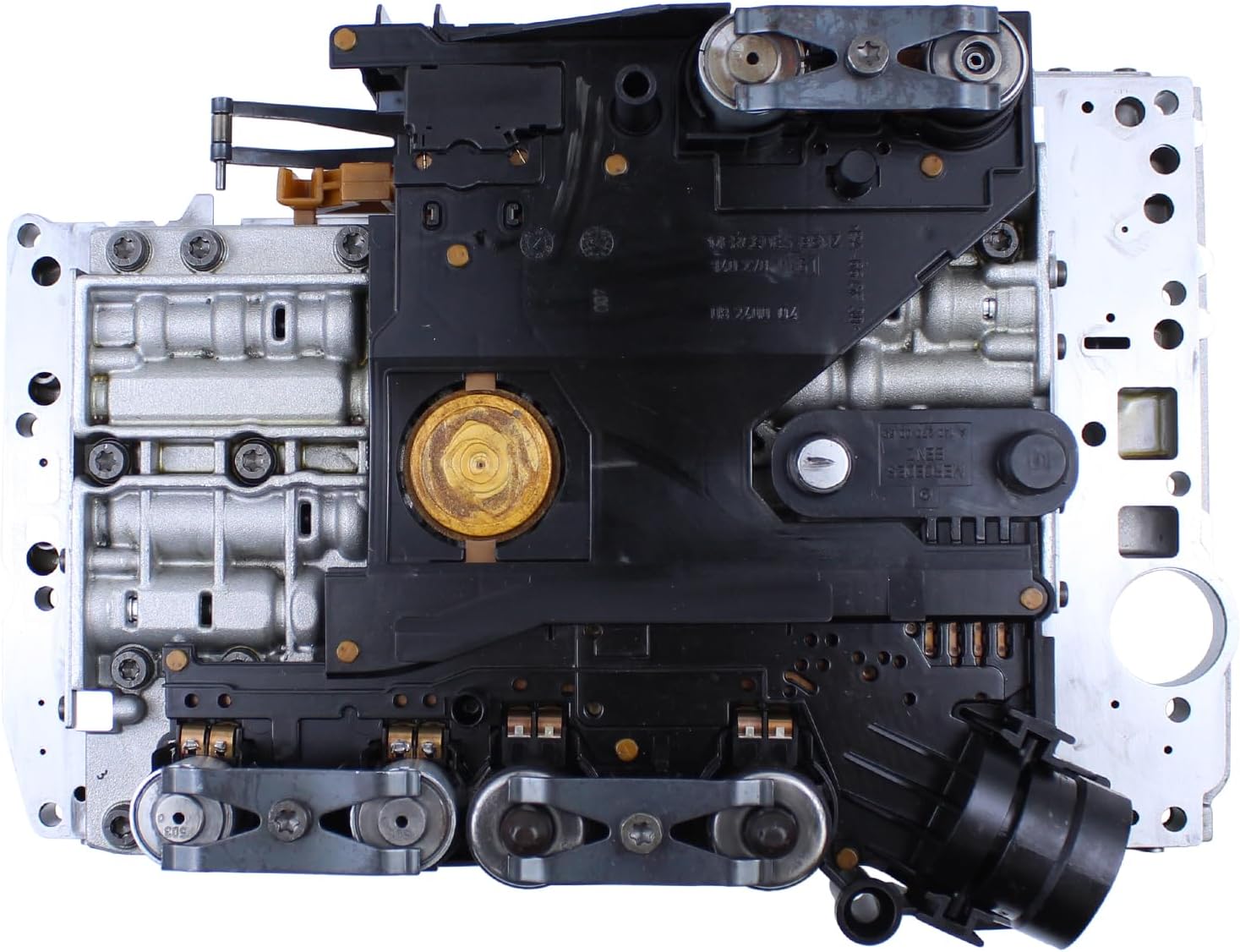
722.6 Transmission Valve Body with Solenoids
A direct-fit replacement valve body with solenoids for the 722.6, for cases where the pressure-regulator or overlap-sleeve bores are worn beyond a sleeve-kit repair.
View the 722.6 valve body →Shop 722.6 parts →
Frequently Asked Questions
Why won't my Mercedes 722.6 shift into 5th gear?
The two most common causes are a conductor plate failure that drops a speed-sensor or solenoid circuit and forces the TCM into a fail-safe gear, or wear in the K1/B1 shift group that also handles the 1-2 shift. Because the same shift solenoid (Y3/6y3) and valve set control both the 1-2 and 4-5 shifts, a problem here can show up as a missing or flared 4-5 shift even when 1-2 still feels normal at low speed.
What gear does a 722.6 default to in limp mode?
Per the shift-solenoid logic described in Transmission Digest's factory-sourced breakdown, the shift solenoids are toggled on or off to make a shift and stay in whatever state they were in while the transmission holds a gear. When the TCM detects a fault and fails safe, the transmission holds whatever gear it was in at the moment of the fault, and if the ignition is cycled afterward it defaults to second gear. Drivers describe this as high RPM and a top speed capped around 25-30 mph.
Is the conductor plate the same as the valve body?
No. The conductor plate is the internal wiring harness and connector board bolted to the valve body. It carries the signals for the two speed sensors and the transmission's solenoids between the 13-pin external connector and the valve body. It is a separate, replaceable part from the valve body itself, and on the 722.6 it fails far more often than the solenoids or valves it feeds.
What fluid does a 722.6 use?
Mercedes-Benz star bulletin S-B-00.40/89d specifies ATF 134 (BeVo sheet 236.14), red in color, part number A001 989 68 03 10, for every 722.6. Do not substitute the blue FE-ATF 134 (236.15) used on later 722.9 units; the bulletin explicitly states 722.6 and early 722.9 units may not be filled with it.
Can a worn valve body cause a no-overdrive complaint without throwing a code?
Yes. Sonnax's documented failure mode for the 722.6 pressure regulator valve bore is wear that lets modulated solenoid feed pressure leak past the valve, dropping line pressure and causing delayed engagement, flare shifts and long shift duration. This is a mechanical wear condition inside the valve body, so it will not always set a DTC. A line-pressure or capture-test on a scan tool, not just a code read, is how you catch it.
Sources
- Transmission Digest — Wayne Colonna, "The 722.6 Shift Strategy" (February 1, 2005). Backs the three-shift-solenoid layout, the K1/B1 shift group controlling both the 1-2 and 4-5 shifts via solenoid Y3/6y3, the toggled on/off solenoid logic, and the fail-safe behavior of holding the current gear and defaulting to second gear on ignition cycle. transmissiondigest.com
- Sonnax — Oversized Pressure Regulator Valve Kit, part 68942-07K, 722.6/722.9 application. Backs the documented pressure regulator bore wear condition, its cause (modulated solenoid feed pressure leaking past the valve, reducing line pressure), and the listed symptoms of delayed engagement, flare shifts, low line rise and long shift duration. sonnax.com
- Sonnax — 1-2/4-5 Overlap Control Sleeve Kit, part 68942-02, 722.6 application. Backs the documented overlap-sleeve wear condition from continuous plunger oscillation and its listed symptoms of 1-2 flare, bump shifts, harsh shifts and slipping gears, tied to the same K1/B1 shift group. sonnax.com
- Mercedes-Benz USA / Mercedes-Benz Canada — Star Bulletin S-B-00.40/89d, "Operating Fluid Specification Changes for Automatic Transmission" (November 6, 2013). Backs the 722.6 fluid specification: ATF 134, BeVo sheet 236.14, red color, part number A001 989 68 03 10, and the incompatibility note against the blue 236.15 fluid. static.nhtsa.gov (PDF)
- Sonnax — 722.6 / Daimler W5A580 / Porsche W5 / Jaguar 722.6 unit reference page. Backs the valve body wear points generally and the relationship between pMod signal oil leakage and flare or lost-gear complaints, including the documented path into limp mode. sonnax.com
Shop 722.x conductor plates, solenoid kits, valve bodies and rebuild kits, shipped fast from the USA.
Shop 722.x parts →