A 722.6 that shudders when you lean on the throttle is one of the most common complaints on this five-speed, and one of the most misdiagnosed. The same unit sits behind Mercedes passenger cars, the Sprinter, and the Chrysler NAG1 (W5A580/W5A380) applications in Chargers, 300s and Jeeps, so the shudder shows up in a lot of bays. The problem is that "shudder on acceleration" is really four different faults that feel almost the same from the driver's seat: a converter clutch that is not getting enough apply pressure, a converter that is leaking apply oil, an engine misfire that the locked converter passes straight into the body, and a driveline or mount problem that has nothing to do with the transmission at all.
This page sorts those four apart before anybody spends money: how the converter clutch applies, which hydraulic faults cause apply shudder, and the scan-data checks that separate a transmission problem from an engine or driveline problem. If your complaint is specifically the cold stall and tugging on downshift, read our companion piece on 722.6 torque converter shudder after this one; that page goes deep on the trapped-oil release problem.
When the Shudder Happens Tells You Most of the Story
The single most useful piece of information is the road speed and throttle position where the shudder lives. On this transmission family the converter clutch normally applies between roughly 35 and 50 mph under moderate acceleration, and under light throttle it can be commanded on as early as 2nd gear, per Keith Clark's NAG1 shudder write-up in ATRA's GEARS Magazine (March 2023). Sonnax lists the classic 722.6 complaint even more tightly: TCC shudder or drone between 35 and 48 mph.
So a shudder that only appears in that window, under light to moderate throttle, and feels like driving over rumble strips, points hard at the converter clutch. A shudder that starts from a dead stop, in 1st gear, before lockup is ever commanded, is almost never the converter clutch, because the clutch is not applied yet. That one is usually engine, mounts or driveline. A shudder that gets worse with every mph regardless of throttle is a rotating balance problem, not a hydraulic one.
| What the driver feels | Most likely area |
|---|---|
| Rumble-strip shudder at 35-50 mph, light throttle, goes away at heavier throttle | Converter clutch apply (pressure, leaks, friction) |
| Shudder from a stop in 1st, before lockup | Engine misfire, engine/transmission mounts, driveline |
| Vibration that rises steadily with road speed | Driveshaft, flex disc, center support bearing, tires |
| Stumble or stall on cold start, tugging and chugging on downshift | Converter clutch not releasing (trapped apply oil) |
How the 722.6 Applies Its Converter Clutch
You cannot diagnose the hydraulic causes without knowing the circuit. The 722.6 converter is a three-pass design: converter charge in, converter oil out to lube, and a dedicated TCC apply circuit, with a clutch pack of two or three friction and steel plates rather than a single lined piston (GEARS, Clark). The apply oil travels through the input shaft and sits between the converter cover and the piston (Sonnax, Ed Lee, Cold Stall/TCC Shudder Part 1).
On the control side, the normally closed lockup solenoid (Y3/6y6 on Mercedes diagrams) strokes the torque converter lockup control valve (Sonnax, Converter Conundrums). Rob Faucett's P0741 case in GEARS (December 2020) describes the path plainly: the TCM commands the solenoid, which opens a port that routes regulated pressure from the lube pressure regulator valve to the converter clutch piston. He names three valves that control the TCC: the TCC damper (an accumulator), the lube pressure regulator, and the TCC regulator. Clark counts five valves in the apply and release circuit once you include the working pressure regulator and the lube/converter limit valve.
Two details in this design matter for shudder. First, the converter clutch is not hard-locked most of the time. The TCM runs it in a controlled slip mode, and Faucett notes normal engagement varies across a wide range depending on speed and load. Any loss of apply pressure or any leak in that circuit shows up as uneven slip, which the driver feels as shudder. Second, there is no dedicated release pressure. Release depends on exhausting the apply circuit so charge pressure pushes the piston back (Sonnax, Part 1). Hold that thought for the cold-stall section.
Cause 1: Low or Unstable Apply Pressure From Valve Body Wear
This is the high-mileage pattern. Sonnax's Converter Conundrums article lays out where the 722.6 loses converter apply pressure: wear in the main/working pressure regulator bore or the lube/converter limit valve bore lowers both TCC apply and converter charge pressure, and wear in the TC control valve bore reduces the solenoid's ability to fully stroke that valve. A valve that only partially strokes gives a partially applied clutch, and a partially applied clutch under torque shudders.
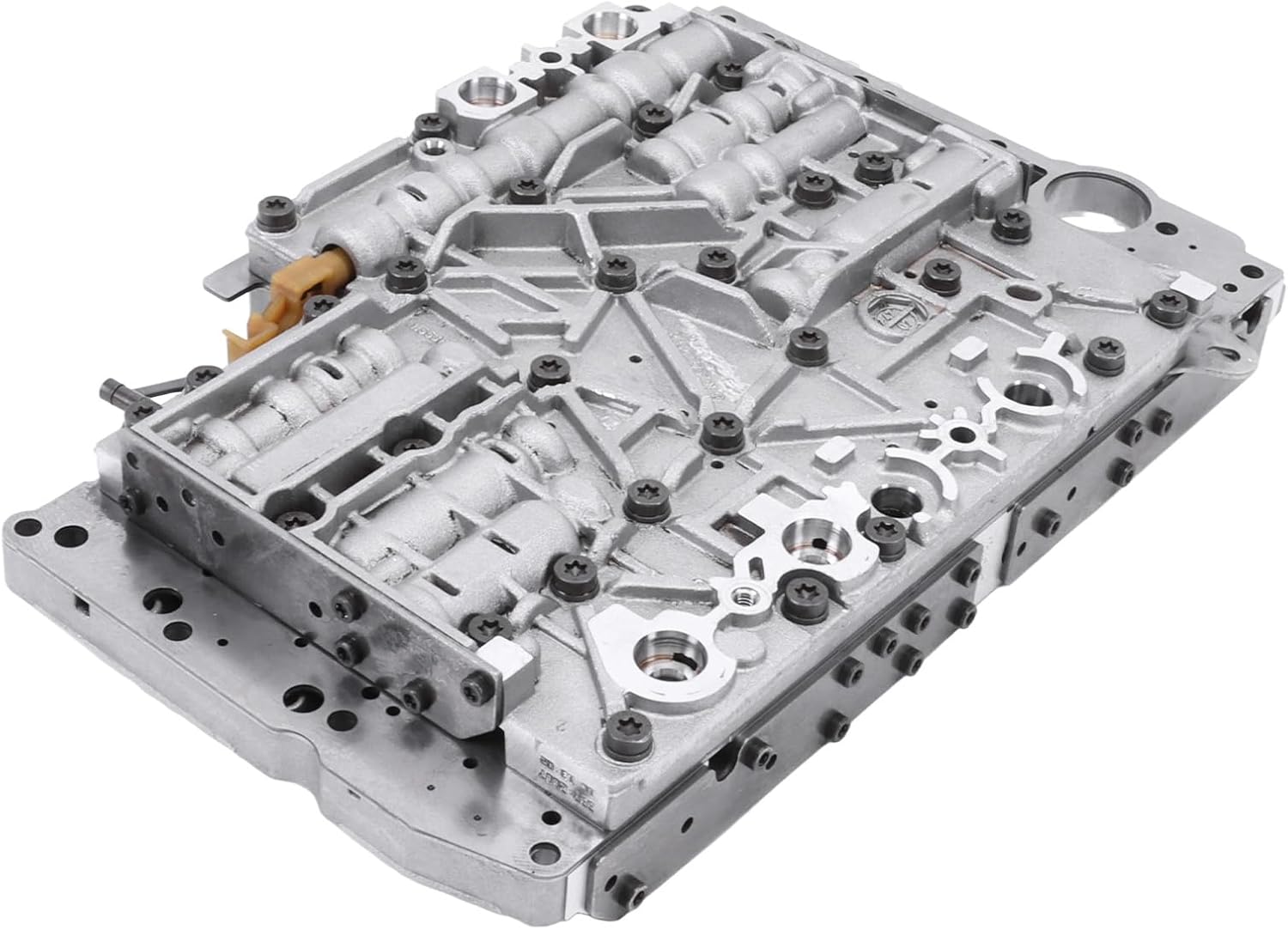
The most documented wear point is the TC lockup clutch regulator valve. Sonnax sells an oversized valve kit for it (part number 68942-10K) because wear opens up clearance at the outboard spool, the one the PWM solenoid feeds, and that excess clearance bleeds lube pressure to exhaust and weakens lockup apply. Sonnax lists TCC slipping, harsh or missing apply, TCC codes and lube failures as the symptoms. Wear at the inboard spool can also pull line pressure down.
Cause 2: Apply Oil Leaking Between the Valve Body and the Converter
Leaks in the apply path drop clamping force just like a worn bore does, and they are the cause that most often survives a valve body swap. Sonnax's Ed Lee documented a 722.6 where the factory .002" clearance at the input shaft and cover tower interface had worn to .021", leaking an estimated 7.5 GPM. Turbine shaft sealing rings are another known path; the early scarf-cut rings were replaced by an interlocking design, and Sonnax says the turbine shaft rings should be the OE overlap style. Clark adds the converter pilot bushing, which can wear or crack, and the converter's D-ring seal.
Sonnax describes an in-vehicle air test of the TCC apply circuit at 30 to 60 psi with the valve body installed, charging the exhaust hole and watching for leakage at the cooler lines or valve body. With the valve body off, the three converter circuits can be isolated, and leakage out of converter charge or converter out points to a cross leak at the pump or inside the converter. One caution from the same article: Teflon-type sealing rings need fluid to lift and seal, so a dry air test can make good rings look like they are cross leaking.
Do not stop at low pressure, either. Faucett's converter seemed fine at 35 psi, but at full shop air it blew back through the converter feed. Cut open, the converter had a hairline crack in the piston. A reseal and a new converter fixed it.
Cause 3: Damaged Friction or Contaminated Fluid
Early 722.6 converters had clutch friction material that flaked, causing chatter and slip, and rebuilt units now use updated clutches (GEARS, Clark). Contamination finishes off good linings fast. Sonnax warns that water or glycol in the ATF flakes the TCC lining, that even a drop can do damage, and that a simple hot-plate test works in the shop: drip fluid on a hot plate and listen for a sizzle as water burns off. If a car has a coolant-in-ATF history, plan on a converter, not a fluid change.
Fluid type matters here as well. Mercedes-Benz USA's Star bulletin S-B-00.40/89d (filed with NHTSA) restricts Mercedes 722.6 applications to oils on specification sheet MB 236.14, sold as part number A001 989 68 03, and requires separate filling equipment because 236.14, 236.15 and 236.16 fluids must never be mixed. A shudder that started right after a quick-lube fill with a generic multi-vehicle ATF is a real possibility worth ruling out before you pull anything. Confirm the level with the proper filler-tube dipstick before you condemn anything; low or overfilled fluid causes its own apply problems.
Cause 4: The Lockup Solenoid
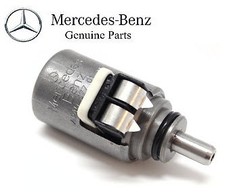
The solenoid is the cheap part everybody wants it to be, and sometimes it is. Clark notes the O-rings on the TCC solenoid go brittle and leak with age, and Sonnax points out that a lockup solenoid leaking into the control valve circuit can leave the valve resting partially applied. Pull it, inspect the O-rings, and bench test it. Faucett also recommends back-probing the solenoid command wire and comparing the measured duty cycle to what the scan tool says the TCM is commanding; a mismatch moves you to a wiring, power, ground or TCM problem rather than the solenoid itself.
Cause 5: It Is Not the Transmission
Before any of the above, rule out the engine. Clark's GEARS checklist for NAG1 shudder starts outside the transmission: check for engine codes, idle quality and cylinder balance. On a modern car that means watching misfire counters, fuel trims and oxygen sensor data on the scan tool during the same road test. Clark notes that on NAG1 V8 applications, engine and mount problems get amplified once the converter locks, and that updated OEM mounts exist for certain models. A misfire that is barely noticeable with the converter open becomes an obvious shake the moment it locks, which is why so many coil and plug problems get blamed on the transmission.
Rear-drive 722.6 cars and vans also use a rubber flex disc at the transmission output and a center support bearing on a two-piece driveshaft. A cracked or separating flex disc, or a collapsed center bearing rubber, typically produces a shudder from a stop or a vibration that tracks road speed. Put the car on a lift and inspect the disc for cracks at the bolt bosses and the bearing for sag before you condemn the converter.
The Diagnostic Order That Saves Money
- Road test cold to hot. Clark's procedure starts with a full drive from cold start to operating temperature, focused on lockup apply and release. Note the exact speed, gear and throttle where it shudders.
- Graph TCC command against TCC slip. With a capable scan tool, graph commanded converter clutch state against actual and desired slip, especially in the 35 to 50 mph band. If the shudder lines up with slip oscillating while lockup is commanded, it is the converter clutch circuit. Faucett notes P0741 sets when actual slip exceeds 60 rpm while the TCM is in slip mode, three times in one key cycle, and his fault only appeared after about 30 minutes of highway driving, so log long enough.
- Check engine load and inputs. Faucett uses engine load as a sanity check: about 10 to 20 percent at idle and 90 to 100 percent at wide open throttle in gear. Bad load numbers point at the MAF or throttle position sensor, and bad inputs mean bad line pressure commands.
- Compare N2 and N3 to engine rpm. For a vibration complaint, Clark compares the N2 and N3 input speed sensor data with engine rpm for speed variations. Uneven input speed while engine rpm is steady points into the transmission; uneven engine rpm points at the engine.
- Pull the pan. Look for friction flake and test the fluid for water or glycol. Pull, inspect and bench test the lockup solenoid.
- Air test, then vacuum test. Air test the apply circuit in the car, then vacuum test the valve body bores. If both pass and the shudder remains, the converter and its seals are next, and the converter should be air checked on the bench through the K2 drum the way Faucett did.
The Fix for Each Cause
- Worn regulator or TC control valve bores: ream-and-oversize repair such as Sonnax 68942-10K in a rebuilder's hands, or a complete tested valve body if you are not set up for bore work.
- Leaking or sticking lockup solenoid: replace the solenoid and its O-rings, and confirm duty cycle afterward.
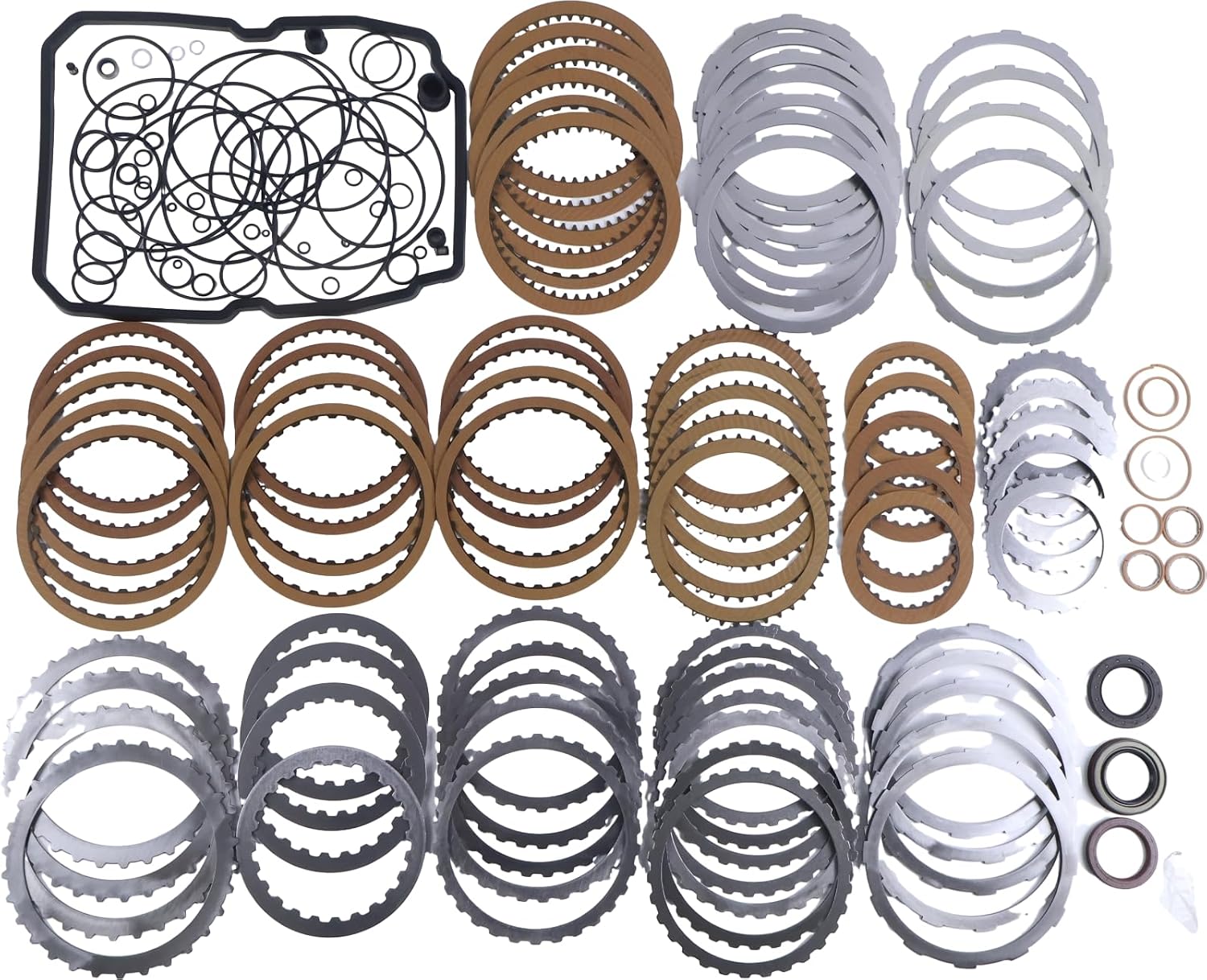
- Apply-circuit leaks: correct turbine shaft rings, new seals, and pump and stator inspection. This is an in-the-case job, so it usually makes sense to do a full overhaul with a master rebuild kit while it is apart.
- Converter friction or piston damage: a quality rebuilt converter with updated clutches. Clark recommends rebuilt units over reusing the original.
- Engine, mounts or driveline: fix the misfire, replace mounts with OEM parts, and replace the flex disc or center bearing. The transmission needs nothing.
Shop the part for this fix
When the air test points to leaking seals and rings in the apply circuit, a complete 722.6 gasket and seal kit covers the turbine shaft rings, piston seals and gaskets in one box. Confirm your sub-variant before ordering.
722.6 master overhaul gasket and seal kit at CoreTransmissionParts →Doing the full job? Browse 722.6 rebuild kits.
Need parts for this job?
Lockup solenoids, valve bodies, rebuild kits and MB-spec fluid for the 722.6 and NAG1, all on our own secure checkout.
Shop 722.6 parts →Frequently Asked Questions
Why does my 722.6 shudder when I accelerate at 35 to 50 mph?
That is the window where the converter clutch normally applies on this transmission, so a rumble-strip shudder there usually means the clutch is slipping unevenly. The common causes are low apply pressure from worn valve body bores, apply oil leaking past seals or turbine shaft rings, a leaking lockup solenoid, or damaged converter friction. Graph commanded lockup against actual slip on a scan tool to confirm it.
Can a misfire feel like 722.6 transmission shudder?
Yes. Once the converter clutch locks, engine roughness passes straight into the body, so a weak coil or plug can feel exactly like converter shudder. Check misfire counters, fuel trims and cylinder balance before touching the transmission, and inspect engine and transmission mounts on V8 applications.
What code goes with 722.6 converter clutch shudder?
P0741 is the most common. On the NAG1/722.6 it sets when actual converter slip exceeds 60 rpm while the TCM is commanding slip mode, three times in one key cycle. Many shudder complaints show no code at all, so a clean scan does not rule out the converter clutch circuit.
Will a fluid change fix 722.6 shudder on acceleration?
Only if the fluid is the wrong type or contaminated. Mercedes 722.6 applications call for MB 236.14 fluid, and water or glycol in the ATF damages the converter clutch lining for good. If the linings are already flaked or the apply circuit is leaking, new fluid will not stop the shudder.
Does a bad TCC solenoid cause 722.6 shudder?
It can. The lockup solenoid's O-rings go brittle and leak with age, and a solenoid leaking into the control valve circuit can leave the lockup valve partially applied. Pull it, inspect and bench test it, and compare its measured duty cycle to what the TCM is commanding.
Sources
- Sonnax — "Converter Conundrums" (722.6/NAG1 section). Backs the Y3/6y6 normally closed lockup solenoid, valve bore wear causes of low TCC apply, the 30-60 psi in-vehicle air test, the Teflon-ring dry air caution, the 35-48 mph drone/shudder complaint, and the water/glycol hot-plate test. sonnax.com
- Sonnax — Ed Lee, "Mercedes 722.6: Cold Stall/TCC Shudder, Part 1" (May 2010). Backs the apply-oil path through the input shaft, the .002" to .021" input shaft wear and 7.5 GPM leak, the turbine shaft ring change, and the lack of a dedicated release pressure. sonnax.com
- Sonnax — Oversized TC Lockup Clutch Regulator Valve Kit, 68942-10K. Backs the outboard-spool wear mechanism that bleeds lube pressure to exhaust and lowers lockup apply pressure, and the listed TCC symptoms. sonnax.com
- ATRA, GEARS Magazine — Keith Clark, "Nagging TCC Issues! NAG1 TCC Shudder Complaints" (March 2023). Backs the 35-50 mph lockup window, the three-pass converter and clutch pack design, friction flaking and pilot bushing/D-ring issues, solenoid O-ring leaks, engine and mount amplification on V8 applications, and the cold-to-hot road test and N2/N3 comparison. gearsmagazine.com
- ATRA, GEARS Magazine — Rob Faucett, "Nag 1/722.6 P0741 TCC Slip" (December 2020). Backs the solenoid-to-lube-regulator apply path, the three TCC control valves, P0741 set conditions (over 60 rpm slip in slip mode, three times per key cycle), engine load checks, and the converter that passed at 35 psi but failed at full shop air. gearsmagazine.com
- Mercedes-Benz USA — Star Bulletin S-B-00.40/89d, operating fluid specification changes for automatic transmissions, via NHTSA. Backs the MB 236.14-only fluid rule for Mercedes 722.6 applications, part number A001 989 68 03, and separate filling equipment for 236.14/236.15/236.16 fluids. static.nhtsa.gov (PDF)