A customer describes a flare on the 2-3 shift, a shudder off the line, or a torque converter that won't quite lock up clean, and the first part a lot of shops reach for is a pressure control solenoid. Sometimes that's the right call. Just as often, the solenoid is fine and the actual fault is a worn regulator bore in the valve body casting, a shrunk O-ring leaking signal oil internally, or a clogged filter screen starving the solenoid of clean supply oil. The 722.6 gives you no pressure taps to settle the argument with a gauge, so the only real way to tell these apart is to understand exactly what the two pressure solenoids do and read the adaptation data the TCM already has stored.
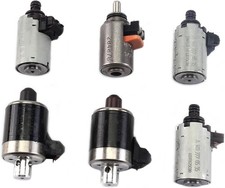
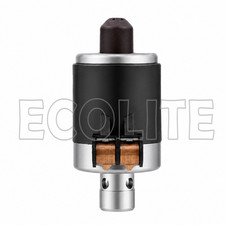
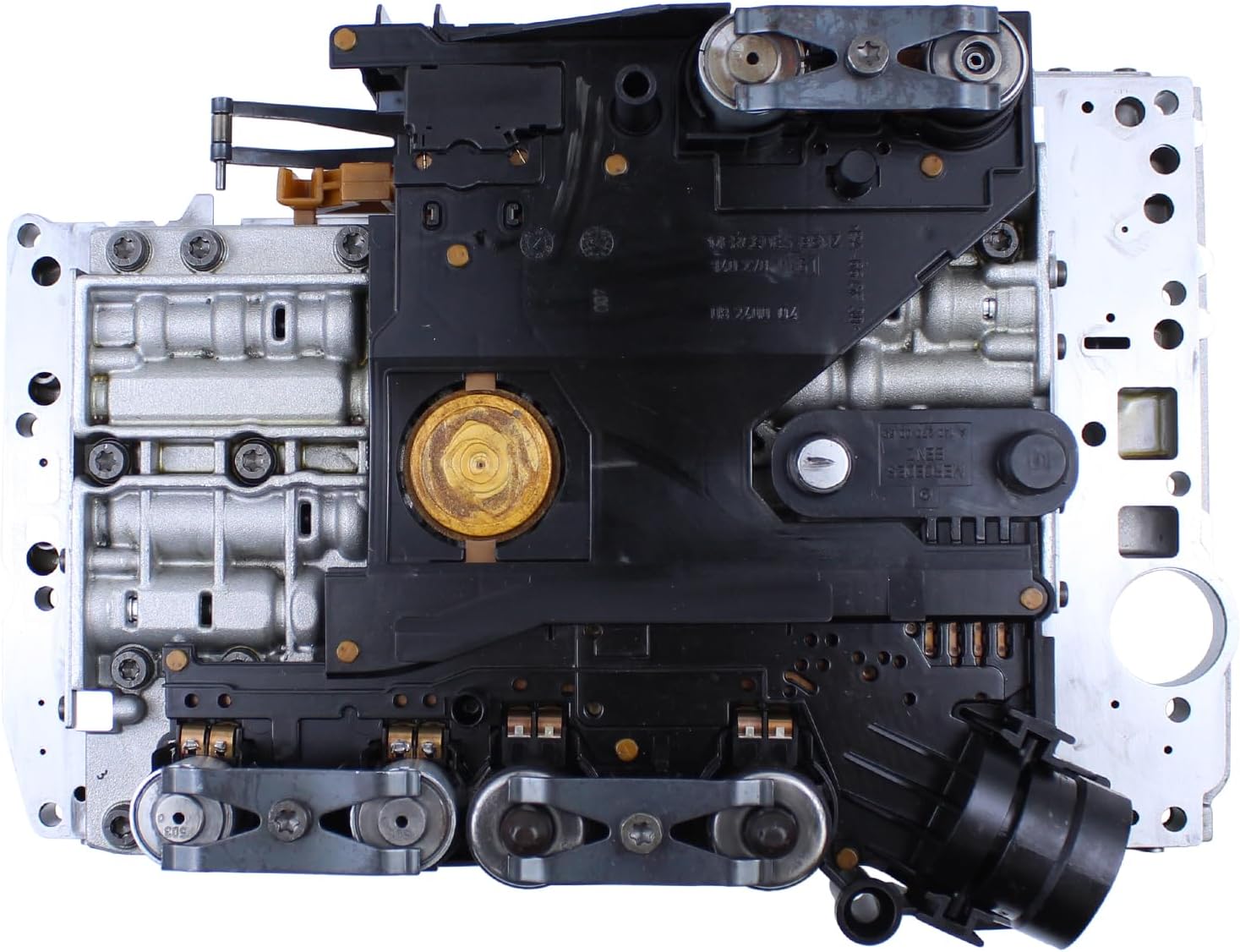
What the Two Pressure Control Solenoids Actually Do
The 722.6 runs two separate pressure-control solenoids, both living on the conductor plate alongside the three shift solenoids. The modulating pressure-regulating solenoid (Y3/6y1) regulates a signal between 0 and 125 psi that acts on the pressure-regulator valve, raising working pressure — what older transmissions would call line pressure — from a static 60 psi up to as much as 320 psi depending on how much torque the engine is making. That same modulating signal also times the 1-2/4-5, 2-3 and 3-4 shift-overlap valves, so the release of one clutch and the apply of the next stay matched to load. The shift pressure-regulating solenoid (Y3/6y2) does a narrower job: it regulates its own 0-120 psi signal that drives the shift-pressure regulator valve, which sets the transitional clutch-apply pressure only during the instant of a shift, ranging from 0 psi up to 220 psi. Both solenoids are fed a maximum of 125 psi from the line-pressure-solenoid "in" valve, and both are driven by the TCM with an amplitude-modulated current rather than a simple on/off signal, which is what lets them hold a precise, continuously variable pressure instead of just toggling a valve open or closed.
Symptoms of a Failing or Contaminated Pressure Control Solenoid
When either pressure solenoid can't deliver the signal the TCM is commanding, the symptom list reads almost identically to a worn regulator bore: insufficient pressure rise under load, a 2-3 upshift flare, torque converter clutch slip or shudder, generally soft shifts, and a shudder on hard throttle acceleration from a stop. That overlap is exactly why solenoid trouble gets misdiagnosed in both directions — techs who assume "soft shift equals bad solenoid" throw parts at a casting problem, and techs who've been burned by that once start assuming every flare is the valve body and skip a solenoid that's actually sticking. A solenoid rarely fails as a dead short or open circuit on this unit; more often it's a partial mechanical problem, an armature that's gummed up with varnish from old fluid, or a small filter screen ahead of it that's gone from merely dirty to effectively blocked.
Solenoid Trouble vs. Valve Body Bore Wear: Reading the Adaptation Data
Because the 722.6 has no pressure taps anywhere in the circuit, a tech can't just hook up a gauge and watch working pressure rise with throttle the way you could on an older hydraulically controlled unit. The only diagnostic window is scan-tool adaptation data, and the two pressure solenoids are specifically what two of those adaptation categories are built around. Fill pressure, displayed in millibars, shows whether the TCM is raising or lowering commanded pressure to produce a firmer or softer shift; 0 mbar means no correction has been stored, and a value sitting at the parameter's upper limit alongside poor shift quality means the TCM has already asked for all the pressure it's allowed to ask for and still isn't getting an acceptable shift. Fill time, displayed in 20-millisecond cycles up to a maximum of 15 cycles (300 ms), measures how long it took the amplitude-modulated current to bring a clutch to zero clearance; a high cycle count means the clutch is taking longer than it should to fill, which again can trace back to either a sluggish solenoid or a leaking mechanical path downstream of it. Neither of these parameters tells you by itself whether the fault is the solenoid, its filter screen, or the regulator bore in the casting — what they tell you is whether the TCM has already run out of room to compensate, which is the point at which a comeback becomes likely if nothing is repaired. For the mechanical side of that comparison — which specific worn bore produces which exact flare, and how to vacuum-test for it — see our 722.6 valve body symptoms guide.
The TCM Fail-Safe Behavior You'll See When a Circuit Faults
The 722.6's shift solenoids are wired to toggle on and off to make their respective shifts, staying off while the transmission sits in whichever gear they control. That matters for diagnosis because when the TCM detects a fault in any of these circuits while the car is being driven, the transmission fail-safes to whichever gear it was already in at that moment, and if the vehicle comes to a stop and the ignition gets cycled, it drops into and stays in second gear. A customer describing "it got stuck and now it won't leave second no matter what I do" is describing this fail-safe strategy, not necessarily a dead pressure solenoid specifically — it's the TCM protecting the hardware the moment it sees a circuit it doesn't trust, whether that circuit belongs to a shift solenoid, a pressure solenoid, or the conductor plate wiring feeding either one.
What to Check Before You Replace the Solenoid
Two mechanical details are worth checking before condemning a pressure solenoid outright. First, both pressure solenoids and the TCC solenoid use O-rings that are known to shrink with age and heat; a shrunk O-ring doesn't fail the solenoid electrically, but it lets signal oil leak past the solenoid's seat internally, which produces the same soft-shift symptoms as a weak solenoid and is cheap to rule out while the valve body is apart. Second, two small filter screens sit between the noses of the modulating and shift pressure solenoids and the separator plate, filtering the oil those two solenoids actually see; on a transmission that's gone long past its service interval, these screens can load up with clutch material and varnish to the point of being effectively blocked, starving the solenoid of clean supply oil and producing an intermittent or sluggish pressure response that looks exactly like a failing solenoid on a bench check. Neither of these is a reason to skip replacing a solenoid that's actually bad, but both explain why a brand-new solenoid dropped into an otherwise neglected valve body sometimes doesn't fix the complaint. Whatever combination of parts ends up going in, reset the TCC and shift adaptation values with a scan tool before the first road test; skipping that step leaves the TCM compensating for the old hardware's wear characteristics against freshly repaired components, which reads like a comeback when it's really just stale adaptation data.
| Solenoid | Function | Commanded signal | Resulting pressure |
|---|---|---|---|
| Modulating PR solenoid (Y3/6y1) | Sets working (line) pressure via the pressure-regulator valve; also times the shift-overlap valves | 0–125 psi | Working pressure 60–320 psi depending on torque input |
| Shift PR solenoid (Y3/6y2) | Sets transitional clutch-apply (shift) pressure during a shift only | 0–120 psi | Shift pressure 0–220 psi depending on torque input |
| Line-pressure-solenoid "in" valve | Feeds supply oil to both pressure solenoids above | — | Max 125 psi supply to each PR solenoid |
Frequently Asked Questions
What do the pressure control solenoids do on a 722.6?
The 722.6 uses two pressure-control solenoids, both mounted on the conductor plate. The modulating PR solenoid (Y3/6y1) regulates a 0-125 psi signal that drives the pressure-regulator valve, which raises working (line) pressure from a static 60 psi up to 320 psi as engine torque increases, and also times the shift-overlap valves. The shift PR solenoid (Y3/6y2) regulates a separate 0-120 psi signal that sets clutch-apply (shift) pressure, from 0 up to 220 psi, only during the moment of a shift. Both are driven by the TCM with an amplitude-modulated current rather than simple on/off switching.
What are the symptoms of a failing 722.6 pressure control solenoid?
Insufficient pressure rise under load, a 2-3 upshift flare, torque converter clutch slip or shudder, generally soft shifts, and a shudder on hard throttle acceleration from a stop. These are the same symptoms produced by a worn working-pressure regulator bore in the valve body casting, which is why pressure-control solenoid trouble is so often misdiagnosed as "just the valve body" or the reverse, without checking scan-tool adaptation data first.
How do you tell a bad pressure control solenoid from valve body wear on a 722.6?
The 722.6 has no pressure taps, so the only window into the hydraulic system is scan-tool adaptation data: fill pressure (in millibars) and fill time (in 20-millisecond cycles, up to a maximum of 15 cycles). If these values are pinned at their upper limit and shift quality is still poor, the TCM has already commanded maximum pressure solenoid output and the hardware still isn't responding, pointing to a solenoid, clogged solenoid filter screen, or a worn regulator bore downstream of it. A mid-range adaptation value with acceptable shift feel usually means no repair is needed yet.
Can you replace just the pressure control solenoid, or do you need the whole conductor plate?
The pressure control solenoids are sold as individual replacement parts, but they sit on the same conductor plate as the shift solenoids and TCC solenoid, and all of them share O-rings that are known to shrink with age and heat. On a high-mileage unit it is common practice to replace the full solenoid pack or the conductor plate assembly in the same job rather than swapping one solenoid and leaving aged O-rings and a worn speed sensor connector in place, since those are frequent repeat-comeback causes on this transmission.
722.6 Pressure Control Solenoid
Direct replacement pressure control solenoid for the 722.6, sized by year range to match the correct conductor plate fitment.
View the pressure control solenoid →Sources
- Transmission Digest, "The 722.6 Shift Strategy," by Wayne Colonna, February 1, 2005. Backs the modulating and shift pressure-regulating solenoid functions, their 0-125 psi and 0-120 psi commanded ranges, the resulting 60-320 psi working pressure and 0-220 psi shift pressure, the amplitude-modulated solenoid drive strategy, the fill-pressure (mbar) and fill-time (20 ms cycle, 15-cycle max) scan-tool adaptation parameters, and the shift-solenoid fail-safe-to-second-gear behavior. transmissiondigest.com
- Transmission Digest, "Mercedes 722.6, Daimler W5, Porsche W5, Jaguar 722.6," by Mio Cundl, June 1, 2009. Backs the working-pressure regulator bore wear mechanism and its overlapping flare symptoms, used here to distinguish solenoid-side faults from casting wear. transmissiondigest.com
- Transmission Digest / Sonnax, "Vacuum Testing Mercedes 722.6/NAG 1," TASC Force Tips, February 1, 2014. Corroborates that this transmission's valve body has no pressure taps and must be diagnosed through indirect methods, supporting the scan-data-first diagnostic approach in this article. transmissiondigest.com
- Sonnax Technical Resource 129, "Mercedes 722.6, Daimler W5, Porsche W5, Jaguar 722.6." Corroborates the pressure-regulating solenoid functions and overlapping symptom set from the parts-manufacturer side. sonnax.com
- TransGo Shift Kit Instructions, SK 722.6 (06 Sept 2016 revision). Backs the symptom list (insufficient pressure rise, 2-3 flare, TCC slip or shudder, soft shifts, shudder on hard acceleration from a stop), the O-ring shrinkage on the Mod, Shift and TCC solenoids, the filter screens ahead of the Mod and Shift pressure solenoids, and the instruction to reset TCC adaptation values with a scan tool before road test. res.cloudinary.com (PDF)
Shop pressure control solenoids, valve bodies and conductor plates for the 722.6, shipped fast from the USA.
Shop 722.6 parts →