A harsh shift on a Mercedes-Benz 722.9 (the seven-speed 7G-Tronic, built on the NAG2 platform) gets blamed on the solenoids more than any other part in the transmission, and that's usually wrong. Mercedes-Benz's own bulletins and Sonnax's documented valve body repair both point somewhere else first: wear in the hydraulic circuit that regulates pressure, a mechanical problem inside a specific clutch pack, or fluid that's old, low, or the wrong spec. An adaptation reset can mask any of these for a day or two, which is exactly why so many owners report the harsh shift coming right back after a shop clears it. This guide works through the three real root causes in the order a tech should actually chase them, using Mercedes-Benz's own XENTRY bulletins and Sonnax's published valve body repair documentation instead of forum guesswork.
722.9 Harsh Shift Causes and Fix

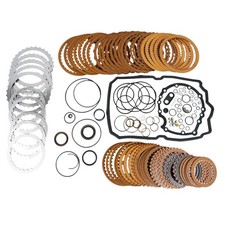
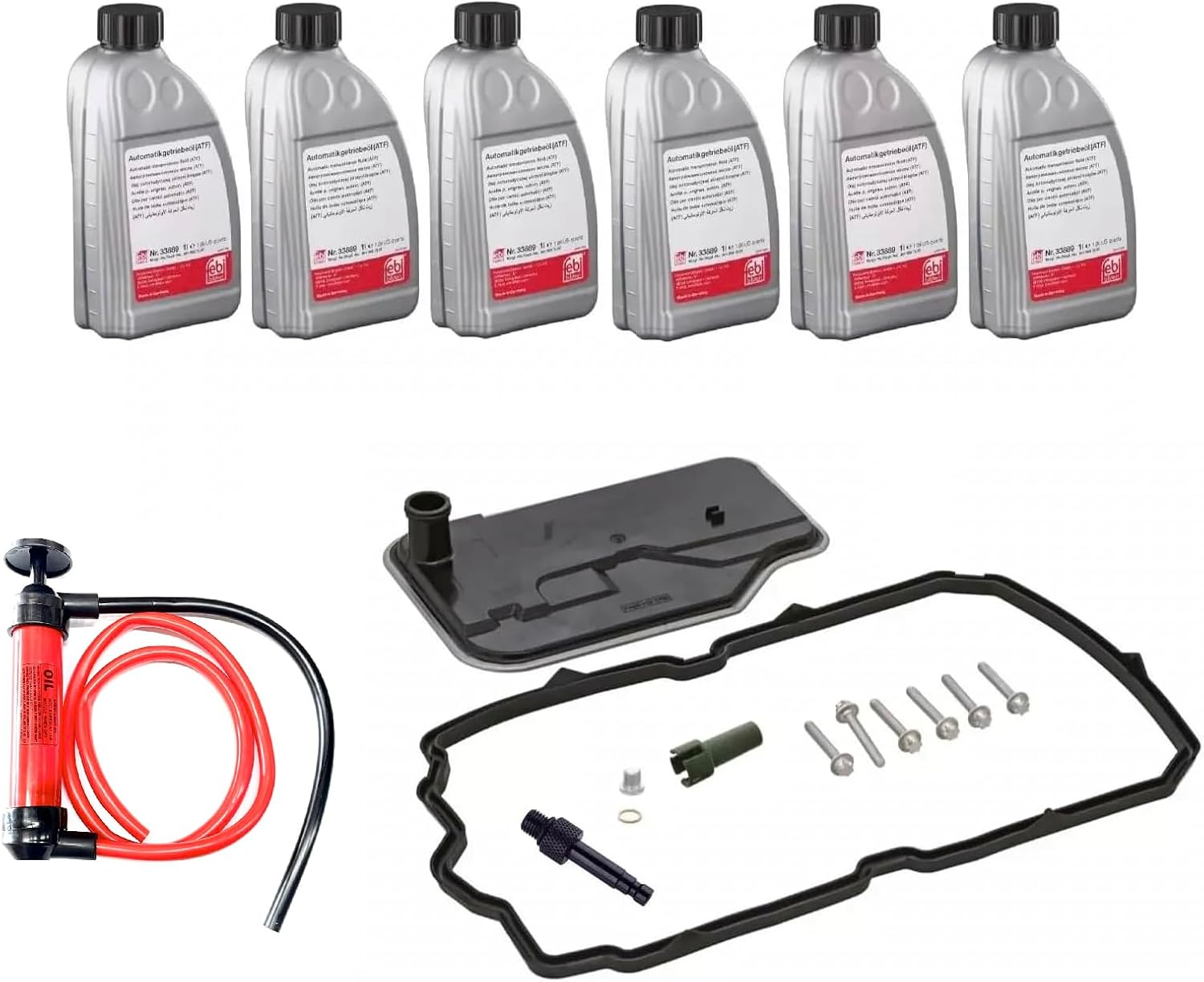
Cause 1: Pressure Regulator Valve Bore Wear (the Most Common Cause)
Sonnax's documented repair for the 722.9 identifies two separate valve bores in the valve body that wear enough, over time, to cause harsh shifting: the supply pressure regulator valve and the working pressure regulator valve. The supply pressure regulator controls the pressure fed to the control solenoids, and bore wear here allows fluid to leak past the valve, which Sonnax describes as producing "erratic supply pressure to control solenoids." Because the solenoids are only as accurate as the pressure they're given, the symptoms this produces look exactly like a bad solenoid or a confused control unit: harsh or soft shifts, solenoid performance codes, wrong-gear starts, and TCC apply faults. Left long enough, the same fluid loss starves the clutch packs of consistent apply pressure and burns the clutches themselves.
The working pressure regulator valve fails differently. Sonnax notes this valve experiences continuous oscillation in normal operation, which accelerates bore wear at two different points: wear between the line and sump ports lets fluid leak and causes low, erratic line pressure, poor converter and lube flow, and overheating, while wear specifically at the valve's balance end can instead cause excessively high line pressure, which shows up as harsh shifting rather than soft, slipping shifts. Both wear patterns come from the same valve, so the two failure modes aren't mutually exclusive on a given transmission.
Sonnax's fix for both bores is the same two-part approach: recondition the worn bore using their F-88740-TL2 tool kit and VB-FIX process, then install an oversized, hardcoat-anodized aluminum replacement valve (88740-02 for the supply pressure regulator, 88740-01 for the working pressure regulator) sized to seal against the reconditioned bore instead of the original, worn one. Sonnax's diagnostic method is a vacuum test at specified ports on the valve body: if the circuit doesn't hold the minimum specified in-Hg reading, the bore has worn enough to need reconditioning. This is a valve body-level repair, not a solenoid swap, and it's the reason a "new" solenoid kit installed into a worn bore often doesn't fully resolve a harsh shift complaint.
Cause 2: A Failed or Misassembled B1/B3 Retaining Ring
Mercedes-Benz's own Star Bulletin S-B-27.60/61j, issued for "All Models with Automatic Transmission 722.9, 7G-Tronic (NAG2)," covers a second, purely mechanical cause specific to rough 1-2, 3-2, and 2-1 gearshifts. The bulletin's diagnostic sequence starts the same way any 722.9 shift complaint should: reproduce the complaint, print the pre-repair transmission control unit adaptation log without resetting it, then re-adapt the specific problem shift and print a post-process log for comparison.
What makes this bulletin useful is the specific threshold it gives for telling a hydraulic problem from a mechanical one. If the adaptation values for the filling times of these shifts sit close to the negative limit of -20 cycles, in the -15 to -20 range, and keep moving further negative with each additional adaptation attempt rather than stabilizing, the bulletin attributes this to one of two mechanical causes inside the B1 and B3 multi-disk brake assembly: an incorrectly installed retaining ring for the B1 or B3 return spring, or warped B1 disks that no longer sit flat on a flat surface check. The bulletin is specific that there are two different versions of the B1/B3 retaining ring and disc spring (parts A220 994 03 40 or A001 994 18 40 depending on variant, with disc spring A220 993 02 26), and that ordering the wrong version, or installing the anti-twist lock for the thrust bearing in the wrong position, is itself a documented cause of the same complaint. The remedy requires removing the transmission, disassembling the B1/B3 multi-disk brake, correcting the retaining ring and disc spring installation, or replacing warped B1 disks outright, and then completely resetting all adaptation data before re-evaluating the shift quality.
Cause 3: Degraded, Low, or Wrong ATF
The 7G-Tronic Plus is calibrated around a specific fluid: Mercedes-Benz's MB-Approval 236.15 specification, a 100% synthetic fluid formulated for fuel economy and shift feel. Motul's technical data sheet for its own MB 236.15-approved product lists the fluid as blue-dyed, with a viscosity of 17.4 mm²/s at 40°C and 4.3 mm²/s at 100°C, a viscosity index of 163, and a formula built specifically around anti-shudder performance "to avoid vibrations on engine fly wheel" and a smooth shift feel with minimized shift time lag. That additive package, not just the base oil, is what the clutch packs are calibrated against. Low fluid, fluid that's broken down past its service life, or a generic DEXRON/MERCON-style universal ATF topped off at some point in the car's history will not carry the same friction-modifier behavior, and the transmission control unit has no way to compensate for a fluid problem the same way it can adapt out normal mechanical wear.
This transmission also doesn't have a conventional dipstick. Level is checked using an overflow pipe mounted above the drain plug inside the pan, and a standard pan-drop service only exchanges roughly 40% of total fluid volume, since the torque converter and cooler lines hold the rest. If a prior service was done with the wrong fluid, or topped off incorrectly against the overflow level, that's a second avoidable way the fluid itself becomes the harsh-shift cause rather than a symptom of something else.
The Diagnostic Trap: An Adaptation Reset Only Hides the Problem
Mercedes-Benz bulletin LI27.00-P-051451, "Shift quality complaints on TRANSMISSION 722.9 (7G-TRONIC and 7G-TRONIC PLUS)," is explicit about sequencing: read out the transmission control unit's log file and its EEPROM data before beginning any repair work and before adaptation of the most recent quick test, because that EEPROM data "can no longer be reproduced" once adaptation has been performed. The bulletin then has the technician verify the actual problem gearshift in front of the customer using Star Diagnosis, and work through the attached "Fault Tree NAG2" to isolate the cause rather than clearing codes and hoping.
The reason this sequencing matters in practice: a full adaptation reset gives the transmission control unit a clean slate to relearn fill times and pressures, and that clean slate can feel noticeably smoother for the first day or two of driving even when the underlying hydraulic or mechanical wear from Cause 1 or Cause 2 above is still present. As the control unit re-adapts against the same worn pressure regulator bore or the same bad B1/B3 retaining ring, the fill-time values drift negative again and the harsh shift returns, which is exactly the pattern Mercedes-Benz's own filling-time threshold in S-B-27.60/61j is designed to catch before a shop declares the car fixed.
A Narrower Case: Harsh 4-3 Downshift on G-Class and GL/GLS Models
Not every 722.9 harsh shift complaint traces back to the pressure regulator valves or the B1/B3 brake. Mercedes-Benz bulletin LI27.10-P-067246 documents a harsh 4-3 downshift at approximately 1200 to 1600 rpm under normal braking or coasting in Comfort and Sport mode, limited specifically to Model Series 166 (GL/GLS, with the M276 engine) and Model Series 463 (G-Class, excluding the 463.275/G65), both running the 722.9 transmission. The bulletin attributes this complaint to the K2 and K3 clutch plates and lays out a stepped remedy: collect initial EEPROM data, confirm the latest VGS/ME/PTCU software is installed, then perform a downshift adaptation drive specifically from 5th to 2nd gear in S and C mode, driven smoothly with torque kept as low as possible. If that adaptation resolves the complaint, the bulletin stops there. If it doesn't, the next step is dropping the oil pan to photograph any debris before replacing the K2 and K3 clutch packs, with K3 serviceable only as a complete unit and K2's clutches orderable separately, and with K3's clearance specifically set to the tighter end of its specification range during reassembly.
This bulletin is a good example of why "harsh shift" isn't one diagnosis on the 722.9: the same transmission platform produces at least three distinct, bulletin-documented failure patterns depending on which gear range is affected, what the production chassis and engine combination is, and what the adaptation data actually shows before and after a reset.
Repair Order That Actually Works
Put the bulletins and Sonnax's documentation together and a practical repair sequence falls out: capture the TCU log and EEPROM data first, since none of it can be recovered once you start adapting. Check and correct the ATF condition and level using the overflow method, and confirm it's genuine 236.15-spec fluid rather than a universal substitute, since a fluid problem is the cheapest of the three causes to rule out. Re-adapt the affected shifts and compare the before-and-after filling-time values rather than just driving the car and calling it fixed. If those values sit in the -15 to -20 range and keep trending more negative, pull the transmission and inspect the B1/B3 retaining ring, disc spring, and disk flatness per S-B-27.60/61j before you touch the valve body. If the filling times look stable but shift quality is still harsh, or you're seeing solenoid codes and TCC faults alongside it, vacuum-test the pressure regulator valve bores per Sonnax's spec and recondition or replace the valve body if they don't hold pressure. Only reset adaptation data completely after the hydraulic or mechanical repair is actually done, not before.
FAQ
What is the most common cause of harsh shifting on a 722.9?
Wear in the supply and working pressure regulator valve bores of the valve body, according to Sonnax's documented repair for the 722.9. That wear lets fluid leak past the valve, which prevents the hydraulic circuit from regulating oil pressure to the shift solenoids correctly. The result is harsh or soft shifts, solenoid performance codes, wrong-gear starts, and in neglected cases burnt clutch packs, because the solenoids are receiving erratic supply pressure rather than a bad command from the control unit.
Can a fluid service alone fix harsh shifting on my 7G-Tronic?
Sometimes, if the fluid is old, low, or the wrong type. The 7G-Tronic Plus requires a 100% synthetic fluid meeting Mercedes-Benz's MB-Approval 236.15 specification, which carries specific friction-modifier and anti-shudder additives, per Motul's technical data sheet for that exact fluid. If the fluid has degraded or someone topped it off with a generic universal ATF, the clutch packs will not engage the way the transmission control unit expects, which shows up as harsh engagement. But if a pressure regulator valve bore is already worn or a clutch pack retaining ring has failed, fresh fluid will not fix either of those mechanical problems.
Why did my harsh shift come back the day after the shop reset the adaptation?
Because an adaptation reset does not repair anything, it just lets the transmission control unit relearn its fill times and pressures from a clean slate. Mercedes-Benz bulletin LI27.00-P-051451 requires saving the EEPROM and transmission control unit log data before any adaptation, specifically because that data cannot be recovered afterward and is needed to see whether the underlying values are actually improving. If a worn pressure regulator valve bore or a damaged B1/B3 retaining ring is still present, the control unit will re-adapt against the same bad hydraulics and the harsh shift returns within a day or two of driving, which matches what shows up repeatedly in Mercedes owner forums after a dealer-only adaptation reset.
Is the harsh 4-3 downshift on my G-Class the same issue as a general 722.9 harsh shift?
Not necessarily. Mercedes-Benz bulletin LI27.10-P-067246 documents a specific harsh 4-3 downshift at approximately 1200 to 1600 rpm during normal braking or coasting, limited to Model Series 166 (GL/GLS) and 463 (G-Class, excluding the G65), and traces it to the K2 and K3 clutch plates rather than the pressure regulator valves. The bulletin's remedy starts with a downshift adaptation drive and an oil pan debris check before K2/K3 clutch pack replacement, which is a narrower and different repair path than the general 1-2/3-2/2-1 harsh shift bulletin covers.
What ATF does the 722.9 actually need, and can I use a universal ATF instead?
The 7G-Tronic Plus requires fluid meeting Mercedes-Benz MB-Approval 236.15, a 100% synthetic, blue-dyed fluid with a viscosity of 17.4 mm²/s at 40°C and 4.3 mm²/s at 100°C, according to Motul's technical data sheet for its 236.15-approved product. A universal or DEXRON/MERCON-style fluid does not carry the same friction-modifier package this transmission's clutch packs are calibrated around, and using one is a common, avoidable cause of harsh or shuddering engagement that a correct fluid change resolves on its own.
Diagnosed the real cause of your 722.9 harsh shift?
Valve bodies, overhaul kits, and the correct 236.15 service kit, matched to your production years and shipped fast from the USA.
Shop 722.9 parts →Sources
- Sonnax — Part 3951, "Oversized Supply Pressure Regulator Valve" (part number 88740-02), for the Mercedes 722.9. Backs the supply pressure regulator valve bore wear mechanism, the resulting symptoms (harsh/soft shifts, burnt clutches, solenoid and TCC codes, wrong gear starts), the reconditioning-plus-oversized-valve fix, and the vacuum test diagnostic method. sonnax.com
- Sonnax — Part 3953, "Oversized Working Pressure Regulator Valve" (part number 88740-01), for the Mercedes 722.9. Backs the working pressure regulator valve's continuous-oscillation wear mechanism, the two distinct failure patterns (low/erratic line pressure vs. high line pressure and harsh shifting at the balance end), and the oversized valve fix. sonnax.com
- Mercedes-Benz USA, LLC — Star Bulletin S-B-27.60/61j, "Uncomfortable Shift Quality of 1-2, 3-2 and 2-1 Gear shifts," November 20, 2008, for All Models with Automatic Transmission 722.9, 7G-Tronic (NAG2). Backs the adaptation-log diagnostic sequence, the -15 to -20 filling-time threshold for distinguishing a mechanical cause, the B1/B3 retaining ring and disc spring failure modes and part numbers, and the complete-reset-after-repair requirement. mbclub.ru
- Mercedes-Benz AG — XENTRY Bulletin LI27.00-P-051451, "Shift quality complaints on TRANSMISSION 722.9 (7G-TRONIC and 7G-TRONIC PLUS)," version 5, July 14, 2014 (archived via NHTSA). Backs the requirement to capture EEPROM and TCU log data before adaptation, the Star Diagnosis verification step, and the Fault Tree NAG2 diagnostic approach. static.nhtsa.gov
- Mercedes-Benz AG — XENTRY Tips LI27.10-P-067246, "166 and 463 with NAG2 harsh 4-3 downshift," version 2, March 8, 2018 (archived via NHTSA). Backs the specific 1200-1600 rpm harsh 4-3 downshift complaint on Model Series 166 and 463, the K2/K3 clutch plate cause, and the downshift-adaptation-then-clutch-pack-replacement remedy sequence. static.nhtsa.gov
- Motul — Technical Data Sheet, "ATF 236.15, Automatic Transmission Fluid for Mercedes," approved to MERCEDES-BENZ MB-Approval 236.15. Backs the fluid specification, color, viscosity at 40°C and 100°C, and the anti-shudder/shift-feel additive performance claims. motul.com
Shop 722.9 valve bodies, overhaul kits, solenoid kits, pumps and the correct 236.15 ATF — shipped fast from the USA.
Shop 722.9 parts →