Mercedes' 722.9, the 7G-Tronic and 7G-Tronic Plus seven-speed, doesn't use one transmission fluid, it uses two incompatible ones, and which one a given car needs has nothing to do with the vehicle's model year. It's tied to the transmission's own production number. Get the fluid wrong, or get the fill procedure wrong, and you can end up with harsh shifts on a unit that was mechanically fine before the service. Here's exactly which fluid goes where, straight from Mercedes-Benz's own factory bulletin and technician training material, along with the real capacity numbers and the physical differences between the two fluid generations.

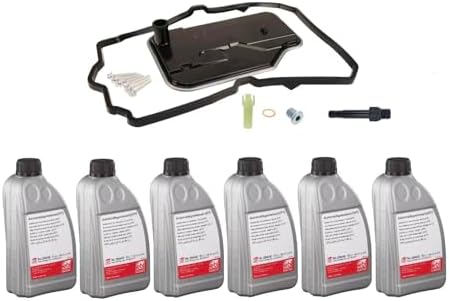
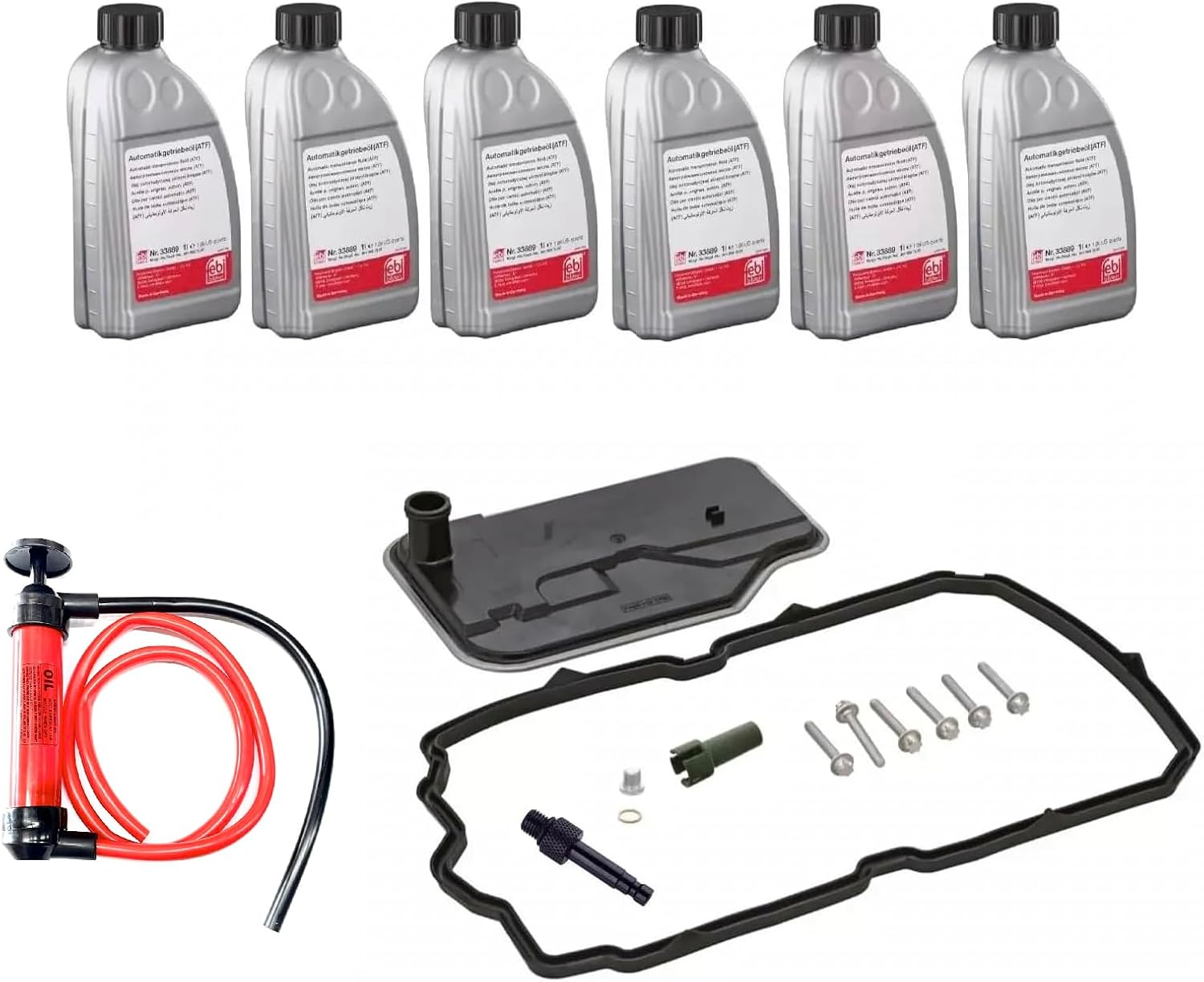
Which Fluid Depends On The Transmission, Not The Car's Model Year
Mercedes-Benz's factory bulletin S-B-00.40/89d, "Operating Fluid Specification Changes for Automatic Transmission," lays out the split in plain terms. The 5-speed 722.6 and the early 7-speed 722.9 both run specification sheet 236.14, red fluid, OEM part number A001 989 68 03. Once 722.9 production crossed a specific transmission production number, 2834526, the fluid changes to specification 236.15, blue fluid, OEM part number A001 989 78 03, on units paired with engines 113, 152, 156, 157, 275 or 279 (the M113 and the AMG-code V8s). 722.9 units built after that same cutover but paired with other engines are approved for either 236.15 or a third sheet, 236.16 (gold fluid, part number A001 989 92 03) — later Mercedes technician training material for the same transmissions lists that gold fluid as sheet 236.17, so treat the sheet number itself as secondary to the color and part number when you're at the parts counter.
The bulletin is explicit that this is tied to the transmission's own build date, not the vehicle's: "Separate filling units must be used for all oils (236.14, 236.15, 236.16) because these oils must never be mixed with other oils." A transmission swapped in later as a replacement unit can run a different spec than the car originally shipped with, which is exactly why the transmission's own production number, not a VIN decoder or a parts-store year/make/model lookup, is the only fully reliable way to identify which fluid a given unit needs.
How To Identify Which Fluid Your 722.9 Takes
Short of pulling the production number off the transmission's ID tag, there are two physical tells documented in Mercedes' own technician materials. The early-style oil pan has round dimple shapes and a noticeable angled chamfer on its side, with a black or white overflow pipe visible once the drain plug is removed. The later pan, used from the June 2010 changeover onward, has deeper oval-shaped indentations, a flat side with no chamfer, and is 5mm deeper than the earlier pan — and its overflow pipe is green. The overflow pipe's color is not cosmetic: using the wrong-colored tube on a service will under- or over-fill the transmission, so replacing it with an exact match, sourced by VIN through the parts catalog, matters as much as getting the fluid color right.
Diagnostic scan tools factor in here too. Mercedes documentation notes that Xentry DAS, from the 05/2010 software version with add-on 1476 onward, displays the specified gear oil for the unit before it will read out transmission oil temperature, which is effectively the factory's own built-in fluid-ID check for anyone servicing the car with the correct tool.
The Fluids Are Physically Different, Not Just Different Colors
It's tempting to treat 236.14 and 236.15 as the same fluid with different dye batches. They aren't. Fuchs Lubricants' own technical data sheets for its two MB-approved products show real physical differences between the generations:
| Property | 236.14 (TITAN ATF 4134, red) | 236.15 (TITAN ATF 7134 FE, blue) |
|---|---|---|
| Density at 15°C | 0.848 g/ml | 0.841 g/ml |
| Kinematic viscosity, 40°C | Not listed by Fuchs | 18.0 mm²/s |
| Kinematic viscosity, 100°C | Not listed by Fuchs | 4.4 mm²/s |
| Viscosity index | Not listed by Fuchs | 160 |
| Pour point | -51°C | -48°C |
| Flash point (COC) | 200°C | Not listed by Fuchs |
| Color | Red | Blue |
Fuchs' own product literature describes TITAN ATF 7134 FE as "the lowest viscosity ATF in the automotive world" among its lineup and states plainly that it is "only miscible with other officially approved MB 236.15 ATFs and not downwards compatible with previous MB-ATF specifications." That lower viscosity is the entire point of the Plus-generation fluid: it's engineered for fuel economy and cold-shift speed in the updated transmission hardware, which is also why Fuchs' 236.14 product, TITAN ATF 4134, is described as backward-compatible with the earlier 236.12 spec but makes no such claim toward 236.15. Compatibility runs one direction, backward through 236.14's own lineage, never forward into the Plus fluid.
Real Capacity: Two Numbers, Both Correct
Mercedes-Benz's StarTuned technician training magazine walks through the actual factory fill procedure for the 722.9, and it explains why you'll see different capacity numbers quoted for the same transmission. The procedure starts by draining the pan and, separately, the torque converter (the 722.9, unlike the 722.6, has its own torque converter drain plug). With the pan reinstalled and a new filter and gasket in place, a fill pump pushes 6 liters in through the drain opening to start.
From there the transmission is brought to a specific temperature with the engine idling in Park — 113°F (45°C) on the chamfered-pan version, 95°F on the later oval-pan version, or 194°F if the vehicle has an auxiliary transmission cooler and that circuit needs to be purged first. Once at temperature, the shop lever is cycled through P-R-N-D several times, and either 4 additional liters (if the torque converter was drained) or 2 additional liters (if it wasn't) are added. The pump is then disconnected and excess fluid is allowed to drain from the overflow pipe until only drops come out, which is the actual level-setting step; everything before it is just getting the transmission full enough to run the real check. Add it up and a full service that includes the torque converter lands at roughly 9 to 10 liters total fluid used, while a pan-drop-only service that skips the converter only circulates the roughly 6 liters that pass through the pan and lower case.
| Step | Fluid volume |
|---|---|
| Initial fill through drain opening (pan-drop baseline) | 6 liters |
| Top-off if torque converter was drained | +4 liters (≈10L total) |
| Top-off if torque converter was not drained | +2 liters (≈8L total) |
| Final level set | Drained to a drip through the overflow pipe at spec temperature |
That temperature-controlled overflow step is the whole reason this transmission has no dipstick: fluid volume changes enough with temperature that a cold check or a hot check at the wrong exact degree will read wrong, and Mercedes' own training material is blunt about why they check it three separate times during the procedure. Get the temperature wrong at the final drain step and the fill level will be wrong even if you measured out a precise number of liters going in.
Why This Isn't A "Close Enough" Fluid
None of the 722.9's approved fluids are Dexron III, and they are not interchangeable with each other. Mercedes' bulletin states the 236.14, 236.15 and 236.16 oils "must never be mixed with other oils," full stop, and requires separate dedicated filling equipment for each one specifically to prevent cross-contamination in a shop that services multiple Mercedes transmissions. Using the wrong viscosity fluid changes how the transmission's hydraulic clutches apply, and combined with a fill level that's only correct at one specific temperature, getting either the fluid or the procedure wrong is a documented, not theoretical, path to harsh or inconsistent shifting on an otherwise healthy 722.9.
It is worth knowing what unstable supply pressure actually looks like downstream, because the symptom can get blamed on the fluid service when the root cause is hydraulic wear instead. Sonnax's listing for its oversized supply pressure regulator valve (part 88740-02) for the 722.9 describes wear in the supply pressure regulator valve bore that lets fluid escape, so the control solenoids receive unstable supply pressure, with a symptom list that includes burnt clutches and burnt TCC apply components, harsh or soft shifts, solenoid performance codes, TCC codes, and wrong gear starts. If a 722.9 still shifts harshly after a correct fluid and fill procedure, that worn bore, not the fluid, is the next thing to check.
Frequently Asked Questions
What transmission fluid does a Mercedes 722.9 actually use?
It depends on when the transmission itself was built, not the car's model year. Units built before production number 2834526 (roughly through June 21, 2010) run red ATF 134 under Mercedes specification 236.14, OEM part number A001 989 68 03. Units built after that point run blue ATF 134 FE under specification 236.15, OEM part number A001 989 78 03, and on most non-AMG applications a third gold-colored fluid under 236.16 (listed as 236.17 in some later technician documentation) is also approved. The transmission's production number, stamped on its ID tag, is the only fully reliable way to know which one you have.
What's the real difference between 236.14 and 236.15 fluid?
They are different formulations, not the same fluid with different dye. Per Fuchs' own technical data sheets, the red 236.14-approved TITAN ATF 4134 has a density of 0.848 g/ml and a -51C pour point, while the blue 236.15-approved TITAN ATF 7134 FE is a noticeably thinner fluid at 0.841 g/ml density, 18.0 mm²/s viscosity at 40C, a viscosity index of 160, and a -48C pour point, built specifically to cut friction and improve fuel economy in the Plus-generation transmission. Fuchs states 7134 FE is "not downwards compatible with previous MB-ATF specifications," meaning it cannot be substituted into an early 236.14 transmission or mixed with 236.14 fluid.
How much fluid does a 722.9 actually hold, and why do two numbers get quoted?
Mercedes-Benz's own StarTuned technician training materials document the fill procedure as 6 liters pumped in through the drain opening to start, followed by a final top-off of 4 liters if the torque converter was drained or 2 liters if it wasn't, bringing total fluid used to roughly 9 to 10 liters for a full service. A pan-drop-only service that skips the torque converter only cycles the roughly 6 liters sitting in the pan and lower case, leaving the converter's share of the fluid untouched, which is why "how much fluid" has two correct answers depending on which service was actually performed.
Does the 722.9 have a dipstick to check the fluid level?
No. Mercedes-Benz's own StarTuned training material confirms the NAG2 completely eliminated the dipstick tube used on the earlier 722.6. Level is set by filling through the drain opening with a pump and adapter, bringing the transmission to a specific temperature (113F with a chamfered-style pan, 95F with the later oval-dimple pan, per the factory procedure), and then letting excess fluid drain out through an overflow pipe inside the pan until only drops come out. There's no way to accurately check or correct the level without that temperature-controlled procedure.
What happens if the wrong fluid or wrong amount goes into a 722.9?
Mercedes' own factory bulletin on this transmission states plainly that the 236.14 and 236.15 fluids "must never be mixed" and that separate filling equipment must be used for each. Because the level-check relies on the fluid's volume at a specific temperature, using the wrong viscosity fluid, or skipping the temperature-controlled overflow step, throws off the actual fill level even if the pump metered what looks like the right quantity. Wrong fluid type and incorrect fill level are both documented causes of harsh or inconsistent shifting on this unit, which is exactly why Mercedes requires dedicated, labeled filling units per fluid spec.
722.9 Transmission Filter with Gaskets
CoreTransmissionParts carries the direct-fit filter and gasket set for the 722.9 pan-drop service, the part that gets replaced regardless of which fluid spec your unit takes.
View the filter →Shop 722.9 parts →
Sources
- Mercedes-Benz USA/Canada, Star Bulletin S-B-00.40/89d, "Operating Fluid Specification Changes for Automatic Transmission," November 6, 2013, hosted via NHTSA's technical service bulletin archive. Backs the 236.14/236.15/236.16 fluid split by transmission production number and engine code, the OEM part numbers, the "must never be mixed" instruction, and the oil pan/overflow-pipe identification details. static.nhtsa.gov (PDF)
- Mercedes-Benz USA, StarTuned technician training magazine, "Transmission Maintenance," March 2017. Backs the full fill procedure: 6-liter initial fill, torque-converter drain, the 113F/95F/194F temperature targets, the 4-liter/2-liter top-off split, and the dipstick-elimination detail on the NAG2. automotivetechinfo.com (PDF)
- Fuchs Lubricants Co., Product Information sheet PI60397e, TITAN ATF 4134 (MB-Approval 236.14). Backs the red fluid's density, pour point, flash point and factory-fill application to the 722.9. motex.bg (PDF)
- Fuchs Lubricants Co., Product Information sheet PI60498e, TITAN ATF 7134 FE (MB-Approval 236.15). Backs the blue fluid's density, viscosity, viscosity index, pour point, and the "not downwards compatible" compatibility statement. petroleumservicecompany.com (PDF)
- Sonnax, Oversized Supply Pressure Regulator Valve, part 88740-02, for Mercedes 722.9. Backs the supply pressure regulator valve bore wear as a cause of unstable control-solenoid supply pressure, and the resulting symptom list: burnt clutches and TCC apply components, harsh or soft shifts, solenoid performance codes, TCC codes, and wrong gear starts. sonnax.com
Shop filter kits, fluid service kits in both fluid specs, and fill adapters for the 722.9, shipped fast from the USA.
Shop 722.9 parts →