A "bad pressure control solenoid" is one of the most over-diagnosed calls on the Mercedes-Benz 722.9 (7G-TRONIC). The EPC solenoid, more properly the pressure control solenoid, regulates the hydraulic pressure that governs shift feel and clutch apply across all seven gears, so when something upstream of it goes wrong, the symptoms look identical to a solenoid that's actually failed. Sonnax's own technical documentation on this unit makes that point directly: a worn valve body bore can starve the solenoid of stable pressure and trigger the same performance codes as a dead solenoid, while the solenoid itself tests fine on the bench. This guide works from ATRA's published failure breakdown, Sonnax's bore-wear bulletins, and a real Mercedes-Benz factory bulletin, so you're diagnosing against documented failure data instead of swapping the first part that looks suspicious.
722.9 Pressure Control (EPC) Solenoid Symptoms
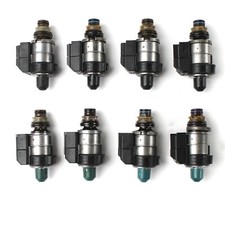
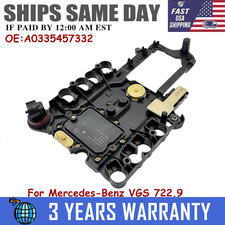
Where the Pressure Control Solenoid Lives and What It Actually Regulates
Like the shift solenoids on this unit, the pressure control solenoid is mounted on the conductor plate, which bolts directly on top of the valve body and also carries the fully integrated transmission control module, per Transmission Digest's technical rundown of the 7G-TRONIC's architecture. The solenoids themselves are individually serviceable; the conductor plate and control module are not. The pressure control solenoid's job is to translate a commanded electrical signal into a precise, modulated hydraulic pressure, and that pressure is what the valve body's pressure regulator valves use as a reference to set both supply pressure (feeding the solenoids) and working/line pressure (feeding the clutch packs). That dependency is the entire reason solenoid-looking symptoms can originate somewhere else entirely: the solenoid only works correctly if the pressure it's regulating against is stable to begin with.
The Symptom List: Harsh Shifts, Burnt Clutches, Wrong-Gear Starts, and Codes
Sonnax's technical documentation on the 722.9's pressure regulator valves lists the exact symptom set that gets blamed on the EPC solenoid: harsh shifts, soft shifts, burnt clutches, wrong-gear starts, and solenoid performance fault codes. On the generic OBD-II side, a scan tool will typically report a pressure-control-solenoid circuit fault in the P0960-P0967 range (control circuit, or control circuit low/high) when the module sees a commanded pressure that doesn't match the feedback it expects. That code tells you the circuit or the pressure response is out of range -- it does not tell you whether the solenoid, its wiring, or the valve body bore behind it is the actual cause.
ATRA's GEARS Magazine breakdown of 722.9 failures adds the other half of the picture: "the majority of the failures we've run into are caused by the O-rings on the tips of the solenoids deteriorating, leaking fluid, and not properly stroking valves." That's a real, confirmable solenoid-level failure, and it's common enough on this unit that it should be the first physical thing you check -- not the first part you order blind.
- Harsh or soft shifts. Either direction is possible depending on whether the regulated pressure reads high or low to the control module.
- Burnt clutches. Erratic or insufficient working pressure under load burns clutch material well before it would otherwise wear out.
- Wrong-gear starts. The transmission launches in a gear other than first, consistent with a clutch pack not getting the pressure it's supposed to at that commanded gear.
- Solenoid performance codes. A generic pressure-control-circuit fault that, per Sonnax's own documentation, can be triggered by bore wear just as easily as by the solenoid itself.
The Part That Actually Fails More Often: The Valve Body Bore, Not the Solenoid
This is the piece most shops skip, and it's the reason so many 722.9 solenoid replacements don't fix the complaint. The valve body has two separate pressure regulator valves that matter here: the supply pressure regulator, which sets the pressure delivered to the control solenoids, and the working pressure regulator, which sets line pressure to the clutch packs. Both bores see constant valve oscillation, and Sonnax's documentation is specific about what happens as they wear.
On the supply side, Sonnax's bulletin for its oversized supply pressure regulator valve (part 88740-02) states that bore wear "allows fluid loss that causes erratic supply pressure to control solenoids," and that this cascades into harsh shifts, soft shifts, burnt clutches, wrong-gear starts, and solenoid performance codes -- the identical symptom list a bad solenoid would produce. On the working pressure side, Sonnax's bulletin for the oversized working pressure regulator valve (part 88740-01) breaks the failure into two distinct wear patterns: deterioration between the line and sump ports causes fluid loss that reduces lube flow and lowers line pressure, while wear specifically at the valve's balance end can instead cause elevated line pressure and harsh shifting. ATRA's failure breakdown backs this up independently, calling out the working pressure regulator bore as "especially critical," since wear there leads directly to clutch burning and overheating.
Both Sonnax valves are machined from hardcoat-anodized aluminum specifically to resist the bore wear that caused the original failure, and the working pressure valve adds extended spools and annular grooves to center it in the bore and resist future side-loading. The supply valve fits either of two bore locations in the valve body and requires Sonnax's F-88740-TL2 tool kit to properly recondition the bore before installation -- this isn't a drop-in part, it's a bore repair plus a replacement valve.
Don't Mistake a Drivetrain Vibration for an EPC Problem
Mercedes-Benz bulletin LI27.10-P-057361, "Humming, droning, vibrations, shuddering, jolting, slip," is worth reading before you touch a 722.9 for anything that feels like a pressure or solenoid complaint under load, because the symptoms overlap. The bulletin covers vehicles with humming, droning, vibration, shuddering, jolting, or slip that could point toward the torque converter. For 722.9 (7G-TRONIC) transmissions built with the optimized torque converter installed from transmission sequence number 1.515.055 onward (after November 2007), the bulletin states plainly that replacing the torque converter is not an effective remedy for these symptoms.
Instead, the bulletin's checks before removing or replacing anything are: limit the transmission to first gear and see if the complaint is still present, check the propeller shaft for excessive resistance and work through the related driveline bulletins, check the wheels and swap them diagonally if necessary, and confirm whether a transmission fluid change was recently performed. The bulletin's own cause list includes the transmission and engine mounts, propeller shafts, side shafts, and the front axle transmission -- none of which a pressure control solenoid or a valve body bore can explain. If a "shudder under load" complaint doesn't clear with any pressure or solenoid work, this bulletin's checklist is where to go next, not another EPC solenoid.
Fluid Spec Matters for Pressure Regulation, Not Just Friction
The 722.9's pressure regulation only behaves predictably with the correct ATF. Fuchs' TITAN ATF 4134, carrying Mercedes-Benz approval 236.14, is the red-dyed fluid specified for 722.9 units built before June 2010 and is backward-compatible with the earlier 236.12 specification. Transmissions built after that date move to the blue-dyed 236.15 fluid (marketed as TITAN ATF 7134 FE). Running the wrong generation of fluid changes viscosity and friction response at the regulator valves and clutch packs, which can produce shift-feel complaints that look like a pressure control problem even when every mechanical component in the valve body is within spec. Confirm the build date against the correct 236.14/236.15 split before doing anything else if the fluid history on the vehicle is unknown.
How to Actually Prove Which Part Is Bad
Work the diagnosis in this order before ordering a solenoid or a valve body: pull the pressure control solenoid and inspect the O-rings on its tip for hardening, cracking, or flattening -- the documented majority failure mode per ATRA. If the O-rings look intact, run Sonnax's recommended vacuum test at the supply and working pressure regulator ports; a bore that won't hold the specified minimum vacuum is worn regardless of what the solenoid tests like on the bench. Cross-check the fluid in the pan against the correct 236.14 or 236.15 specification for the build date. Finally, if the complaint is a vibration, shudder, or slip under load rather than a shift-quality or burnt-clutch complaint, work through bulletin LI27.10-P-057361's driveline checklist before assuming it's a transmission-internal problem at all.
FAQ
What are the symptoms of a bad pressure control solenoid on a 722.9?
Sonnax's documentation on the 722.9's pressure regulator bores lists harsh shifts, soft shifts, burnt clutches, wrong-gear starts, and solenoid performance fault codes as the symptom set. In practice that shows up as a shift that is noticeably firmer or softer than normal, a transmission that starts moving in third gear instead of first, or a check-engine light with a generic pressure-control-solenoid circuit code. None of these symptoms by themselves confirm the solenoid itself is bad, since worn valve body bores produce the exact same complaints.
Is a pressure control solenoid code always the solenoid itself?
No. Sonnax's bulletins on the 722.9 supply and working pressure regulator valves both state that bore wear in the valve body causes fluid loss that results in erratic pressure delivered to the control solenoids, which triggers the same solenoid performance codes as an actual solenoid failure. ATRA's GEARS Magazine breakdown of 722.9 failures also notes that the working pressure regulator bore is especially critical, since wear there leads to clutch burning and overheating independent of solenoid condition. A solenoid should be bench-tested before it's condemned on a code alone.
My 722.9 shudders and jolts under load. Is that the EPC solenoid?
Not necessarily, and Mercedes-Benz bulletin LI27.10-P-057361 is specific about this. For 722.9 (7G-TRONIC) transmissions built with an optimized torque converter from sequence number 1.515.055 onward (after November 2007), the bulletin states that replacing the torque converter is not an effective fix for humming, droning, vibration, shuddering, jolting or slip complaints. It directs you to limit the transmission to first gear and see if the complaint persists, check the propeller shaft and side shafts for excessive resistance, check whether the wheels need to be swapped diagonally, and confirm whether a transmission fluid change was recently performed, before touching the transmission at all.
What causes most pressure control solenoid problems on the 722.9?
According to ATRA's GEARS Magazine writeup on 722.9 failures, the majority of actual solenoid failures on this unit trace back to the O-rings on the solenoid tips deteriorating, which leaks fluid and keeps the solenoid from fully stroking the valve it controls. Separately, and just as commonly, Sonnax's technical documentation points to wear in the supply and working pressure regulator valve bores in the valve body itself, which starves the solenoids of stable pressure and produces identical symptoms without the solenoid ever failing.
How do you tell a worn pressure regulator bore from a bad solenoid on a 722.9?
Sonnax's fix for both the supply and working pressure regulator valves includes a vacuum test at the valve body's regulator ports: if the bore holds vacuum below the specified minimum, the bore itself is worn and no amount of solenoid swapping will fix the complaint. Pull the solenoids and inspect the O-rings on the tips for hardening, cracking or flattening before condemning either part, and confirm the fluid in the unit matches the correct Mercedes-Benz 236.14 or 236.15 specification for the build date, since the wrong ATF changes pressure response too.
Confirmed a bad 722.9 pressure control solenoid or worn valve body?
Pressure control solenoids and valve bodies matched to your production years, shipped fast from the USA.
Shop 722.9 parts →Sources
- ATRA — GEARS Magazine, "Common Mercedes 722.9 Problems," Rob Faucett, August 31, 2018. Backs the O-ring deterioration failure mode on the solenoid tips, the note that the working pressure regulator bore is especially critical, and the clutch-burning/overheating consequence of that bore wear. gearsmagazine.com
- Sonnax — Part 88740-02, Oversized Supply Pressure Regulator Valve, Mercedes 722.9. Backs the supply pressure regulator bore-wear mechanism, the resulting harsh/soft shift, burnt clutch, wrong-gear-start and solenoid code symptoms, and the vacuum-test diagnostic method. sonnax.com
- Sonnax — Part 88740-01, Oversized Working Pressure Regulator Valve, Mercedes 722.9. Backs the working pressure regulator bore-wear mechanism, the two distinct wear patterns (line/sump port wear vs. balance-end wear) and their opposite pressure effects, and the burnt-clutch/overheating/poor-shift symptom list. sonnax.com
- Transmission Digest — "Mercedes-Benz 7G-Tronic: Common issues," Andrew Markel, August 5, 2025. Backs the conductor plate/control module architecture and which components are individually serviceable versus integrated. transmissiondigest.com
- Mercedes-Benz AG (Daimler) — Bulletin LI27.10-P-057361, "Humming, droning, vibrations, shuddering, jolting, slip," version 1, June 10, 2014 (archived via NHTSA). Backs the torque-converter sequence-number exemption for 722.9 units after November 2007, and the required driveline checklist before condemning the transmission. static.nhtsa.gov
- Fuchs Lubricants — TITAN ATF 4134 product data sheet. Backs the MB-Approval 236.14 fluid specification, red fluid dye, and backward compatibility with 236.12 for 722.9 units built before June 2010. fuchs.com
Shop 722.9 pressure control solenoids, valve bodies, pumps, rebuild kits and the correct ATF — shipped fast from the USA.
Shop 722.9 parts →