The 8L90 has been in GM's 6.2L trucks, SUVs, the Corvette, and the Camaro since 2015 (RPO M5U/M5X, with the lighter-duty 8L45 sharing the case under M5N/M5T), and it has a reasonable reputation for durability -- its weak point has always been shift quality, not outright failure. That reputation holds up a lot better on a transmission that's actually been serviced than one that's been run on factory fill with no attention paid to it. GM's own maintenance schedule for this unit doesn't make that easy to figure out on your own: it lists a severe-duty interval and essentially nothing for normal use, which leaves most owners assuming "no interval" means "no service needed." That assumption is what turns a cheap fluid-and-filter job into a valve body replacement a few years later.
This is a checklist built from GM's own service bulletins for the 8L90/8L45 platform, organized by what actually needs attention as the miles climb -- not a generic "flush it every 30k" recommendation.
1. Fluid and Filter: Don't Trust "No Interval Listed"
GM's published maintenance schedule for the 8L90 splits by duty cycle. Under severe-duty use -- which GM defines broadly enough to cover most trucks and SUVs that tow, idle in traffic, or operate in extreme temperatures -- the fluid and filter get changed at 45,000 miles. Under "normal" use, the schedule drops to periodic fluid-level checks with no change interval specified at all. That's not GM saying the fluid lasts forever; it's GM assuming a smaller slice of ownership never sees a towing load or a hot climate. Realistically, run the 45,000-mile severe-duty interval on this transmission regardless of how the truck is used, especially once it's past the 75,000-100,000 mile mark and nobody can confirm the last time it was serviced.
The fluid itself is not optional or cross-compatible with other brands. GM's bulletin on approved fluids is direct: the 8L90 uses Dexron HP transmission fluid only, and running the wrong fluid "may cause internal transmission damage." The specific part number has changed across this transmission's production run -- GM's later shudder-correction bulletin (covered below) moved to Mobil 1 Synthetic LV ATF HP, GM part number 19417577, in a 1-quart US container -- so match the fluid to your vehicle's current GM-approved spec rather than grabbing whatever bottle says "Dexron HP" on the shelf.
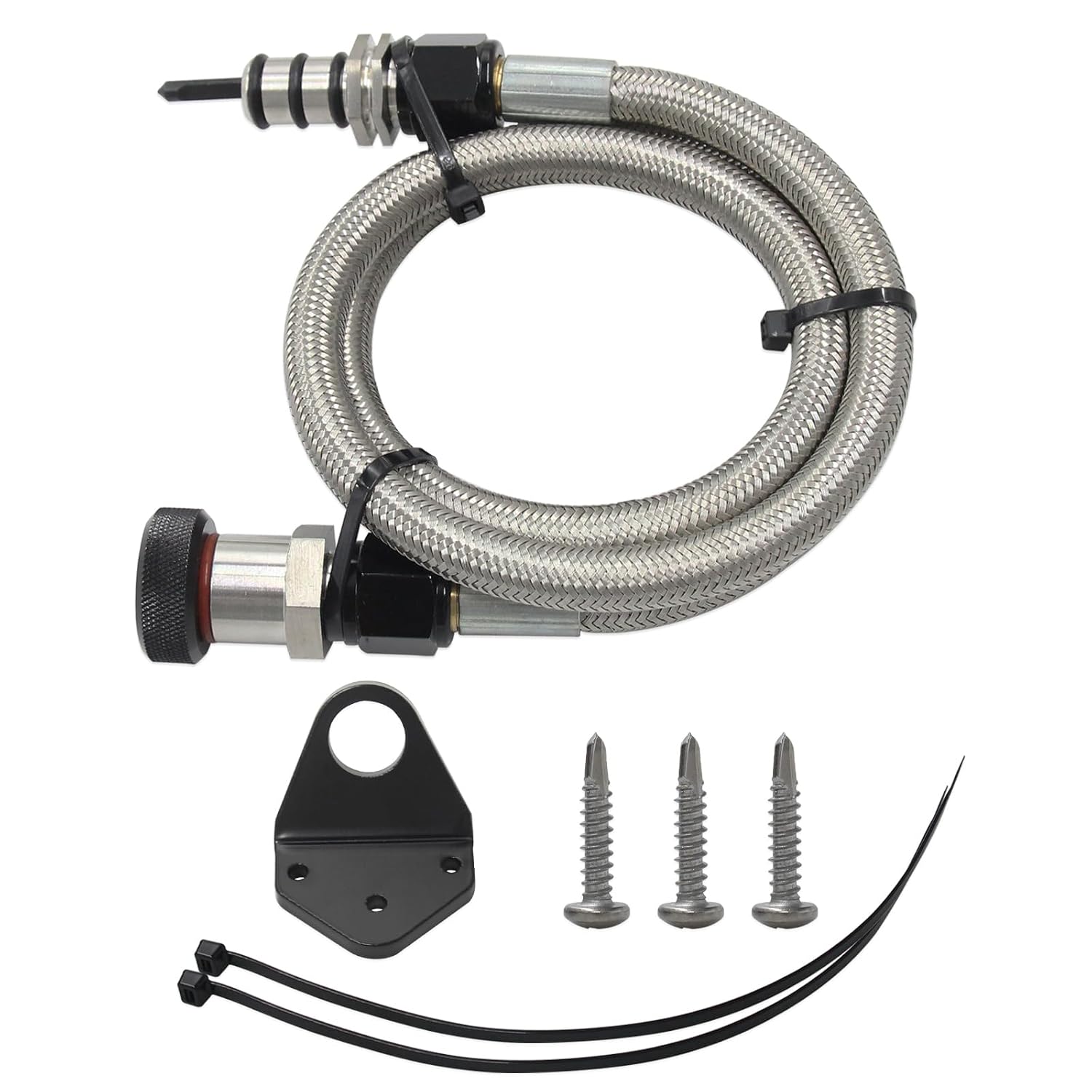
Capacity is where a lot of DIY fluid changes go wrong, because the numbers vary a lot by application. GM's own capacity tables list drain-and-refill figures around 7.0 liters (7.4 quarts) for lighter applications, climbing to roughly 11.8-12.0 liters (about 12.5-12.7 quarts) for a full overhaul fill on heavier Low Cab Forward applications -- a nearly 2x spread depending on what you're working on. Don't use a generic "8L90 capacity" number pulled from a forum post; check the figure for your specific vehicle platform. The fill procedure itself is also particular: GM's guidance for this unit has the fill plug on the passenger side of the case, and the correct method is bringing the fluid to roughly 100 F before checking for a trickle from the stand pipe plug, adding fluid through the fill hole until it trickles consistently rather than just topping off to a dipstick mark.
2. Check the Thermal Bypass Valve
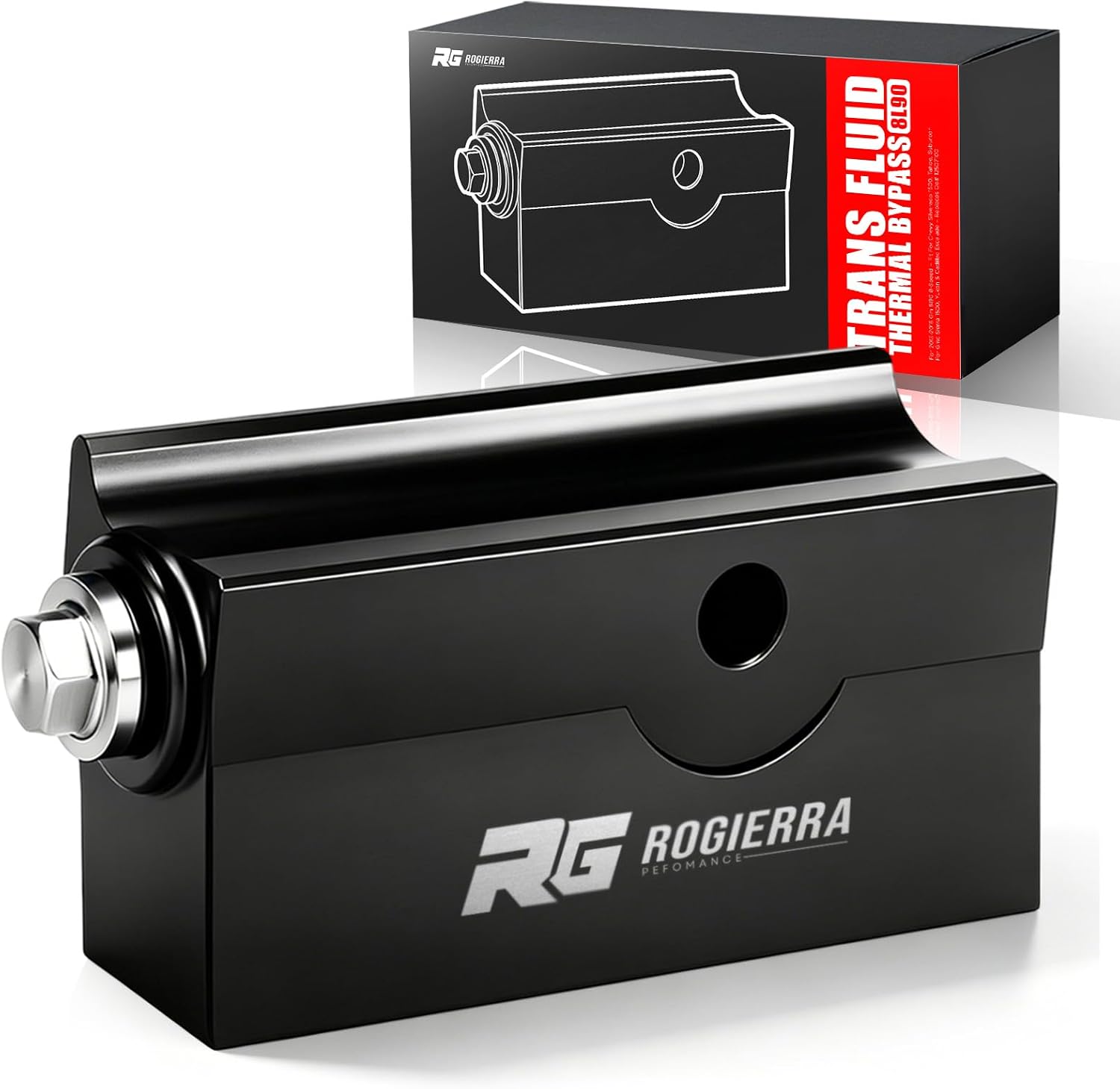
GM bulletin 22-NA-182 documents a thermal bypass valve (TBV) on the 8L90 that sits external to the transmission case and opens at 194 F (90 C), routing fluid through the external cooler once the transmission reaches that temperature. This bulletin is broad -- it also covers the 6L80, 6L90, 10L80, 10L90, and 10L1000 -- and its subject list reads like a greatest-hits of high-mileage transmission complaints: harsh shifts, shudder, surge, stall, neutral/flare, overheating, and high fluid temperature. A TBV that's degraded or stuck at high mileage can leave the transmission running hotter than it should, which accelerates fluid breakdown and feeds directly into the shudder and harsh-shift complaints covered next. This is a cheap part relative to the damage a chronically overheated transmission causes, and it's worth inspecting any time a high-mileage 8L90 comes in for an unrelated complaint -- not just when someone specifically reports a temperature problem.
3. Watch For TCC Shudder Before It Gets Worse
A shake or shudder during light, steady throttle between roughly 25 and 80 mph -- often described as driving over rumble strips -- is one of the most common high-mileage complaints on this platform, and GM bulletin 18-NA-355 covers it directly for the 8L45 and 8L90. The confirmation method is a three-mode scan tool test: reproduce the complaint in normal operation, then command the torque converter clutch disabled, then command it forced locked. If the shudder disappears in both of the TCC-commanded modes, it's confirmed TCC shudder; if it's still present in either mode, the root cause is something else entirely -- engine mounts, tires, or driveline, not the transmission.
Once confirmed, GM's fix is a full fluid exchange through a TransFlow-type machine using the Mobil 1 Synthetic LV ATF HP fluid referenced above -- not a simple pan drop, and not an aftermarket friction modifier poured on top of what's already in the pan. GM states the condition should start improving immediately and may take up to 200 miles of driving to fully resolve. Catching this early matters: letting a confirmed shudder run for tens of thousands of miles keeps glazing the converter clutch material and contaminating the fluid further, which is a worse starting point for the eventual fix.
4. The Harsh-Shift-After-Mileage Pattern
GM bulletin 16-NA-213 covers a specific and well-documented pattern on 8L90/8L45 units built between July 1 and September 14, 2015: a harsh shift that develops gradually over mileage accumulation, in units with no previous transmission repairs or calibration updates. The affected shifts group into clusters -- 1-2, 5-6, and 7-8 together; 3-4 with Park-or-Neutral-to-Reverse; and 6-7 with 3-1 -- which is a useful pattern to recognize because a harsh shift complaint that matches one of those exact groupings points toward this specific condition rather than a random valve body fault.
GM's diagnostic order starts with the lower-cost options: completing the adaptive relearn procedures covered in a companion bulletin, which may resolve the condition temporarily or not improve it at all. If the harsh shift persists after that, the next step is pulling the pan to check for excessive clutch debris. Clean debris with persistent harsh shifts points toward a valve body replacement; debris found in the pan means the transmission needs to come apart for a root-cause repair rather than a bolt-on fix. This is exactly the kind of complaint where checking the service history matters -- if the relearn has already been tried once without success, repeating it a second time isn't going to produce a different result.
Where the Valve Body Actually Wears
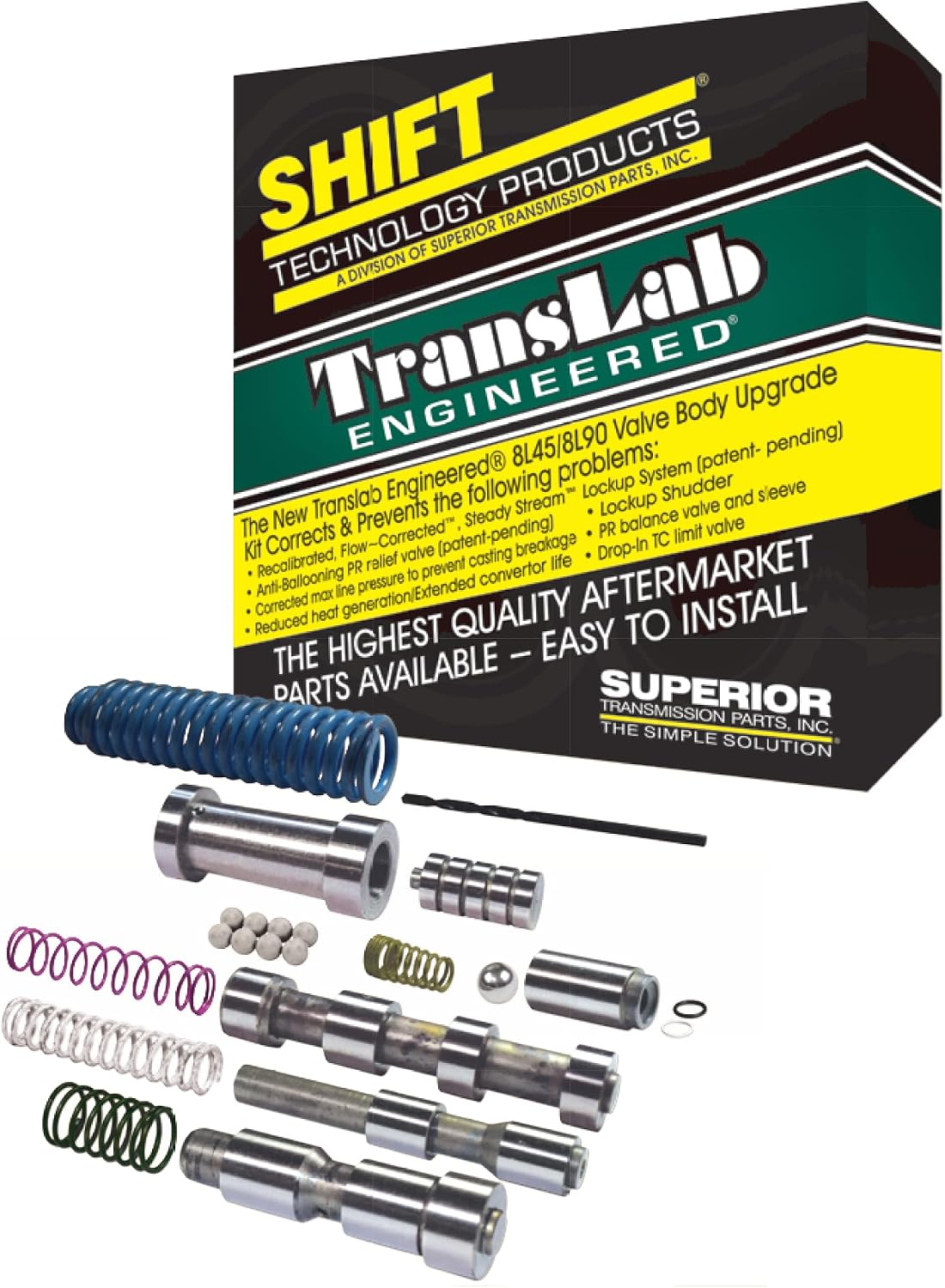
Sonnax's technical documentation on the 8L45/8L90 control solenoid valve body identifies the signal accumulators as the primary wear source, with seven total accumulator bores and the S3 and S4 locations reported as generally the worst. Reported symptoms tied to this wear include poor shift quality, low line pressure, no converter apply, hydraulic-related converter codes, burnt clutches, and soft or flared shifts. Vacuum testing each bore is the preferred diagnostic method before assuming a full valve body replacement is necessary -- in many cases a drop-in accumulator piston kit or an oversized kit for casting wear beyond drop-in tolerances resolves the complaint without replacing the whole assembly. This is worth knowing before quoting a customer a full valve body swap on a shift-quality complaint that a $50-100 piston kit might fix.
The Checklist, In Order
- Confirm fluid and filter history. If there's no record of a service in the last 45,000 miles, do it now using Dexron HP (or the current GM-approved equivalent) -- don't wait for a shift complaint.
- Verify the correct fill capacity for the specific application before refilling; don't use a generic figure, and use the passenger-side fill plug trickle-check method rather than topping to a dipstick mark.
- Inspect the thermal bypass valve on any high-mileage unit, especially one that runs hot, tows, or has any shudder/harsh-shift complaint -- it's cheap insurance against accelerated fluid breakdown.
- Ask about a light-throttle shudder between 25-80 mph specifically. If present, run the three-mode TCC test before assuming hard-parts failure, and correct it with a proper fluid exchange, not a top-off.
- If the complaint is a harsh shift that developed gradually with no prior repair, check the build date against the 16-NA-213 window, run the adaptive relearn first, and only pull the pan for debris inspection if the relearn doesn't resolve it.
- For any confirmed valve body shift-quality issue, vacuum test the signal accumulator bores (S3/S4 first) before committing to a full valve body replacement.
If the complaint on your bench is a whine or a clunk rather than a shift-quality issue, that's a different diagnostic path covered in our separate 8L90 noise diagnosis guide.
FAQ
What fluid change interval should I actually run on a high-mileage 8L90?
GM's maintenance schedule only calls for a fluid and filter change under severe-duty conditions, at 45,000 miles, and lists no interval at all for normal use beyond periodic checks. In practice almost every truck or SUV sees enough towing, stop-and-go driving, or hot-climate operation to qualify as severe duty at some point in its life, so running a 45,000-mile fluid and filter service is the safer call once the vehicle is past 75,000-100,000 miles, rather than waiting for a shift complaint to show up first.
What fluid does the 8L90 need, and can I substitute another Dexron fluid?
GM's bulletin on this platform is explicit that the 8L90 uses Dexron HP transmission fluid only, and using a different Dexron-branded fluid can cause internal damage. The approved fluid changed over this transmission's production run -- later-build vehicles already run the updated Mobil 1 Synthetic LV ATF HP (GM part number 19417577) -- so confirm the current GM-approved part number for your specific build date rather than assuming any bottle labeled Dexron HP is interchangeable.
My 8L90 shudders at steady highway speed -- is that a fluid problem or a hard-parts problem?
On this platform it is overwhelmingly a fluid condition, not a hard-parts failure. GM bulletin 18-NA-355 covers a shake or shudder during light, steady throttle between about 25 and 80 mph, confirms it with a three-mode torque converter clutch test, and corrects it with a full fluid exchange rather than a parts replacement. Catching this early with a proper exchange is far cheaper than letting it run long enough to glaze the converter clutch material or contaminate the rest of the fluid.
Does the 8L90 have a transmission cooler thermostat I need to check at high mileage?
Yes -- GM bulletin 22-NA-182 documents a thermal bypass valve (TBV) on the 8L90 that sits external to the transmission and opens at 194 F (90 C) to route fluid through the cooler once it reaches that temperature. A TBV that's stuck or degraded at high mileage can either starve the transmission of cooling flow or bypass the cooler when it shouldn't, and GM ties this component to harsh shift, shudder, surge, overheating, and high fluid temperature complaints across the 8L90 and its 6L80/6L90/10-speed siblings.
My 8L90 developed a harsh shift with no warning and no prior repairs -- what's going on?
GM bulletin 16-NA-213 covers exactly this pattern on 8L90/8L45 units built between July 1 and September 14, 2015: a harsh shift that develops over mileage accumulation with no previous repair history. GM's diagnostic path starts with an adaptive relearn procedure, but if the harsh shift persists after that, the next step is pulling the pan to check for excessive clutch debris -- clean debris points to a valve body replacement, while debris in the pan means the unit needs to come apart for a root-cause repair.
Related 8L90 guides
Need parts for this job?
Thermal bypass valves, filters, fluid, valve bodies, and the fix kits for shudder and harsh shift — shipped fast from the USA.
Shop 8L90 parts →Sources
- General Motors Service Bulletin, Dexron HP fluid requirement (NHTSA-hosted copy, 2015). Backs the Dexron HP-only fluid requirement for the 8L90 and the warning that an incorrect fluid may cause internal transmission damage. static.nhtsa.gov (PDF, hosted by NHTSA)
- General Motors Service Bulletin 16-NA-213 / SB-10089044-2280, "Harsh Shift Developed Over Mileage Accumulation" (July 2016). Backs the 2015-2016 8L90/8L45 build-date window (July 1-September 14, 2015), the grouped shift pattern (1-2/5-6/7-8, 3-4 with Park-or-Neutral-to-Reverse, 6-7 with 3-1), the adaptive relearn-first diagnostic order, and the clutch-debris pan check as the next step. static.nhtsa.gov (PDF, hosted by NHTSA)
- General Motors Service Bulletin 18-NA-355, "Shake and/or Shudder During Light Throttle Acceleration Between 25 and 80 MPH" (August 2019 revision). Backs the TCC shudder symptom description, the three-mode confirmation test, the special tool list (DT-52263 Fluid Exchange Kit, DT-45096 TransFlow machine), and the Mobil 1 Synthetic LV ATF HP fluid exchange fix (GM part number 19417577) with its stated up-to-200-mile resolution window. static.nhtsa.gov (PDF, hosted by NHTSA)
- General Motors Service Bulletin 22-NA-182, thermal bypass valve reference (May 2025 revision). Backs the 8L90's external thermal bypass valve opening at 194 F (90 C), and the bulletin's broader complaint list of harsh shift, shudder, surge, stall, neutral/flare, overheating, and high fluid temperature across the 6L80/6L90/8L90/10-speed family. static.nhtsa.gov (PDF, hosted by NHTSA)
- Sonnax Technical Resource, "Tips for Tackling 8L45/8L90 Shift Repairs with Sonnax Signal Accumulator Pistons." Backs the seven signal-accumulator-bore wear pattern, the S3/S4 worst-wear locations, the reported shift-quality and pressure symptoms, vacuum testing as the preferred diagnostic method, and the drop-in versus oversized piston kit repair options. sonnax.com
- GM TechLink, transmission fluid capacities reference table (2026). Backs the drain-and-refill versus full-fill capacity spread across 8L90 applications and the passenger-side fill plug/stand-pipe trickle check procedure. gm-techlink.com (PDF)