An 8L90 that runs hot almost never has a cooler that is too small. It has something keeping fluid out of the cooler. That distinction matters, because the shop that bolts on an auxiliary cooler first spends the customer's money on the one repair that cannot fix three of the four common causes.
Here is what actually makes these units climb, in the order I check them on the lift, with the GM and Sonnax numbers behind each one.
The temperature band, and how little margin this unit has
ATRA's GEARS puts the healthy working range for automatic transmission fluid at roughly 160 to 200°F. Below it, fluid thickens, hydraulic response slows and shifts go harsh or long. Above it, the fluid breaks down, wear climbs and the pump can cavitate, and oxidation accelerates sharply with every degree you add.
Now look at what the 8L90 has to work with. GM's own Supermatic 8L90 service literature lists three capacities:
| Service | Metric | US |
|---|---|---|
| Pan removal and filter replacement | 7.0 liters | 7.4 quarts |
| Overhaul (transmission volume only) | 10.3 liters | 10.88 quarts |
| Complete system, including cooler volume | 10.8 liters | 11.41 quarts |
Two things jump out of that table. First, only about half a quart of the total system charge lives in the external cooler and lines — 11.41 quarts total against 10.88 inside the transmission. That is a small buffer, and it is the buffer the whole cooling strategy depends on turning over continuously. Second, a pan service moves 7.4 of the 11.41 quarts in the system, so a single drain and fill leaves roughly a third of the old fluid in the converter, cooler and circuits.
GM is also explicit about the fluid: DEXRON HP only, and using anything else "may result in transmission internal damage." There is no factory dipstick or fill tube on this transmission. Level is set at a plug, and the plug torque is 9 N·m (80 lb in) per bulletin 18-NA-355. Do not guess at that one; it is a small plug in an aluminum pan.
Cause 1: a thermal bypass valve that will not open
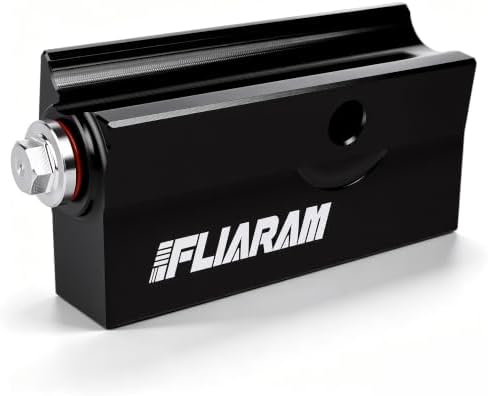
Every truck and SUV 8L90 has a thermal bypass valve (TBV) in the cooler lines. Its job is warm-up: hold fluid out of the external cooler until the fluid is hot, so the transmission reaches operating temperature faster. GM publishes the opening point by family in bulletin 22-NA-182, and the 8L90 is the hottest of the three:
- 6L80 and 6L90: 158°F (70°C), valve external to the transmission
- 8L90: 194°F (90°C), valve external to the transmission
- 10L80, 10L90, 10L1000: 143°F (61°C), valve inside the valve body, except the 3.0L LM2 diesel where it is external
Read that against the 160-200°F healthy band. A healthy 8L90 spends the bottom two thirds of its normal operating range with the cooler mostly gated. That is by design, and it is fine until the valve stops opening — at which point the transmission has no external cooling at all and gets there in a hurry.
The failure is not theoretical, and it is not a spring that got weak. Mike Greer at Certified Transmission tore down a pile of these blocks and published what he found in Transmission Digest: some blocks use a metal cup washer between the thermal valve spring and the valve, and some use a plastic one — and the plastic cups "were getting a hole punched in them from the point of the thermal valve." Once that cup is holed, the valve can no longer be held or positioned correctly. His shop first found it on 6L80 and 6L90 blocks; they have since found the same plastic spring cup failure on GM 8L90 transmissions.
Worth knowing how seriously GM takes the temperature itself: on the 6L80 it changed the part. GM TechLink told technicians to replace the TBV during any 6L80 (RPO MYC) repair for harsh shift, delayed shift, shudder, noise or vibration, because "the previous TBV had a full-open temperature of 194°F (90°C). The new TBV has a full-open temperature of 158°F (70°C)," identified by a "70" stamped into the bottom of the valve, with part numbers in bulletin 21-NA-199. The 8L90 is still published at 194°F.
How to test it without guessing
Get the unit to full operating temperature and feel the two cooler lines at the block with an IR thermometer. Below the opening point both should read close to sump. Above it, the line feeding the cooler should climb and the return should come back measurably cooler. If sump is past 194°F and the cooler lines are still near ambient, the valve is not opening — either the cup is holed and the valve is stuck, or the block is plugged. Pull it and look at it.
Cause 2: a twisted or leaking cooler line
This is GM's own first-listed cause, and it costs nothing to check. Bulletin 22-NA-182 covers harsh shifting, shudder, surging, stalling, neutral/flare, transmission overheating and above-normal fluid temperature, and states plainly: "This condition may be caused by a twisted cooler line on low mileage vehicles."
The procedure is the kind of thing that gets skipped because it sounds too simple. Get under it, drop the belly panels if you have to, and look at the rubber sections where they run to the auxiliary cooler. If a line is twisted, disconnect it at the cooler, untwist it, reconnect it. If it stays misshaped after untwisting, replace it. Then check fluid level either way. GM adds one more diagnostic hook: on ETRS transmissions (RPO MHS, MQC) a twisted cooler line may set DTC P27EC in the TCM.
While you are there, look at the crimps. Greer's shop reports these cooler lines "have a very high failure rate because they tend to leak where the rubber hoses are crimped to the steel lines." A slow seep at a crimp is a level problem before it is a leak problem, and a low 8L90 aerates and overheats.
Cause 3: the valve body starving the cooler and lube circuits
This is the cause that gets missed, because the truck comes in for heat and the gauge on the cooler line looks fine at idle. In the 8L90, cooler and lube flow are what is left after line pressure and converter charge are satisfied. Wear the wrong bore and the oil that should be going to the cooler goes somewhere else.
Two lineups do it.
The converter feed limit valve. Transmission Digest states it directly for the 8L45 and 8L90: bore wear or a stuck converter feed limit valve "can result in converter overheat, incorrect TCC apply or release, inadequate lube and cooling, and converter over-pressurization." Sonnax lists its converter feed limit valve kits (154740-19K, and oversized 154740-22K with tool F-154740-TL22) against exactly that symptom set: code P0218, code P0741, overheated converter, inadequate lubrication, excess converter pressure and high TCC slip RPM.
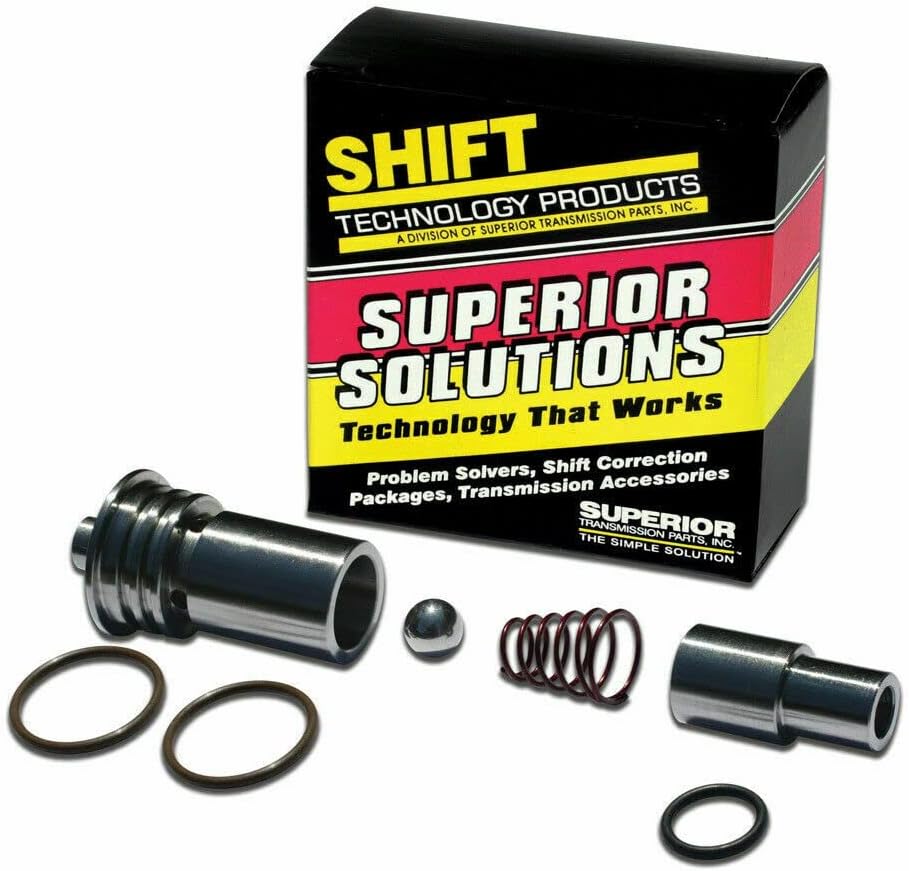
The shuttle valve and pressure regulator lineup. Sonnax lists its shuttle valve kit 154740-09K and the pressure regulator and O-ringed shuttle valve kits 154740-02K, 154740-29K and 154740-31K against low cooler flow, loss of lube oil, and overheated transmission and converter. That is a hydraulic cooling failure with a perfectly good radiator bolted to the truck. If the unit is also showing high line pressure and harsh shifts, that is the same lineup talking. (We covered the pressure side of this in detail in the 8L90 pressure testing guide.)
Sonnax packages the converter-side repairs together as the 8L45-8L90-TCC-ZIP kit, listed against overheated transmission and converter, loss of cooler flow, loss of lube oil, burnt converter, high TCC slip RPM and codes P0218 and P0741. If you are in the valve body for heat, that is the shopping list.
One caution before you condemn a valve body on a low-mileage truck. GM bulletin 22-NA-122 attributes solenoid and valve related DTCs on low-mileage 8L45 and 8L90 units to manufacturing debris that clears itself from the valve body and is then captured by the filter, and says the bulletin exists to "reduce unnecessary repairs in cases of transient or momentary issues." Cut the filter open before you order a valve body.
Cause 4: the fluid, the level, and the converter clutch
Three fluid-side heat sources, in descending order of how often I see them.
Level set with a cold cooler. Because the bypass gates the cooler, the cooler is empty until the fluid is hot. GM's own tip for the updated 6L80 valve makes the logic explicit: check level only after fluid temperature "has reached or exceeded an operating temperature of 158°F (70°C)," because that "opens the bypass valve and allows the cooler to fill up with fluid, which will result in a more accurate fluid level check." Set the level with roughly half a quart of cooler volume sitting empty and you will be over when it fills. GM warns that an overfilled unit "may result in foaming or fluid to be expelled out the vent tube," and aerated fluid neither carries heat nor holds a clutch.
Torque converter clutch shudder. A slipping TCC is a heater running inside the converter. GM's bulletin 18-NA-355 covers it on the 8L45 and 8L90: shake or shudder during light throttle acceleration between 25 and 80 mph at steady speed, with the transmission not shifting. Road test for it with sump temperature between 122°F (50°C) and 158°F (70°C) and confirm it with the three-mode TCC test on a scan tool — normal, TCC commanded off, TCC commanded on. If the vibration disappears both with the clutch fully open and fully locked, it is TCC shudder.
The wrong fluid, or too little new fluid. GM's correction for TCC shudder is a full exchange to blue-label Mobil 1 Synthetic LV ATF HP, with the machine filled to 20 quarts, not a pan drop. Two cautions from the procedure travel with any 8L90 service: never pull more than 3 quarts at a time, because it "could cause fluid pump cavitation and possibly damage the transmission"; and do not intermix other fluids or aftermarket additive packages, which "will result in a low concentration level of new fluid." Expect up to 320 km (200 mi) and two full cold-to-hot drive cycles before the result settles.
The diagnostic order that saves you a day
- Pull codes first. P0218 with converter codes points at the valve body. P27EC on an ETRS unit points at the cooler line.
- Look at the cooler lines. Two minutes under the truck for a twist, a kink, or a wet crimp.
- Baseline transmission fluid temperature on a scan tool. Watch the rise on a loaded pull and, more telling, the recovery after you crest. A unit rejecting heat comes back down; a unit with no cooler flow climbs and stays.
- IR the cooler lines above 194°F. No delta across the cooler means no flow — bypass valve or blockage.
- Do a cooler flow test. GM's own service literature calls for a transmission fluid cooler flushing and flow test as a standard procedure. Measured flow is the only thing that settles the bypass-versus-valve-body argument.
- Then check level, hot, by the book, with the plug torqued to 9 N·m (80 lb in) and the cooler filled.
- Only now consider more cooler capacity.
Prevention: what keeps an 8L90 cool for 200,000 miles
- Service by temperature, not by the light-duty interval. If the truck tows, plows, or lives in summer traffic, treat it as severe service. Fluid life falls off a cliff above 200°F.
- Put fluid temperature where the driver can see it — driver information center or a gauge. The customer who backs out of the throttle at 230°F never needs a rebuild quote.
- Change the filter with the fluid. A restricted filter starves the pump, and an aerated pump makes heat. This is the one service item on the unit with a real interval.
- Address the bypass before towing season, not during it. Either replace the valve with a known-good one or move to a bypass-delete so the cooler sees flow at all temperatures. The tradeoff for deleting it is longer winter warm-ups, which is a real cost in cold climates and no cost in the southern half of the country.
- Fix a shudder as a heat problem. A slipping converter clutch at highway speed is the most efficient way to cook this fluid, and the fix is documented.
- Do not add friction modifiers. GM's own bulletin says aftermarket additive packages defeat the concentration of new fluid the exchange is trying to achieve.
The 8L90 is a strong transmission with a thin fluid, a small cooler buffer and a bypass valve that stays shut longer than either the unit before it or the unit after it. Keep fluid moving through the cooler and it holds up fine. Let anything gate that flow — a holed spring cup, a twisted hose, a worn bore — and it will tell you about it in a few hundred miles.
FAQ
At what temperature does the 8L90 thermal bypass valve open?
GM bulletin 22-NA-182 lists it by transmission family, and the 8L90 is the hottest of the three: 194F (90C), with the valve external to the transmission. The 6L80 and 6L90 are listed at 158F (70C) and the 10L80, 10L90 and 10L1000 at 143F (61C) with the valve inside the valve body. Until the fluid reaches that temperature, the external cooler is largely out of the circuit.
How much fluid does an 8L90 hold, and what type?
GM's own Supermatic 8L90 service literature lists three numbers: 7.0 liters (7.4 quarts) for a pan removal and filter replacement, 10.3 liters (10.88 quarts) for an overhaul counting transmission volume only, and 10.8 liters (11.41 quarts) for the complete system including cooler volume. The fluid is DEXRON HP only, and GM warns that the wrong fluid may result in internal damage.
Can overfilling an 8L90 make it overheat?
Yes, and it is a common self-inflicted one. GM cautions that an overfilled 8L90 may foam or push fluid out the vent tube in service. Aerated fluid carries heat poorly and compresses in the clutch circuits. Because the bypass valve gates the cooler, setting level before the cooler has filled is the usual way it happens.
What code does an overheating 8L90 set?
P0218 is the transmission fluid over temperature code, and Sonnax lists it on the 8L90 as a symptom its converter feed limit valve and TCC valve kits address, alongside P0741. On late-model GM units a twisted cooler line can also set P27EC in the TCM on ETRS transmissions (RPO MHS, MQC) per GM bulletin 22-NA-182. Codes are the starting point, not the diagnosis: confirm with a cooler flow test.
Will an auxiliary cooler fix an 8L90 that runs hot?
Only if the circuit feeding it is healthy. A bigger cooler does nothing for a bypass valve that will not open, a twisted line, or a worn shuttle valve lineup that is dumping cooler and lube flow back to sump. Prove flow first, then add capacity if the numbers still say you need it.
Sources
- General Motors — Service Bulletin 22-NA-182, “Information on 6L80, 6L90, 8L90, 10L80, 10L90, 10L1000 Equipped Vehicles with A Harsh Shift, Shudder, Surge, Stall, Neutral/Flare, Transmission Overheating and/or High Transmission Fluid Temperature,” September 2024 revision (NHTSA-hosted PDF). Backs the customer complaint list including transmission overheating and above-normal transmission fluid temperature; the first-listed cause of a twisted cooler line on low mileage vehicles and the instruction to disconnect it at the auxiliary cooler, untwist it, replace it if it stays misshaped, then check fluid level; the note that a twisted cooler line may set DTC P27EC in the TCM on ETRS transmissions (RPO MHS, MQC); and the thermal bypass valve opening temperatures by family — 158F (70C) for the 6L80 and 6L90, 194F (90C) for the 8L90, both external to the transmission, and 143F (61C) inside the valve body for the 10L80, 10L90 and 10L1000 except the 3.0L LM2 diesel. static.nhtsa.gov (PDF)
- General Motors — Chevrolet Performance Supermatic 8L90 Transmission Control Kit installation instructions, Part No. 19419038, revision 26AP22 (chevrolet.com PDF). Backs the approximate fluid capacities for the 8L90 — 7.0 liters / 7.4 quarts for pan removal and filter replacement, 10.3 liters / 10.88 quarts for overhaul counting transmission volume only, and 10.8 liters / 11.41 quarts for the complete system including cooler volume; the caution to use DEXRON HP transmission fluid only because the wrong fluid may cause internal damage; the warning that an overfilled transmission may foam or expel fluid out the vent tube; the instruction that an adequate cooler must be used for proper transmission operation; the absence of a factory fluid level indicator or tube; the approximate transmission weight of 98 kg (216 lb); and the gear ratios from 4.56 in first to 0.652 in eighth with a 3.818 reverse. chevrolet.com (PDF)
- General Motors — Service Bulletin 18-NA-355, “Shake and/or Shudder During Light Throttle Acceleration Between 25 and 80 MPH (40 and 128 KM/H) at Steady Speed,” August 2019 revision (NHTSA-hosted PDF). Backs the TCC shudder condition on 8L45 and 8L90 units and its 25-80 mph steady-speed description; the instruction to road test for shudder with transmission sump temperature between 122F (50C) and 158F (70C); the three-mode TCC test using GDS2; the correction being a full fluid exchange to blue-label Mobil 1 Synthetic LV ATF HP; the 20-quart machine fill; the caution not to remove more than 3 quarts at once because it could cause fluid pump cavitation and possibly damage the transmission; the warning that intermixing other fluids or aftermarket additive packages will result in a low concentration of new fluid; the 22 N·m (16 lb ft) cooler pipe adapter block bolt torque and the 9 N·m (80 lb in) level set plug torque; and the note that full effect takes up to 320 km (200 mi) and two cold-to-operating-temperature drive cycles. static.nhtsa.gov (PDF)
- Transmission Digest — “Potential causes of an overheated transmission: It's not always what you think,” Mike Greer, Certified Transmission, May 25, 2023. Backs the thermal bypass valve failure mechanism: the valve exists to bring fluid up to temperature, a failure stuck open would go unnoticed while a valve stuck closed causes rapid overheating; the teardown finding that some thermal blocks use a plastic cup washer between the thermal valve spring and the valve and some use metal, and that the plastic ones were getting a hole punched in them by the point of the thermal valve; the high failure rate of the cooler lines leaking where the rubber hoses are crimped to the steel lines; the aftermarket spool-valve bypass that completely bypasses the thermal valve; and the finding that GM 8L90 transmissions have the same plastic spring cup failure as the 6L80 and 6L90. transmissiondigest.com
- Sonnax — GM 8L90 transmission parts and symptom index. Backs the valve body wear points tied to cooling: the Converter Feed Limit Valve Kit 154740-19K and Oversized Converter Feed Limit Valve Kit 154740-22K listed against code P0218, code P0741, overheated converter, inadequate lubrication, excess converter pressure and high TCC slip RPM; the Shuttle Valve Kit 154740-09K and Pressure Regulator & O-Ringed Shuttle Valve Kits 154740-02K, 154740-29K and 154740-31K listed against low cooler flow, loss of lube oil and overheated transmission and converter; and the TCC Zip Kit 8L45-8L90-TCC-ZIP listed against overheated transmission and converter, loss of cooler flow, loss of lube oil, burnt converter, high TCC slip RPM and codes P0218 and P0741. sonnax.com
- Transmission Digest — “GM 8L45, 8L90 Oversized Converter Feed Limit Valve Kit & Tool Kit,” July 29, 2021. Backs the statement that bore wear or a stuck converter feed limit valve in GM 8L45 and 8L90 transmissions can result in converter overheat, incorrect TCC apply or release, inadequate lube and cooling, and converter over-pressurization, and that reaming the bore with the Sonnax kit restores hydraulic control; and the part numbers 154740-22K and tool kit F-154740-TL22. transmissiondigest.com
- General Motors — GM TechLink, “Thermal Bypass Valve Installation,” Mid-September 2021 (Volume 23, No. 18), page 3. Backs GM's own move to a cooler-opening bypass valve on the 6L80 (RPO MYC) for 2014-2019 Silverado and Sierra and 2015-2020 Tahoe, Suburban and Yukon: the previous valve had a full-open temperature of 194F (90C) and the new valve opens fully at 158F (70C), identified by a “70” stamped into the bottom of the valve, with part numbers in bulletin 21-NA-199; and the fluid level tip that with the new valve, level should be checked only after transmission fluid temperature has reached or exceeded 158F (70C), because that opens the bypass and allows the cooler to fill, giving a more accurate level check. gm-techlink.com (PDF)
- ATRA / GEARS Magazine — “Engine & Transmission Thermal Management Systems.” Backs the healthy operating band for automatic transmission fluid of roughly 160 to 200 degrees F; the statement that ATF oxidation accelerates dramatically with heat and lowers fluid life expectancy; the description of excessive heat breaking the fluid down, increasing wear and causing pump cavitation; and the note that cold fluid thickens, slows hydraulic response and can cause harsh or delayed shifts, which is the reason thermal bypass valves exist in the first place. gearsmagazine.com
- General Motors — Service Bulletin 22-NA-122, “Diagnostic Tip for DTCs Set at a Low Mileage for 8L45/90 Automatic Transmissions,” April 2023 (NHTSA-hosted PDF). Backs the caution against condemning a low-mileage 8L45 or 8L90 valve body outright: GM attributes solenoid and valve related DTCs on low-mileage units to manufacturing debris that clears itself from the valve body and is then captured by the filter, and the bulletin's stated intent is to reduce unnecessary repairs in cases of transient or momentary issues during initial break-in. static.nhtsa.gov (PDF)