The 8L90 is not a weak transmission. It went into 6.2L Silverados, Sierras, Yukons, Escalades and Corvettes, and the hardware is sized for that duty. What it is short on, with a loaded trailer behind it on a grade in August, is heat management margin: a small sump, a deliberately thin fluid, and on truck applications an external cooler gated by a thermal bypass that keeps fluid out of it until the fluid is already hot. That is why "add a cooler" is one of five things worth doing here, and not the first one.

What the 8L90 is working with when you hook up a trailer
Start with volume, because it sets the ceiling on everything else. GM's current TechLink Transmission Capacities & Fluids chart lists the 8L90 under RPO N8X at a fluid change capacity of 7.0 liters (7.4 US quarts) of DEXRON HP. The 8L80 and 8L45 carry the same figure.
That 7.4-quart number is what leaves and returns on a pan drop. It is not the total system charge, which is why a single pan service on a towing truck accomplishes less than people think: a lot of old, oxidized fluid stays in the converter, the cooler and the circuits.
The licensed DEXRON HP fluid GM names in its own bulletins is Mobil 1 Synthetic LV ATF HP. Its data sheet puts kinematic viscosity at 5.7 mm²/s at 100°C and 27 mm²/s at 40°C, viscosity index 152, flash point 233°C, pour point -54°C, under DEXRON license code J-62120.
A 5.7 cSt hot viscosity is an efficiency-first fluid. Thin fluid carries heat out of a clutch pack well and costs less parasitic drag, which is the point, but the film you are relying on at 240°F is thinner than an older DEXRON III unit had, so the penalty for running hot shows up sooner. ATRA's GEARS puts the working band for ATF at roughly 160 to 200°F, and is blunt about the modern reality: in many cases radiators can barely cool the transmission even when everything is working correctly, without auxiliary coolers and larger sumps.
The thermal bypass is the first thing to understand
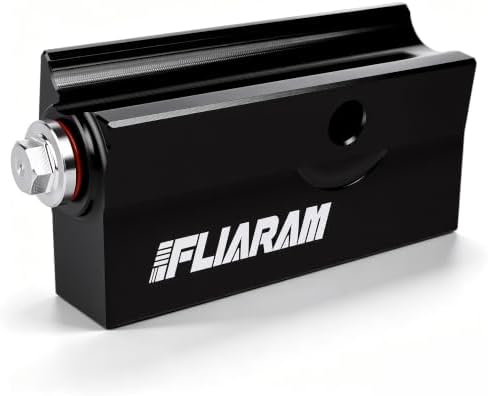
On truck and SUV 8L90 applications there is a thermal by-pass block in the transmission oil cooler lines. Step 24 of the fluid exchange in bulletin 18-NA-355 reads: "If equipped, remove the Thermal By-Pass Block from the cooler pipes on the Escalade, Silverado, Sierra and Yukon Models," and step 30 puts it back after the cooler and lines are flushed.
The block keeps fluid out of the external cooler until the fluid is up to temperature, which shortens warm-up and helps the fuel economy number. It also means that on a cold morning with a trailer on the ball, you are loading a transmission whose cooler is still gated.
GM states the opening temperature outright. Bulletin 22-NA-182, which covers harsh shifting, shudder, surging, stalling, neutral/flare and transmission overheating across the 6L80, 6L90, 8L90 and 10-speed units, lists it by family: "8 Speed (8L90) - 194F (90C) - TBV is external to the transmission." The six-speeds are listed at 158F (70C) and the ten-speeds at 143F (61C).
So the 8L90 holds its cooler closed until 194°F while its predecessor and its replacement open 36 to 51 degrees earlier. And the 6L80 got there by being changed: GM TechLink told technicians to replace the bypass valve during any 6L80 (RPO MYC) repair for harsh shift, delayed shift, shudder, noise or vibration, because "the previous TBV had a full-open temperature of 194°F (90°C). The new TBV has a full-open temperature of 158°F (70°C)." The updated valve carries a "70" stamped into its bottom; part numbers are in bulletin 21-NA-199.
The bypass point also sets your fluid level check. GM's tip: with the 70°C valve, level should only be checked after transmission fluid temperature has reached or exceeded 158°F (70°C), because that opens the bypass and lets the cooler fill, giving an accurate level. On a 90°C valve you have to get past 194°F first, then cool back into the checking window. Set the level with a cold, empty cooler and you will overfill it.
Line pressure is a cooling problem on this transmission
This is the step people skip, and on an 8L90 it is the one that costs you the unit. Sonnax states line pressure on the 8L45 and 8L90 should peak at around 315 psi. In their evaluations they have measured units running above 415 psi.
Two things cause it. The pressure regulator valve bore wears at the variable force solenoid signal port area and at the shuttle valve sleeve, and once it leaks badly enough the valve can no longer stroke to its lower pressure position. On top of that, the OE relief blow-off spring is calibrated high, over 400 psi in some cases, so the safety net never catches the runaway.
Now read Sonnax's own list of what that produces: harsh or soft shifts, burnt clutches, loss of cooler and lube flow, and overheating of the transmission and converter. A worn regulator lineup here is a cooling failure as much as a shift-quality failure, because that lineup meters oil to the cooler and lube circuits after line pressure is satisfied. Feed the leak instead of the cooler and you overheat a transmission with a perfectly good radiator bolted to it. Where it ends is not repairable: Sonnax documents cracked worm tracks in the valve body casting and catastrophic drum failure.
Their fix is to replace the regulator lineup and relief spring every time a valve body is rebuilt, using pressure regulator and O-ringed shuttle valve kit 154740-29K with relief ball valve spring 154740-18, which holds peaks in the 300-315 psi range. One assembly note while you are in there: the inner shuttle boost valve and its bushing must go in facing inboard for boost. Installed outboard you get a low or no pressure condition.
The fluid exchange GM actually specifies
If the truck has never had it, bulletin 18-NA-355 is the highest-value thing you can do to an 8L90 before towing season. The condition is a shake or shudder during light throttle acceleration between 25 and 80 mph (40 and 128 km/h) at steady speed with the transmission not shifting, which customers describe as driving over rumble strips. GM names the cause as torque converter clutch (TCC) shudder, and the correction is a full fluid exchange to blue-label Mobil 1 Synthetic LV ATF HP. Coverage spans 2015-2018 Silverado and Sierra, 2015-2017 Yukon and Escalade, 2015-2019 Corvette, 2016-2019 Camaro, ATS and CTS, and 2017-2019 Colorado and Canyon.
Worth knowing even if you are not running GM's TransFlow machine:
- Volume. The machine is filled with 20 quarts, the exchange collects 16 quarts of old fluid, and the cooler and lines get flushed with 2 more, one quart in each direction. Against a 7.4-quart pan service, that is the difference between diluting the fluid and replacing it.
- Do not pull too much at once. GM is explicit: do not remove more than 3 quarts, because it can cause pump cavitation and possibly damage the transmission. The exchange is staged in 3-, 4-, 4-, 4- and 5-quart steps with the engine running.
- Do not mix. GM: intermixing other transmission fluids or aftermarket additive packages "will result in a low concentration level of new fluid and will not provide satisfactory results."
- Once per vehicle. The 2020 revision notes the procedure should only be done once, and that a returning shudder needs real diagnosis, because it is sometimes fish bite, chuggle, surge or vibration rather than TCC.
Torque specs from the procedure
| Fastener / item | Spec | Source |
|---|---|---|
| Cooler pipe adapter block bolt | 22 N·m (16 lb ft) | GM 18-NA-355 step 6 |
| Transmission level set plug | 9 N·m (80 lb in) | GM 18-NA-355 step 22 |
| Fill adapter (DT-51190) tightening limit | Do not exceed 9 N·m (80 lb in) | GM 18-NA-355 step 9 |
| Fluid change capacity, 8L90 (RPO N8X) | 7.0 L / 7.4 qt, DEXRON HP | GM TechLink capacities chart |
| Line pressure peak, 8L45 / 8L90 | ~315 psi design; 300-315 psi target after repair | Sonnax |
The upgrade order that actually works
Given all of that, here is how I sequence an 8L90 towing build. Cheapest and highest-yield first.
- Verify line pressure with a gauge before you spend a dollar on cooling. Idle and stall, against the 315 psi ceiling. If it is high, the regulator lineup and relief spring come first and nothing else matters yet.
- Do the full fluid exchange to blue-label Mobil 1 Synthetic LV ATF HP, not a pan drop, with a new filter and pan gasket. This is the biggest single change in how the converter behaves under load.
- Look at the cooler lines before you buy anything. GM's first-listed cause in 22-NA-182 for these complaints is a twisted cooler line on low-mileage vehicles, which on ETRS units can also set P27EC. Untwist it at the auxiliary cooler, or replace it if it stays misshaped, then recheck fluid level.
- Address the thermal bypass. Service the valve so it actually opens, move to a lower-temperature valve, or delete the bypass so the cooler sees flow at all temperatures. A deleted bypass means longer warm-ups in winter, which is the tradeoff for cooler fluid under load.
- Add cooler capacity after the circuit is healthy. A larger or supplementary cooler helps a transmission that is circulating properly and does little for one that is not.
- Instrument it. Get transmission fluid temperature on the driver information center or a scan tool and watch it on the first loaded climb. You want to know where this truck, this trailer and this grade put you relative to that 160-200°F band, because that number decides your service interval.
Two things not to bother with. Additives, because GM's own bulletin says aftermarket additive packages defeat the fluid concentration the exchange is trying to achieve. And setting the level by feel, because this transmission has no factory dipstick and the bypass valve decides whether the cooler is full when you check.
What to watch on the scan tool while towing
Three PIDs, and one loaded pull tells you most of what you need.
Transmission fluid temperature (TFT). Baseline it unloaded on flat ground, then watch the rise on a sustained climb and how fast it recovers after you crest. A unit that climbs and comes back down quickly has working cooler flow. One that climbs and stays up is not rejecting heat, which points at the bypass, the cooler, or the regulator lineup starving the cooler circuit.
TCC slip speed (engine RPM minus input speed when the converter should be locked). Slip under load with the TCC commanded on is heat being made inside the converter, and it is the mechanism behind the complaint 18-NA-355 addresses. Persistent slip after a correct exchange is a converter or TCC control problem, not a fluid problem.
Line pressure against the pressure control solenoid command. If the TCM commands normal pressure and the gauge disagrees, the hydraulic side is leaking. One last field note: in failsafe with basic function present, this unit defaults to 2nd and Reverse, so if a loaded truck suddenly has one forward gear on a grade, pull codes before you pull the pan.
FAQ
What transmission fluid does a GM 8L90 take, and how much?
GM specifies DEXRON HP for the 8L90 (RPO N8X), and the current GM TechLink capacities chart lists a fluid change capacity of 7.0 liters, which is 7.4 US quarts. That is the pan-service number, not a dry fill. Mobil 1 Synthetic LV ATF HP is the licensed DEXRON HP fluid GM names in its own shudder bulletin.
Does the 8L90 have a thermal bypass valve, and does it hurt towing?
Truck and SUV 8L90 applications do. GM bulletin 18-NA-355 has the technician remove the thermal by-pass block from the cooler pipes on Escalade, Silverado, Sierra and Yukon models to flush the cooler, then reinstall it. The block restricts flow to the external cooler until the fluid is hot. GM bulletin 22-NA-182 lists the opening temperature as 194F (90C) for the 8L90, against 158F (70C) for the 6L80 and 6L90 and 143F (61C) for the 10-speeds, so the 8L90 holds its cooler closed longest of the three families.
How hot is too hot for 8L90 transmission fluid?
ATRA's GEARS puts the healthy working band for automatic transmission fluid at roughly 160 to 200 degrees F, and sustained operation well above that is where oxidation, varnish and clutch damage stack up. Put transmission fluid temperature on the driver information center or a scan tool before you hitch up.
Will an auxiliary cooler fix an 8L90 that runs hot while towing?
Sometimes, and sometimes it hides the real fault. Sonnax documents 8L45 and 8L90 units running above 415 psi against a design peak near 315 psi from a worn pressure regulator bore and a mis-calibrated blow-off spring, and one listed consequence is loss of cooler and lube flow with overheating. Put a gauge on it first.
How often should an 8L90 that tows get serviced?
Treat towing as severe service and service by heat, not by the light-duty interval. A pan drop moves roughly 7.4 quarts, so repeat services are what turn the fill over. If the truck has never had the bulletin 18-NA-355 fluid exchange and it shudders at light throttle at steady speed, that exchange comes first.
Sources
- General Motors — Service Bulletin 18-NA-355, “Shake and/or Shudder During Light Throttle Acceleration Between 25 and 80 MPH (40 and 128 KM/H) at Steady Speed,” April 2020 revision (NHTSA-hosted PDF). Backs the condition description and the 25-80 mph steady-state speed range; the TCC shudder cause; the 8L45 and 8L90 vehicle coverage list and model years; the correction being a full fluid exchange to blue-label Mobil 1 Synthetic LV ATF HP; the 20-quart machine fill, 16 quarts collected and 2-quart cooler and line flush in both directions; the caution not to remove more than 3 quarts of fluid because of pump cavitation risk; the staged 3/4/4/4/5-quart exchange sequence; the warning that intermixing other fluids or aftermarket additive packages yields a low concentration of new fluid and unsatisfactory results; the once-per-vehicle note and the reminder that shudder is sometimes fish bite, chuggle, surge or vibration; the 22 N·m (16 lb ft) cooler pipe adapter block bolt and 9 N·m (80 lb in) level set plug and fill adapter specs; and the removal and reinstallation of the Thermal By-Pass Block from the cooler pipes on Escalade, Silverado, Sierra and Yukon models. static.nhtsa.gov (PDF)
- General Motors — Service Bulletin 22-NA-182, “Information on 6L80 6L90 8L90 10L80 10L90 10L1000 Equipped Vehicles With A Harsh Shift, Shudder, Surge, Stall, Neutral/Flare, Transmission Overheating and/or High Transmission Fluid Temperature,” August 2023 revision (NHTSA-hosted PDF). Backs the thermal bypass valve opening temperatures by transmission family — 158F (70C) for the 6L80 and 6L90, 194F (90C) for the 8L90, and 143F (61C) for the 10L80, 10L90 and 10L1000 — and the note that the valve is external to the transmission on the six- and eight-speeds but inside the valve body on the ten-speeds except the 3.0L LM2 diesel; the customer-complaint list of harsh shifting, shudder, surging, stalling, neutral/flare and transmission overheating, before or after an overhaul; the first-listed cause of a twisted cooler line on low-mileage vehicles and the instruction to disconnect it from the auxiliary cooler and untwist it, replace it if it stays misshaped, then check fluid level; and the note that a twisted cooler line may set DTC P27EC in the TCM on ETRS transmissions. static.nhtsa.gov (PDF)
- General Motors — GM TechLink “2025 Transmission Capacities & Fluids” reference chart (05-2025 revision A). Backs the 8L90 fluid change capacity of 7.0 liters / 7.4 US quarts of DEXRON HP under RPO N8X; the matching 7.0 / 7.4 DEXRON HP figures for the 8L80 (MFC, MTH) and 8L45 (MHA); and the comparison figures of 7.7 L / 8.1 qt DEXRON ULV for the 10L80 and 13.6 L / 14.4 qt for the 10L1000. gm-techlink.com (PDF)
- General Motors — GM TechLink, “Thermal Bypass Valve Installation,” Mid-September 2021 (Volume 23, No. 18), p. 3. Backs the 6L80 (RPO MYC) application across 2014-2019 Silverado and Sierra and 2015-2020 Tahoe, Suburban and Yukon; the direction to replace the thermal bypass valve during transmission repairs for harsh shift, delayed shift, shudder, noise or vibration; the previous TBV full-open temperature of 194°F (90°C) and the new valve's 158°F (70°C) full-open temperature; the “70” identification stamp on the bottom of the valve; the once-only replacement guidance; the reference to bulletin 21-NA-199 for part numbers; and the fluid level check tip that TFT must reach or exceed 158°F (70°C) to open the bypass and fill the cooler for an accurate level. gm-techlink.com (PDF)
- Sonnax — “Watch Out for High Pressure in GM 8L45, 8L90 Valve Bodies.” Backs the ~315 psi design peak for 8L45 and 8L90 line pressure and the measured pressures above 415 psi; the worn pressure regulator valve bore at the VFS signal port area and shuttle valve sleeve preventing the valve from stroking to its lower pressure position; the OE blow-off spring calibrated over 400 psi in some cases; the symptom list of harsh or soft shifts, burnt clutches, loss of cooler and lube flow and overheating of the transmission and converter; cracked valve body worm tracks that cannot be repaired and catastrophic drum failure from runaway pressure; and the repair using pressure regulator and O-ringed shuttle valve kit 154740-29K with pressure relief ball valve spring 154740-18 to hold peaks at 300-315 psi. sonnax.com
- Sonnax — “Troubleshooting GM 8L45, 8L90 No Move & No Pressure Conditions.” Backs the requirement that the inner shuttle boost valve and bushing be installed facing inboard for boost, and that installing them outboard produces a low or no pressure condition; and the note that the 8L45/8L90 default failsafe gears are 2nd and Reverse when basic function is present. sonnax.com
- ExxonMobil — Mobil 1 Synthetic LV ATF HP product data sheet. Backs the typical properties cited here: kinematic viscosity of 27 mm²/s at 40°C and 5.7 mm²/s at 100°C (ASTM D445), viscosity index 152 (ASTM D2270), pour point -54°C (ASTM D5949), flash point 233°C (ASTM D92) and density 835 kg/m³ at 15°C; and the GM DEXRON HP approval under DEXRON license code J-62120. mobil.com
- ATRA / GEARS Magazine — “Engine & Transmission Thermal Management Systems.” Backs the statement that automatic transmission fluid works well in the 160-200°F range, and the description of modern thermal management strategies deliberately routing heat into the transmission oil cooler during warm-up to bring the fluid up to temperature faster. gearsmagazine.com
- ATRA / GEARS Magazine — “Heat Is Still The Enemy!” by Pat Burrow. Backs the point that reduced-viscosity ATF is used by OEMs to improve heat removal through quicker heat exchanger turnover, and the assessment that in many cases today radiators can barely cool the transmission when everything is working correctly, without auxiliary coolers and larger sumps. gearsmagazine.com