P0894 costs people the most money on a GM 8-speed because it sounds like a death sentence. "Transmission Component Slipping." The truck flares between gears, the code sets, somebody quotes a rebuild, and nobody ever finds out whether the clutch was actually burnt or whether it just never got the pressure it was asking for.
Those are two very different repairs. On the 8L90 the second is more common than the first, and the parts that cause it are small, cheap, and sitting in a valve body casting that most shops replace whole instead of inspecting.
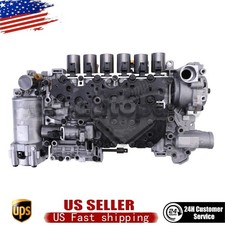
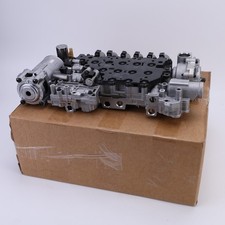
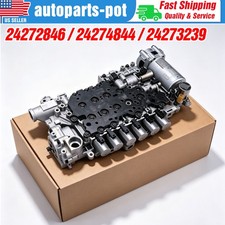
What the TCM is actually complaining about
P0894 is a ratio code, not a damage report. The TCM knows what gear it commanded and the fixed ratio that gear should produce, and it watches input speed against output speed to confirm it got there. When measured ratio does not match commanded ratio for long enough, the code sets. That is the entire mechanism, and it has no way of knowing whether the friction material is gone or whether the apply pressure never showed up.
That matters more here than on most units. Per ATRA's GEARS teardown, the 8L90 uses five clutches to make eight forward ratios plus reverse, and three of those five are applied to attain each gear except park and neutral. Every upshift is a hand-off: one clutch releasing while another applies. Here is the clutch application chart from the same article, because it is how you turn a generic P0894 into a specific circuit to test:
| Clutch | Applied in | Control solenoid | Pressure circuit |
|---|---|---|---|
| C1 | 1-2-7-8-Reverse | S1 (normally high) | Low (AFL) |
| C2 | 1-2-3-4-5-Reverse | S2 (normally low) | High (line) |
| C3 | 1-3-6-7 | S3 (normally low) | High (line) |
| C4 | 2-3-4-6-8 | S4 (normally high) | High (line) |
| C5 | 4-5-6-7-8-Reverse | S5 (normally high) | Low (AFL) |
The solenoid column and circuit pressures come from Sonnax's VFS chart for the unit, which also lists S6 as line pressure control and S7 as TCC. Sonnax lists S3's gear coverage as 1-3-5-6-7 rather than GEARS' 1-3-6-7; either way, the overlap logic is what you need.
Cross-referencing your way to the failed clutch
This is the part that saves the job. P0894 does not name a clutch, but the complaint plus the chart above does. Write down every gear that slips and every gear that is clean, then find the clutch that appears in all the bad ones and none of the good ones.
- Slips in 2nd, 3rd, 4th, 6th and 8th, but 1st, 5th and 7th are fine. Only C4 lives in that set. It is the C4 clutch or the S4 circuit that feeds it.
- Slips in 4th through 8th and reverse, but 1st through 3rd are solid. That is C5.
- Slips in reverse and in 1st and 2nd only. C1 and C2 both cover reverse plus 1-2. Split them on 3rd, 4th and 5th: also bad means C2, clean means C1.
- Everything slips including reverse. Stop chasing clutches. That is line pressure, and the gauge comes out next.
Do this before the pan comes down and you already know which quarter of the valve body to interrogate.
Check these three before you condemn a clutch
1. Fluid, and whether it is the right fluid
Per GM's TechLink capacity chart, the 8L90 under RPO N8X takes 7.0 quarts for a fluid change and 7.4 quarts with the filter, and the spec is DEXRON HP. Not DEXRON VI. Not LV, not ULV. GEARS is emphatic about this and so am I: the writer describes personally seeing units filled with DEXRON VI instead of HP, with shift behavior he calls bizarre. Fluid alone can produce slipping-shaped complaints here, and checking it costs nothing.
Check it correctly, though: at temperature, through the level set plug, not by eyeballing a dipstick. GM's procedure in bulletin 18-NA-355 puts the check window at a transmission fluid temperature of 35 to 45 degrees C (95 to 113 degrees F), and spells out the failure mode of getting it wrong: check above 45 C and you end up under-filled, check below 35 C and you end up over-filled. The same bulletin notes the thermostat opens at 90 C (194 F), so bring the unit up past 90 C, shut it off, and let it fall back into the window before you pull the plug. Torque the level check plug to 9 N·m (80 lb in), no more.
2. Line pressure, on a gauge, before anything else comes apart
If you take one thing away from this article, take this. Sonnax states that line pressure on the 8L45 and 8L90 should peak at around 315 psi, and that in their own evaluations they have measured units running above 415 psi. The cause is a worn pressure regulator valve lineup leaking badly enough that the valve cannot stroke to its lower pressure position, combined with an OE safeguard blow-off spring calibrated over 400 psi in some cases. The consequence is not a shift complaint: Sonnax documents cracked worm tracks in the valve body casting, which cannot be repaired at all, and shattered drums. A casting with a cracked worm track is scrap.
Low pressure starves clutches and sets P0894. High pressure destroys the casting and the hard parts. You cannot tell which one you have without a gauge, and both present as a slipping complaint on the way to failure.
3. The signal accumulator pistons
Here is the wear item that produces most of the "burnt clutch" 8L90s I see, and the reason a lot of them did not have to be burnt.
Each of the seven VFS solenoid circuits has a small signal accumulator piston in it. Sonnax explains the design clearly: these solenoids are low-flow devices whose only job is to move a clutch control valve, and the accumulator piston damps pressure and flow instability so the shift feels right. Those pistons are very active, they live in cast aluminum bores, and they wear those bores. Because the signal is low flow to begin with, a leak past a worn piston has a disproportionate effect on the valve it feeds. The valve does not fully stroke, the clutch does not see full apply pressure, it slips under torque, and the friction cooks. The clutch is a symptom. The bore is the cause.
Sonnax's chart maps each piston to the complaint it produces, and it reads like a P0894 worksheet: S4 gives 2nd, 3rd, 4th, 6th and 8th gear complaints; S3 gives 1st, 3rd, 5th, 6th and 7th; S5 gives 4th through 8th and reverse; S1 gives 1st, 2nd, 7th, 8th and reverse; S2 gives 1st through 5th and reverse; and S6, the line pressure circuit, gives low line pressure, slipping and burnt clutches, and various shift complaints. Sonnax notes from field experience that S3 and S4 wear worst.
Test them by vacuum, with the spring still in the piston and the test port opening centered on the spring. It takes minutes on the bench and tells you whether you are about to install a clutch pack into a valve body that will eat it.
8L90 Sonnax Signal Accumulator Piston Kit 154740-06K
This is the drop-in fix for the bore wear that starves clutch apply pressure and sets P0894. Reconditions up to four bores with no reaming, with hardcoat-anodized aluminum pistons and annular grooves so the bore clearance does not open back up at operating temperature. If you are replacing clutches on an 8L90 and you have not addressed the accumulator bores, plan on doing the job twice.
See the 154740-06K piston kit →The traps that make a rebuilt 8L90 set P0894 on the test drive
A meaningful share of the P0894s on this unit are self-inflicted, set on a transmission that was just repaired. Sonnax's Jim Mobley opens his article on 8L valve body traps by telling techs to give one of these repairs undivided attention, because a single interruption turns into days of diagnosis. He is not being dramatic.
Mixed-up clutch control valves
The 8L valve body uses clutch control valves in two inner-land diameters, .426 inch and .443 inch, and here is the trap: the outer lands on all of them measure .531 inch, so they drop into any bore. Sonnax notes the mix-up is only possible when aftermarket valving is going in, which is exactly what happens on a worn high-mileage valve body. What it produces looks like clutch failure, only worse: Sonnax describes the apply pressure loss as more severe than typical bore wear, with most of it dumping into the exhaust backfill circuits and dragging line pressure down. Their specific examples:
- .426 inch valve in the S3 bore: code P0722, delayed forward engagement, sloppy upshifts, and it will not adapt out.
- .426 inch valve in an S4 bore, 2018-and-earlier valve body: a bad flare on the first 1-2 shift out of the gate. It looks like it might be adapting, then the next key cycle brings the same flare back. Reverse is good.
- .426 inch or early .443 inch S4 valve in a 2019-or-later S4 bore: no forward movement at all, possibly with P0722. Reverse is good.
- .426 inch valve in the S7 (TCC) bore: no converter apply, or converter apply with excessively high slip RPM, and P2808 after extended driving.
Sonnax adds the detail that matters most: most of these mistakes will not pass the Fast Learn process. If Fast Learn will not complete on a freshly assembled 8L90, do not blame the scan tool.
The 2019 S4 change, and swapped solenoids
Model year 2019 trucks and SUVs with the 5.3L and 6.2L V8 moved from active fuel management to dynamic fuel management, and per Sonnax that change reached into the transmission: a torque converter with a centrifugal pendulum absorber, plus a revised control solenoid, valve body casting and S4 control valve. The previous-design S4 valve has two diameters; the new one has a single diameter, and Sonnax states plainly that the .443 inch valve in their kit 154740-11K cannot be used in the 2019-or-later S4 location. A triangle on the solenoid canister identifies the new-design unit without pulling the valve body apart.
One more: the S4 and TCC solenoids sit side by side with identical snouts and O-rings, and the harness plugs into either. Sonnax reports that swapping them gives you a neutral condition on the 1-2 shift, and calls it genuinely hard to diagnose because plenty of other things do the same thing.
If the clutch really is gone
Sometimes it is, and then the rebuild has to be measured properly or the adapts will never settle.
GM's clutch clearance procedure for the C2, C3, C4 and C5 clutches is not the traditional bench method. Per GEARS, the published procedure uses load gauge DT-50903 to apply a specified force between 30 and 80 pounds depending on the clutch, zeroes a dial indicator with that load applied, then strokes the piston with 50 psi of air through tool DT-50905, reapplies the load, and reads clearance off the indicator. When the author polled more than 120 rebuilders at Expo, only two or three owned the tools. The reason GM specifies the load is repeatability: C4 and C5 use wave plates for cushioning and C3 does not, so hand pressure deflects each pack by a different amount.
Then the software side. GEARS lists three mistakes that put a properly rebuilt 8L90 back on the lift: not following the scan tool instructions completely, not performing the drive relearn correctly, and not programming the PUN or TUN into the TCM. Replaced the valve body, you program its Part Unique Number; replaced the transmission, you program the new Transmission Unique Number. Those values tell the TCM the actual flow rates of the solenoids that got installed, and the baseline adapt values are derived from them.
The relearn has a temperature gate of 131 to 198 degrees F (55 to 96 degrees C). The coast-down adapt is the hard one and usually affects C2 and C3: lightly accelerate to 65 mph, then decelerate to 25 mph with the brake lightly applied, ten times. Botch it and you hand the customer a hard 1-2 or 3-1 shift. If you finish the full relearn and one shift is still wrong, relearn only the clutches involved in that shift rather than starting over.
Do not let the shudder confuse you
A customer who says "it slips" may be describing something else entirely. GM bulletin 18-NA-355 covers shake or shudder during light throttle acceleration between 25 and 80 mph at steady speed on 8L45 and 8L90 vehicles, described in the bulletin as feeling like driving over rumble strips or rough concrete. GM names torque converter clutch shudder as the cause and a fluid exchange as the correction, and on vehicles built before the listed 2019 date breakpoints the bulletin says diagnosis beyond the customer complaint is not required.
The fix is the blue-label Mobil 1 Synthetic LV ATF HP, GM part number 19417577 in the US. The bulletin is explicit that the exchange process is required to reach the correct concentration and that intermixing other fluid types or aftermarket additive packages will not give satisfactory results. GEARS explains why the fluid is the cure: the earlier HP fluid was behaving hygroscopically, and absorbed moisture changed its friction dynamics. The bottle still reads DEXRON HP LV, so the part number and the blue label are how you tell new from old. GEARS also gives the tell that separates a real TCC shudder from everything else: a 23 to 28 Hz vibration, typically at 40 to 50 mph with the unit between 122 and 158 F, that disappears at full lockup. Expect up to 400 miles before it fully clears.
The short version
P0894 on an 8L90 means the TCM did not get the ratio it commanded. Before you sell a rebuild: verify DEXRON HP at the right level checked in the 35 to 45 C window, put a gauge on line pressure and confirm it is not running past 315 psi, cross-reference the slipping gears against the clutch chart to name the circuit, and vacuum test the signal accumulator piston in that circuit. If the unit was recently apart, check the clutch control valve diameters and whether S4 and TCC got swapped. The clutch is usually the last thing that failed, not the first.
Related guides
- 8L90 P0748: Pressure Control Solenoid Electrical Causes and Fix
- 8L90 Pressure Testing: Taps, Specs and Readings
- 8L90 Rebuild Wear Points to Check on the Bench
- GM 8L90 and 8L45 Shudder and Harsh Shift Fix
- 8L90 vs 10L90: Differences That Matter
FAQ
What does P0894 mean on a GM 8L90?
It means the TCM commanded a gear, compared input speed against output speed, and the ratio it measured did not match the ratio that gear should produce. It is a ratio complaint, not a damage report. The TCM cannot tell the difference between friction material that is worn out and a clutch that never received full apply pressure, and on the 8L90 the second cause is more common than the first.
Can low or wrong fluid cause P0894 on an 8L90?
Yes, and it is the first thing to rule out. The 8L90 specifies DEXRON HP, 7.0 quarts for a fluid change and 7.4 with the filter per GM's TechLink capacity chart. ATRA's GEARS has documented units filled with DEXRON VI instead of HP behaving strangely enough that flushing and refilling with the correct fluid resolved the complaint. Check the level at a transmission fluid temperature of 35 to 45 degrees C through the level set plug, not by dipstick.
Which clutch is slipping when I get P0894?
Cross-reference the gears. C1 covers 1-2-7-8 and reverse, C2 covers 1-2-3-4-5 and reverse, C3 covers 1-3-6-7, C4 covers 2-3-4-6-8, and C5 covers 4-5-6-7-8 and reverse. Find the clutch that appears in every gear that slips and in none of the gears that are clean. If everything including reverse slips, look at line pressure rather than an individual clutch.
Do I have to replace the whole 8L90 valve body?
Not always. Sonnax's position is that the seven VFS solenoid circuits each contain a signal accumulator piston that wears its aluminum bore, and that leakage past the worn bore starves the clutch control valve it feeds. Those bores can be vacuum tested and reconditioned individually. Check them before committing to a valve body, because GM does not sell the solenoids separately and a valve body swap also requires programming the new PUN into the TCM.
What line pressure should an 8L90 make?
Sonnax puts the design peak at roughly 315 psi. They have measured units above 415 psi caused by a worn pressure regulator lineup and a blow-off spring calibrated too high, and that runaway pressure cracks the valve body worm tracks and shatters drums. A cracked casting cannot be repaired. Put a gauge on the tap before you assume a slipping complaint is a clutch problem.
Sources
- General Motors — Service Bulletin 18-NA-355, "Shake and/or Shudder During Light Throttle Acceleration Between 25 and 80 MPH (40 and 128 KM/H) at Steady Speed" (August 2019, Version 5, NHTSA-hosted). Backs the 8L45/8L90 application list and 2019 date breakpoints; the condition described as driving over rumble strips or rough concrete expansion joints; TCC shudder named as the cause and a fluid exchange as the correction with no diagnosis required beyond the complaint on pre-breakpoint builds; the blue label Mobil 1 Synthetic LV ATF HP requirement and GM part number 19417577 (US, 1 quart); the 20-quart machine fill and 24 quarts for CT6 and Corvette; the warning that intermixing other fluid types or aftermarket additive packages leaves a low concentration of new fluid; the 22 N·m (16 lb ft) cooler pipe adapter block bolt torque and the 9 N·m (80 lb in) level plug torque; and the 35–45°C (95–113°F) fluid level check window with the 90°C (194°F) thermostat opening temperature. static.nhtsa.gov (PDF)
- General Motors TechLink — Transmission Fluid Capacities chart (2025). Backs the 8L90 under RPO N8X at 7.0 quarts for a fluid change, 7.4 quarts with the filter, DEXRON HP specification. gm-techlink.com (PDF)
- Sonnax — "Diagnosing 8L45 & 8L90 Shift Complaints: Always Check the VFS Solenoid Circuits," Maura Stafford, TASC Force (April 2021). Backs the seven VFS solenoid circuits and their signal accumulator pistons; the low-flow signal design in which the solenoid moves a clutch control valve that does the actual clutch apply work; the wear mechanism in the cast aluminum bores and its outsized effect on the related control valve; the solenoid-to-gear map used in the article table (S1 1-2-7-8-R, S2 1-2-3-4-5-R, S3 1-3-5-6-7, S4 2-3-4-6-8, S5 4-5-6-7-8-R, S6 line pressure, S7 TCC) with normally-high and normally-low designations and high line versus low AFL circuit pressures; S6's related complaints of low line pressure, slipping and burnt clutches; the observation that S3 and S4 wear worst; the vacuum test method with the spring in place and the port centered on the spring; the note that GM does not sell the solenoids separately and that pulling one alters the PUN programming; and kits 154740-06K and 154740-01K with tool kit 154740-TL. sonnax.com
- Sonnax — "GM 8L45, 8L90 Valve Body Traps: Clutch Control Valves & Solenoid Mix Ups," Jim Mobley, TASC Force (May 2026). Backs the .426 inch and .443 inch inner land diameters with common .531 inch outer lands; the warning to give the repair undivided attention; the note that the mix-up only occurs when installing aftermarket valving; apply pressure dumping into exhaust backfill circuits and dragging line pressure down; the four specific symptom sets (.426 in S3 with P0722 and delayed forward that will not adapt out; .426 in an 2018-and-earlier S4 with a repeating 1-2 flare and good reverse; .426 or early .443 in a 2019-and-later S4 with no forward movement; .426 in S7 with no TCC apply or high slip RPM and P2808); the statement that most of these mistakes will not pass Fast Learn; and the S4/TCC solenoid swap producing a neutral condition on the 1-2 shift. sonnax.com
- Sonnax — "Watch Out for High Pressure in GM 8L45, 8L90 Valve Bodies," Chris Leach, TASC Force (April 2024). Backs the roughly 315 psi design peak for line pressure, the measured readings above 415 psi, the worn pressure regulator lineup and mis-calibrated blow-off spring as the cause, the blow-off spring calibrated over 400 psi in some cases, and the resulting cracked valve body worm tracks and shattered drums. sonnax.com
- Sonnax — "GM 8L90 Model Year 2019 S4/23468 Control Valve Changes," TASC Force (August 2022). Backs the 2019 AFM-to-DFM change on 5.3L and 6.2L V8 truck and SUV applications; the torque converter gaining a centrifugal pendulum absorber; the control solenoid, valve body casting and S4 control valve revisions; the previous two-diameter versus new single-diameter S4 valve; the warning that the .443 inch valve in kit 154740-11K cannot be used in the 2019-or-later S4 location; and the triangle on the solenoid canister as the external identifier. sonnax.com
- ATRA / GEARS Magazine — "What is Causing That? A Look at the GM 8L90's Most Common Concerns," Steve Garrett. Backs the five-clutch, eight-forward-ratio architecture with three clutches applied per gear; the C1 through C5 gear application chart (C1 1-2-7-8-R, C2 1-2-3-4-5-R, C3 1-3-6-7, C4 2-3-4-6-8, C5 4-5-6-7-8-R); the 131–198°F (55–96°C) adaptive relearn temperature window; the coast-down relearn procedure of 65 mph down to 25 mph with light brake, repeated ten times, and the hard 1-2 or 3-1 result of getting it wrong; the advice to relearn only the clutches involved in a remaining complaint; the three common adapt mistakes including failure to program the PUN or TUN; the DEXRON HP requirement and the DEXRON VI misfill producing bizarre shifts; the TCC shudder occurring at 20–80 mph (typically 40–50) with the unit at 122–158°F (50–70°C) and disappearing at full lockup; the 23–28 Hz vibration signature; the hygroscopic fluid root cause; the blue label and part number 19417577 identification versus black bottles and grey labels; and the up-to-400-mile drive time before the shudder fully clears. gearsmagazine.com
- ATRA / GEARS Magazine — "Is It Really Necessary? 8L90 Clutch Clearance Measurement Procedures," Sean Boyle. Backs the GM clutch clearance procedure for the C2, C3, C4 and C5 clutches using load gauge DT-50903 at 30 to 80 pounds depending on the clutch, zeroing a dial indicator under load, stroking the piston with 50 psi of air through tool DT-50905 and rereading under load; the note that only two or three of 120-plus rebuilders at Expo owned the tools; and the fact that C4 and C5 use wave plates for cushioning while C3 does not. gearsmagazine.com