The ZF 9HP48 and its Chrysler-built twin, the 948TE, are the transmission that normalized nine forward speeds in a transverse FWD/AWD platform. Jeep Cherokee, Renegade and Compass, Chrysler 200 and Pacifica, Honda CR-V and Pilot, Acura MDX, and Range Rover Evoque all run some version of this unit. What gets lost in most writeups is the actual numbers: the nine individual gear ratios, what the torque rating in the name really means, how much clutch clearance the thing is built to, and the fluid spec and service interval ZF itself publishes.
Those numbers matter for more than trivia. A scan tool throwing a P0731 or P0734 gear-ratio-incorrect code is comparing a commanded ratio against the actual one — you cannot judge whether a reading is close or way off without knowing what the transmission is supposed to produce in that gear. A shop quoting an engine swap or a tow package needs the 480 Nm ceiling, not a guess. And a tech chasing a no-engagement complaint needs to know this transmission has shut itself down over a fluid level error before, by factory admission. Every figure below is cited to the source it came from, not carried over from a spec sheet nobody checked.
The short version: Nine forward gears run from 4.700:1 in first to 0.479:1 in ninth, a 9.81:1 overall spread. Torque capacity is 480 Nm (354 lb-ft) — the “48” in both 9HP48 and 948TE. The unit uses six total clutches (four friction, two dog clutch) and runs ZF LifeguardFluid 9 / Mopar ZF 8&9 Speed ATF on a factory 150,000 km (93,000 mile) service interval. A documented Stellantis TSB shows an incorrect fluid level can cause total loss of forward gear on this transmission.
Full Gear Ratio Table
Per the SAE technical paper covering this transmission's design, the 9HP48 runs four planetary gear sets and six shift elements to produce nine forward ratios plus reverse. The published set is below.
| Gear | Ratio |
|---|---|
| Reverse | -3.805:1 |
| 1st | 4.700:1 |
| 2nd | 2.842:1 |
| 3rd | 1.909:1 |
| 4th | 1.382:1 |
| 5th | 1.000:1 |
| 6th | 0.808:1 |
| 7th | 0.699:1 |
| 8th | 0.580:1 |
| 9th | 0.479:1 |
Divide first gear by ninth (4.700 ÷ 0.479) and you get the 9.81:1 overall spread ZF designed around. That is the real engineering story here: a low, aggressive first gear for launch, an overdrive ninth deep enough to drop highway rpm for fuel economy, and seven gears in between stepped closely enough that the engine rarely falls out of its efficient band under acceleration. Per the SAE paper, that gearing is a core part of how this transmission delivers up to 16% better fuel economy than the 6-speed automatics it replaced in the same vehicle lines.
These numbers are also your reference point for gear-ratio diagnostic codes. P0731 through P0737 each compare the transmission's actual achieved ratio in a given gear against what it is commanded to be; knowing the factory ratio in, say, 4th (1.382:1) is what lets you judge whether a scan-tool ratio reading is a rounding difference or a real slip. A ratio reading a few hundredths off the factory number during a cold-fluid warmup is normal; one that is 10-20% off in a specific gear points at that gear's specific clutch or band not fully applying.
Torque Capacity: What the “48” Actually Means
Per ATRA's technical introduction to this transmission family, the naming on both sides of the badge split encodes the same number: 48 stands for 480 Nm (354 lb-ft) of maximum input torque capacity. Chrysler's 948TE spells it out directly — 9 for nine speeds, 48 for 480 Nm, T for transverse, E for electronic control. ZF's 9HP48 badge keeps the same 9 and 48 and swaps in HP for hydraulic planetary. Same hardware, same torque ceiling, different maker's name on the case.
That 480 Nm figure is a design limit on the ZF-rated end of the family, not a loose guideline. General Motors and other OEMs that spec variants of the 9HP architecture build versions rated as low as 280 Nm for lighter-duty applications, per the same ATRA source — so “a 9HP is a 9HP” is not a safe assumption when you are sizing an engine swap or evaluating a performance tune. Confirm the specific 48-rated unit is actually what is in the vehicle before you plan around 354 lb-ft of headroom, and do not treat that number as a target to push toward; clutch and gearset wear accelerates well before a true overload event when a build is run consistently near its torque ceiling.
Physical Specs and Architecture
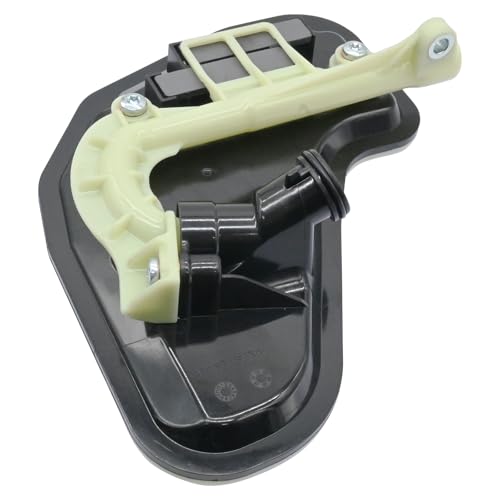
Per Transmission Digest's teardown coverage of this unit, the fully assembled transaxle runs just shy of 200 lbs — worth knowing before you plan a bench lift, since it is noticeably heavier than the 6-speed units it replaced in the same platforms. The case has no bottom drop-pan; the filter sits internally rather than being accessible by pulling a conventional pan, which is itself a quick way to confirm you are looking at this transmission family rather than a lookalike.
Per the SAE paper and ATRA's technical introduction, the internal architecture is built from four planetary gear sets working through six total shift elements: four conventional multi-disc friction clutches (labeled B, C, D, E) and two dog clutches (A, F) that engage by meshing splined teeth rather than slipping friction material. The dog clutches are a deliberate packaging choice — per the SAE paper, they let ZF fit nine ratios into a case not much larger than the 6-speed units it replaced, without the bulk of two more full friction-clutch packs.
Clutch Clearance Specs
Per Gears Magazine's architecture writeup on this transmission, the four friction clutches are built to the following clearance ranges, and the unit shipped in two running changes with slightly different clearances depending on disc count:
| Clutch | 3-Disc Clearance | 2-Disc Clearance |
|---|---|---|
| B-clutch | 0.050–0.070 in | 0.040–0.060 in |
| C-clutch | 0.030–0.045 in | 0.020–0.035 in |
| D-clutch | 0.040–0.059 in | 0.040–0.059 in |
| E-clutch | 0.050–0.070 in | 0.050–0.070 in |
Per the same source, the B and E clutches deliver input torque into the gearset, while C and D hold gearset components stationary against the case. If you are rebuilding one of these and setting clutch pack clearance by feel instead of checking which disc-count running change you actually have on the bench, you are guessing at a spec that has a documented split — confirm the disc count before you shim the pack.
Fluid Spec and ZF's Own Service Interval
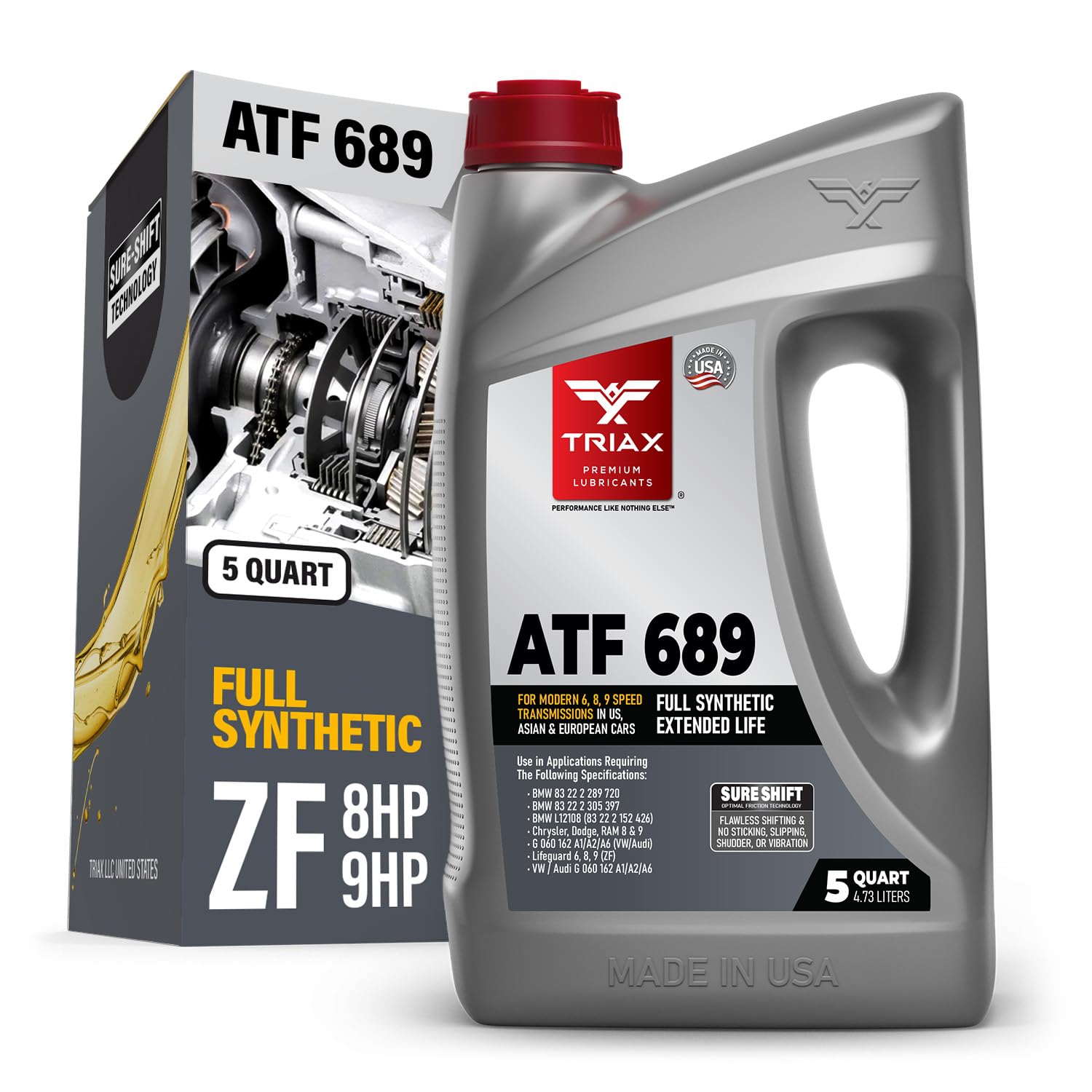
Per Gears Magazine's bench procedure for this transmission, the correct fluid on FCA applications is Mopar ZF 8 & 9 Speed ATF, part number 68157995AB, identifiable by its pale green color — the article specifically warns against adding leak dye to this fluid. The ZF-branded equivalent sold across the rest of the application list (Honda, Acura, Land Rover) is ZF LifeguardFluid 9. Per ZF's own product data sheet, this is a semi-synthetic fluid with a viscosity of 24.9 mm²/s at 40°C and 5.6 mm²/s at 100°C, a pour point of -42°C, and a flash point of 185°C — properties ZF engineered specifically for this transmission's friction material and shift feel, which is why the data sheet is explicit that no substitute fluid is approved.
On service interval, ZF's own data sheet states the transmission is factory-filled with what it calls lifetime oil, but recommends an oil change at 150,000 km (about 93,000 miles) under normal conditions, with shorter intervals called out for high heat, heavy load, or an unknown service history. If you are buying a used vehicle on this transmission with no fluid-change records, treat that as the clock already running rather than the clock not having started.
Because fluid level on this unit is checked with the transmission running and hot against a temperature-specific chart rather than a simple cold dipstick read, getting the level wrong is easier than it sounds — see the dedicated 9HP48 fluid type and capacity guide for the full check procedure and total system capacity.
When the Numbers Don't Hold: a Documented Fluid-Level Failure
The ratios and torque rating above assume the transmission is actually filled correctly, and that assumption has failed in the field. Per Stellantis Technical Service Bulletin 21-006-23 (“Loss of Forward Gear in Transmission,” February 15, 2023), a population of 2022-2023 Jeep Compass and Commander vehicles built with the 948TE lost forward gear entirely, with the bulletin's stated cause being straightforward: “Transmission did not have the specified amount of transmission fluid for proper operation.” The bulletin's remedy is not a top-off — the listed repair is a full transmission replacement, with FCA's own claims data showing a 7.1-hour, highly-skilled labor operation attached to the fix.
That bulletin is the clearest real-world argument for taking the fluid-level procedure in the section above seriously rather than eyeballing it. This transmission's close-ratio, nine-speed gearing depends on precise hydraulic pressure to apply six different shift elements correctly; a fluid level outside spec does not just cause a slip or a harsh shift here, it has documented, factory-acknowledged potential to take forward gear away entirely.
9HP48 Fluid, Filter and Rebuild Parts
Full synthetic ZF-spec ATF, the correct filter and pan gasket kit, and a complete master rebuild kit when the job goes past a service fill — shipped fast from the USA.
Shop 9HP48 parts →FAQ
What is the 9HP48's overall gear ratio spread?
The published ratio set runs from 4.700:1 in first gear down to 0.479:1 in ninth, a 9.81:1 overall spread between the lowest and highest gear, per the SAE technical paper covering this transmission's design. That wide spread is the entire point of the extra gears: a low first gear for launch and a deep overdrive ninth for cruise rpm, with closely stepped gears in between so the engine stays near its efficient band under acceleration.
What does the 480 Nm torque rating in the 948TE/9HP48 name mean?
Per ATRA's technical introduction to this transmission family, the 48 in both the Chrysler 948TE and ZF 9HP48 badge refers to a 480 Nm (354 lb-ft) maximum input torque rating. That number is a design ceiling, not a suggestion: pairing this transmission with an engine or a tune that regularly exceeds that input torque is a direct path to clutch and gearset wear well short of normal service life.
What ATF does the 9HP48 use and how often should it be changed?
Per Gears Magazine's bench procedure for this transmission, FCA applications spec Mopar ZF 8 & 9 Speed ATF, part number 68157995AB, identifiable by its pale green color; the ZF-branded equivalent is ZF LifeguardFluid 9. ZF's own product data sheet lists a factory service interval of 150,000 km (about 93,000 miles) under normal use, with shorter intervals recommended for heavy load, high heat, or unknown prior service history.
How much does a 9HP48/948TE transmission weigh?
Per Transmission Digest's teardown coverage of this unit, the assembly runs just shy of 200 lbs fully built. That is worth knowing before you plan a bench lift or an engine-hoist pull, since this transaxle is noticeably heavier than the 6-speed units it replaced in the same vehicle lines.
Can a fluid level problem cause the 9HP48 to lose a gear or stop engaging?
Yes, and it is a documented factory issue, not a theory. Stellantis Technical Service Bulletin 21-006-23 covers a population of 2022-2023 Jeep Compass and Commander vehicles built with the 948TE that lost forward gear entirely because the transmission did not have the specified amount of fluid, a condition serious enough that the bulletin's repair is a full transmission replacement rather than a simple top-off.
Sources
- SAE International — Paper 2013-01-1276, “The ZF Automatic Transmission 9HP48 Transmission System, Design and Mechanical Parts.” Backs: the four planetary gear set / six shift element architecture, the published nine-speed gear ratio set from 4.700:1 (1st) to 0.479:1 (9th) for a 9.81:1 overall spread, the dog-clutch packaging rationale, and the up-to-16% fuel economy gain over 6-speed automatics. saemobilus.sae.org/content/2013-01-1276
- ATRA — “ZF9HP48/948TE Introduction” Technical Webinar. Backs: the 480 Nm (354 lb-ft) torque capacity encoded in the “48” of both the 9HP48 and 948TE names, the 9/48/T/E naming breakdown, and the note that other OEM variants of the 9HP architecture are rated as low as 280 Nm. atracom.blob.core.windows.net — 948te_introduction.pdf
- Gears Magazine (ATRA) — “ZF 9HP48: A Mechanical Marvel!” Backs: the six-clutch architecture (four friction clutches B/C/D/E, two dog clutches A/F), the B/C/D/E clutch clearance specs across the 2-disc and 3-disc running changes, and which clutches deliver torque versus hold components to the case. gearsmagazine.com/magazine/zf-9hp48-a-mechanical-marvel
- Gears Magazine (ATRA) — “948TE: Checking Fluid Levels.” Backs: the Mopar ZF 8 & 9 Speed ATF part number 68157995AB, its pale-green color, and the temperature-dependent dipstick fill procedure this transmission requires. gearsmagazine.com/magazine/948te-checking-fluid-levels
- ZF Friedrichshafen AG — ZF LifeguardFluid 9 Product Data Sheet (2021-07-19). Backs: the fluid's viscosity (24.9 mm²/s at 40°C, 5.6 mm²/s at 100°C), pour point (-42°C), flash point (185°C), and ZF's own factory-recommended 150,000 km service interval. aftermarket.zf.com — ZF LifeguardFluid 9 data sheet
- Stellantis / FCA US LLC via NHTSA — Technical Service Bulletin 21-006-23, “Loss of Forward Gear in Transmission” (February 15, 2023). Backs: the 2022-2023 Jeep Compass and Commander no-forward-gear condition traced to an incorrect transmission fluid level, and the full-transmission-replacement repair procedure. static.nhtsa.gov/odi/tsbs/2023/MC-10248022-9999.pdf