The ZF 9HP48, sold by Chrysler as the 948TE, shows up in the Jeep Cherokee, Jeep Renegade, Chrysler 200, Fiat 500X, Ram ProMaster City, and the Land Rover Evoque and Discovery Sport, along with Honda and Acura nine-speed applications. It is a dense, nested-planetary design with six clutches instead of the usual four or five, and that layout matters the moment Reverse stops working. Reverse is not carried by one clutch on this unit. It takes two elements applying together, and knowing which two tells you where to look before you pull the pan.
This is how I work a no-reverse complaint on the 9HP48/948TE. The clutch architecture and apply chart come from Transmission Digest and GEARS magazine. The documented wear points come from Sonnax. The known electrical and mechanical recalls come straight from NHTSA's own filings, and the fluid spec comes from ZF's product data sheet. Full citations are at the bottom.

How Reverse Works on the 9HP48
Per GEARS magazine, the 9HP48 uses six clutches labeled A through F in power-flow order: four multi-plate friction clutches (B, C, D, E) and two dog clutches (A, F). The B and E clutches deliver input torque into the gearset. The C and D clutches hold parts of the gearset stationary to the case. The A and F dog clutches are mechanical synchro-style couplers rather than friction packs, which is unusual for a passenger-car automatic and is part of what lets ZF package nine forward ratios into a compact unit.
Transmission Digest's teardown of the unit spells out exactly which elements apply in Reverse:
| Element | Type | Applied in Reverse | Also used in |
|---|---|---|---|
| B clutch | Multi-plate friction, splined to the input shaft | Yes | 3rd, 5th, 9th |
| F dog clutch | Dog/synchro, anchors the #1/#2 sun gear to the output gear support | Yes | Park, Neutral, 1st through 4th |
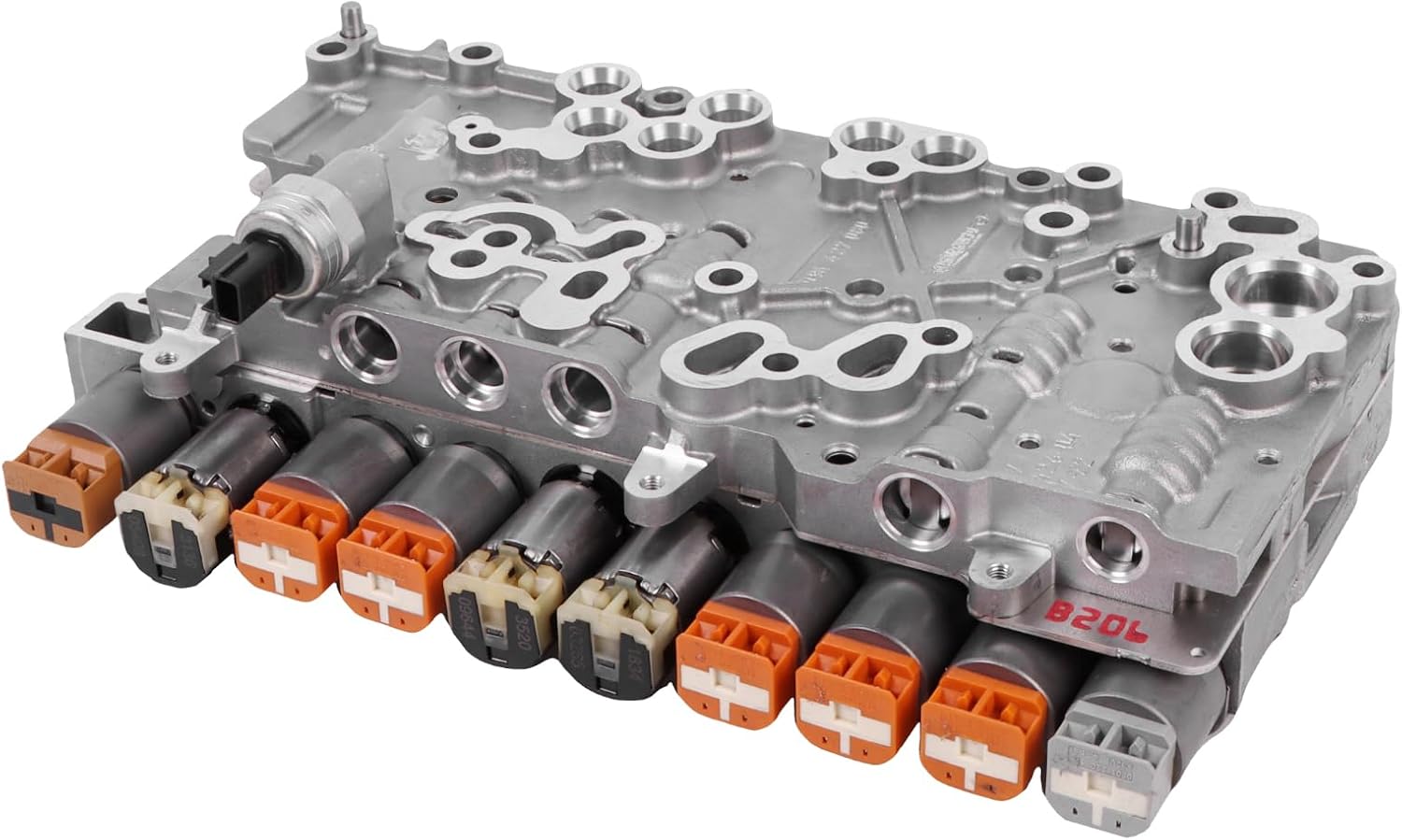
No other clutch is part of the Reverse apply. The B clutch pack is aluminum-drum with segmented frictions and a cushion plate, splined to the input shaft. The F dog clutch is a sleeve that meshes mechanically with the sun gear rather than squeezing a friction pack, so when it fails, the symptom tends to lean toward a grind, clunk or flare rather than a smooth slip. The valve body carries either nine solenoids, on units with a mechanical park system, or ten, on units with electronic park — which is why you will see this transmission referred to with both counts depending on the application.
What the apply chart tells you before you touch a wrench
Because the B clutch also carries 3rd, 5th and 9th gear, a worn or burnt B clutch pack rarely stays quiet in Reverse alone. Road test or scan the vehicle through the gears: if 3rd, 5th and 9th all engage clean with no slip or ratio-error codes, the B clutch pack itself is very likely fine, and the fault is almost certainly isolated to the circuit that feeds Reverse specifically — not a worn-out friction pack. That distinction is the difference between a valve body job and a teardown, and it is worth two minutes on a road test before you commit to either one.
Step 1: Rule Out Fluid, Linkage and the Simple Stuff
- Fluid type and level. ZF specifies ZF LifeguardFluid 9 for its 8HP and 9HP transmissions, sold under Mopar as ZF 8&9 Speed ATF for the Chrysler/Jeep/Fiat applications. ZF is explicit that no substitute fluid should go in these units — the wrong fluid can range from poor shift feel to outright transmission failure. ZF treats these as lifetime-fill units in normal service but recommends a change at 150,000 km, and sooner if the truck or SUV runs hot, heavy, or has an unknown service history. Low or badly aerated fluid starves the Reverse feed first on a unit this compact, so check level and condition before anything else.
- Shifter and range sensor. These are electronic/push-button or rotary shift applications in most of their vehicles. Confirm with a scan tool that the TCM actually registers "R" when Reverse is selected. If the commanded range does not match the lever or dial position, you are chasing a shifter or range-sensor fault, not a transmission problem.
- Scan data in Reverse. With the brake held, put it in Reverse and watch commanded gear, actual versus commanded line pressure, and input/output speed. If the TCM shows R, line pressure reads where it should, and the input shaft is held down with the brake applied, the clutches are applying and the fault is downstream (axles, differential, transfer gear). If the input shaft free-spins with the output stopped, something in the Reverse power path is not holding.
Step 2: Check for the Documented Harness and Park-Pawl Recalls
Before you condemn anything mechanical, rule out two documented, federally filed defects on this platform. NHTSA recall 16V-529 (FCA internal number S55) covers certain 2014-2015 Jeep Cherokee, 2015 Ram ProMaster City, 2016 Fiat 500X, 2015 Chrysler 200 and 2015 Jeep Renegade vehicles built with the 9HP48 or 948TE. The defect description is specific: insufficient crimps in the transmission wire harness that could cause an unexpected shift to neutral and a sudden loss of motive power. FCA's remedy was to reprogram the PCM and TCM, and to replace the transaxle range-sensor wire harness on any unit with an active or stored fault code. Over 412,000 vehicles were in the recall population.
That recall is about an unwanted shift to neutral, not strictly a no-reverse complaint, but the lesson carries over directly: a marginal crimp in the transaxle range-sensor harness on this platform is a documented, factory-acknowledged failure mode, and an intermittent connection there can make the TCM lose track of what range is actually commanded. That can present at the shifter exactly like "no reverse," even though the valve body and clutches never see a problem. Pull the VIN at NHTSA.gov to check recall status, then inspect the range-sensor harness and connector at the transaxle before you go any further electrically.
Separately, NHTSA recall 15V-090 (FCA internal number R08) covers about 21,000 2015 Chrysler 200 vehicles built with this transmission, for a different problem: contamination in the parking pawl, or a broken and dislodged park rod, that can prevent the transmission from actually locking into Park even though the shift indicator shows "Park." That is a Park complaint, not a Reverse complaint, but customers often describe both the same way ("it won't stay where I put it" or "it rolled on me"). If the actual complaint is unintended movement with the shifter in Park, this recall, not a Reverse diagnosis, is where to start.
Step 3: The Valve Body Wear Points That Actually Take Reverse Away
Once the simple checks and the recalls are cleared, the most common real-world cause of a no-reverse or intermittent-reverse 948TE/9HP48 is wear inside the valve body itself, and Sonnax has documented two specific bores that account for most of it.
- Pressure regulator bore wear. Sonnax identifies this as a known wear point across the Chrysler 948TE, ZF9HP48 and the related Honda/Acura nine-speed units. Wear in the bore lets oil escape around the valve instead of being properly regulated, which destabilizes line pressure. The downstream effects Sonnax lists are cooler and lube flow restriction, bad shifts, and damaged clutches — not a clean, isolated loss of Reverse, but an unstable pressure condition that can take Reverse out along with other symptoms. The fix is Sonnax's oversized pressure regulator valve kit (85740-15K), which requires reaming the bore with the proper fixture before installing the oversized valve.
- A/F dog clutch plunger valve sleeve wear. Both the A and F dog clutches use an aluminum sleeve for their plunger valve, and Sonnax notes this material wears from the repeated reciprocation of the plunger. Failure of the sleeve, per Sonnax, results in "a variety of shift problems and solenoid codes." Because the F dog clutch is one of only two elements that make Reverse, a worn plunger valve bore on the F side is a direct, documented path to intermittent or missing Reverse, even with a perfectly good F dog clutch sleeve and a healthy B clutch pack. Sonnax's fix is the A/F dog clutch plunger valve kit (85740-05K).
Both of these are valve body bench repairs, not teardown jobs, and both explain why two trucks with the same "no reverse" complaint can need very different fixes: one is a hydraulics problem in a bore, the other is a friction pack that is actually gone.
Step 4: Confirm Before You Commit
Pull the pan first and look at the fluid. Metal or heavy friction material in the pan means the B clutch pack or the F dog clutch splines are already damaged and you are headed for a teardown regardless of what the valve body shows. Clean fluid with no debris points back toward the valve body wear points above.
If you can pressure-test the unit, command or road-test Reverse and compare actual line pressure to commanded. Pressure that is low or wanders supports the pressure regulator bore. With the valve body off the case, air-check the B clutch and F dog clutch circuits separately: you should get a clean, single thump on apply and release with no sustained hiss. A big air leak on either circuit, with good fluid and no metal in the pan, points at piston seals or the bore itself rather than a burnt pack.
Quick Diagnostic Order
- Confirm the TCM shows R when the lever or dial is in Reverse, and check actual versus commanded line pressure.
- Check fluid level, hot, and fluid condition. Confirm ZF LifeguardFluid 9 / Mopar ZF 8&9 Speed ATF was used.
- Pull the VIN and check NHTSA recalls 16V-529 (harness/neutral shift) and 15V-090 (park pawl) before condemning anything mechanical.
- Road-test 3rd, 5th and 9th gear. If they are clean, the B clutch pack is likely fine and the fault is circuit-specific, not the friction pack.
- Pull the pan and inspect for metal or friction debris before deciding between a valve body repair and a teardown.
- If fluid is clean, pressure-test or air-check the pressure regulator bore and the A/F dog clutch plunger valve bore.
The Fix
- Worn pressure regulator bore: ream and sleeve with Sonnax's oversized pressure regulator valve kit (85740-15K), or replace the valve body outright.
- Worn A/F dog clutch plunger valve sleeve: install Sonnax's A/F dog clutch plunger valve kit (85740-05K), or replace the valve body.
- Marginal range-sensor harness crimp (recall population or similar symptom): confirm recall completion, repair or replace the transaxle range-sensor harness, and have the PCM/TCM reprogrammed.
- Burnt B clutch pack or damaged F dog clutch splines (metal/friction in the pan): full teardown, replace the friction pack and inspect the dog clutch sleeve and splines, then reinstall with a remanufactured valve body and solenoid pack rather than reusing worn bores.
After any repair that touches the clutches or valve body, run the transmission's quick-learn or adaptive relearn procedure. New frictions and a fresh valve body will not shift correctly against old learned pressure values.
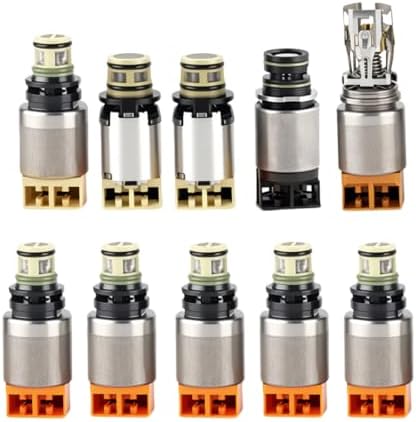
9HP48 shift solenoid kit at Core Transmission Parts
If scan data or a bench check points at a sticking solenoid rather than a worn bore, this is the direct replacement for the 9HP48/948TE solenoid pack.
View the 9HP48 solenoid kit →9HP48/948TE valve bodies, solenoid kits and filter/gasket kits — shipped fast from the USA.
Shop 9HP48 parts →Related guides
- 9HP48 Harsh Shift Causes and Fix
- 9HP48 Limp Mode Causes
- 9HP48 Shift Solenoid Symptoms
- 9HP48 Slipping: Causes and Fix
- ZF 9HP48/948TE 9-Speed Transmission Problems
FAQ
Why does my 9HP48 have Drive but no Reverse?
Reverse on the 9HP48 applies two elements together: the B clutch and the F dog clutch. The B clutch also works in 3rd, 5th and 9th, so if those gears shift clean and only Reverse is missing, the fault is usually in the reverse-feed circuit in the valve body rather than a worn clutch pack. Start with fluid level and condition, then check the valve body before you consider a teardown.
Is there a recall related to 9HP48 transmission problems?
NHTSA recall 16V-529 covers certain 2014-2015 Jeep Cherokee, 2015 Chrysler 200, 2015 Jeep Renegade, 2015 Ram ProMaster City and 2016 Fiat 500X vehicles built with insufficient crimps in the transmission wire harness, which could cause an unexpected shift to neutral. A separate recall, 15V-090, covers some 2015 Chrysler 200 units for a parking pawl or park rod defect that can prevent the transmission from locking in Park. Check the VIN at NHTSA.gov before chasing a mechanical cause.
What fluid does the 9HP48 transmission use?
ZF specifies ZF LifeguardFluid 9 for its 8HP and 9HP automatic transmissions, sold under Mopar as ZF 8&9 Speed ATF for Chrysler, Jeep and Fiat applications. ZF states no other fluid should be used, since it can degrade shift quality or cause transmission failure. ZF lists these as lifetime-fill units but recommends a change at 150,000 km, sooner under heavy use or unknown service history.
Can a worn valve body cause no Reverse on a 9HP48?
Yes. Sonnax documents two specific wear points in the 948TE/ZF9HP48 valve body: the pressure regulator bore, which bleeds off line pressure and causes unstable shifts, and the A/F dog clutch plunger valve sleeve, which wears from plunger reciprocation and causes shift problems and solenoid-related codes. Since the F dog clutch is one of the two elements that make Reverse, a worn plunger valve bore is a direct, documented cause of intermittent or missing Reverse.
Sources
- GEARS Magazine — "ZF 9HP48: A Mechanical Marvel" (December 2019). Six-clutch architecture: four multi-plate friction clutches (B, C, D, E) and two dog clutches (A, F); B and E deliver input torque, C and D hold the gearset to the case. gearsmagazine.com
- Transmission Digest — Mike Riley, "ZF9HP48 FWD Nine Speed, Part 2" (Technically Speaking, September 1, 2015). B clutch applied in Reverse, 3rd, 5th and 9th gear; F dog clutch applied in Park/Neutral, Reverse and 1st through 4th gear; valve body carrying 9 solenoids with mechanical park or 10 with electronic park. transmissiondigest.com
- Sonnax — Oversized Pressure Regulator Valve Kit, part 85740-15K. Pressure regulator bore wear in the Chrysler 948TE, ZF9HP48 and Honda/Acura nine-speed transmissions causing oil loss, unstable line pressure, cooler/lube flow restriction, bad shifts and damaged clutches. sonnax.com
- Sonnax — A/F Dog Clutch Plunger Valve Kit, part 85740-05K. Aluminum sleeve wear from plunger reciprocation in the A and F dog clutch valves, causing a variety of shift problems and solenoid-related codes. sonnax.com
- NHTSA Part 573 Safety Recall Report 16V-529 (FCA internal S55), submitted October 6, 2016. Insufficient crimps in the transmission wire harness on certain 2014-2015 Jeep Cherokee, 2015 Ram ProMaster City, 2016 Fiat 500X, 2015 Chrysler 200 and 2015 Jeep Renegade vehicles with the 9HP48 or 948TE, causing an unexpected shift to neutral; remedy of PCM/TCM reprogramming and range-sensor harness replacement. static.nhtsa.gov (PDF)
- NHTSA Part 573 Safety Recall Report 15V-090 (FCA internal R08), submitted May 3, 2016. Parking pawl contamination or a broken/dislodged park rod on certain 2015 Chrysler 200 vehicles with the 9-speed transmission, preventing the transmission from locking into Park. static.nhtsa.gov (PDF)
- ZF Friedrichshafen AG — ZF LifeguardFluid 9 Product Data Sheet (2021-07-19). Fluid specified for ZF 8HP and 9HP automatic passenger car transmissions, no substitute fluid approved, lifetime fill with a 150,000 km recommended change interval. aftermarket.zf.com (PDF)