P0776 on a ZF9HP48 or 948TE nine-speed reads as "Pressure Control Solenoid B Performance or Stuck Off," and on a lot of transmissions that is a short job: pull the solenoid, bench test it, swap it if it fails. This unit makes it messier. It ships in two different valve body configurations with two different solenoid counts, its clutch-apply solenoids share supply wiring with several other solenoids at once, and FCA has a documented history of calibration bulletins that clear solenoid "performance" codes with nothing more than a software flash. Here is what actually sits behind a B-circuit pressure control fault on this transmission, and the order worth checking it in before a part gets ordered.
What P0776 Actually Flags
P0776 is the generic SAE/OBD-II definition for Pressure Control Solenoid "B" Performance or Stuck Off: the TCM commanded a pressure change at that solenoid's circuit and did not see the hydraulic result it was expecting within its programmed tolerance. That is different from P0777 (the same solenoid stuck on) and from a simple electrical code like P0778 -- a performance/stuck-off code means the circuit is electrically intact enough that the TCM can command it, but the commanded pressure change is not showing up. By itself that description does not tell you whether the cause is the solenoid, the wiring feeding it, the TCM's own calibration, or a worn valve downstream of the solenoid in the hydraulic circuit. On the ZF9HP48/948TE, all four are documented, real-world causes, and the cheapest ones to rule out are not the solenoid.
Two Valve Bodies, Two Solenoid Counts -- Confirm Which One You Have First
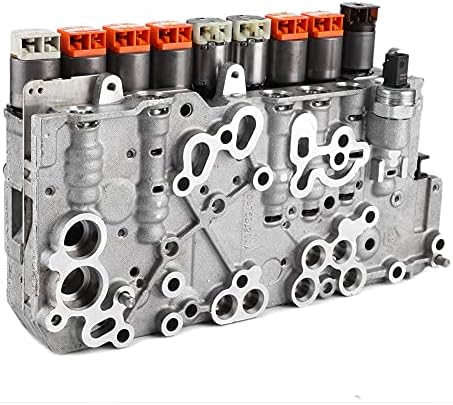
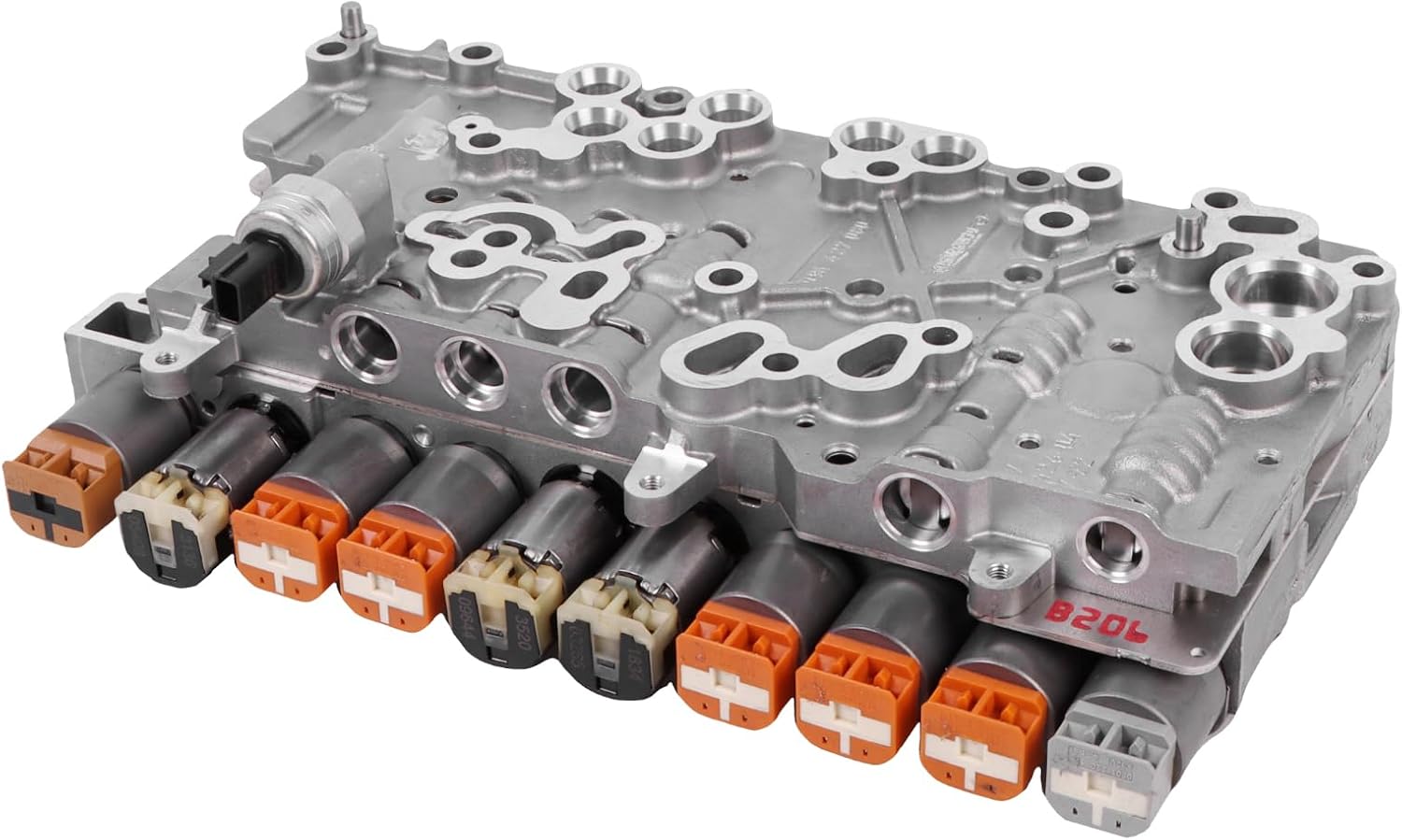
Before chasing "solenoid B" at all, confirm which valve body is actually on the bench. Sonnax's identification guide for this transmission splits it into two variants by how Park is selected. Park By Wire (PBW) uses full electronic control with 10 solenoids; Park By Cable (PBC) uses a cable-actuated manual valve and carries 9. The simplest field check is literally counting the solenoid caps on top of the unit. Sonnax is explicit that the two are not interchangeable -- the solenoid configuration differs, and so do several internal small parts and valve locations -- and that Honda and Acura applications use the ZF9HP48 PBW design specifically. Getting this wrong before you start testing means you are potentially looking at the wrong solenoid position entirely, since valve and small-parts locations documented in Sonnax's own installation booklet differ by variant.
Finding Solenoid "B" on the Bench
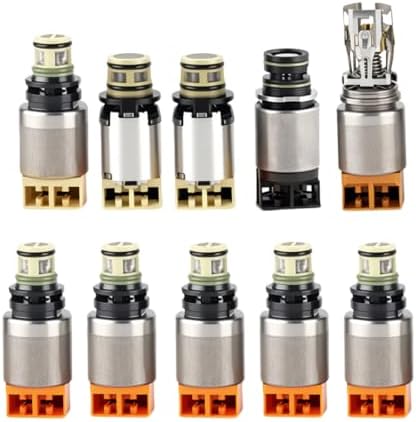
Sonnax's solenoid identification diagrams for both the PBW and PBC valve bodies show the same labeling convention: the clutch-pack-control solenoids -- B, C, D and E Clutch Solenoid -- are pressure-modulated units with orange caps, normally low. The system pressure solenoid, which handles overall line pressure rather than an individual clutch, has a white cap and runs normally high. That is a useful visual check, but Sonnax's documentation adds a specific warning worth repeating: the white- and orange-capped solenoids share the same physical snout and connector shape and can be installed in the wrong bore. A transmission that had the valve body serviced previously and came back with a B-circuit performance code is worth checking for a swapped solenoid before anything else is tested.
For the resistance check itself, Sonnax's booklet lists the OEM spec measured at the case connector: B Clutch Solenoid tests at terminals 4 and 3, with 5-6 ohms as the expected range (C, D and E Clutch Solenoid read the same 5-6 ohms at their own terminal pairs; the A and F Dog Clutch solenoids run 10-12 ohms, and the Mechanical Park solenoid on PBW units runs 24-26 ohms). A B Clutch Solenoid reading outside 5-6 ohms confirms a genuinely bad coil. A reading inside spec means the fault is somewhere else, and that is the more common outcome.
One more wrinkle worth knowing before you order a part by code name alone: FCA's own documentation does not consistently call this circuit "Pressure Control Solenoid B." A 2016 FCA service bulletin covering this exact transmission lists a related fault as "Shift Solenoid B Control Circuit Performance" (P0975) rather than using the generic SAE pressure-control naming. Pull the DTC-to-component list for the specific VIN and calibration rather than assuming the generic code description matches the part name in the parts catalog.
Check for a TCM Calibration Bulletin Before You Touch Hardware
This is the step most likely to get skipped, and it is free. FCA Service Bulletin 21-015-16, "Flash: Transmission Diagnostic And Shift Enhancements," covers 2015 Jeep Cherokee (KL) and Chrysler 200 (UF) vehicles built with the 948TE and 9HP48. For UF vehicles specifically, the bulletin lists Shift Solenoid B Control Circuit Performance (P0975-00) among a documented set of codes -- alongside several other solenoid-performance and TCM-internal codes -- that the reflash is intended to address, along with separate shift-quality enhancements for garage shifts, coast-down downshifts and grade-detection behavior. The fix in every case is reprogramming the TCM with current software through wiTECH, with no part replaced. Before condemning a solenoid on this platform, confirm the TCM and PCM calibrations are current for the VIN. If they are not, updating them first can resolve a performance code that looks electrical or mechanical but is really just outdated logic.
Wiring Before Hardware -- A Real Case
If the solenoid tests in spec and the calibration is current, the wiring deserves a close look before the valve body comes out. Transmission Digest published a first-hand account from Paul Loch, an ASE Master Certified diagnostician at Certified Transmission, working a 2014 Jeep Cherokee with a 948TE that would not shift and had set P0973 (shift solenoid one control circuit low) and P1DB2 (actuator supply voltage circuit). On this architecture, the solenoids share two supply circuits -- SS1 feeding six solenoids and SS2 feeding four -- off a common power source that should read full battery voltage with the case connector connected and roughly 2.5 volts with it disconnected. Loch methodically tested each supply circuit for opens, shorts to ground, and continuity from the TCM connector through to the case connector, and found everything in spec -- until the fault stopped reproducing once he had disturbed the harness during testing. Pulling the harness apart again, he traced it to a mounting bracket rubbing through the insulation on the SS2 wiring. He later saw the same bracket starting to wear through on three more same-year, same-model vehicles that had not yet thrown a code. His conclusion, after years on this unit: harness chafing is the single most common root cause behind intermittent faults here.
The relevance to a B-circuit code specifically: because the B Clutch Solenoid shares a supply circuit with several other solenoids, a marginal or intermittent fault anywhere on that shared circuit -- not just at the B solenoid's own connector -- can present as a single-solenoid performance code, especially if it is heat- or vibration-dependent and does not show up as a hard open on a static bench test.
When It Really Is the Valve Body
If the solenoid, the calibration and the wiring all check out, the valve body is the remaining suspect, and Sonnax's critical wear documentation for this unit is specific about what a worn bore actually causes. The Solenoid Pressure Regulator Valve (PR-V), which regulates feed pressure to the solenoids, is documented to cause "solenoid performance codes" and "low solenoid feed pressure" directly when its bore wears -- Sonnax's drop-in kits 85740-09K or 85740-11K address it. Downstream of the solenoid itself, wear at the B Clutch Valve (CV-B) is documented to cause no reverse, 2-3 flare, no 5th gear and gear ratio errors. If P0776 is showing up alongside any of those shift symptoms rather than in isolation, that points toward the valve body rather than the solenoid as the real root cause.
Diagnostic Order
- Confirm the valve body variant -- count the solenoids to establish PBW (10) vs. PBC (9) before testing anything, since locations and part numbers differ between them.
- Check TCM/PCM calibration against the latest published bulletin for the VIN via wiTECH or TechConnect. This costs nothing and has a documented history of resolving solenoid performance codes on this exact platform.
- Ohm the B Clutch Solenoid at the case connector (terminals 4 and 3, expect 5-6 ohms), and visually confirm no solenoid has been cross-installed into the wrong bore.
- Inspect the SS1/SS2 harness and connectors for chafing, especially near chassis-mounted brackets, wiggle-testing while watching live data for an intermittent fault.
- If all of the above check out, pull the valve body and vacuum-test the PR-V and CV-B bores for wear before condemning the TCM.
The Fix
If the TCM calibration was out of date, a reflash and the Quick Learn relearn resolves the code with no parts replaced. If the B Clutch Solenoid itself tested outside its 5-6 ohm spec, it is normally replaced as part of the full solenoid set rather than on its own, since the other solenoids in the same unit share the same age and the same miles. If the cause traces to chafed insulation on the shared solenoid supply harness, repair or replace the affected section and check nearby mounting brackets for the same wear pattern Loch found on repeat vehicles. If the cause is PR-V or CV-B bore wear, Sonnax's drop-in kits address a moderately worn bore without a full valve body swap; a unit that has already seen burnt clutches from the resulting pressure instability is better served by a remanufactured valve body with new solenoids.
Refill with an approved fluid. Any of these repairs drops fluid, and the wrong ATF in a solenoid-fed pressure control system is a good way to bring the same code back. ZF's own List of Lubricants TE-ML 11 (edition 01.10.2026) groups the 9HP48 variants with the 9HP50 and names ZF LifeguardFluid 9 (ZF No. AA01.500.001) or ZF Lifeguard Hybrid 1 for service fills, chosen according to the vehicle manufacturer's spare part number. That same ZF document recommends an oil change after 150,000 km despite the lifetime-fill marketing, and sooner on high-temperature, high-load or unknown-history vehicles (ZF TE-ML 11). Match the jug to the part number the vehicle maker specifies, then set level with Sonnax's 37-45°C check window.
Relearn After Any Repair
Any time the transmission's clutch adaptive values are cleared -- after a TCM flash, a solenoid swap, or valve body work -- FCA's Quick Learn procedure needs to run before the vehicle goes back to the customer. Per the published repair procedure, that means warming the transmission to a minimum of 60 degrees C (140 degrees F) by cycling Park to Reverse to Drive and accelerating to at least 45 mph several times so the unit shifts through every gear, then connecting a scan tool, selecting the TCM module, and running "Quick Learn" from the Misc Functions menu. Skipping this step after a repair is a common reason a fixed transmission still shifts poorly on the test drive.
Need parts for this job?
Our transmission parts shop carries the full 10-piece refurbished solenoid set for this transmission, a 948TE valve body with the wiring harness already attached, and a remanufactured 9HP48 valve body with all 10 solenoids, all on our own checkout. If bench testing points specifically at the solenoid pack rather than the harness or TCM calibration, CoreTransmissionParts also stocks the 9HP48 shift solenoid kit, or browse their full 9HP48 parts collection.
FAQ
What does P0776 mean on a 9HP48 or 948TE transmission?
P0776 is the generic SAE code for Pressure Control Solenoid "B" Performance or Stuck Off -- the TCM commanded a pressure change at the B solenoid circuit and did not see the hydraulic response it expected. On this transmission that circuit most often maps to the B Clutch Solenoid, one of four orange-capped, pressure-modulated clutch solenoids that apply the B, C, D and E clutch packs, but the root cause can be the solenoid itself, a shared supply-circuit wiring fault, outdated TCM calibration, or wear in the valve body downstream of the solenoid.
Is "Pressure Control Solenoid B" the same thing as the "B Clutch Solenoid"?
Likely, but confirm it for the specific vehicle before ordering parts. Sonnax's own technical documentation for this transmission names the clutch-apply solenoids B, C, D and E Clutch Solenoid rather than using the generic SAE "Pressure Control Solenoid" lettering, and FCA's own service bulletins have logged a closely related fault on this same architecture under yet another name, Shift Solenoid B Control Circuit Performance. Pull the DTC-to-component list for the exact VIN and calibration rather than assuming the generic code name matches the OEM part name one-to-one.
Can a TCM software update really fix a solenoid performance code on this transmission?
Yes, and it costs nothing to check first. FCA Service Bulletin 21-015-16 documents a TCM reflash that resolved a documented list of solenoid and TCM performance codes, including Shift Solenoid B Control Circuit Performance, on 2015 Jeep Cherokee and Chrysler 200 models with this transmission, with no parts replaced. Confirm the TCM and PCM calibrations are current via wiTECH or TechConnect before condemning a solenoid.
How do I know if my 9HP48/948TE has the 9-solenoid or 10-solenoid valve body?
Count the solenoids on top of the valve body. Sonnax's identification guide for this unit confirms the Park By Wire (PBW) version uses 10 solenoids and the Park By Cable (PBC) version uses 9, and the two are not interchangeable -- the solenoid configuration and several internal small parts differ between them. Honda and Acura applications use the ZF9HP48 PBW design.
Can P0776 be fixed without replacing the valve body?
Often, yes. If the TCM calibration is out of date, a reflash and Quick Learn relearn resolves it with no parts. If the B Clutch Solenoid itself tests out of its 5-6 ohm specification, it is normally replaced as part of the full solenoid set since the others share the same age and mileage. If the fault traces to chafed wiring on the shared solenoid supply circuit, a harness repair resolves it. A valve body swap is the right call only once those are ruled out and the B Clutch Valve or Solenoid Pressure Regulator Valve bores show documented wear.
Related guides
- 9HP48 Pressure Control Solenoid Symptoms
- 9HP48 Valve Body Symptoms
- 9HP48 P0842: Fluid Pressure Sensor Low Causes and Fix
- 9HP48 Limp Mode Causes
- 9HP48 Shift Solenoid Symptoms
Sources
- Sonnax, "Chrysler 948TE; Honda/Acura, 9-Speed; ZF9HP48 Zip Kit, Identification Guide & Installation and Testing Booklet," Part No. 948TE-ZF9-HONDA-ZIP, 2022. Backs the PBW (10-solenoid) vs. PBC (9-solenoid) valve body identification and non-interchangeability, the solenoid ID diagrams and cap-color convention (orange clutch solenoids normally low, white system pressure solenoid normally high) with the cross-installation warning, the resistance spec table (B Clutch Solenoid at terminals 4 & 3, 5-6 ohms), the fluid fill procedure (6.5L dry fill, 37-45°C check window), and the PR-V and CV-B critical wear/symptom documentation with part numbers 85740-09K, 85740-11K. cdn.transend.us
- FCA US LLC, Service Bulletin 21-015-16, "Flash: Transmission Diagnostic And Shift Enhancements," April 5, 2016, hosted by NHTSA. Backs the documented DTC list including P0975-00 Shift Solenoid B Control Circuit Performance resolved via TCM reflash on 2015 Jeep Cherokee (KL) and Chrysler 200 (UF) 948TE/9HP48 vehicles, and the Quick Learn relearn procedure (60°C/140°F warm-up, 45 mph cycles, wiTECH Misc Functions). static.nhtsa.gov
- Transmission Digest (Paul Loch, Certified Transmission), "Diving into electrical testing and wiring with the 948TE," June 15, 2023. Backs the SS1/SS2 shared solenoid supply circuit architecture, the P0973/P1DB2 case study, the voltage test procedure, and the harness-chafing root cause found on repeat vehicles. transmissiondigest.com
- Sonnax (Jason Larochelle), "ZF9HP48, 948TE Line Pressure Control & Diagnostics," July 21, 2021. Backs the shared ZF9HP48/948TE hydraulic architecture and application list referenced for background on this transmission's solenoid-fed pressure control design. sonnax.com
- ZF Friedrichshafen AG — List of Lubricants TE-ML 11, edition 01.10.2026. Backs the 9HP48/9HP50 product group, ZF LifeguardFluid 9 (ZF No. AA01.500.001) and ZF Lifeguard Hybrid 1 as the approved service-fill fluids according to the vehicle manufacturer's part number, and the 150,000 km oil change recommendation with shorter intervals for high-temperature, high-load or unknown-history use. aftermarket.zf.com (PDF)