The ZF 9HP48, badged 948TE on Chrysler and Jeep products, is one of the only transmissions on the road that does not regulate its own line pressure the conventional way. Most automatics balance the pressure regulator valve with a spool built into that same valve. The 9HP48/948TE adds a second valve to the job — the shift valve-system pressure valve, or SV-SP valve — fed by EPC (electronic pressure control) pressure from a dedicated system pressure solenoid. That unusual design is exactly why line-pressure complaints on this transmission get misdiagnosed as often as they do: the symptoms look like a bad shift solenoid, a tired clutch pack, or "just a 9-speed being a 9-speed," when the real fault is upstream in a pressure circuit most shops never learned to check.
This is what the EPC/system pressure solenoid and SV-SP valve actually do, how to tell a line-pressure fault apart from a shift-solenoid fault, the real TCM calibration history behind this transmission's early shift-quality complaints, and the documented repair for the wear point that causes most of it.
The short version: The 9HP48/948TE uses a traditional pressure regulator valve plus a second valve, the SV-SP valve, which takes EPC pressure from the system pressure solenoid and uses it to balance the regulator valve and set line pressure, per a Sonnax technical writeup published in Transmission Digest. Wear at that SV-SP valve causes poor line pressure control, substandard shift quality, and burnt clutches — symptoms that hit multiple gears at once, not one stuck gear the way a shift-solenoid fault does. Before condemning hydraulics, rule out the documented 2014-2016 TCM calibration issues first; FCA US has a specific flash (TSB 21-015-16) for shift-quality complaints on this platform.
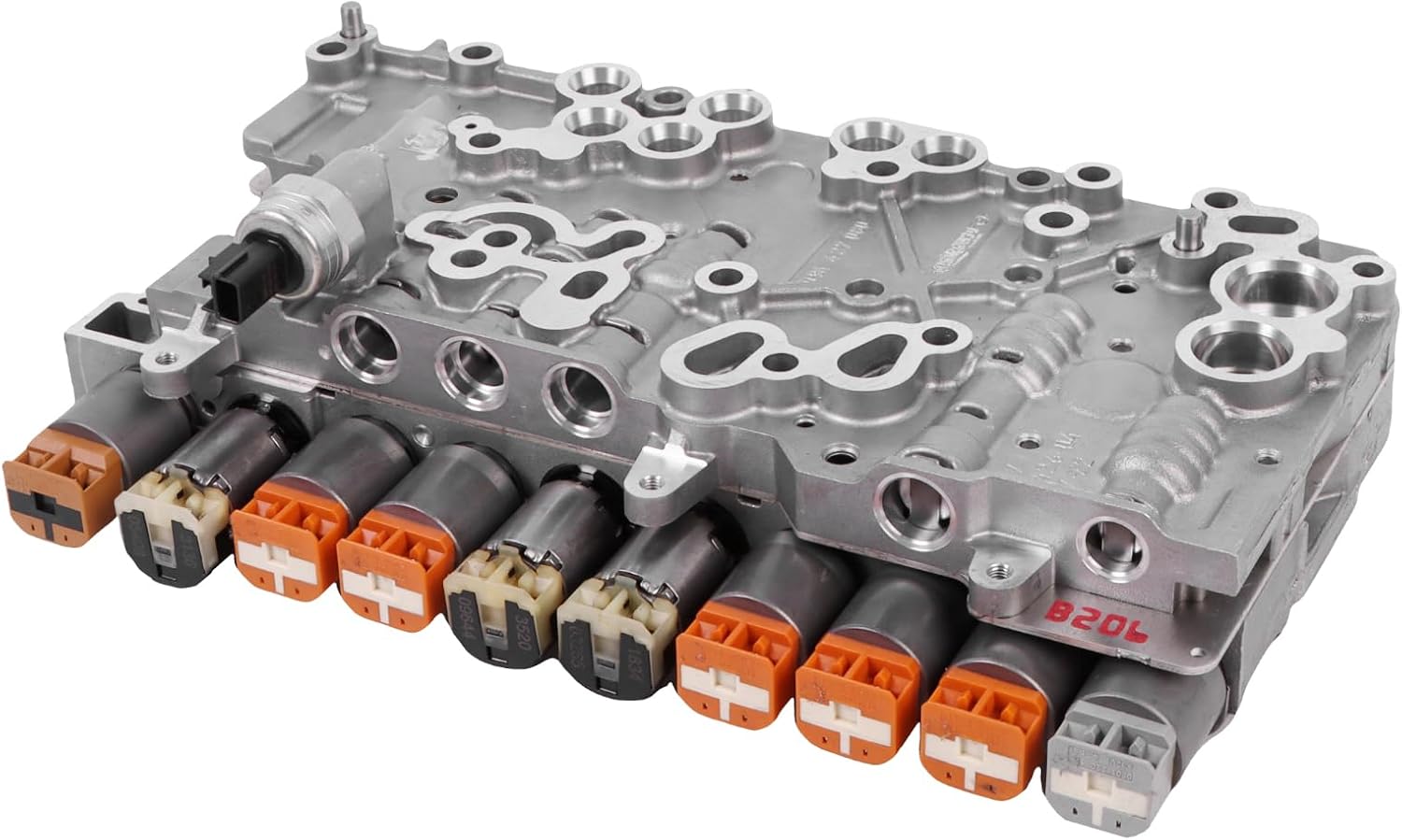
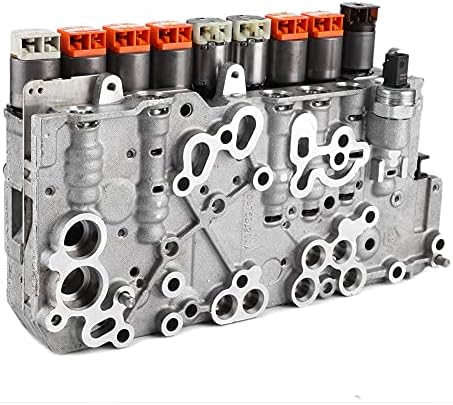

How the 9HP48/948TE Regulates Line Pressure
Nearly every modern automatic controls line pressure by using a solenoid to push against a spool built directly into the pressure regulator valve — more solenoid pressure, more spring force resisted, higher line pressure. The 9HP48/948TE does it differently. According to a Sonnax technical writeup published in Transmission Digest, this platform keeps a traditional pressure regulator valve but adds a second, dedicated valve: the shift valve-system pressure valve, or SV-SP valve. The SV-SP valve takes EPC (electronic pressure control) pressure from the system pressure solenoid and uses that signal to regulate pump pressure at the balance end of the main pressure regulator valve, rather than acting on the regulator valve directly.
Sonnax's own writeup is candid that the reason for the extra valve isn't fully documented by the OEM: "It is not entirely clear what motivated the designers to use this unique setup," though more precise control of line pressure is the likely intent. Whatever the reasoning, the practical effect for diagnosis is that this transmission has two wear-sensitive valves in the line-pressure path instead of one, and a tech who only checks the pressure regulator bore the way they would on a traditional unit will miss the SV-SP valve every time.
Symptoms of a Bad EPC Solenoid or Worn SV-SP Valve
Per Sonnax, wear at the SV-SP valve bore produces three documented outcomes: poor line pressure control, substandard shift quality, and burnt clutches. Those are not independent problems — they are a chain reaction. Once the SV-SP valve can no longer deliver a clean EPC balance signal, the pressure regulator valve can't hold commanded line pressure accurately. Low pressure under load lets a clutch pack slip instead of locking up cleanly; high or erratic pressure produces harsh, banging engagements. Repeated slip cycles glaze and eventually burn the friction material, which is how a hydraulic wear issue turns into a mechanical rebuild.
The practical giveaway is how broadly the symptom shows up. A failing shift solenoid on this transmission tends to affect gear selection — the unit gets stuck in one failsafe gear, won't shift out of it, and throws a specific shift-solenoid circuit code. A line-pressure fault affects gear engagement quality across the board, because every clutch in every gear depends on the same regulated line pressure:
- Harsh or banging engagements in multiple gears, not just the garage shift from Park to Drive or Reverse.
- Shift flare — engine RPM briefly rises before the next gear catches, a sign the outgoing clutch released before the incoming clutch had enough clamping force.
- Slipping or shudder under load, especially accelerating from a stop or under heavier throttle, without a specific shift-solenoid code present.
- Inconsistent shift feel from one shift to the next, rather than one reliably reproducible hard shift in one spot.
- Burnt-fluid smell or discolored, varnished ATF on a fluid check, which points at clutch slip heat rather than a purely electrical fault.
None of these symptoms by themselves confirm an SV-SP valve or EPC solenoid problem — low fluid, a tired clutch pack from age, or a TCM calibration issue can produce overlapping complaints. That's exactly why the diagnostic order below starts with the cheapest, fastest checks first.
The 2014-2016 TCM Calibration History Behind Shift-Quality Complaints
Before any valve body comes apart, it's worth knowing that a large share of this transmission's early shift-quality reputation was never a hardware problem. Per Gears Magazine, the official publication of the Automatic Transmission Rebuilders Association (ATRA), early production 9HP48/948TE units in FCA vehicles "had numerous issues regarding shift quality, namely harsh upshifts and downshifts, delayed gear engagements, gear ratio error DTCs, stuck in-gear DTCs, and various other DTCs," and most were resolved through TCM reprogramming rather than parts changes. Over three million of these transmissions shipped in FCA products alone — Jeep Cherokee, Renegade and Compass, Chrysler 200 and Pacifica, the Ram ProMaster City, and the Fiat 500X — plus Honda/Acura and Land Rover applications on the shared ZF-designed platform.
FCA US Service Bulletin 21-015-16 (April 5, 2016), hosted in NHTSA's public TSB archive, documents exactly this kind of fix for 2015 Jeep Cherokee (KL) and Chrysler 200 (UF) vehicles with the 948TE or 9HP48. The bulletin's symptom list includes codes P0887 (TCM Power Control Circuit High), P061B (Internal Control Module Torque Calculation Performance), P0711 (Transmission Fluid Temperature Sensor A Circuit Range-Performance), and on UF vehicles, shift-solenoid performance codes P0975, P0978, P0981 and P0984. The listed fix is a TCM reflash followed by a Transmission Quick Learn procedure, which resets and relearns the clutch adaptive values the TCM uses to control engagement feel. The bulletin explicitly calls out improvements to "garage shift," the 2-1 downshift and 3-1 shift bump when coasting to a stop, and a 3-2 downshift that was "hard to achieve or not available" on grades — all classic line-pressure-feel complaints that have nothing to do with a worn valve.
The takeaway: if a 2014-2016 Cherokee, 200, Renegade or Compass has harsh or inconsistent shifts and the TCM calibration hasn't been checked against the latest available software, that is the first and cheapest thing to rule out, not the last.
How the Clutch Pack Depends on Line Pressure
Understanding why a pressure fault burns clutches instead of just feeling soft requires knowing what line pressure is actually holding. Per Gears Magazine, the 9HP48/948TE uses six clutch assemblies labeled A through F: four conventional multi-disc friction clutches (B, C, D, E) and two dog clutches (A and F) that lock mechanically rather than through friction. Clutches B and E deliver input torque into the gearset, while C and D hold gearset members to the case; the A-dog clutch drives the rear sun/internal gear assembly and the F-dog clutch holds the front and middle sun gears to the case. Every forward gear and reverse is built from a specific combination of these six elements applying and releasing in sequence.
The friction clutches (B, C, D, E) are the ones at risk from a line-pressure fault, because they rely on hydraulic clamping force to hold without slipping. The dog clutches lock mechanically once engaged and are far less sensitive to pressure variance, but they still need adequate pressure to shift into engagement cleanly in the first place. When line pressure is low or unstable from SV-SP valve wear, it's the B/C/D/E friction clutches that slip, heat, and eventually glaze or burn — which is exactly the failure mode Sonnax's writeup describes.
Diagnostic Order: Cheapest Checks First
- Pull codes and separate TCM-calibration codes from solenoid-circuit codes. P0887, P061B, P0711 and shift-solenoid performance codes like P0975/P0978/P0981/P0984 on an affected 2015-2016 KL or UF vehicle point at TSB 21-015-16, not a worn valve. On a 2014 Cherokee with the 3.2L, FCA bulletin 21-043-15 covers a separate reflash for P0711, P072F (stuck in gear 4), P076F and P0734 (gear ratio errors), P0810 (clutch position control error), P1CC9 (unable to engage gear) and P061B, and lists garage-shift and 3-2 downshift-on-grade improvements [5] — another set of pressure-feel complaints that are software, not hardware.
- Check TCM software against the latest available calibration before anything else. If it's behind, flash it and perform the Transmission Quick Learn procedure per the bulletin before drawing any conclusions from a road test.
- Check fluid type, level, condition, and smell. ZF's product data sheet for LifeguardFluid 9 states that only that fluid (sold by Mopar as ZF 8 and 9 Speed ATF) may be used in the 9HP, and that other oils can badly degrade shift behavior up to transmission failure [6]. Level is checked hot and running in Park with Mopar tool 10323A through the fill plug, read against transmission temperature; GEARS Magazine gives 16-23 mm as correct at 140°F [7]. Burnt or varnished fluid supports a clutch-slip theory; clean fluid at the correct level points the investigation toward calibration or wiring instead.
- Road test and map exactly which gears and conditions trigger the complaint. One reproducible hard shift at the same spot suggests a solenoid or calibration issue; harsh or inconsistent feel across multiple gears and load conditions points toward line pressure.
- If hydraulics are still suspected after the above, pull the valve body and inspect the SV-SP valve bore and the pressure regulator bore for wear, not just the regulator bore alone — this is the step Sonnax specifically warns gets skipped.
- Repair or replace accordingly. A worn SV-SP valve can be addressed with a dedicated valve kit on a bench rebuild; a high-mileage unit already apart is usually better served with a remanufactured valve body that addresses the solenoid pack, regulator valve and SV-SP valve together.
The Documented Repair: Sonnax SV-SP Valve Kit
Sonnax publishes a dedicated repair for this exact wear point: part 85740-07K, a Shift Valve-System Pressure Valve Kit sized at 1.157 inches overall length with a 0.435-inch inner spool length, including an end plug with a wire retainer. It is built specifically to replace the worn OEM SV-SP valve and restore an accurate EPC balance signal to the pressure regulator valve. Sonnax's guidance to technicians is direct: "Take care when digging into these valve bodies and checking for wear... don't overlook the SV-SP valve!" because it "is highly active and feeds the pressure regulator valve, so wear at the SV-SP valve will affect line pressure control, shifts, and clutch durability."
For a shop doing a targeted repair on a unit already on the bench, the individual valve kit is the precision fix. For a unit coming apart for a full rebuild, or where the solenoid pack is also questionable, a remanufactured valve body that addresses the SV-SP valve, pressure regulator bore and all ten solenoids as a unit is the more practical path — it removes the SV-SP valve as a variable permanently rather than betting the rest of the body is still within tolerance.
9HP48/948TE Valve Bodies and Fluid
We stock remanufactured 9HP48 valve bodies with the solenoid pack and pressure regulation addressed, a 948TE valve body with harness, and the correct full-synthetic ZF 9HP-spec ATF — shipped fast from the USA.
Shop 9HP48 parts →FAQ
What does the 9HP48/948TE EPC or system pressure solenoid actually control?
On the 9HP48/948TE, the system pressure solenoid does not regulate line pressure directly. It generates an EPC control pressure that acts on a dedicated shift valve-system pressure valve (SV-SP valve), which then balances the main pressure regulator valve to set line pressure from the pump, according to a Sonnax technical writeup published in Transmission Digest. Most transmissions balance the regulator valve with a spool on the valve itself; this platform uses a second valve for that job instead.
What symptoms point to a bad EPC solenoid vs. a bad shift solenoid on the 9HP48?
A shift solenoid fault on this transmission typically locks the unit into a single failsafe gear with one hard engagement, per documented case data. An EPC/line-pressure fault behaves differently: because it affects clamping force on every clutch in every gear, the symptoms show up across the board — harsh engagement in multiple gears, shift flare, slipping under load, and in worst cases burnt clutch material, rather than one stuck gear.
Why does SV-SP valve wear cause burnt clutches on the 9HP48?
The SV-SP valve is in constant motion feeding the pressure regulator valve, so bore and spool wear there directly degrades line pressure control, per Sonnax. If line pressure cannot hold the commanded clamping force on a clutch pack during a shift or under load, that clutch slips against its mating surface and generates heat, and repeated slip-and-heat cycles glaze and burn the friction material.
Can a TCM software update fix 9HP48 shift-quality problems, or do I need a new valve body?
Both are documented fixes for different problems. FCA US TSB 21-015-16 corrects a specific list of calibration-related DTCs and shift-quality complaints — garage shifts, 2-1 and 3-1 shift bumps, and grade-related 3-2 downshift issues — with a TCM reflash and a Transmission Quick Learn, no parts involved. Mechanical wear at the SV-SP valve or pressure regulator bore is a hydraulic problem a software update cannot fix; that requires a valve body repair or replacement.
What is the documented fix for SV-SP valve wear on the 9HP48/948TE?
Sonnax publishes a dedicated Shift Valve-System Pressure Valve Kit (part 85740-07K) sized to replace the worn OEM SV-SP valve and bore, restoring the EPC-pressure balance signal the valve sends to the main pressure regulator valve. On a high-mileage unit already apart for a rebuild, a remanufactured valve body with the solenoid pack, pressure regulator and SV-SP valve addressed together is usually the more practical repair than sourcing and fitting the individual valve kit.
Sources
- Jason Larochelle, Sonnax — “ZF9HP48, 948TE Line Pressure Control and Diagnostics,” published in Transmission Digest (August 11, 2021): the SV-SP valve design, how EPC pressure from the system pressure solenoid balances the pressure regulator valve, and the documented symptoms of SV-SP valve wear (poor line pressure control, substandard shift quality, burnt clutches). transmissiondigest.com
- Sonnax — Product page for part 85740-07K, Shift Valve-System Pressure Valve Kit: valve dimensions (1.157" overall length, .435" inner spool length) and kit contents for the documented SV-SP valve repair. sonnax.com
- Gears Magazine (Automatic Transmission Rebuilders Association) — “ZF 9HP48 – A Mechanical Marvel!” (December 2019): the six-clutch A-F layout with dog clutches A and F, FCA/Honda/Acura/Land Rover vehicle applications and production volume, and the documented 2014-2016 TCM shift-quality and DTC issues resolved through reprogramming. gearsmagazine.com
- FCA US LLC — Technical Service Bulletin 21-015-16, “Flash: Transmission Diagnostic And Shift Enhancements” (April 5, 2016), hosted in NHTSA's public TSB archive: the full DTC list for 2015 KL/UF 948TE and 9HP48 vehicles, the garage-shift and grade-downshift enhancements, and the TCM reflash plus Transmission Quick Learn repair procedure. static.nhtsa.gov (NHTSA TSB archive)
- FCA US LLC — Service Bulletin 21-043-15, “Flash: Transmission Shift and Diagnostic Enhancements” (June 19, 2015), hosted by NHTSA: 2014 KL Cherokee 3.2L / 948TE applicability, the DTC list (P0711, P072F, P076F, P0810, P1CC9, P0734, P061B), and the garage-shift and grade 3-2 downshift improvements. static.nhtsa.gov
- ZF Friedrichshafen AG — Product Data Sheet, “ZF LifeguardFluid 9” (8HP and 9HP): only LifeguardFluid 9 approved, consequences of other fluids, and the 150,000 km change recommendation. aftermarket.zf.com
- Jarad Warren, GEARS Magazine (ATRA) — “948TE: Checking Fluid Levels” (April 2017): Mopar ZF 8 and 9 Speed ATF part number, tool 10323A, the running/Park temperature-based check, and the 16-23 mm level at 140°F. gearsmagazine.com