A 9HP48 doesn't just throw a code and sit still when a speed sensor circuit goes bad. The ZF-badged 9HP48 and its Chrysler-built twin, the 948TE, run across the Jeep Cherokee (KL), Jeep Renegade (BU), Chrysler 200 (UF), Ram ProMaster City (VM) and Fiat 500X (FB), plus Honda, Acura and Land Rover applications, and on every one of them the TCM leans on input and output speed data for two jobs at once: calculating torque converter slip and deciding when to shift. Lose a clean signal from either sensor and the symptoms show up fast — a harsh garage shift into Reverse or Drive, a transmission that won't move past a single gear, or a speedometer that jumps, drops out, or goes dead.
What makes this transmission different from an older four- or six-speed is that Stellantis documents the failure in its own language. There are generic OBD-II codes any scan tool will show, and there are manufacturer-specific codes the 948TE's TCM actually sets, backed by a real TCM reflash bulletin, a real NHTSA harness recall, and a real documented diagnostic case from a shop that worked through one of these on the bench. This is what each of those sources actually says, and the order to check them in before parts start coming off the vehicle.
The short version: A generic scanner reads input speed sensor faults as P0715 or P0717 and output speed sensor faults as P0720, but the 948TE's own TCM flags output speed sensor/wheel speed correlation problems with the manufacturer-specific codes P1720 and P1634, per Stellantis TSB 21-039-15 REV A — and that bulletin's fix is a TCM software reflash, not a sensor swap. Before condemning any part, know that NHTSA recall 16V-529 documents a real, confirmed wire harness crimp defect in this same connector family on 412,981 vehicles, which is why the case connector and harness come first in any proper diagnosis.

What a Speed Sensor Fault Actually Looks Like
The TCM uses input (turbine) speed to calculate torque converter slip for lockup control and uses output speed, correlated against wheel speed, to confirm the transmission is actually turning the gear it thinks it commanded. When either signal goes bad, intermittent, or stops correlating with the other sensors on the vehicle, the symptoms are rarely subtle:
- Harsh or delayed garage shifts — a hard clunk or a pause going from Park or Neutral into Reverse or Drive.
- The transmission holding a single gear in Drive and refusing to shift, a classic failsafe/limp mode response.
- A jumpy, dropping, or dead speedometer, since output speed on many of these applications also feeds the instrument cluster's road speed signal.
- Erratic torque converter clutch behavior — harsh or premature lockup, or no lockup at all — because the TCM can't calculate slip without a clean turbine speed reading.
- A MIL with a correlation or rationality code rather than a simple no-signal code, especially when the fault is intermittent rather than a dead sensor.
That last point is the one worth sitting with before a sensor comes off the transmission: a rationality or correlation fault means the TCM received a signal, just not one that made sense against its other inputs, which is exactly the kind of fault a marginal connector or a damaged wire produces — not necessarily a dead sensor.
Generic Codes vs. What the 948TE's Own TCM Actually Sets
A generic OBD-II scanner reads the input speed sensor circuit as P0715 (circuit malfunction) or P0717 (no signal), and the output speed sensor circuit as P0720 (circuit malfunction). Those are standard, manufacturer-independent definitions and they will show up on this transmission like any other.
But the 948TE's own TCM software goes further. Per Stellantis Service Bulletin 21-039-15 REV A, a small number of 948TE-equipped vehicles set the manufacturer-specific codes P1720 and P1634, both documented as "Output Speed Sensor-Wheel Speed Rationality." That wording matters: it's not a dead-sensor code, it's a correlation code — the TCM compared output speed against wheel speed from the ABS/stability system and found them disagreeing. These frequently set alongside P1DAD (Input Shaft-Output Shaft Direction Correlation), P1CC9 (Unable to Engage Gear), P0887 (TCM Power Control Circuit High) and P0711 (Transmission Fluid Temperature Sensor Range-Performance) in the same TCM memory, which tells a technician this is a TCM-side pattern, not an isolated sensor failure.
The Fix in TSB 21-039-15 Is Software, and It Has One Hard Rule
TSB 21-039-15 REV A, dated August 22, 2015, applies to the 2015 Ram ProMaster City (VM) with the 2.4L engine (sales code ED6) and the 9-speed 948TE FWD transmission (sales code DFH). The repair procedure is a straight TCM reprogram with the wiTECH diagnostic application, 0.2 hours of labor under operation 18-19-05-BZ — no sensor, connector, or harness replacement in the published fix. Stellantis's own note in the bulletin is the part worth underlining: "DO NOT CLEAR THE SHIFT ADAPTIVES IN THE TCM'S MEMORY. THIS ACTION MAY CAUSE THE TRANSMISSION TO NOT SHIFT SMOOTHLY UNTIL THE ADAPTIVES ARE RE-LEARNED." The wiTECH flash process clears DTCs automatically after the reprogram; the adaptive values are a separate memory space and should be left alone unless a different procedure specifically calls for resetting them.
This bulletin is not an isolated one-off, either. Stellantis separately issued TSB 21-043-15 for the 2014 Jeep Cherokee (KL) with the 3.2L engine and 948TE, targeting a different but overlapping set of codes — P0711, P072F (stuck in gear 4), P076F (gear 7 incorrect ratio), P0810 (clutch position control error), P1CC9 and P0734 — with the same TCM reflash approach. Two separate bulletins, two different engine/vehicle combinations, same root fix: updated TCM software. That pattern is the reason a VIN check for an open reflash campaign belongs ahead of a parts order on this transmission.
A Documented Harness Problem in This Same Connector Family
Software isn't the only root cause Stellantis has had to address on this platform. NHTSA Recall 16V-529 (Manufacturer Recall S55, submitted November 10, 2016) covers 412,981 vehicles — the 2014-2015 Jeep Cherokee (KL), 2015 Ram ProMaster City (VM), 2015 Jeep Renegade (BU), 2015 Chrysler 200 (UF) and 2016 Fiat 500X (FB) — all equipped with either the 9HP48 or 948TE. The documented defect: "insufficient crimps in the transmission wire harness that may cause an unexpected shift to neutral resulting in a sudden loss of motive power," with an estimated 5% defect rate across the recall population. The harness was built by supplier KE Elektronik GmbH. FCA's remedy was to reprogram the PCM and TCM, and — specifically where an active or stored fault code was present — replace the transaxle range sensor wire harness.
That recall is about the range sensor circuit, not the speed sensor circuit, and it should be described that way, not stretched into something it isn't. What it does establish, on the record, is that this transmission's wire harness family has a real, confirmed history of marginal crimp quality from the factory, not a theoretical one. A connector with a bad crimp doesn't care which circuit it happens to be on. That's the practical reason a speed-sensor correlation fault on a 948TE gets a connector and harness inspection before it gets a new sensor — the platform has already shown this exact kind of electrical defect is real.
How a 948TE Was Actually Diagnosed on the Bench
Transmission Digest published a first-hand case study by ASE Master Technician Paul Loch covering a 2014 Jeep Cherokee, 3.2L, 948TE that came in not shifting, after a prior shop had already declined to work on it. The codes were P0973 (shift solenoid 1 control circuit low) and P1DB2 (actuator supply voltage A circuit) — different circuits than the speed sensors, but the diagnostic approach is directly transferable. A road test confirmed the failsafe pattern: harsh Reverse and Drive engagement, and the transmission stuck in fourth gear in Drive. After ruling out the battery, alternator and the auxiliary start-stop battery, and confirming fluid level and condition were normal, the technician pulled wiring diagrams and tested at the case connector.
The key finding: with the transmission case connector disconnected and the key turned on, the monitored circuit did not read full battery voltage or zero — it defaulted to approximately 2.5 volts, confirmed on both solenoid power supply wires. That known default value is what let the technician confirm the TCM side of the circuit was behaving as designed before chasing the fault further into the harness. The same logic applies to a speed sensor circuit complaint: know what the circuit should read with the connector open and the key on, verify it there first, and only then start checking continuity and pin condition back toward the sensor itself.
How to Diagnose a 9HP48 Speed Sensor Complaint
- Scan for codes and record everything stored, not just the one that's active. A P1720/P1634 pairing, or a speed sensor code alongside P1DAD or P1CC9, points toward a correlation problem rather than a single dead part.
- Check the VIN for an open TCM reflash campaign. TSB 21-039-15 and TSB 21-043-15 both resolve sets of 948TE DTCs with a software update alone — confirm there isn't an available flash before replacing hardware.
- Inspect the case connector and harness for the kind of marginal crimp NHTSA recall 16V-529 documents in this exact harness family. Wiggle-test the harness with a scan tool connected and watch for the code going active.
- Test circuit voltage with the connector disconnected, the way Transmission Digest's case study did — know the expected default reading for the circuit in question before condemning anything downstream of it.
- Check fluid level and condition. It won't cause a speed sensor code directly, but it's a two-minute check that rules out a second variable before you're elbows-deep in wiring.
- If the TCM reflash is already current and wiring tests clean, the sensor assembly itself — or, on many of these units, the valve body it's mounted to or routed through — is the remaining candidate.
- After any repair, clear codes properly and road test. Per TSB 21-039-15, never clear the TCM's shift adaptive values as part of this process unless a specific procedure calls for it; doing so trades one driveability complaint for another.
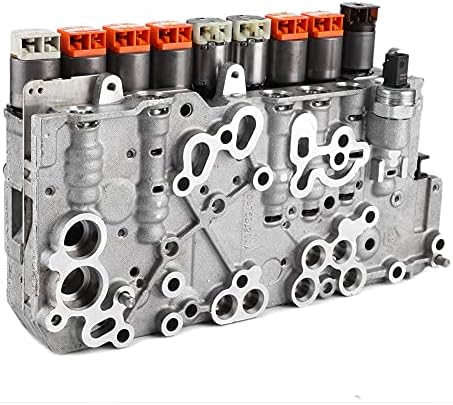
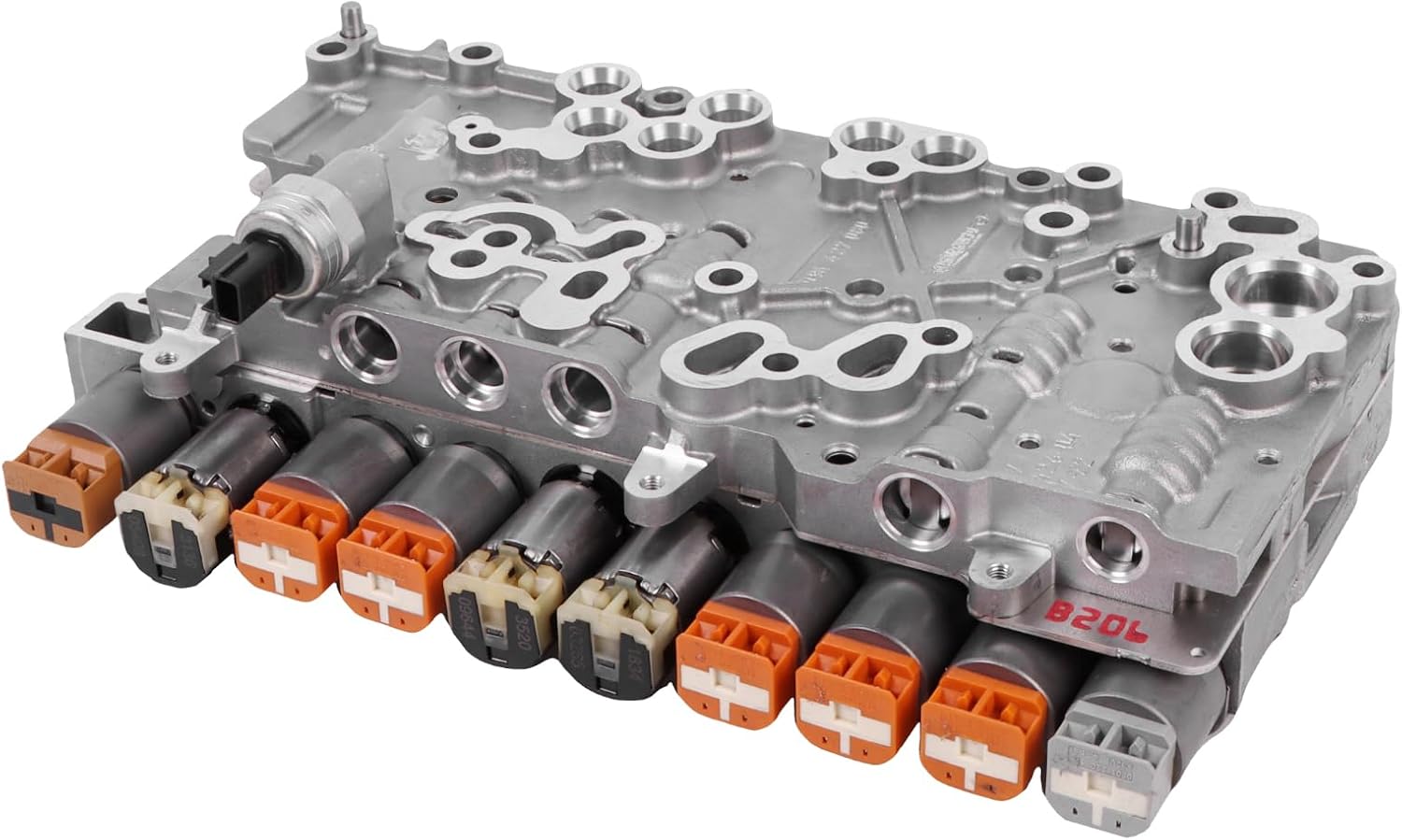
948TE Valve Bodies, Wire Harness Assemblies, and Filter Kits
We stock a 948TE valve body with its wire harness, a fully remanufactured 9HP48 valve body with all 10 solenoids installed, and the correct filter and pan gasket kit for the fluid service that should follow any internal repair — shipped fast from the USA.
Shop 9HP48 parts →FAQ
What codes show up when a 9HP48/948TE speed sensor circuit fails?
A generic scan tool can show P0715 or P0717 for the input/turbine speed sensor circuit and P0720 for the output speed sensor circuit. On the 948TE specifically, Stellantis's own TCM software also flags output speed sensor and wheel speed correlation faults with the manufacturer-specific codes P1720 and P1634, both labeled Output Speed Sensor-Wheel Speed Rationality in TSB 21-039-15 REV A. These often set alongside related codes like P1DAD (input shaft-output shaft direction correlation) or P1CC9 (unable to engage gear) rather than in isolation.
Is a 948TE speed sensor code a bad sensor or a wiring problem?
On this transmission, wiring and connector problems are a documented, confirmed failure mode, not a guess. NHTSA recall 16V-529 covers 412,981 vehicles equipped with the 9HP48 or 948TE for insufficient crimps in the transmission wire harness, built by supplier KE Elektronik GmbH, that caused an unexpected shift to neutral. That recall involves the transaxle range sensor circuit specifically, but it proves the harness family that also carries the speed sensor signals has a real history of marginal crimps, which is why checking the case connector and harness before replacing a sensor is the correct first move, not an optional one.
Will a 948TE speed sensor fault put the transmission into limp mode?
Yes. The TCM needs both input and output speed data to calculate torque converter slip and schedule shifts, and when a code for either circuit sets, the transmission commonly defaults to a fixed gear with harsh garage shifts (Park to Reverse or Drive) until the fault clears. A real-world 948TE diagnostic case documented by Transmission Digest showed the same failsafe pattern from an unrelated solenoid supply code: harsh reverse and drive engagement and the transmission stuck in a single gear in Drive.
Does Stellantis have a software fix for 948TE speed sensor codes, or does the sensor need to be replaced?
Sometimes it is software, not hardware. TSB 21-039-15 REV A exists specifically because a small number of 948TE-equipped vehicles set P1720 and P1634 and other correlation codes that a TCM reflash resolves, with no sensor or harness replacement involved. Stellantis has issued more than one TCM software campaign for the 948TE targeting shift-quality and sensor-correlation DTCs, so checking the VIN for an available reflash campaign before ordering a sensor is a legitimate diagnostic step, not a shortcut.
Sources
- Stellantis/FCA US LLC — Technical Service Bulletin 21-039-15 REV. A, “Flash: Transmission Shift And Drivability Enhancements” (August 22, 2015): the 2015 Ram ProMaster City (VM), 2.4L (ED6), 948TE (DFH) application; the manufacturer-specific codes P1720 and P1634 (Output Speed Sensor-Wheel Speed Rationality), plus P1DCCD, P0887, P0711, P1DAD and P1CC9; the TCM reflash repair procedure and labor operation 18-19-05-BZ; and the explicit warning not to clear the TCM's shift adaptive values. static.nhtsa.gov (NHTSA TSB archive, PDF)
- Stellantis/FCA US LLC — Technical Service Bulletin 21-043-15, “Flash: Transmission Shift and Diagnostic Enhancements” (June 19, 2015): the 2014 Jeep Cherokee (KL), 3.2L (EHB), 948TE (DFJ/DFH) application; the DTC list including P0711, P072F, P076F, P0810, P1CC9, P0734 and P061B; and the TCM reflash procedure, confirming a second, separate 948TE software campaign targeting shift-quality and correlation codes. static.nhtsa.gov (NHTSA TSB archive, PDF)
- Chrysler (FCA US LLC) / NHTSA — Part 573 Safety Recall Report 16V-529 (Manufacturer Recall S55), submitted November 10, 2016: the 412,981-vehicle population across the 2014-2015 Jeep Cherokee, 2015 Ram ProMaster City, 2015 Jeep Renegade, 2015 Chrysler 200 and 2016 Fiat 500X, all with the 9HP48 or 948TE; the defect description of insufficient crimps in the transmission wire harness causing an unexpected shift to neutral; the 5% estimated defect rate; supplier KE Elektronik GmbH; and the remedy of PCM/TCM reprogramming plus transaxle range sensor wire harness replacement where a fault code is present. static.nhtsa.gov (NHTSA recall report, PDF)
- Paul Loch (ASE Master Certified Technician, Certified Transmission) via Transmission Digest — “Diving into electrical testing and wiring with the 948TE” (June 15, 2023): the first-hand 2014 Jeep Cherokee 3.2L 948TE diagnostic case, codes P0973 and P1DB2, the failsafe symptom pattern (harsh Reverse/Drive engagement, stuck in fourth gear), and the documented case-connector test showing a 2.5-volt default reading on the solenoid supply circuits with the connector disconnected and key on. transmissiondigest.com
- ZF Friedrichshafen AG — Product Data Sheet, ZF LifeguardFluid 9 (for 8HP and 9HP automatic transmissions): confirms ZF LifeguardFluid 9 as the only approved fluid for the 9HP48 family and the 150,000 km service interval recommendation, referenced here as the baseline fluid check in the diagnostic order above. aftermarket.zf.com (PDF)