A shudder right at torque converter clutch (TCC) lockup is one of the most common complaints brought to a shop with a ZF 9HP48, badged 948TE across Chrysler, Jeep, Ram and Fiat applications and closely related to the 9-speed units in Honda, Acura and Land Rover products. It is also one of the easiest complaints to misdiagnose, because a fine vibration right at lockup can come from degraded fluid, an incomplete software relearn, a worn hydraulic valve, or an actually worn converter — and three of those four have nothing wrong with the hardware at all. Replacing a converter on a shudder complaint that was really a fluid or calibration issue is an expensive way to find that out.
Here is what the shudder actually feels like, the documented causes behind it in order of how often they turn out to be the real one, and the scan-tool test that separates a converter clutch problem from an engine misfire before anything gets pulled apart.
The short version: 9HP48/948TE TCC shudder is most often degraded or incorrect ATF — the unit needs Mopar ZF 8 & 9 Speed ATF or ZF LifeguardFluid 9 (ZF approval ZF005946), not a generic fluid, and friction-modifier additives in any ATF deplete with age and heat. The next most common causes are an incomplete Quick Learn relearn after a TCM or valve body replacement, wear at the SV-SP valve that Sonnax documents separately from the main pressure regulator, and, less often, actual converter friction-material or thrust-bearing wear. A scan tool logging TCC commanded and actual slip, with the converter clutch manually commanded on and off, tells you which one you are chasing before the first bolt comes out.

What 9HP48 TCC Shudder Actually Feels Like
Shudder is clutch chatter, not a steady vibration: the converter clutch's friction material and the steel reaction surface are catching and slipping against each other in rapid succession instead of locking cleanly, and the driver feels that chatter as a buzz through the floor, seat, or shifter. On most vehicles it shows up in a specific, repeatable window — commonly cited as roughly 35 to 45 mph in third or fourth gear on a light, steady throttle, which is where a typical TCC first applies. The 9HP48 is not typical in this respect: it is tuned to command lockup unusually early for fuel economy, and late-model control strategies on this class of transmission can apply the converter clutch as low as 10 to 15 mph in second gear, so some drivers feel the shudder much earlier in the acceleration run than they would expect on an older transmission.
The most useful diagnostic clue is what makes it stop. Shudder tied to the converter clutch almost always goes away under harder acceleration (which raises commanded slip or releases the TCC outright) or at a steady cruise once the clutch has fully locked and stabilized. A vibration that persists across throttle position and road speed, or that scales with engine RPM rather than road speed, points away from the converter and toward the engine instead.
Cause 1: Degraded or Incorrect ATF
The 948TE/9HP48 is specified for Mopar ZF 8 & 9 Speed ATF, a fluid built under license from ZF that carries the same ZF005946 approval as ZF's own LifeguardFluid 9. ZF's published fluid documentation describes LifeguardFluid 9 as developed specifically for 8HP and 9HP-family passenger car transmissions, not a repackaged version of a generic Dexron or ATF+4 spec. That distinction matters for shudder specifically: every modern ATF carries a friction-modifier additive package that lets the converter clutch's friction material transition smoothly from slipping to fully locked, and that additive package depletes with heat, mileage, and oxidation long before the fluid looks obviously dirty. A fluid that is simply old, or that was topped off at some point with the wrong spec fluid, can produce TCC shudder with every other part of the transmission working correctly.
This is also the cheapest cause to rule out, which is why it belongs first in the diagnostic order rather than last. A full fluid and filter service with the correct Mopar ZF 8 & 9 Speed ATF or ZF LifeguardFluid 9 resolves a meaningful share of shudder complaints on its own, and ruling it out costs a fluid service rather than a teardown.
Cause 2: An Incomplete Quick Learn Relearn
The 948TE's TCM manages four friction clutches — identified in ATRA's technical coverage of this platform as clutches B, C, D, and E — using adaptation memory cells that record how long each clutch takes to fill and what pressure it needs to apply cleanly. Those memory cells are zeroed any time the TCM is reflashed or whenever a technician runs Quick Learn (also called Valve Body Solenoid Learn in current service literature) through wiTECH, which is required after a TCM or valve body replacement. Quick Learn itself only establishes a starting baseline for pressure and time; per ATRA's writeup on how this unit's adaptation differs from the related ZF 8HP, the clutch models do not really stabilize until the transmission has accumulated several clean fill cycles afterward, and the 9HP48 is described as unusually sensitive to temperature, torque, turbine speed, road smoothness, and throttle stability while that relearn is settling in.
In practice, that means a vehicle that recently had a TCM reflash, a valve body swap, or a battery disconnect without a proper Quick Learn can shudder on TCC apply for reasons that have nothing to do with worn parts. Two FCA technical service bulletins on this platform — TSB 21-029-14, covering a TCM reprogram for 2015 Jeep Cherokee and Chrysler 200 948TE-equipped vehicles, and TSB 2103414-1, titled "948TE 9 Speed Shift Enhancements and Quick Learn Enable" — document FCA's own history of updating this transmission's shift and clutch-control calibrations through TCM software, which is the same adaptation system a bad relearn disrupts. Confirming the TCM has current calibration and that Quick Learn was completed and allowed to settle is a legitimate diagnostic step before suspecting hardware.
Cause 3: SV-SP Valve Wear Affecting Line Pressure
Beyond the conventional pressure regulator valve, the 948TE/9HP48 uses a second valve specific to this platform: the Shift Valve-System Pressure valve, or SV-SP valve, which feeds EPC pressure from the system pressure solenoid to the balance end of the main pressure regulator valve rather than relying on the regulator's own spool for balance control. Sonnax's technical documentation on its 85740-07K shift valve system pressure valve kit describes wear at this bore as a cause of poor line pressure control, poor shift quality, and burnt clutches — and line pressure that drifts out of spec changes how firmly and how cleanly the TCC itself applies, since the converter clutch is hydraulically actuated off the same main line circuit. A valve body that tests mechanically sound everywhere else but still produces an inconsistent TCC apply is worth inspecting specifically at this bore, not just at the more commonly checked pressure regulator valve.
Cause 4: Worn Converter Friction Material or Bearings
When fluid, calibration, and valve body all check out clean, the remaining cause is wear inside the converter itself. Sonnax's parts listing for the ZF9HP48/948TE unit includes converter-specific thrust bearings (impeller-side and turbine-side) and multiple friction-ring options of differing material and thickness for this platform, which exist because those are the components that wear and glaze over converter service life. Glazed or unevenly worn friction material on the TCC apply surface produces the same chatter symptom as a fluid or pressure problem, but it does not clear up with a fluid change or a relearn — it requires converter service or replacement. This is why it belongs last in the diagnostic order: it is the only cause on this list that cannot be ruled in or out without at least partially disassembling the unit, so it should only be reached after the cheaper, non-destructive checks come back clean.
How to Diagnose 9HP48 TCC Shudder With a Scan Tool
- Duplicate the complaint on a road test while logging TCC commanded slip and TCC actual slip, along with TCC solenoid amps, VSS, TPS%, and engine load, so those last four stay steady and confirm you are looking at a clean test.
- Check the slip reading itself. A small amount of slip while the TCC is engaged is normal and by itself is not a fault; low, stable slip in the neighborhood of 60 rpm or less is consistent with a properly operating lockup clutch.
- Manually command the TCC off, then back on, using the scan tool's bidirectional controls. If the shudder disappears the instant the converter clutch releases and returns as soon as it reapplies, the converter clutch is confirmed as the source and the diagnosis moves to Causes 1 through 4 above.
- If the shudder persists with the TCC commanded off, or if it scales with engine RPM rather than road speed or throttle, redirect the diagnosis to the engine (misfire, injector, or ignition fault) rather than the transmission.
- Start with fluid condition and spec before anything else, since it is the lowest-cost check and the most common real-world cause.
- Confirm TCM calibration and Quick Learn status next, especially on any vehicle with recent TCM, battery, or valve body work.
- Inspect the SV-SP valve and pressure regulator bore if fluid and calibration are clean, before considering the converter itself.
9HP48 Valve Bodies, Solenoid Kits, and Filter Service Parts
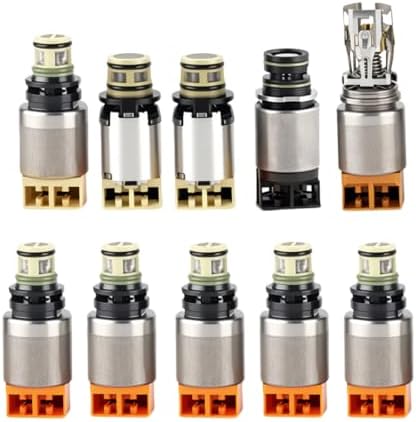
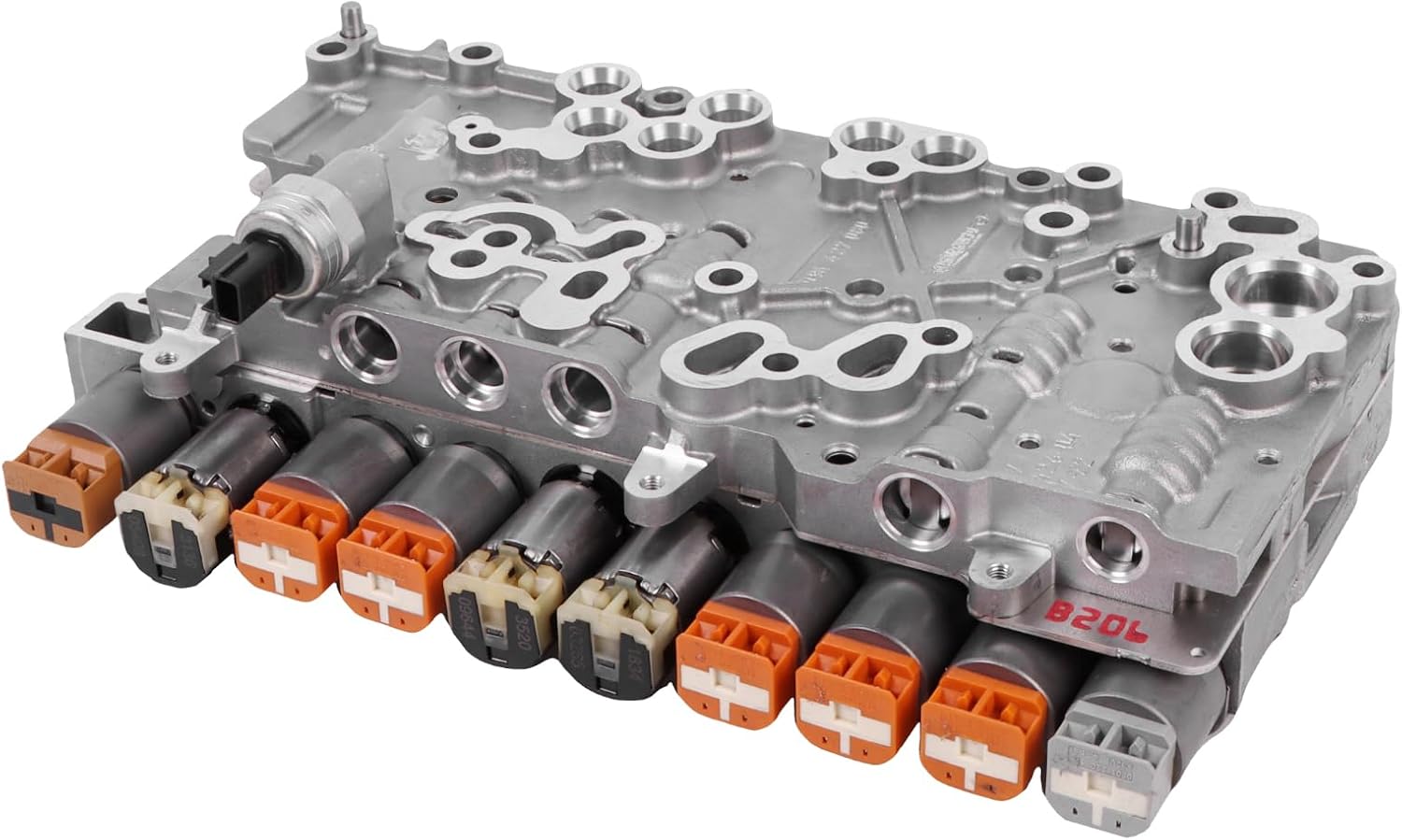
We stock remanufactured 9HP48 valve bodies with all 10 solenoids installed, refurbished 10-piece solenoid kits, and the correct filter and pan gasket kit for a proper fluid service — shipped fast from the USA.
Shop 9HP48 parts →FAQ
What does 9HP48 torque converter shudder feel like?
A fine, buzzy vibration through the floor, pedal, or shifter that shows up right as the torque converter clutch (TCC) applies, most commonly reported between about 35 and 45 mph in third or fourth gear on a steady, light throttle. Because the 9HP48 commands lockup unusually early to protect fuel economy, some drivers feel it as low as 10 to 15 mph in second gear instead. It typically goes away if you accelerate harder or let off the throttle enough that the TCM releases the converter clutch, which is the single best clue that the converter clutch, not the engine, is the source.
Will a fluid change fix 9HP48 TCC shudder?
Often, yes, and it is the cheapest thing to rule out first. The 948TE/9HP48 needs Mopar ZF 8 & 9 Speed ATF, a licensed-from-ZF equivalent to ZF LifeguardFluid 9 carrying the same ZF005946 approval, not a generic ATF+4 fill. Over time and heat cycles the friction-modifier additive package in any ATF depletes, which is the single most common root cause of TCC shudder across modern transmissions. If the fluid is old, was never changed, or was topped off with the wrong spec, a full fluid and filter service with the correct fluid resolves a large share of shudder complaints before any parts come off the vehicle.
Can a bad Quick Learn cause torque converter shudder on a 9HP48?
Yes. The 948TE's TCM stores clutch-fill time and pressure data in adaptation memory cells that get zeroed any time the TCM is flashed or a Quick Learn (Valve Body Solenoid Learn) is run in wiTECH, which is required after a TCM or valve body replacement. Per ATRA's technical writeup on this platform, Quick Learn only sets a baseline; the transmission needs several clean fill cycles afterward before the clutch models fully stabilize, and the 9HP48 is unusually sensitive to temperature, throttle stability, and road smoothness while that is happening, so a converter clutch commanded to apply before the relearn has settled can feel rough or shuddery even with no hardware fault present.
How do you tell TCC shudder from an engine misfire on a 9HP48?
With a scan tool, log TCC commanded slip and TCC actual slip while duplicating the shudder on a road test, then manually command the torque converter clutch off and back on. If the vibration disappears the instant the TCC is commanded off and returns when it is commanded back on, the converter clutch is the cause. If the vibration persists with the TCC commanded off, or RPM itself is oscillating independent of TCC state, point the diagnosis at the engine (misfire, dirty injector, or ignition fault) instead of the transmission.
Sources
- FCA US LLC — Technical Service Bulletin 21-029-14 (2014): TCM selective erase and reprogram for 2015 (KL) Jeep Cherokee and 2015 (UF) Chrysler 200 948TE-equipped vehicles, covering calibration improvements including P1DB8 and P1DCF, via NHTSA's public TSB archive. static.nhtsa.gov (NHTSA TSB archive)
- FCA US LLC — Technical Service Bulletin 2103414-1, “948TE 9 Speed Shift Enhancements And Quick Learn Enable” (November 26, 2014), for 2015 Chrysler 200, via NHTSA's public TSB archive: documents FCA's software-calibration updates to this transmission's shift and clutch-control (Quick Learn) behavior. static.nhtsa.gov (NHTSA TSB archive)
- ZF Friedrichshafen AG — LifeguardFluid 9 product data sheet: confirms LifeguardFluid 9 was developed specifically for ZF 8HP/9HP-family automatic transmissions. aftermarket.zf.com
- Gears Magazine (ATRA) — “Shudder Diagnosis”: the TCC commanded-slip/actual-slip scan tool test, the acceptable low-slip range during normal lockup, the typical 35–45 mph shudder window, and early lockup application as low as 10–15 mph in second gear on late-model controls. gearsmagazine.com
- Sonnax — 85740-07K Shift Valve System Pressure Valve Kit product documentation: describes SV-SP valve wear on the Chrysler 948TE/ZF9HP48/Honda-Acura 9-speed platform and its effect on line pressure control, shift quality, and clutch durability. sonnax.com
- Sonnax — ZF9HP48/948TE unit parts listing: converter-specific thrust bearings and friction-ring replacement options documenting the components that wear inside this platform's torque converter. sonnax.com