The C6 has been in the field since 1966, and plenty of the ones still running have no idea when their fluid was last touched. That history is exactly why the flush-versus-drain-and-fill question matters more on this transmission than on something newer. There is no adaptive pressure control, no module logging shift counts, and in a lot of cases no paper trail at all. What you find when you drop the pan is often the only diagnostic information you are going to get, and the method you choose for the fluid service should respond to what you find, not to whichever machine happens to be sitting in the bay.
Both methods are legitimate. Neither is automatically the right call. The difference is how much fluid each one actually replaces, what each one does to debris that has been sitting in the unit for decades, and whether you even have the correct fluid figured out before you commit a full system's worth of it.
What a Drain-and-Fill Actually Replaces
A drain-and-fill on a C6 means pulling the pan, dumping what comes out, dropping in a new filter, and refilling. ATRA's own description of a standard service puts the replaced volume at roughly one-third to one-half of the fluid in the system, because the torque converter, the valve body, and the cooler and lines keep the rest. That estimate lines up with real numbers for this specific unit. B&M's installation instructions for a C6 swap call for a 1-quart pre-fill into the torque converter before the transmission goes in, plus a 5-quart initial fill into the pan before you run the level check on the dipstick. Compare that 5-6 quarts to the total dry-fill capacity Ford publishes for the C6 - 12.0 quarts in 4x2 F-Series trucks and the Econoline, 13.5 quarts in 4x4 F-Series - and you can see the gap directly. A pan drop is touching less than half the fluid in the unit, and the torque converter, which holds a large share of that total, stays full of whatever was in it before you started.
That is not a reason to skip the service. It is a reason to do it more than once if the fluid has been neglected. Drive the truck a few hundred miles after a pan drop, then do a second one. Each pass dilutes what is left in the converter and cooler circuit further, and you get there without ever forcing fresh fluid through the system at pressure. For exact capacity by application, see our C6 fluid type and capacity guide, which breaks down Ford's own figures by truck and fluid era.
The Filter Advantage This Unit Has
Unlike some modern sealed transmissions, the C6's filter sits right in the pan and comes out with a few bolts. There is no reason to ever do a C6 service without a new filter - it costs little and it is the one piece of the fluid circuit a flush machine typically cannot touch.
What a Flush (Fluid Exchange) Does Differently
A flush, which ATRA calls a fluid exchange, uses dedicated equipment to push new fluid through the transmission while pulling old fluid out of the unit and the cooler lines at the same time. Done correctly, it replaces nearly all of the fluid in one visit instead of the one-third to one-half a standard service gets you. On paper, that is a clear win for getting old, degraded ATF out of the system.
The catch ATRA points out directly: many flush machines do not replace the filter. If a shop runs a flush on your C6 and never touches the pan, you have fresh fluid moving across a filter that has been doing its job since the last service - possibly for decades on a neglected unit. On a transmission where the filter is this easy to access, that is a service gap worth asking about before you pay for a flush.
Where the Debris Risk Actually Comes From
The concern people raise about flushing an old, high-mileage automatic is not abstract. Transmission Digest's reporting on cooler and line contamination, written by Lubegard's product-technical manager, documents exactly what builds up in a transmission's cooling circuit over years of service: dirt, grease, sludge, clutch material, and metal shavings and particles. None of that is unique to the C6, but a transmission that has been in service since the 1970s, 80s or 90s with an unknown fluid history has had a lot more time to accumulate it than something half that age.
The same reporting makes a point that matters for how you think about a flush on an old core: if a transmission has already failed catastrophically internally, it may not be possible to remove all the resulting debris no matter which cleaning method you use. That is not a reason to avoid flushing a healthy, running C6. It is a reason to actually look at what comes out of the pan before you decide. If the fluid is dark but otherwise clean and the magnet shows only light wear, a flush is a reasonable way to finish the job a drain-and-fill started. If there is a noticeable amount of metal or clutch material in the pan, pushing that unit's cooler and lines with a flush machine is a worse idea than a conservative drain-and-fill followed by a second one a few hundred miles later.
Get the Fluid Type Right Before the Method Matters
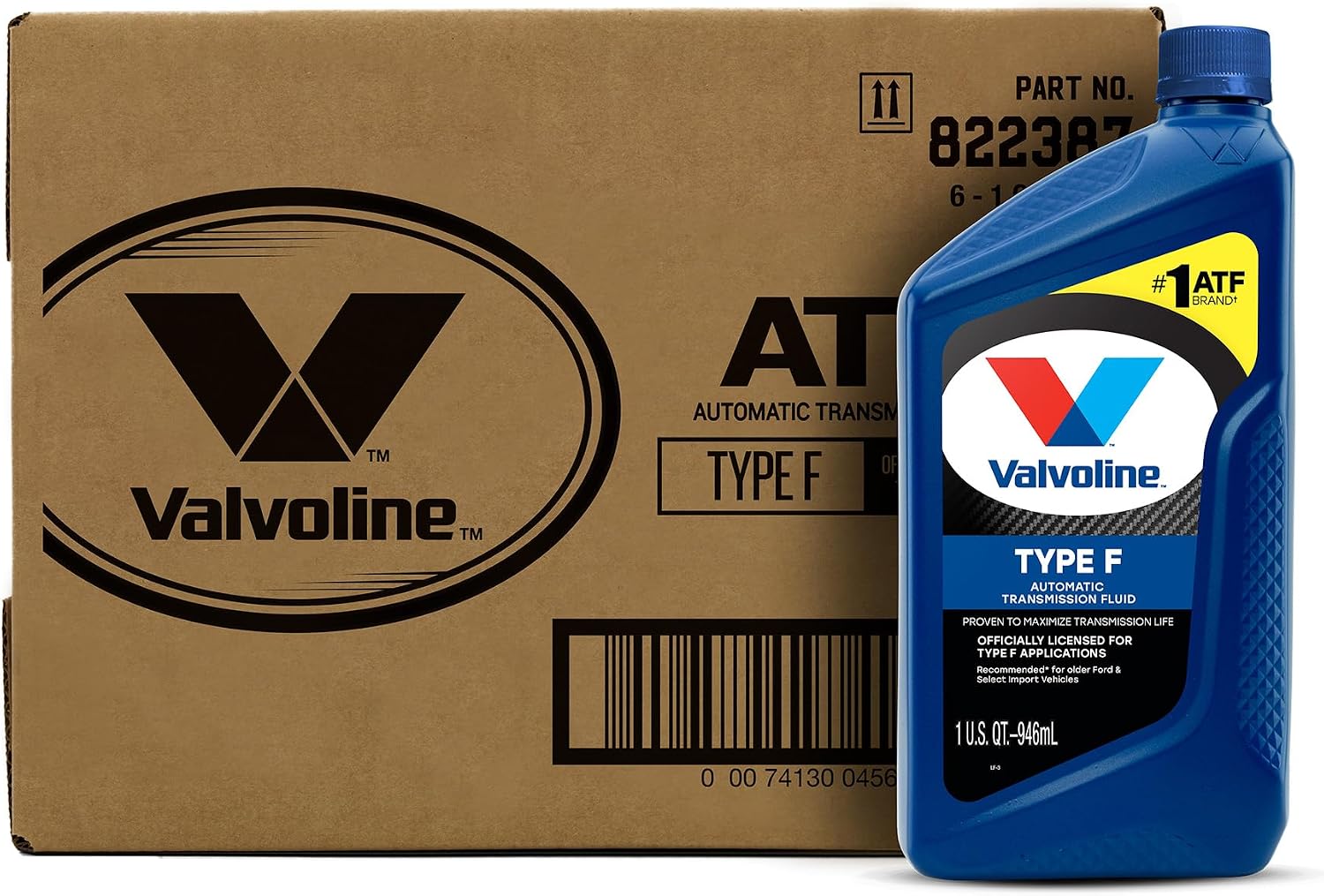
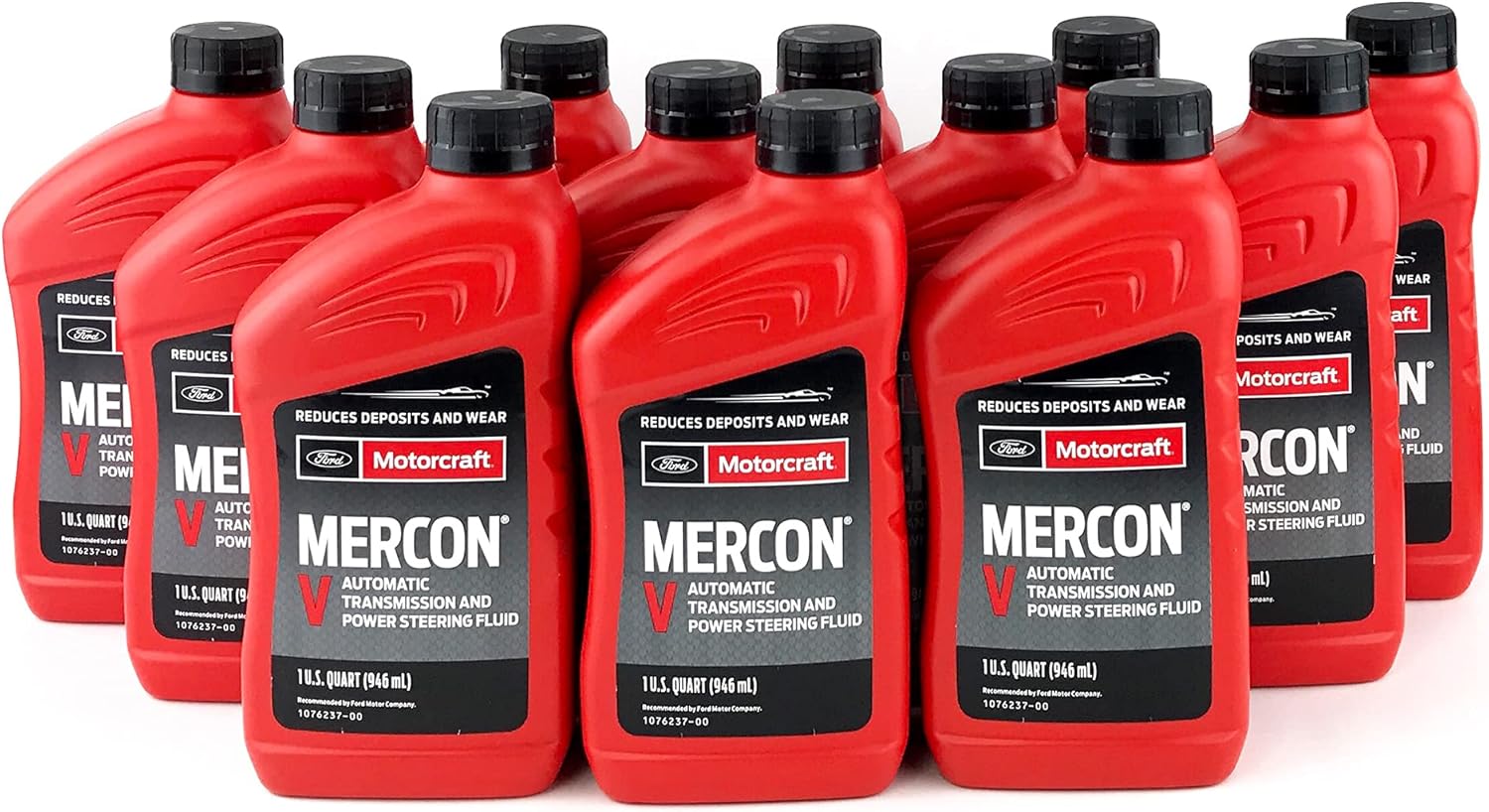
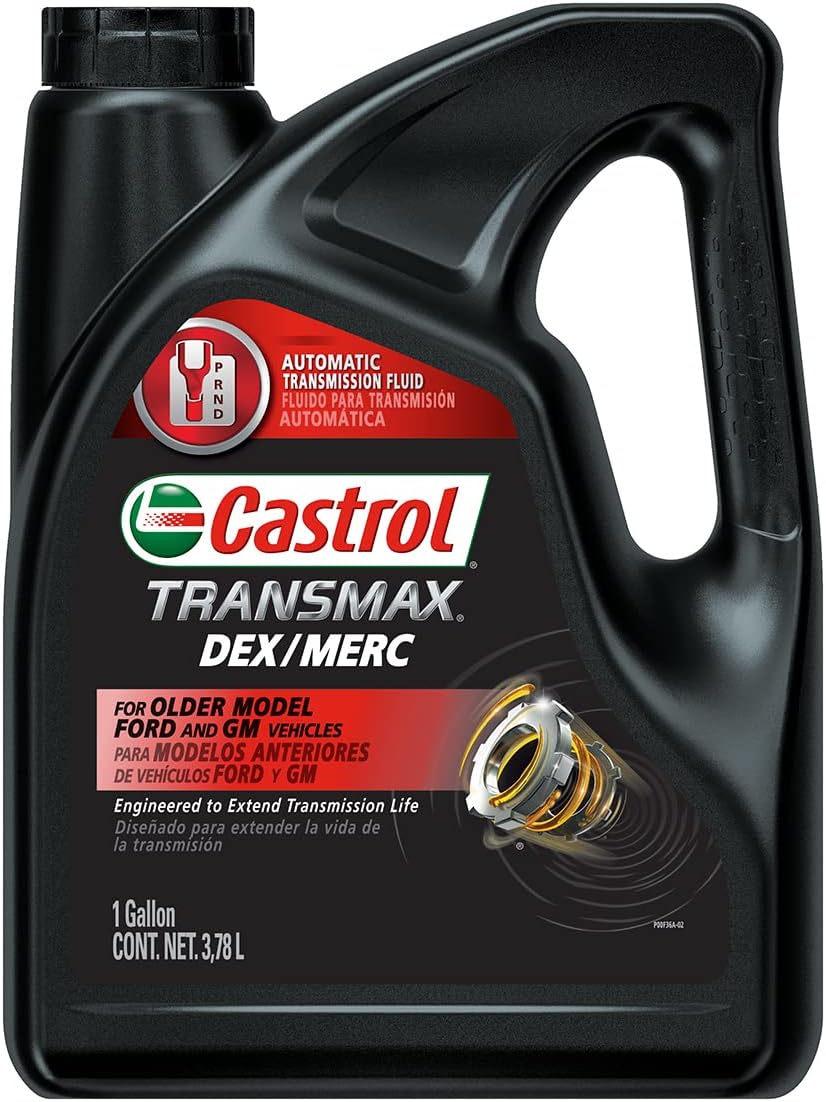
Neither service method fixes a fluid mismatch, and the C6's production run crosses several Ford fluid specifications. Per ATRA's GEARS Magazine history of Ford ATF, Ford transmissions were factory-filled through most of the 1970s with ESW-M2C33-F, known as Type F - still sold today as Motorcraft part XT-1-Q1F, and Motorcraft's own product page is explicit that it should not be used in newer transmissions that call for MERCON or later fluids. Ford released the CJ specification in 1974 to improve shift feel and oxidation resistance, then released MERCON in 1987 alongside the Type H factory fill. By 1996, Ford's own F-Series and Econoline owner's guides specify Motorcraft MERCON (XT-2-QDX) for the C6. MERCON V is the current replacement for MERCON; Ford ended MERCON licensing in 2007.
Check the dipstick and your specific application before you buy fluid. This is where a flush carries more downside than a drain-and-fill if you get it wrong: pushing a full system's worth of the wrong-spec fluid through the converter and cooler in one pass is a bigger mistake than discovering a mismatch three quarts into a pan refill, where you can still stop, drain it back out, and start over with the correct fluid.
The Call on a C6 Specifically
If your C6 has a known, reasonably current service history, runs clean fluid, and you have confirmed the correct spec for your build date, a flush is a legitimate way to get closer to a full fluid replacement in one visit - just make sure the filter gets changed in the same appointment, even if that means asking the shop to drop the pan separately.
If the history is unknown, the truck has gone a long time between services, or you find any real debris when the pan comes off, do the conservative thing: drain-and-fill with a new filter, drive it, and repeat the service in a few hundred miles. You give up some of the single-visit convenience of a flush, but you are not betting the transmission on what a machine running at pressure might dislodge from forty-plus years of sediment sitting in the cooler and lines.
Shop C6 fluid, filters, valve bodies and hard parts — shipped fast from the USA.
Shop C6 parts →FAQ
How much fluid does a drain-and-fill actually replace on a C6?
Only part of it. ATRA describes a standard fluid service as replacing roughly a third to half of total fluid, because the torque converter, cooler and lines hold the rest. B&M's own installation instructions for a C6 swap call for a 1-quart torque converter pre-fill plus a 5-quart initial pan fill before running the level check, against a Ford-published total dry-fill capacity of 12.0 to 13.5 quarts depending on application. That gap between 5-6 quarts going in and 12+ quarts total is why a single pan drop never gets all the old fluid out.
Is it safe to flush a high-mileage C6 with unknown fluid history?
Proceed carefully. Transmission Digest's reporting on cooler and line contamination identifies dirt, grease, sludge, clutch material and metal shavings as what actually accumulates in a transmission's cooling circuit over time, and notes that after a severe internal failure it may not be possible to remove all of that debris no matter which cleaning method you use. On a C6 with no service history, drop the pan first and look at the fluid and the magnet before deciding whether to run a flush machine.
What transmission fluid does a Ford C6 actually need?
It depends on the build date. Ford's factory-fill fluid for the C6 through most of the 1970s was ESW-M2C33-F, known as Type F, still sold today as Motorcraft part XT-1-Q1F. Ford released the CJ specification in 1974, then MERCON in 1987, and by 1996 Ford's own F-Series and Econoline owner's guides specify Motorcraft MERCON (XT-2-QDX) for the C6. MERCON V is the modern replacement for MERCON. Check your dipstick and your specific application before buying fluid, and never substitute Type F where MERCON or MERCON V is specified or the reverse.
Does a transmission flush replace the filter?
Usually not. ATRA's own description of a fluid exchange notes that many flush machines do not replace the transmission filter, and recommends replacing it separately if it is accessible. The C6's filter is accessible through the pan, so there is no good reason to run a flush and skip a $15-20 filter - if you are paying for a flush, pull the pan and change the filter in the same visit.
How often should a C6 get a transmission fluid service?
ATRA's general guideline is about every 24,000 miles or two years for a standard service, though some manufacturers' intervals run 50,000 to 100,000 miles. A C6 that tows, that has already gone a long time between services, or that shows any discoloration or debris on the pan magnet is better served by shorter, more frequent drain-and-fills than by stretching the interval and relying on an occasional flush to catch up.
Sources
- ATRA — "Transmission Service," members.atra.com. Backs the definitions of a standard fluid service (one-third to one-half of fluid replaced, 24,000-mile/two-year general interval) versus a flush/fluid exchange (nearly all fluid replaced via specialized equipment pushing fluid through the transmission and cooler lines), and the note that many flush machines do not replace the filter. members.atra.com
- Transmission Digest — "To Flush Or Not To Flush," Pat Barrow (Lubegard), June 2019. Backs the composition of cooler and line contamination (dirt, grease, sludge, clutch material, metal shavings) and the limit that a catastrophic internal failure may leave debris that cannot be fully removed by any cleaning method. transmissiondigest.com
- Ford Customer Service Division — Motorcraft ATF Type F product sheet (XT-1-Q1F, ESW-M2C33-F). Backs Type F as Ford's factory-fill specification for automatics built in the 1970s and earlier, and the warning against using it in transmissions that require MERCON or newer MERCON-family fluids. fcsdchemicalsandlubricants.com
- GEARS Magazine (ATRA) — "Fluid Matters," Pat Burrow. Backs the Ford ATF timeline: Type F (ESW-M2C33-F) as factory fill through the 1970s, the CJ specification released in 1974 for improved shift feel and oxidation resistance, MERCON released in 1987 alongside Type H, MERCON V as its successor, and the 2007 termination of MERCON licensing. gearsmagazine.com
- B&M (Holley) — Installation instructions, C6 replacement transmissions (114202/114203). Backs the 1-quart torque converter pre-fill and 5-quart initial pan fill procedure used before the running level check on a C6 installation. documents.holley.com
- Ford Motor Company — 1996 F-150/250/350 and Bronco Owner Guide, Refill Capacities and Lubricant Specifications. Backs the C6 total dry-fill capacities of 12.0 qt (4x2) and 13.5 qt (4x4), and Motorcraft MERCON (XT-2-QDX) as the specified fluid for the C6 in 1996 F-Series applications. fordservicecontent.com