The C6 has a reputation as the Ford automatic you cannot kill, and for the hard parts that is mostly earned. What does fail on a C6 is rarely the gear train. It is the hydraulics around it: a vacuum modulator that is not getting clean vacuum, an intermediate band that was never adjusted, a boost valve sleeve worn enough that line pressure will not come up under load, or a pump bushing letting the front seal weep. Most of those can be found with a vacuum gauge, a pressure gauge and a wrench before anyone pulls the unit.
This is the list I work through when a C6 truck or car comes in. For each problem you get the symptom, how to confirm it, and the fix, with the Ford, Sonnax and TransGo data behind it listed under Sources so you can check my work.
What Makes the C6 Different to Diagnose
Ford's own C6 training handbook (Ford Marketing Corporation, first printed 1970) describes the unit as a fully automatic three-speed with a torque converter and a compound planetary gear train controlled by one band, three disc clutches and a one-way clutch, run by a hydraulic control system. The converter produces about 2.1 to 1 torque multiplication at full stall. TransGo lists the forward ratios as 2.46 first, 1.46 second and 1.00 third. There is no overdrive and no lockup clutch.
That matters because there is nothing electronic to scan. No solenoids, no speed sensors, no trouble codes. Shift timing comes from three inputs: governor pressure (road speed), the vacuum modulator (engine load), and the kickdown linkage (wide-open throttle). If any one of those inputs is wrong, the transmission behaves wrong even with perfect hard parts. So on a C6, I always check the inputs before I condemn the internals.
1. Soft, Late or Harsh Shifts: Vacuum Supply and the Modulator
Symptoms: soft, slipping shifts under load; shifts that come too late or too early; harsh engagement. On some trucks the complaint changes when the engine is hot.
The modulator reads manifold vacuum to set line pressure and shift timing. When it gets the wrong signal, the whole shift schedule moves. TransGo's SK 6 instructions give two quick checks for gas engines that I use on every C6:
- Hose-off test. With the engine idling, pull the hose off the modulator. The engine must speed up or idle rough. If nothing changes, the hose is on the wrong port, or a fitting or line is plugged or pinched with carbon.
- Trapped vacuum test. Start the engine in Park, shut it off, wait until it is completely stopped and count to five, then pull the hose at the modulator and listen. If vacuum hisses out, it was trapped: the main hose is sucked shut or carboned, the brake reservoir check valve is bad, or a vacuum reserve canister shares the same firewall tree. TransGo's fix is to run the modulator line straight to the manifold and clean the carbon out of the hoses and fittings.
Also pull the modulator hose and look inside it. Transmission fluid in the vacuum line means a leaking modulator diaphragm, which pulls ATF into the engine and drops the fluid level at the same time. Replace the modulator, then correct the fluid level.
If the complaint is the opposite, shifts that bang at every throttle position, look for the same vacuum faults plus a heavy aftermarket pressure regulator spring left from an old shift kit. Sonnax lists "high line pressure" as a C6 symptom and names aftermarket springs with higher spring rates as a cause; its own 36946-13 replacement adds only about 10 psi over OE baseline, per the Sonnax 36946-13 listing. Our C6 harsh shift guide walks through the full check order.
Diesel C6s are fussier. TransGo says diesels need the green-stripe adjustable modulator, a vacuum regulator set with the truck at operating temperature, and roughly 14 to 17 inches of vacuum at closed throttle dropping below 5 inches at wide open throttle. For a diesel with no wide-open-throttle 1-2 upshift, TransGo's check is line pressure at maximum throttle in D at 28 mph: it must not exceed 138 psi.
2. Burnt Intermediate Band, Slipping 2nd, Poor 1-2
Symptoms: a flare or slip on the 1-2 shift, a slipping 2nd gear, a 2-3 shift that bangs or ties up, and burnt band material in the pan.
The intermediate band holds 2nd, and it has three common enemies:
- Band adjustment. A band left loose slips and burns. One set too tight drags in 3rd. TransGo's method: with the wheels off the ground, the transmission in neutral and the engine off, snug the adjustment screw with a short wrench (the output shaft or driveshaft will not turn backwards by hand). Loosen the screw slowly until you can just turn the shaft backwards by hand, then loosen it 1/4 turn more and tighten the locknut. Ford's own truck shop manual procedure is the torque method: install a new locknut, tighten the adjusting screw to 10 ft-lb, back it off exactly 1-1/2 turns, then hold the screw and tighten the locknut to 35-40 ft-lb (source 12). Do this at every pan service on a C6 that works for a living.
- 1-2 accumulator springs. Sonnax ties poor 1-2 quality and a burnt intermediate band to fatigue and failure of the 1-2 accumulator valve springs, and sells a 10-spring replacement kit (36946-05K). If the band is burnt and the springs are original, replace them. A new band on tired springs is on the same clock.
- Servo leakage. On high-mileage cases the servo bore wears and the servo leaks apply oil. Sonnax's R-ratio servo kit (K36528R, mid-1968 and later) uses a no-leak pin with an O-ring and a PTFE ring to seal worn case bores. It is also the largest apply area, so it needs the Sonnax extra-wide band (S026968) and unrestricted feed and exhaust passages. It is a performance part. On a stock rebuild, new servo seals and a check of the bore are usually enough. Also confirm the apply lever matches the servo: Sonnax's C6 levers come in E (1.85), F (2.30) and a non-stock FF (2.82:1) ratio, and Sonnax does not recommend the FF lever with H or R code servos (source 10).
Not sure the slip is the band? Ford's own diagnosis guide has you stall test each range for no more than five seconds, cooling at 1000 rpm in neutral between runs: stall rpm above spec means the clutches or band for that range are not holding, below spec points to the engine or the converter one-way clutch (source 1). Our C6 slipping diagnosis guide maps each gear to the clutch or band that holds it.
3. Reverse Shudder, Burnt Direct Clutch, Low Line Rise
Symptoms: a shudder backing up a hill or with a trailer, soft shifts under heavy throttle, a burnt direct clutch (the clutch that works in 3rd and Reverse).
This is the most common valve body wear point on a C6. Sonnax describes it on its 36946-01K boost valve kit page: the boost sleeve wears at its inside diameter, oil leaks past the boost valve to exhaust, and line pressure does not rise when it should. Wear on the outside diameter of the sleeve leaks through the valve body too. The result is soft shifts, poor shift quality, Reverse shudder, direct clutch failure and low line rise.
How to prove it: a pressure gauge on the line tap. Line pressure should climb as throttle and load increase, and Reverse should run well above the forward ranges. A C6 that holds normal idle pressure but will not rise under load has a leak in the boost circuit or the pressure regulator.
The fix: replace the boost valve and sleeve. Sonnax sells a gas-ratio kit (36946-01K) that restores factory boost, and recommends the higher-boost diesel-ratio kits (36946-02K and 36946-03K) for all heavy-duty applications. The early "clicker" valve bodies with a screw-on boost end plate take 36941-01K. Note Sonnax's warning that these kits do not recalibrate shift timing and do not let you swap a gas valve body into a diesel. If the direct clutch is already burnt, the boost valve work has to be done in the same rebuild or the new clutch will burn the same way.
C6 Master Transmission Rebuild Kit 1976-1996
Frictions, seals and gaskets for a full C6 overhaul, the right kit when the direct clutch or intermediate band is already burnt and the valve body work is going in at the same time.
View the C6 master rebuild kit →4. Front Seal Leak and Pump Whine
Symptoms: fluid dripping from the bellhousing, a whine that follows engine speed, low pump volume.
A new front seal on a worn pump bushing will leak again, because the converter hub wobbles in the bushing. Sonnax traces leaking front seals, pump noise, excess converter hub-to-bushing clearance and low pump volume to aftermarket pump bushings that are not thick enough. Its finish-in-place bushing (36002-01) fits the C6 and several later Ford units and allows about .008 to .010 in. of material to be removed during install to set the correct clearance.
Check the converter hub at the same time. B&M's C6 install instructions call for inspecting the pump drive hub sealing surface for wear, scoring or damage, because a worn hub will damage the pump seal and leak.
5. Rear Leak and Worn Rear Case Bushing
Symptoms: fluid at the tailshaft, a driveline vibration or clunk, a rear seal that will not stay dry.
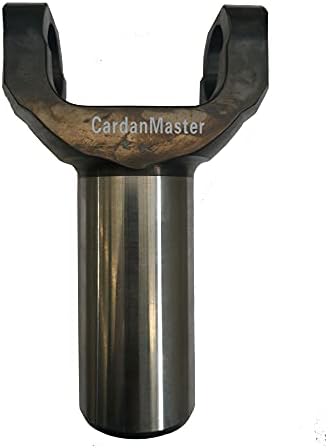
Sonnax lists its rear case bushing (36008B) for all C6 units and links the OE two-bushing design to premature wear and bushing failure from inadequate lubrication and too much load for the bearing area. Its single-piece replacement has more bearing area and better lubrication. Sonnax notes that C6 cases may need honing to remove the material that separates the original two bushings. If the yoke is grooved where the seal rides, replace the yoke too. A grooved yoke will cut a new seal.
6. No 1st in Drive, But Manual Low Works
In Drive, first gear is held by the one-way clutch (the low sprag). In manual 1, the low-reverse clutch holds instead, which is also why manual low gives engine braking. So a C6 that takes off in 2nd or neutral in D, but pulls normally in manual 1, points at the one-way clutch. Sonnax lists a late-style low sprag inner race and bearing kit (36429E-K, shared with the E4OD) for lost or damaged sprag components.
7. Kickdown That Does Not Work, or Works Too Much
Ford's handbook describes forced 3-2 downshifts at speeds as high as 90 mph in D, and a forced downshift to first up to 48 mph depending on engine, axle ratio and tire size. If the kickdown rod or cable is out of adjustment, you either get no forced downshift at all or a downshift when you did not ask for it. TransGo's adjustment for gas engines: adjust the linkage until there is no 3-1 kickdown at 30 mph, then back it until you can just get a 3-1 kickdown at 30 mph. For diesels, use the same method with a 3-2 kickdown at 20 mph.
8. Fluid Starvation From a Bent Pan
This one is easy to miss. TransGo warns that a pan bottom bent upward, from a jack or a rock, can press against the filter opening and restrict flow through the filter, which damages the transmission. The symptoms look like a slipping, failing unit, especially when the fluid is hot or low. Every time the pan comes off, check it and flatten it with a mallet if needed. Sonnax also sells a C6 pan (36950-01) that is 25 percent thicker than the original.
9. Problems Right After a Rebuild or Swap
Plenty of "bad transmission" complaints are install mistakes. B&M's C6 instructions give the checks:
- Converter seating. Rotate the converter while pushing it on and feel for three distinct clicks as it engages the input shaft, the stator support and the pump lugs. B&M gives typical C6 converter depth as 1-1/8 in. (plus or minus .050 in.) from the bellhousing face. After the transmission is bolted up, the converter must turn freely and have end-play. No end-play means it is not engaged, and the transmission has to come back out.
- Input shaft direction. Some Ford input shafts have different spline lengths at each end, and installing one backwards damages the converter.
- Driveshaft slip. Leave 3/4 in. of slip-yoke clearance for street use, 1 in. for competition, so the shaft cannot crash into the transmission when the suspension compresses.
- Cooler. Flush the cooler and lines, or replace an auxiliary cooler. Debris left in the cooler goes straight into the new unit.
Fluid: Get the Type Right
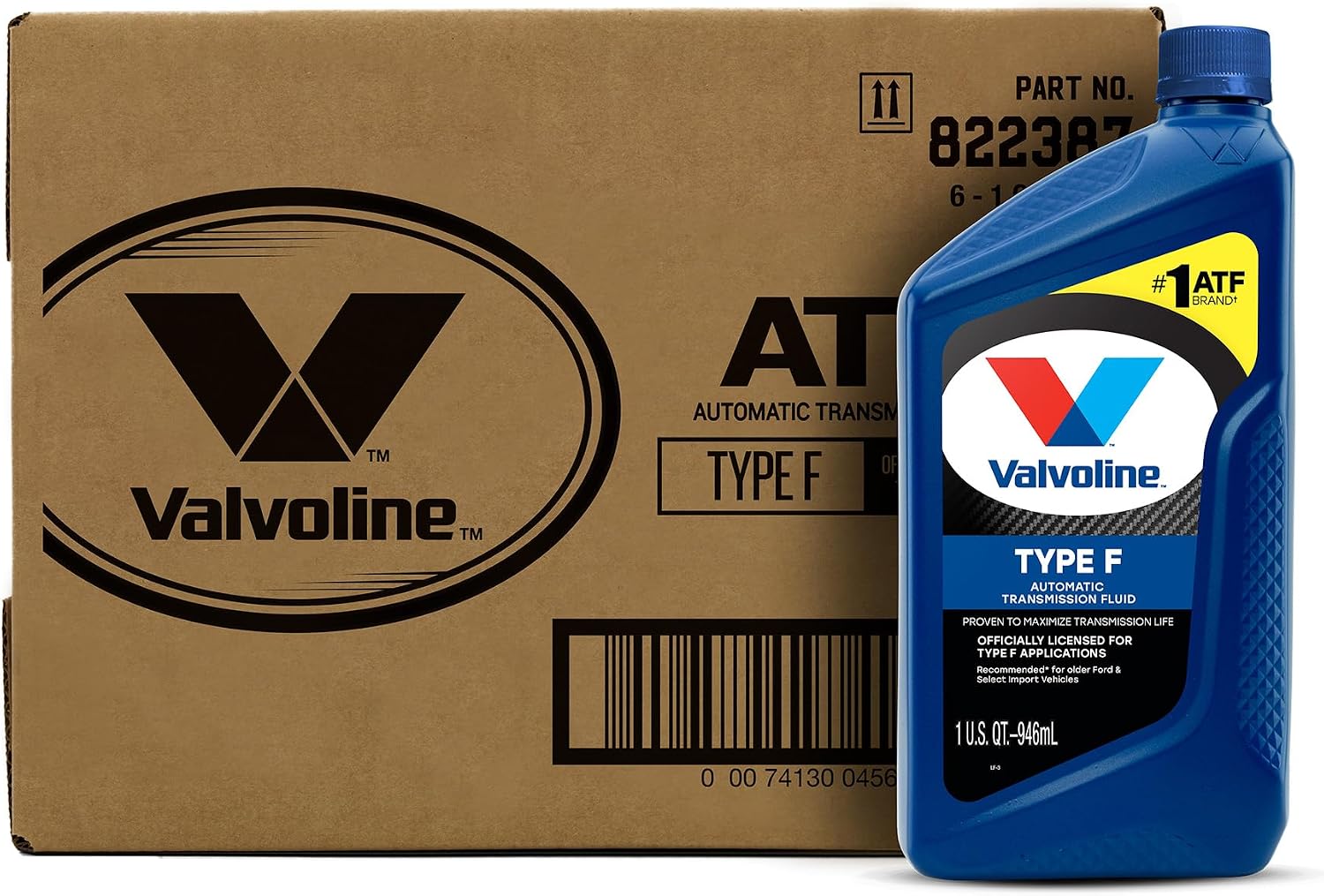
Early C6s were filled with Type F. Ford's Motorcraft ATF Type F (ESW-M2C33-F) is a high static friction fluid for Ford automatics built in the 1970s and earlier, and Ford says it should not be used in transmissions that call for any MERCON fluid. Later C6s moved to lower-friction Ford specs: by the last model year, Ford's 1996 Econoline owner guide lists Motorcraft MERCON, part XT-2-QDX, for the C6 automatic, with a 12.0 quart (11.4 L) refill capacity and a note to always set the exact level by the dipstick (Ford 1996 Econoline Owner Guide, pp. 354 and 358). The 1996 F-Series guide lists the same fluid, 12.0 quarts in a 4x2 and 13.5 in a 4x4 (Ford 1996 F-Series Owner Guide). MERCON V replaces plain MERCON today. The fluid type is stamped on the dipstick, and our C6 fluid type and capacity guide walks through telling which one your unit needs.
My Diagnostic Order on a C6
- Check fluid level and condition hot, in Park or Neutral on level ground. Look for band material and ATF in the vacuum hose.
- Check the vacuum supply: hose-off test and trapped vacuum test.
- Check the kickdown adjustment and the shift linkage.
- Adjust the intermediate band.
- Put a gauge on line pressure: idle, under load, and in Reverse.
- If it comes apart: boost valve and sleeve, 1-2 accumulator springs, pump bushing, rear case bushing, servo bore and low sprag, then check converter seating and end-play on install.
Need parts for this job?
C6 valve bodies, Type F fluid, slip yokes, shifters and rebuild parts, with checkout on our site.
Shop C6 transmission parts →Get the C6 shift kit →
FAQ
What is the most common problem with a Ford C6 transmission?
Most C6 problems are hydraulic, not hard-part failures. The usual ones are a vacuum modulator or vacuum supply fault that throws off shift timing, a burnt intermediate band from poor adjustment or tired 1-2 accumulator springs, and a worn boost valve sleeve that stops line pressure from rising, which causes Reverse shudder and burnt direct clutches. Front seal leaks from a worn pump bushing are also common.
How do you adjust the band on a C6?
TransGo's method: with the wheels off the ground, the transmission in neutral and the engine off, snug the band adjustment screw until the output shaft will not turn backwards by hand. Loosen the screw slowly until the shaft just turns backwards by hand, then loosen it 1/4 turn more and tighten the locknut. A loose band slips and burns in 2nd, and a band that is too tight drags in 3rd.
Why does my C6 shudder in Reverse?
The most common cause is wear in the boost valve sleeve in the valve body. Sonnax explains that oil leaks past the worn sleeve to exhaust, so line pressure does not rise under load. That gives Reverse shudder, soft shifts and eventually a burnt direct clutch. Replacing the boost valve and sleeve with the correct gas or diesel ratio kit restores line rise.
Does a C6 have solenoids or trouble codes?
No. The C6 is a fully hydraulic three-speed. Shift timing is set by the governor, the vacuum modulator and the kickdown linkage, so there are no solenoids, speed sensors or trouble codes to scan. Diagnosis is done with a vacuum gauge, a line pressure gauge, linkage and band adjustments, and a road test.
What fluid does a Ford C6 take?
Early C6s were filled with Type F. Ford's Motorcraft ATF Type F meets ESW-M2C33-F and is meant for Ford automatics from the 1970s and earlier, and Ford says not to use it in transmissions that call for any MERCON fluid. Later C6s moved to lower-friction Ford specs, so check the owner guide or dipstick for your year.
Sources
- Ford Marketing Corporation — The C6 Automatic Transmission Training Handbook (first printing July 1970), reprinted under Ford license by Forel Publishing. Backs the C6 layout (one band, three disc clutches, a one-way clutch, hydraulic controls), the diagnosis guide stall test procedure and its above/below-spec interpretation, the 2.1:1 converter stall multiplication, and the forced downshift limits (3-2 up to 90 mph, to first up to 48 mph). Ford C6 Training Handbook sample (PDF)
- Ford Customer Service Division — Motorcraft ATF Type F (ESW-M2C33-F) product details. Backs Type F as a high static friction fluid for Ford automatics of the 1970s and earlier, and Ford's warning against using it in transmissions that require MERCON fluids. fcsdchemicalsandlubricants.com
- Sonnax — Ford C6 transmission unit page. Backs the pump bushing 36002-01 (front seal leak, pump noise, hub clearance, low pump volume), 1-2 accumulator valve spring kit 36946-05K (poor 1-2, burnt intermediate band), R-ratio servo kit K36528R and extra-wide band S026968, rear case bushing 36008B, low sprag race and bearing kit 36429E-K, and the thicker 36950-01 pan. sonnax.com
- Sonnax — Boost Valve Kit 36946-01K. Backs boost sleeve ID and OD wear as the cause of low line rise, soft shifts, Reverse shudder and direct clutch failure; the diesel-ratio 36946-02K/03K recommendation for heavy duty; the 36941-01K "clicker" application; and the warning that the kits do not recalibrate shift timing or allow gas and diesel valve body interchange. sonnax.com
- TransGo — SK 6 C6 Shift Kit installation instructions (2011). Backs the gas-engine vacuum hose-off and trapped-vacuum tests, the diesel modulator and vacuum regulator notes, the 138 psi diesel line pressure check at 28 mph, the kickdown adjustment method, the band adjustment method, and the bent pan filter restriction warning. TransGo SK 6 instructions (PDF)
- TransGo — C6 Reprogramming Kit 67-3 instructions (2008). Backs the C6 forward ratios of 2.46, 1.46 and 1.00. TransGo 67-3 instructions (PDF)
- B&M (Holley) — Installation instructions for B&M automatic transmissions replacing the Ford C6 (114202/114203). Backs the converter hub inspection, the three-click converter engagement, the 1-1/8 in. typical C6 converter depth, the end-play requirement, the reversible input shaft caution, the driveshaft slip clearance and the cooler flush recommendation. B&M C6 instructions (PDF)
- Ford Motor Company — 1996 Econoline and Club Wagon Owner Guide, Refill Capacities (p. 354) and Lubricant Specifications (p. 358). Backs the C-6 refill capacity of 12.0 qt (11.4 L), the dipstick footnote, and Motorcraft MERCON XT-2-QDX as the late C6 fluid. Ford's own fordservicecontent.com host now blocks direct PDF access (Akamai 403), so this links the Internet Archive's cached copy of the same document. Ford 1996 Econoline Owner Guide (PDF, web.archive.org)
- Ford Motor Company — 1996 F-150/250/350 and Bronco Owner Guide, Refill Capacities and Lubricant Specifications. Backs the C-6 capacities of 12.0 qt 4x2 and 13.5 qt 4x4 and Motorcraft MERCON XT-2-QDX for the C6. Ford's own fordservicecontent.com host now blocks direct PDF access (Akamai 403), so this links the Internet Archive's cached copy of the same document. Ford 1996 F-Series Owner Guide (PDF, web.archive.org)
- Sonnax — C6 Servo Apply Lever 36916E. Backs the E (1.85), F (2.30) and FF (2.82:1) lever ratios and the warning against pairing the FF lever with H or R code servos. sonnax.com
- Sonnax — C6 Elevated Pressure Main Pressure Regulator Spring 36946-13. Backs high line pressure caused by aftermarket regulator springs with higher spring rates, and the approximately 10 psi over OE baseline calibration to OE gas line pressure. sonnax.com
- Ford Motor Company — Truck Shop Manual Section 17-10, C6 Automatic Transmission (E-150 to E-350, F-150 to F-350 and Bronco). Backs the factory intermediate band adjustment (10 ft-lb, back off exactly 1-1/2 turns, locknut 35-40 ft-lb), the ID tag location under the intermediate servo lower front cover bolt, and the servo cover (14-20 ft-lb) and oil pan (8-12 ft-lb) torque limits. Ford Section 17-10 (PDF)